Reviewed · TOURS
“The Third Man” Film Location Tour
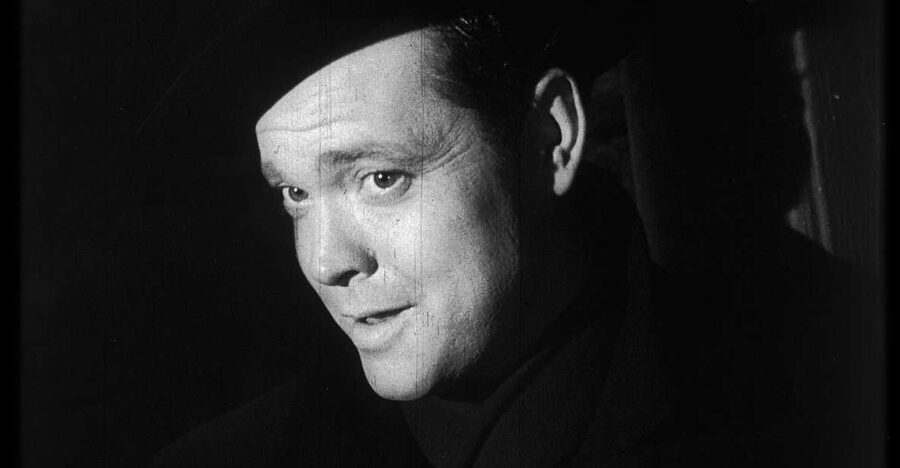
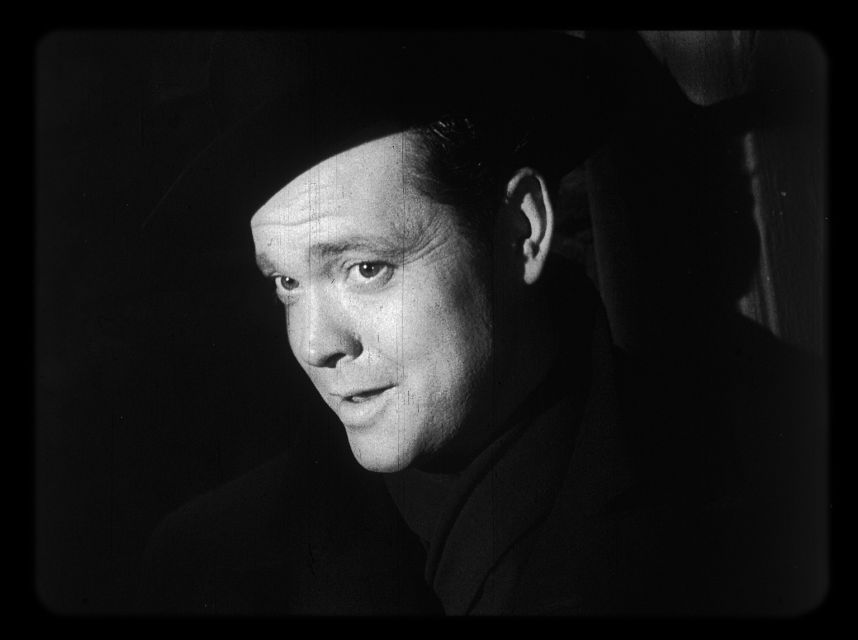
Vienna’s cobbled old town becomes a film set on this lively walk through The Third Man. You follow Harry Lime and Orson Welles from location to location while photographs show how the city looked in the film. The tour also explains the spies, black market, ruins, and divided postwar city behind Graham Greene’s story.
I especially like the guides’ personal command of the subject, with Brigitte Timmermann, Christopher, Christian Timmermann, and others bringing film trivia and city history together. I also like the final surprise, which has included a zither performance. The main drawback is practical: two hours on cobbles can become closer to three, and the tour does not include the famous sewer scenes, Prater Ferris wheel, or cemetery.
Key points to know before you book
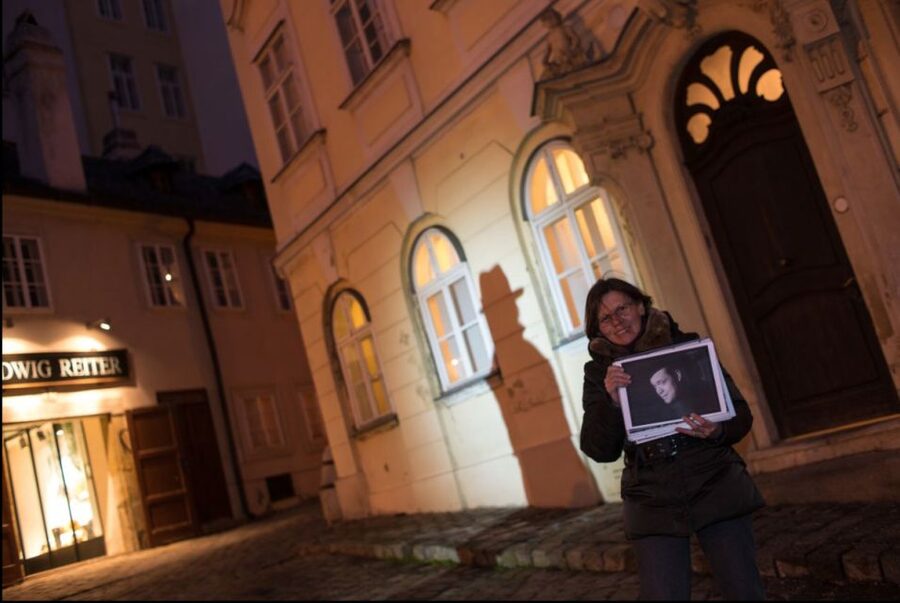
- Harry Lime’s Vienna: See major central locations used in The Third Man with period photographs to compare the screen with the streets today.
- Film and Cold War history together: Learn about Allied occupation, the black market, espionage, and Vienna’s wartime damage.
- Guides with serious film expertise: Brigitte Timmermann and Dr. Christian Timmermann are among the guides associated with the tour, along with Christopher, Kirstin, Bridget, and others.
- A city walk, not a sewer visit: The real sewers are not part of the experience, and the film’s sewer action used a mock-up for important scenes.
- English and German tours: The guide speaks one or both listed languages, so check the departure details if language matters to you.
- Plan for extra time: The advertised length is two hours, but the walk can run longer when discussion and questions take hold.
Why The Third Man works so well in Vienna
Many movie-location walks amount to a few photo stops and a string of production facts. This one has more to work with. The Third Man is tied closely to Vienna’s condition after the Second World War, when the city was occupied by four Allied powers and split into zones.
That setting gives every alley and square extra weight. The film’s shadows, damaged buildings, uneasy loyalties, and crooked camera angles are not just decorative style. They reflect a city still dealing with ruins, shortages, smuggling, and political tension.
Your guide begins at the U4 station Stadtpark, at the Johannesgasse exit. From there, the group heads into central Vienna and follows the film through the old town. The route mainly covers the Inner Stadt south of Stephansplatz, with much of the walking over old cobblestones.
I like this approach because you are not simply hunting for famous frames. You are learning why Vienna was the right place for Carol Reed’s film and how Greene’s screenplay grew from the city’s real postwar mood. The walk connects the movie’s fictional intrigue with the actual international pressures surrounding Vienna.
You do not need to be a film scholar to follow the story. The guides give enough background to bring newcomers along, while fans get production anecdotes, actor stories, and details about what was changed for the camera.
Other Vienna days people book alongside this one:
- Vienna: Vivaldi’s Four Seasons Concert in Karlskirche
★ 4.7 · 14,951 reviews - Vienna: Spanish Riding School Training
★ 3.9 · 9,281 reviews - Vienna: Skip-the-cashier-desk-line Giant Ferris Wheel Ride
★ 4.5 · 7,859 reviews
Starting at Stadtpark and entering Harry Lime’s world
The meeting point at Stadtpark is convenient for anyone using Vienna’s U4 line. Look for the Johannesgasse exit, not simply the station name, since large Vienna stations can have several ways out.
The opening portion sets up the movie and the city. Expect an explanation of the film’s international origins, including Graham Greene’s screenplay, Carol Reed’s direction, and the presence of Orson Welles as Harry Lime.
This introduction matters because Welles’ performance can overshadow the rest of the production. The tour gives attention to the way the film was built, the work behind the scenes, and the relationship between the actors, director, writer, and location.
Guides such as Brigitte Timmermann are associated with years of research into the movie. Some guides have written extensively about The Third Man, and their talks can go well beyond a prepared list of shooting sites. Christopher, Kirstin, Bridget, Christian Timmermann, and Brigitte have all led tours described as warm, funny, and highly informed.
The exact guide depends on the departure, so do not book expecting one particular person unless the provider confirms it. The important point is that the experience is guided by someone who can explain both the movie and Vienna’s past.
Comparing screen images with Vienna today
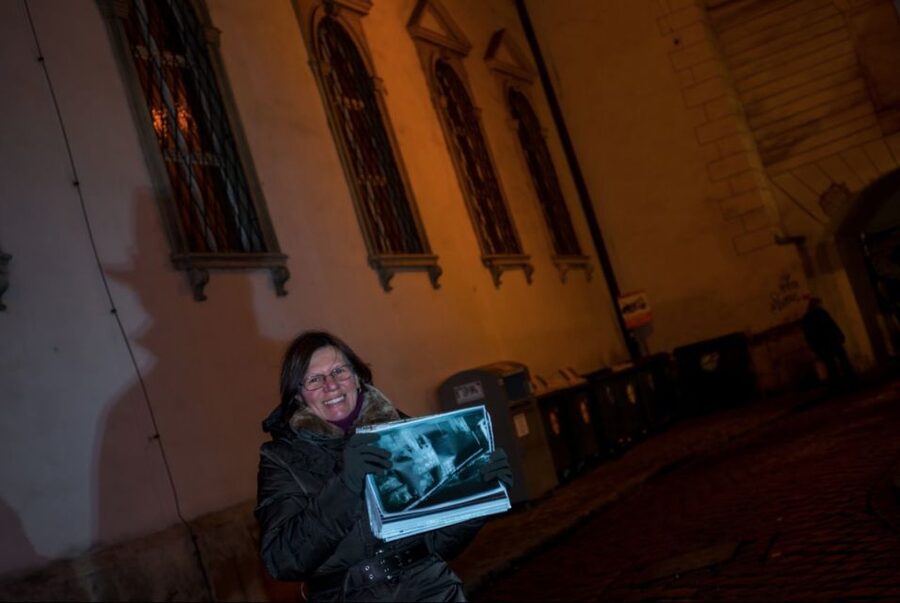
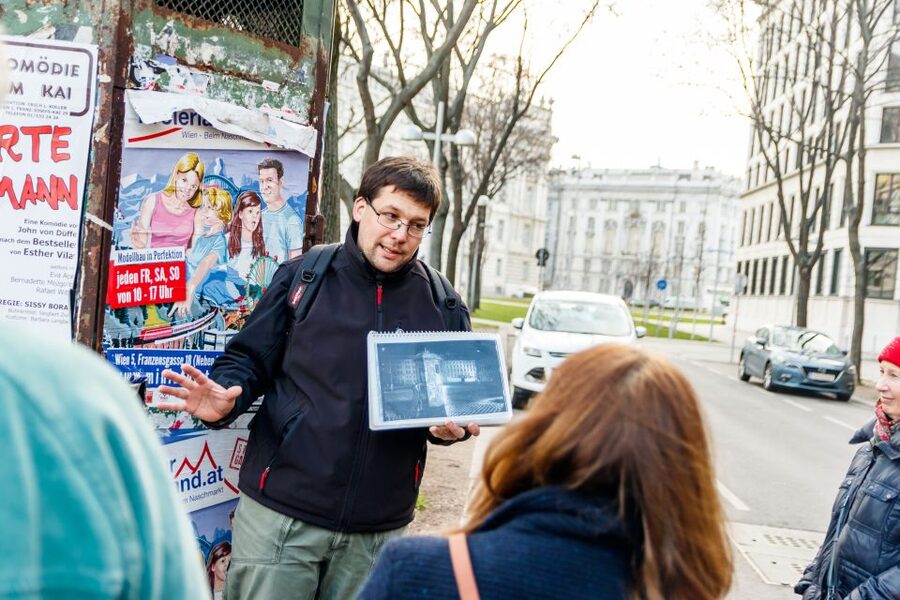
One of the most useful features is the collection of illustrative photographs. At each stop, the guide uses images from the movie or its production to show the original framing and setting.
That solves a common problem with film tours. A modern street may look too clean, too bright, or simply too ordinary to match the screen. The photographs let you spot the architectural lines, corners, doorways, and alleys that remain.
You also learn where the camera created an illusion. The Third Man often makes Vienna feel like one continuous maze, but filming locations were selected and combined for dramatic effect. Some scenes were shot on location, while others relied on sets or altered spaces.
This is where the tour becomes useful even if you have already visited Vienna’s center. You stop seeing only a handsome historic district. You begin noticing how the city’s tight lanes, heavy masonry, stairways, and worn surfaces helped produce the film’s uneasy look.
The route is mainly flat, but the paving can be hard on your feet. Wear firm, comfortable shoes. You may cover more ground than the two-hour estimate suggests, particularly if the guide spends time answering questions.
The postwar city behind the movie
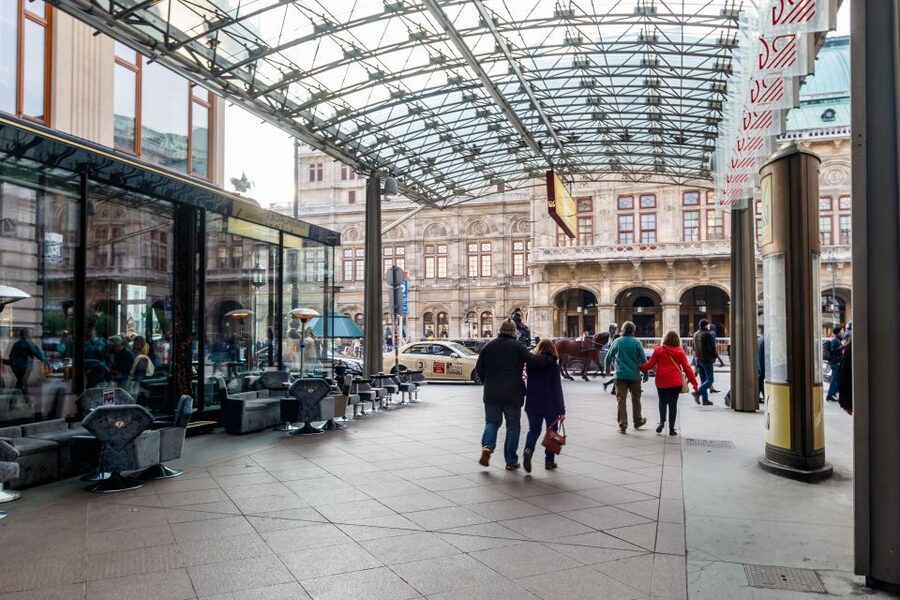
The strongest part of the walk is the historical setting. Your guide explains the Vienna that emerged from the war: damaged buildings, allied soldiers, economic scarcity, the black market, and people trying to survive amid competing authorities.
That context changes the way you read Harry Lime. His business is not just a plot device. It belongs to a city where normal rules had been weakened, borders were politically charged, and information could be as valuable as money.
You also hear about spies from east and west and the presence of the Allied powers. Vienna was not simply a backdrop for a British thriller. It was an important meeting point in the early Cold War, and the film uses that uncertainty at nearly every turn.
I find this blend of cinema and civic history more useful than a tour that treats the movie as a sealed work of art. You see how the real city shaped the script and how the film then reshaped international ideas about Vienna.
The guide may also add details about actors, production disputes, and the making of the film. Stories about Orson Welles, including his efforts to undermine the project, add a human edge to the otherwise serious political background. The result is part film seminar, part walking tour, and part lesson in twentieth-century Europe.
Same Alps, a completely different kind of day:
- Vienna: Schönbrunn Palace & Gardens Skip-the-Line Tour
★ 4.7 · 7,739 reviews - Vienna: Light of Creation Votive Church Immersive Light Show
★ 4.8 · 6,779 reviews - Vienna Spanish Riding School Guided Tour
★ 4.7 · 6,765 reviews - Vienna: Classical Concert in the World-Famous Musikverein
★ 4.6 · 6,673 reviews
What the central Vienna stops can and cannot show you
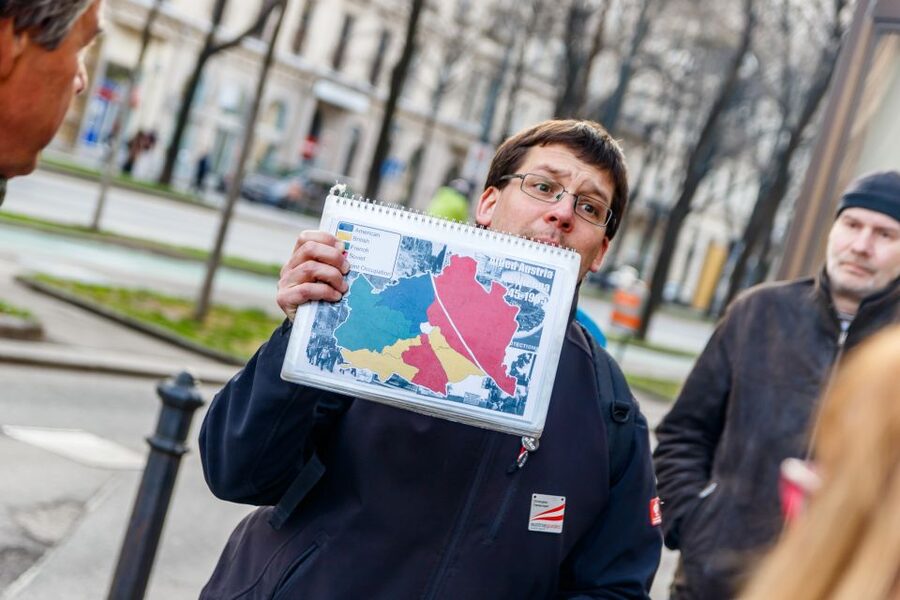
The central route reaches many of the important locations from The Third Man. You see the streets and buildings that remain accessible in the old town, with the guide pointing out how they appeared on screen.
Do not expect every major image from the movie to fit into this walk. The famous cemetery and the giant Ferris wheel at the Prater are too far away for the regular central route. If the Ferris wheel matters to you, plan a separate visit to the Prater.
That is not a flaw, but it is worth knowing before you book. Some people arrive expecting the tour to include every iconic setting. It does not. The central locations give you a strong sense of the film’s Vienna, but they are only part of the full geography.
The same applies to the sewer system. The tour does not take you underground. The dramatic sewer sequences were filmed using a combination of real spaces and constructed material, including a mock-up. The guide explains that distinction, which is more interesting than simply walking into a damp tunnel.
The missing sewer visit may disappoint anyone choosing the experience mainly for the chase scenes. For most people, the explanation of how the movie created those scenes is a fair substitute, especially when paired with photographs and production detail.
The surprise at the end
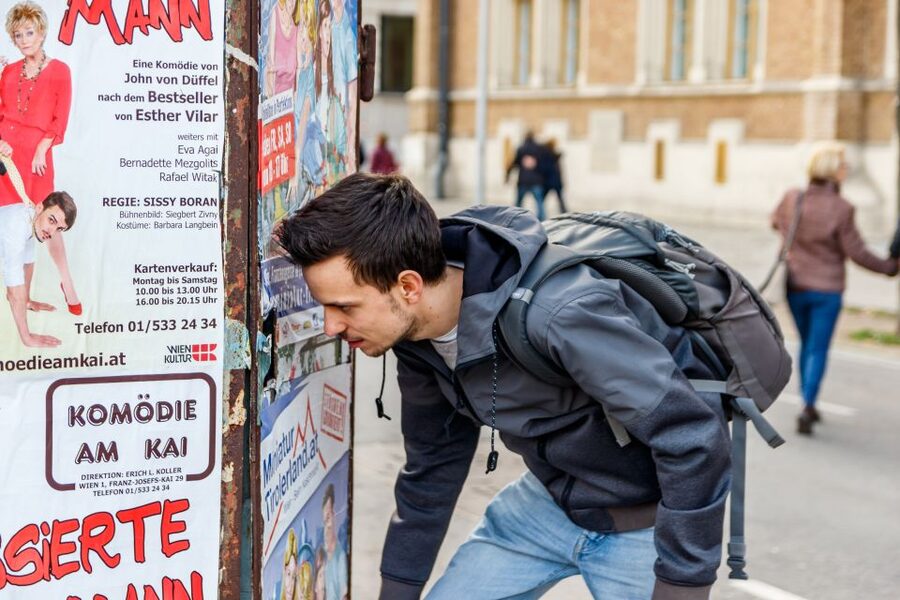
The last part of the tour has made a strong impression on many groups. The exact presentation may vary, but the final stop has been described as a special treat, and one past tour included an unexpected zither player.
The zither music is closely linked with the film’s identity, so this is more than a random musical extra. It brings the sound of postwar Vienna into a walk that has mostly focused on images, stories, and streets.
Do not treat this as a guaranteed concert unless it is confirmed for your date. The useful advice is simply to stay through the final stop. Leaving early can mean missing one of the most memorable touches.
The ending also gives the tour a sense of shape. You begin with the film’s conception, move through its locations and historical setting, and finish with a reminder that music helped make The Third Man unlike any ordinary crime picture.
How much film knowledge do you need?
You will get the most from the tour if you watch The Third Man first. That lets you recognize the locations, follow the characters, and appreciate the guide’s corrections when the film bends geography or history.
You do not have to memorize the plot. A basic familiarity with Harry Lime, Holly Martins, Anna Schmidt, and the film’s mood is enough. The guide can provide a short summary and explain the major scenes.
If you have never seen the movie, the walk still works as a Vienna history tour with a strong film theme. The postwar material is substantial, and the city locations are interesting on their own.
Film fans get the biggest reward from small details. You may learn how a shot was staged, which parts of the story reflect real Vienna, and how the director used angles and streets to make the city feel unstable. Watching the film again afterward is a good idea because familiar scenes will have a different setting in your mind.
You can also pair the walk with a screening at Vienna’s Burg Kino if one fits your schedule. One past participant used the tour as preparation for a local screening the next day, which is an excellent way to connect the physical locations with the finished film.
Guide style, languages, and group rhythm
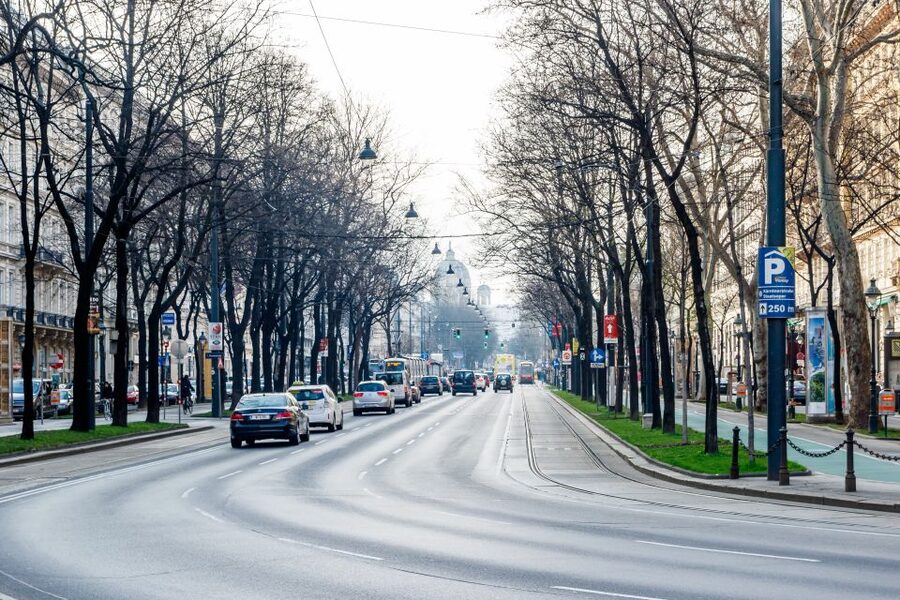
The tour is led by a state-certified guide and offered in German or English. English-language tours have included guides such as Christopher, Kirstin, Bridget, Christian Timmermann, and Brigitte Timmermann.
The best guides bring humor as well as facts. That matters during a two-hour history walk, since a steady stream of dates and political labels can become tiring. Stories about the cast, production, and city life make the information easier to remember.
A bilingual tour can be helpful if both German and English speakers are present, but it can also slow the pace. One person who spoke both languages found the repeated explanations irritating and felt separate language departures would be more efficient.
If the activity is offered in your preferred language, check the departure details before paying. A bilingual format is not necessarily a problem, but it may make the tour longer than expected.
The group should also be prepared to walk without long breaks. Most of the route is flat, yet central Vienna’s cobbles and the amount of ground covered can be tiring. One past participant in her sixties found the final part difficult and said the tour ran close to three hours.
That does not make the walk unsuitable for older adults. It means you should bring sensible footwear, avoid scheduling a tight appointment afterward, and allow room for the guide’s stories.
Is $30 a fair price?
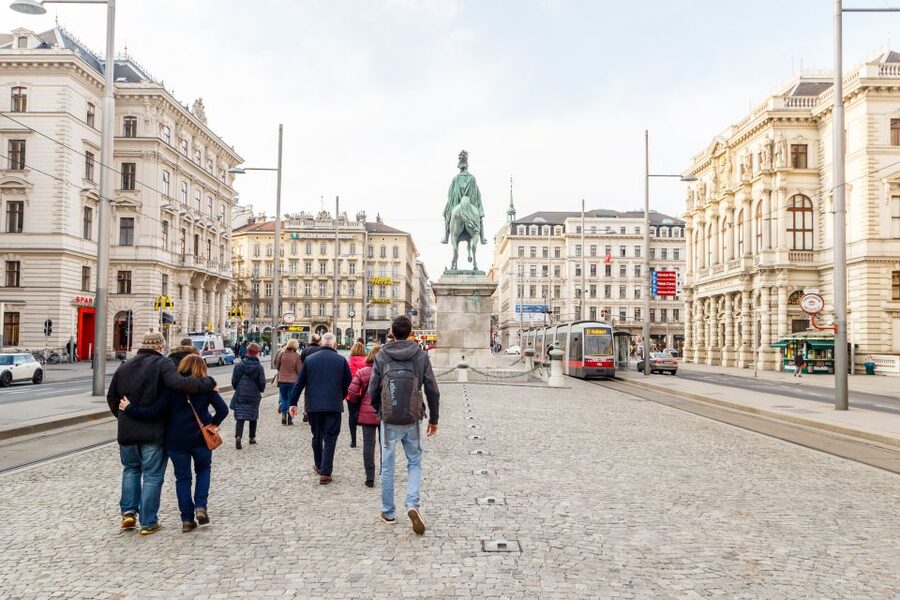
At $30 per person, this tour is a good-value choice if you want more than a generic city stroll. The fee covers a two-hour guided walk with a state-certified guide, but the real value lies in the combination of location access, photographs, film research, and postwar history.
A simple self-guided route would cost less. You could watch the movie, mark locations on a map, and walk through the center independently. What you would miss is the explanation of what is real, what was altered, and how the city’s politics shaped the story.
The price makes particular sense for film fans, history students, and first-time visitors who want an unusual introduction to the Inner Stadt. It is also useful for repeat visitors because the route gives familiar streets a new purpose.
The value drops if you want only the Prater Ferris wheel, the cemetery, or an underground sewer experience. Those are not included, and you will need to see the wheel separately. The tour works best when you want the central locations and the historical story around them.
Free cancellation up to 24 hours before the tour and the option to reserve now and pay later make it easier to fit into a changing Vienna schedule. The walk runs rain or shine, so check the forecast and carry suitable clothing.
Who should book this Vienna film walk?
I would choose this tour for:
- Fans of The Third Man who want to see how the movie used real Vienna.
- People interested in the first years after the Second World War.
- Visitors who enjoy walking tours with a strong narrative rather than a list of monuments.
- Repeat visitors looking for a fresh way to see central Vienna.
- Couples or friends who want a focused two-hour activity with plenty to discuss afterward.
I would be more cautious if you dislike cobblestones, need a tightly timed schedule, or expect to visit the sewers and Ferris wheel as part of the ticket.
You also do not need to know much about classic cinema. The tour’s history of occupation, espionage, black-market trade, and divided authority gives it value beyond the movie.
My booking advice
Book this if you can watch The Third Man before arriving and enjoy connecting fiction with real streets. The strongest features are the guides’ command of both subjects, the old-town locations, the period photographs, and the way the film’s dark mood is tied to postwar Vienna.
Plan extra time, wear walking shoes, and do not leave before the final stop. If you want the Prater wheel, cemetery, or a sewer visit, add those separately rather than assuming they are included.
For a modest price, you get a thoughtful city walk with a clear focus and plenty of local context. It is especially good for anyone who wants Vienna presented not as a polished imperial capital, but as a tense, damaged, divided city that became the perfect setting for a classic film.
FAQ
Where does The Third Man Film Location Tour meet?
The meeting point is at Vienna’s U4 Station Stadtpark, using the Johannesgasse exit.
How long does the tour last?
The advertised duration is two hours. You should allow extra time because some departures have lasted closer to three hours.
What languages are available?
The tour is offered in German and English. Check the departure details to confirm the language arrangement for your chosen time.
Is the tour led by a qualified guide?
Yes. The experience includes a guided walk with a state-certified guide.
Does the tour enter Vienna’s sewer system?
No. The sewer system is not included. The guide explains the sewer scenes and the use of a mock-up instead.
Does the tour include the Prater Ferris wheel?
No. The Prater Ferris wheel is too far from the central route and is not included in the tour.
Does the tour visit the cemetery from the film?
No. The cemetery is not included in the regular two-hour walk.
Does the tour run in bad weather?
Yes. The tour takes place rain or shine, so bring suitable clothing and shoes.
Can I cancel for a full refund?
Yes. You can cancel up to 24 hours in advance for a full refund. You can also reserve now and pay later.
Just added around Vienna
- Ottakringer Brewery tour★ 4.0 · 6 reviews
- New Hofburg Palace Tour House of Habsburg★ 4.5 · 5 reviews
- Private Van & Walk Tour – One Perfect Day in Vienna★ 5.0 · 21 reviews
- True Crime mobile puzzle rally Vienna★ 4.0 · 3 reviews
- Vienna Naschmarket Food Tasting Tour★ 4.0 · 30 reviews
- Vienna Nightlife Experience: Food, Wine, Cocktails & Vibes★ 5.0 · 119 reviews
- Myth Mozart★ 4.0 · 80 reviews
- ( Night Tour ) With Private Guide + wine or prosecco★ 4.0 · 12 reviews
Tours, compared.
Schönbrunn Palace & Gardens Skip-the-Line Tour
Read our review →

Skip-the-Line Sisi Museum, Hofburg and Gardens Tour
Read our review →
Skip-the-Line Schönbrunn Palace & Gardens Tour
Read our review →
Guided Walking Tour of City Center Highlights
Read our review →