Reviewed · VIENNA TOURS
The best of Vienna on foot
Vienna reveals itself quickly on foot, especially when the route links the Maria Theresa Memorial with the Hofburg, the Capuchin Crypt, the Albertina, the State Opera, and St. Stephen’s Cathedral. In two and a half hours, you get a useful first map of the city and the stories behind its grand façades.
I like the practical advice woven into the walk, from restaurants and public transport to Vienna’s cultural life. I also like that you get real time for photographs and questions, rather than being pushed from one stop to the next. The main caution is simple: this is a long city-center walk, and the operator says it is not suitable for people with mobility impairments.
Key points to know
- The route connects major sights: Start at the Maria Theresa fountain and finish beside St. Stephen’s Cathedral.
- The tour is conducted in Italian: Guides named Raffaele and Mara have received especially strong praise for clear explanations, humor, and historical detail.
- You see more than ten central highlights: The route includes the Hofburg, Heldenplatz, Capuchin Crypt, Albertina, State Opera, Plague Column, and other notable buildings.
- The walk lasts 150 minutes: Allow for a steady period on your feet, with pauses for photographs and questions.
- The price is $40 per person: That is fair if you want context and orientation early in your stay, but less useful if you prefer to explore silently at your own pace.
- The meeting point is easy to spot: Look for the red, white, and green Italian-colored umbrella by the Maria Theresa fountain.
Why this walk is a smart first look at Vienna
Vienna’s central sights are close together, but their stories are not always obvious from the street. A palace may look like a beautiful façade until you understand its connection to Franz Josef and Empress Sissi. A column may appear to be just another Baroque ornament until you learn why it was built.
This tour gives you that background while moving through the city’s core. You are not spending the afternoon inside one museum. Instead, you are learning how the central streets fit together, which can help you plan the rest of your stay.
The route is particularly useful on your first day. You finish knowing where the Hofburg sits in relation to the Opera, where the Capuchin Crypt is located, and how St. Stephen’s Cathedral anchors the central city. That orientation has real value in Vienna, where many important sights are packed into a walkable area.
The experience is guided in Italian, so it is best suited to Italian-speaking visitors. The operator identifies the guide as a certified official guide, and the supplied guide names include Raffaele and Mara. Raffaele is described as prepared, friendly, and never dull, while Mara is praised for complete explanations, amusing anecdotes, and precise historical framing.
Other Vienna days people book alongside this one:
- Vienna: Vivaldi’s Four Seasons Concert in Karlskirche
★ 4.7 · 14,951 reviews - Vienna: Spanish Riding School Training
★ 3.9 · 9,281 reviews - Vienna: Skip-the-cashier-desk-line Giant Ferris Wheel Ride
★ 4.5 · 7,859 reviews
Finding the Maria Theresa fountain
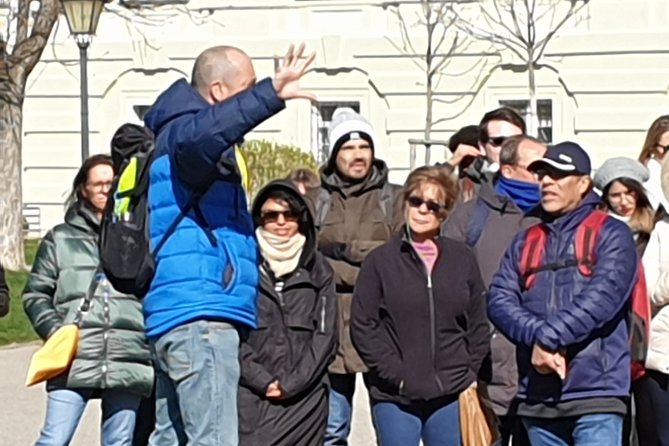
The meeting point is at the fountain of Maria Theresa on the square beside the Maria Theresa Memorial. Look for an umbrella in the colors of the Italian flag, red, white, and green. That detail matters in a busy open space, since it gives you a clear visual marker instead of leaving you to search for a small sign or office.
The starting location places you between two major museums, the Kunsthistorisches Museum and the Naturhistorisches Museum, although the tour information does not indicate that either museum is visited inside. You should think of this opening area as a grand introduction to Vienna’s imperial setting rather than a museum stop.
From here, the walk moves toward the city center. Your guide can explain the buildings and the role Vienna’s residents have played in shaping the city’s culture. This is also a good moment to ask practical questions about public transport, restaurants, and cultural activities, since the tour is designed to offer advice for the rest of your visit.
The Hofburg and the world of Franz Josef and Sissi
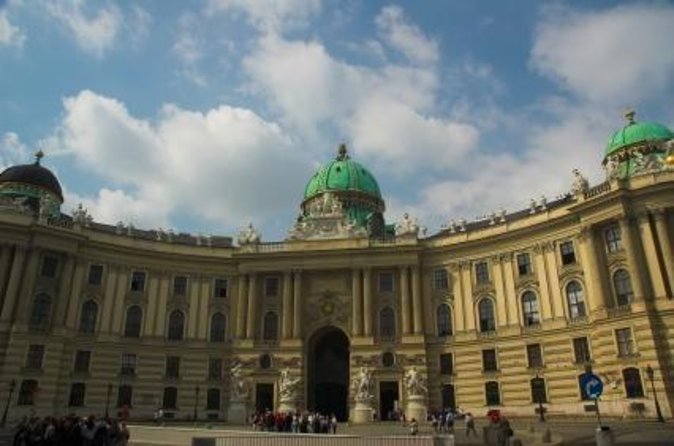
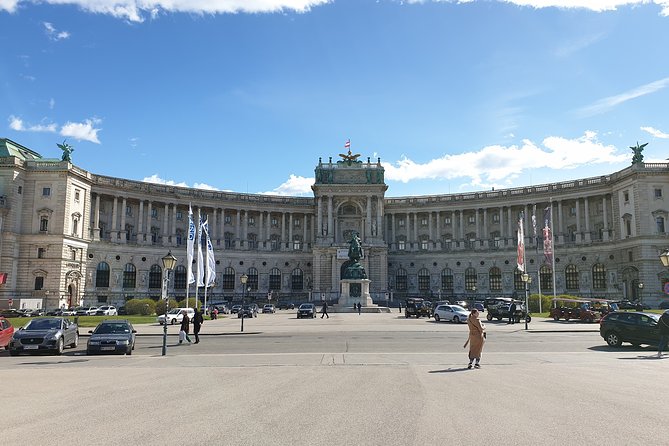
The Hofburg is one of the route’s central moments. This was the imperial palace associated with Franz Josef and Empress Sissi, and its scale helps explain how Vienna functioned as the center of Habsburg power.
You will see the palace from outside rather than taking an interior tour. That keeps the walk moving and lets you cover more ground, but it also means you will not see the imperial apartments or museum displays as part of this experience. If you want a detailed look inside the Hofburg, plan a separate visit.
The value here is the explanation. A guide can point out the buildings and connect them to the people and events that shaped Vienna. Without that context, the Hofburg can feel like one large sequence of formal courtyards. With a clear story, the setting becomes easier to read.
Heldenplatz and Vienna’s imperial stage
The route continues to Heldenplatz, one of Vienna’s most impressive open spaces. Its broad setting and surrounding imperial buildings make it a natural place to pause and take photographs.
Your guide also talks about Vienna’s popular culture and the special importance of the city’s residents. That helps keep the walk from becoming a list of dates and royal names. You get a sense of how the city presents its past and how daily life continues around these formal spaces.
Heldenplatz is also a useful contrast to the tighter streets farther into the center. You can step back, look across the architecture, and understand the scale of the imperial complex. Bring a camera, but keep in mind that the tour runs in all weather, so the quality of your photographs may depend on the day.
Same Alps, a completely different kind of day:
- Vienna: Schönbrunn Palace & Gardens Skip-the-Line Tour
★ 4.7 · 7,739 reviews - Vienna: Light of Creation Votive Church Immersive Light Show
★ 4.8 · 6,779 reviews - Vienna Spanish Riding School Guided Tour
★ 4.7 · 6,765 reviews - Vienna: Classical Concert in the World-Famous Musikverein
★ 4.6 · 6,673 reviews
The Capuchin Crypt and the Habsburg burial place
The stop in front of the Capuchin Crypt introduces one of Vienna’s most important royal burial sites. It is the burial place of Habsburg monarchs, giving the imperial story a more personal and solemn side.
The tour takes you in front of the crypt, but the information provided does not include an interior visit. That distinction is useful if you are deciding how much time to reserve for the site later. The outside stop gives you the setting and historical meaning, while a separate visit would be needed for the full underground experience.
I find this kind of stop valuable because it breaks up the palace story. Vienna’s imperial past was not only about grand rooms and public ceremonies. It was also tied to dynasties, succession, family memory, and death. A short explanation here can add weight to the buildings you have already seen.
The Albertina and Vienna State Opera
The walk then takes you in front of the Albertina and the Vienna State Opera. Both are major cultural addresses, and seeing them together shows how Vienna’s artistic life sits alongside its imperial center.
The Albertina is presented as an exterior highlight on this route. The same is true of the State Opera. You should not expect admission, a performance, or an art collection visit in the $40 price. Instead, you get the chance to photograph the façades and hear how these buildings fit into Vienna’s cultural life.
That arrangement works well for a first orientation walk. You can decide later if you want to return for a museum visit or an opera performance. The guide’s advice about cultural life may be especially helpful if you are trying to work out what to book after the tour.
There is also a practical benefit to seeing these buildings with a guide. You can ask where they are, how they relate to the rest of the center, and what other parts of the city deserve your time. The tour does not promise a full program of cultural planning, but questions are welcome.
The Plague Column and Vienna’s Baroque style
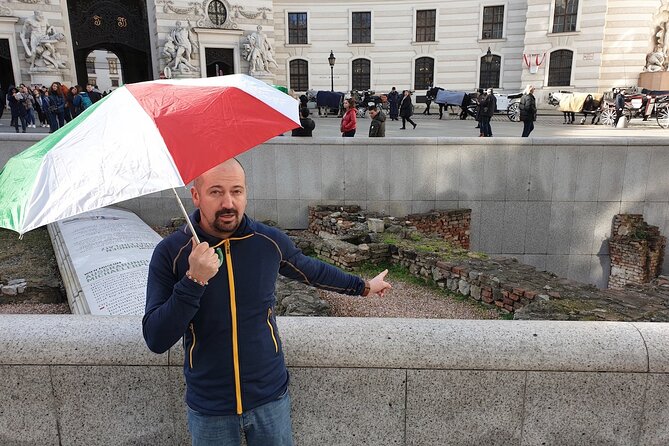
Another featured sight is the Plague Column, a major Baroque monument in the center. It is the sort of structure that can be easy to admire without understanding, so the guide’s explanation gives the monument a clearer place in Vienna’s story.
The route also emphasizes the city’s magnificent Baroque buildings more broadly. You have time to stop, look up, and take photographs rather than simply passing them in a blur. That slower pace is one reason the tour lasts 150 minutes.
Vienna’s architecture rewards this kind of attention. Decorative details, monumental proportions, and religious imagery can look similar from one street to the next if you are rushing. A guide can help you notice what makes a particular building or monument worth remembering.
The weather matters here. The tour runs rain or shine and is canceled only in the event of an environmental disaster. Wear shoes suitable for a long walk and dress for the forecast. A cold-weather review described freezing temperatures and strong wind, yet the walk remained enjoyable because the guide kept the explanations lively. That is encouraging, but it does not make winter clothing optional.
Ending at St. Stephen’s Cathedral
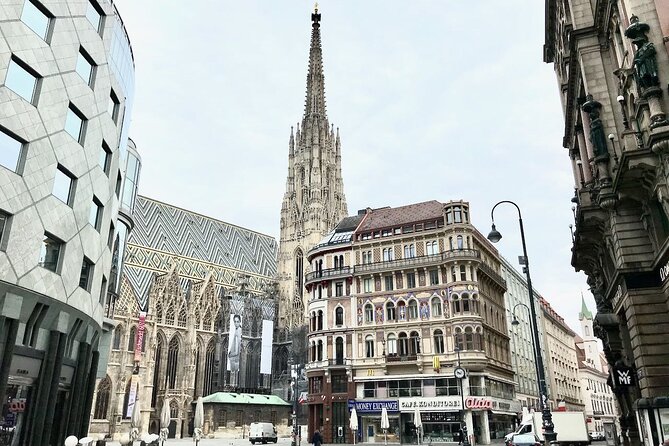
The tour finishes at St. Stephen’s Cathedral, Vienna’s best-known landmark and one of the clearest reference points in the center. Ending here gives the walk a strong visual finish and leaves you in a useful location for further sightseeing.
The cathedral is not just a final photo stop. It brings together many of the themes introduced along the route: Vienna’s religious life, imperial history, monumental architecture, and central-city identity. You can continue exploring from here or use the location as a landmark when navigating later.
The supplied route description refers to St. Stephen’s Cathedral as the starting point of the city’s story, but the stated meeting point is the Maria Theresa Memorial and the stated finish is the cathedral. In practical terms, you should arrive at the Maria Theresa fountain and expect to end at St. Stephen’s.
Because the tour ends here, you may want to schedule a cathedral visit after the walk rather than before it. The experience itself focuses on the guided outdoor route, with time for photographs and questions.
What the guide adds beyond a sightseeing list
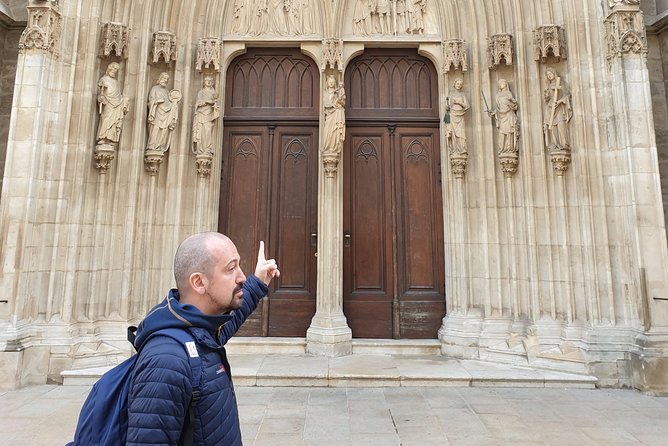
The strongest part of this experience is the human explanation between the sights. You hear specific dates, stories, facts, and anecdotes, not just the names of buildings.
Raffaele is described as prepared, pleasant, and never boring. Mara is praised for making almost three hours of walking interesting with complete explanations, funny anecdotes, and accurate historical context. Those details matter because a city tour succeeds or fails on the guide’s ability to manage pace and keep the group interested.
You also have the opportunity to ask questions. That can be more useful than a fixed script, especially when you want help with restaurants, transport, museums, or evening plans. I would use this time well. Ask about the areas you are planning to visit next, and ask the guide to clarify anything that seems confusing about Vienna’s imperial past.
One informal detail adds a bit of local flavor. During one walk, the group asked for a stop at a punch kiosk, and Mara agreed. This is not a promised part of the tour, and drinks are not included, but it shows that the guide may respond to reasonable group requests when time allows.
Is $40 a fair price for 150 minutes?
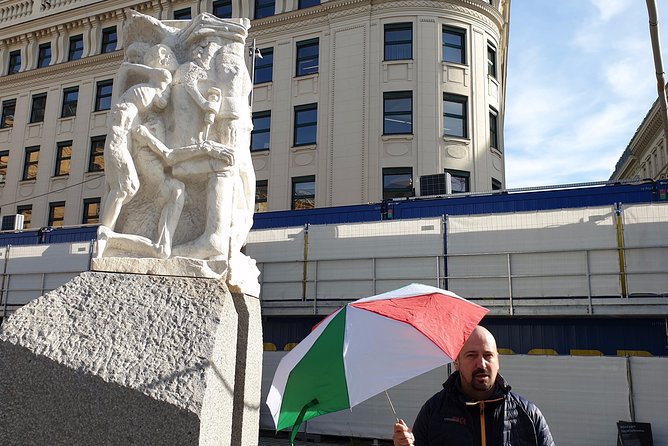
At $40 per person, this is not the cheapest way to walk around central Vienna. You can see many of these buildings on your own for free. The question is what you want your money to buy.
The fee includes a certified official guide, the guided walk, time for photographs, and the chance to ask questions. You are paying for interpretation and orientation, not entry tickets, food, drinks, or private access to monuments.
I consider the price fair for a first-day activity if you value historical context and practical advice. Two and a half hours is long enough to cover a substantial section of the center without taking up an entire day. It can also prevent a common Vienna problem: spending hours admiring grand buildings while missing why they matter.
The value is lower if you already know Vienna well, speak little or no Italian, or prefer to set your own pace. You should also remember that the tour does not include interior admissions, so museum and palace costs come later if you decide to visit them.
Who will enjoy this Vienna walk most
This experience fits an Italian-speaking first-time visitor who wants a broad introduction before exploring the city independently. It is also a good match for someone who likes architecture, imperial stories, Baroque monuments, and practical city tips.
You will probably get the most from it if you enjoy asking questions. The chance to discuss restaurants, public transport, and cultural life can turn a general sightseeing walk into a useful planning session.
It is less suitable for someone who wants a relaxed, short stroll. The route lasts 150 minutes and covers several central sights. The operator says it is not suitable for people with mobility impairments, even though the activity information also describes it as wheelchair accessible. Because those statements conflict, anyone needing step-free access or mobility support should confirm the arrangements before booking.
You should also leave large bags and luggage behind. Audio recording is not allowed, and pets are not permitted. Food and drinks are not included, though you may have time to buy something during the walk if the guide and group agree.
Weather, timing, and simple ways to prepare
The walk runs in rain or shine, with cancellation only in the event of an environmental disaster. That makes your clothing choice important. Comfortable walking shoes, a weatherproof layer, and protection from wind or cold will make a real difference.
Plan to arrive at the Maria Theresa fountain with enough time to find the Italian-colored umbrella. The meeting point is outdoors, so do not assume you will be able to wait inside a nearby building.
I would avoid carrying luggage or a large bag. The rules do not allow them, and bulky items would make a long walking tour less comfortable anyway. Bring only what you need for the walk, such as a small personal bag, water, and a camera.
The tour is offered in Italian. If that is your preferred language, the format should make the historical explanations easier to follow. If you do not speak Italian, this is not the right booking, since no other guide language is listed.
You can cancel up to 24 hours before the start for a full refund, and the reserve-now, pay-later option lets you hold a place without paying immediately. Those terms are useful when your Vienna plans are still changing.
Should you book this tour?
Book it if you want a clear, story-led introduction to Vienna’s center, especially in Italian. The route covers a generous list of major sights, the guide can answer practical questions, and the praised work of Raffaele and Mara suggests that the experience depends on lively delivery as much as on the buildings themselves.
I would choose it early in a Vienna stay, then return to the places that interest you most. The tour does not replace a visit inside the Hofburg, Capuchin Crypt, Albertina, State Opera, or cathedral, but it helps you decide which deserve more of your time.
Skip it if you want entrance tickets, a private tour, a very gentle pace, or a walk in a language other than Italian. Also think twice if long periods on your feet are difficult.
For the right visitor, $40 buys more than a route between famous façades. It gives you a working sense of Vienna, useful questions answered, and a strong finish at St. Stephen’s Cathedral.
FAQ
Where does the tour begin?
It begins at the Maria Theresa fountain on the square by the Maria Theresa Memorial.
How do I find the meeting point?
Look for an umbrella in Italian colors, red, white, and green, at the meeting point.
Where does the tour finish?
The tour finishes at St. Stephen’s Cathedral.
How long does the tour last?
The tour lasts 150 minutes, or two and a half hours.
What language is the tour in?
The live tour guide speaks Italian.
What sights are included on the route?
The route includes the city center, St. Stephen’s Cathedral, the Hofburg, the Capuchin Crypt, the Albertina, Vienna State Opera, Heldenplatz, the Plague Column, and other notable buildings.
Are entry tickets included?
No entry tickets are listed as included. The experience is a guided outdoor sightseeing walk.
Are food and drinks included?
No. Food and drinks are not included.
Can I cancel for a refund?
Yes. You can cancel up to 24 hours in advance for a full refund.
Does the tour run in bad weather?
Yes. The tour takes place rain or shine and is canceled only in the event of an environmental disaster.
Just added around Vienna
- Ottakringer Brewery tour★ 4.0 · 6 reviews
- New Hofburg Palace Tour House of Habsburg★ 4.5 · 5 reviews
- Private Van & Walk Tour – One Perfect Day in Vienna★ 5.0 · 21 reviews
- True Crime mobile puzzle rally Vienna★ 4.0 · 3 reviews
- Vienna Naschmarket Food Tasting Tour★ 4.0 · 30 reviews
- Vienna Nightlife Experience: Food, Wine, Cocktails & Vibes★ 5.0 · 119 reviews
- Naschmarkt Food Tour★ 4.0 · 14 reviews
- Myth Mozart★ 4.0 · 80 reviews
Vienna Tours, compared.
Vivaldi’s Four Seasons Concert in Karlskirche
Read our review →
Skip-the-cashier-desk-line Giant Ferris Wheel Ride
Read our review →
Schönbrunn Palace & Gardens Skip-the-Line Tour
Read our review →
Light of Creation Votive Church Immersive Light Show
Read our review →
Classical Concert in the World-Famous Musikverein
Read our review →