Reviewed · TOURS
Taste and Tour Small Organic Wineries with a Winemaker
The best part of this experience is its close look at Austrian wine made on a human scale. Instead of touring one large estate, you move through the Kremstal and Kamptal areas with Chris, a winemaker who works with small vineyards himself. You meet producers, enter cellars, taste wines at different stages, and see how soil, grape choice, and farming methods shape each bottle.
I like the personal access to tiny wineries, where the people making the wine explain their work directly. I also like the mix of tasting and place: a Danube-linked drive, old family estates, working vineyards, and a final viewpoint above the region. The main consideration is time. This is a compact three-hour outing, so the stops are focused rather than leisurely.
Key points to know before booking
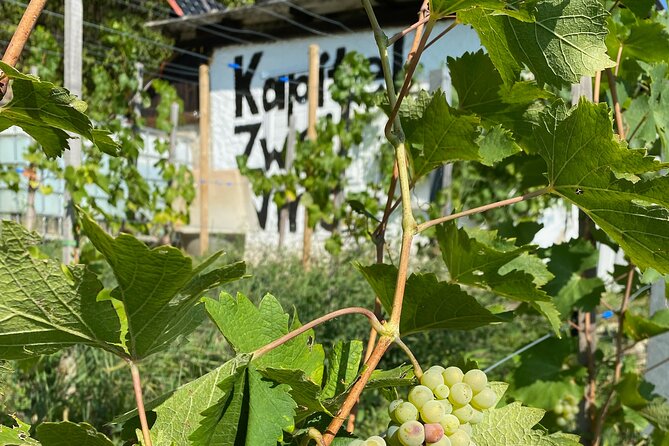
- Four small producers in one private outing: Visit Kapitel Zwei Wine, Mantlerhof, Weingut Feldtheorie, and WeinSchach.
- Chris leads the experience: He can discuss the process from young vines to bottling and adjusts tastings around your interests.
- Organic and experimental wines: Expect amphora-aged wines, natural sparkling wine, and organic Grüner Veltliner and Roter Veltliner.
- Easy from Vienna by train or boat: Direct train service to Krems takes you to the meeting point, and a boat arrival can also be arranged.
- A short vineyard walk ends the tour: Allow for a 7 to 10 minute walk to a viewing point over the wine country.
- Not ideal for limited mobility: Some hiking is required, and you should be comfortable walking down into a cellar and spending time in small rooms.
Why this small-winery tour feels different
Large Austrian wine estates can give you polished tasting rooms and broad portfolios. This outing takes another route. You spend time with small producers whose wines are tied to particular parcels, family traditions, or unusual production methods.
Chris is central to that format. He owns or rents small vineyards in the area and is actively involved in winemaking. That gives him a useful working view of the local industry, not just a list of tasting notes. You can ask about pruning, harvest timing, fermentation, blending, ageing, or the effect of soil, and he can carry the conversation into practical detail.
The experience is private, so only your group takes part. That matters when you are tasting wines that may be unfamiliar. You can ask why one wine comes from a single vineyard, why another blends fruit from several fields, or why a producer chooses steel, amphora, or bottle fermentation.
The mood is friendly and informal, but this is still a wine-focused outing. You should arrive ready to taste several wines and listen. It suits a curious drinker better than someone who wants a quick scenic drive with one glass at the end.
Other Vienna days people book alongside this one:
- Vienna: Vivaldi’s Four Seasons Concert in Karlskirche
★ 4.7 · 14,951 reviews - Vienna: Spanish Riding School Training
★ 3.9 · 9,281 reviews - Vienna: Skip-the-cashier-desk-line Giant Ferris Wheel Ride
★ 4.5 · 7,859 reviews
Starting in Krems, with the Danube as your guide
The meeting point is Bahnhofplatz 2 at Krems an der Donau station. The tour uses the Danube and nearby wine roads as its visual thread, with about 30 minutes spent driving between locations and roughly two and a half hours at the stops.
Krems is a practical base from Vienna. You can take a direct train and meet Chris at the station. A boat arrival from Vienna is another option, with pickup at the boat station. The operator says the exact meeting place and time can be flexible, but you should arrange this in advance rather than assume a last-minute change will work.
The drive climbs from near river level toward the vineyards, reaching about 400 meters on some roads. This gives you a quick sense of how sharply the wine country rises above the river. The tour is not only about tasting rooms. The road itself helps explain why vineyard position and slope matter here.
Kapitel Zwei Wine at Kremsleithen
The first stop is Kapitel Zwei Wine, a micro-winery connected with the Kremsleithen vineyard. The name means Chapter Two, fitting for a young project that is testing new ideas while working within an old wine region.
The vineyard was abandoned decades ago and replanted in May 2022. Its name refers to the steep slope running down toward the Krems River. Records mention the site as early as 1266, while its present vines are very new. That contrast gives the visit an interesting angle: old ground, new planting, and a producer trying to build a future from it.
Kapitel Zwei works organically and sustainably with French grape varieties that are less familiar in Austria, including Chenin Blanc, Roussanne, and Sémillon. The wines are aged in amphora and steel tanks. If you usually associate Austrian wine with Grüner Veltliner and Riesling, this stop shows you a different side of local production.
The vineyard sits at about 300 meters above sea level on loamy, sandy soil mixed with clay. Those details are not just decoration. Chris and the winemaker can connect the site to the style of the wines you taste, helping you understand why a steep, sandy, clay-rich parcel might be treated differently from another field nearby.
Allow about 20 minutes here. That makes this an introduction rather than a long winery visit, but it can be one of the most useful stops for anyone interested in organic farming or new approaches to Austrian wine.
Mantlerhof, a family estate with centuries of roots
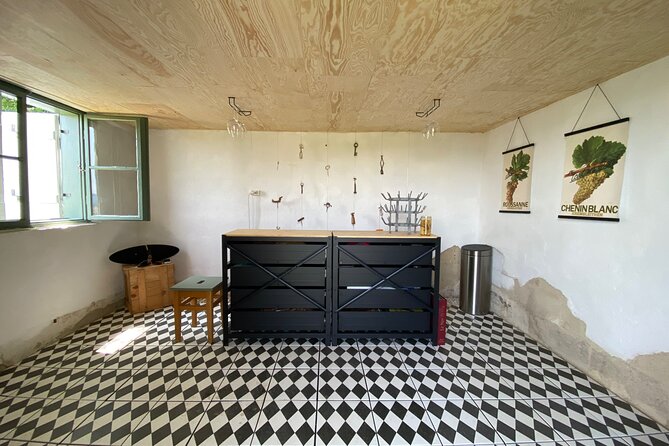
The next stop brings you to Mantlerhof in Gedersdorf, close to the Kamp River before it reaches the Danube. The setting includes views toward Krems in the west and Grafenegg to the east, but the real character comes from the village itself.
Mantlerhof sits in Brunn im Felde beside a pond and an old manor with an early classical facade. The Mantler family has worked the property for more than 200 years, with winemaking roots traced to 1365. You are not simply visiting a modern tasting room. You are entering a family property shaped by generations of work.
The estate farms 15 hectares of vineyards and focuses on long-lived organic wines. Grüner Veltliner is a central focus, along with Roter Veltliner, a less common Austrian grape that is easy to overlook on a standard wine list.
This is the stop for a sense of continuity. Kapitel Zwei shows a young project and unusual varieties. Mantlerhof shows what happens when a family keeps refining its vineyards over many generations. The contrast helps you taste Austrian wine as a living trade, not a single fixed style.
Plan on about 45 minutes here, the longest listed winery stop. You will have more time to talk, taste, and compare the wines. If you enjoy asking about vineyard age, organic work, or the difference between grape varieties, this is likely to be one of the most satisfying sections of the tour.
Same Alps, a completely different kind of day:
- Vienna: Schönbrunn Palace & Gardens Skip-the-Line Tour
★ 4.7 · 7,739 reviews - Vienna: Light of Creation Votive Church Immersive Light Show
★ 4.8 · 6,779 reviews - Vienna Spanish Riding School Guided Tour
★ 4.7 · 6,765 reviews - Vienna: Classical Concert in the World-Famous Musikverein
★ 4.6 · 6,673 reviews
Weingut Feldtheorie in Schoenberg am Kamp
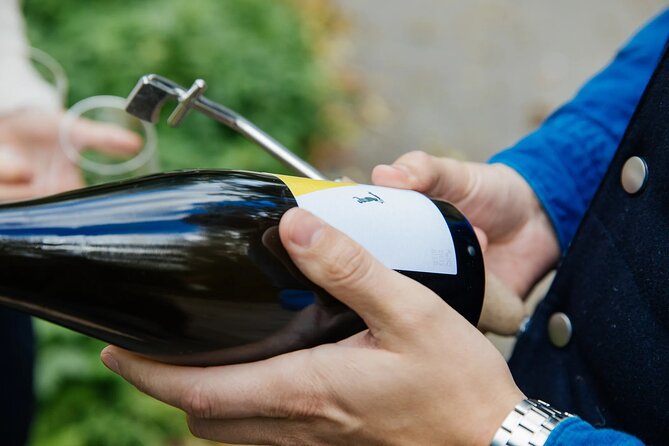
At Weingut Feldtheorie, Ulrike Filp and Robert Bormuth bring a newer story to the tour. They discovered wine while studying natural sciences and traveling in New Zealand. After internships in Germany, Australia, and Austria, they bought vineyard parcels in the nearby Kamptal region.
Their stated aim is to express the character of Kamptal through their wines. That makes this visit useful for comparing intention with tradition. Mantlerhof carries a family history reaching back centuries, while Feldtheorie comes from people who chose winemaking after academic study and work abroad.
You will spend about 30 minutes here. The time is short, but the stop adds another view of small-scale Austrian production. The winery’s story also shows how international experience can feed into a local wine project. Chris can help connect that story to the wines in the glass and to the wider Kamptal area.
The tour’s strength is the sequence. You are not tasting four versions of the same estate. You are seeing a young organic project, an old family winery, and a newer producer with a scientific and international background.
Natural sparkling wine at WeinSchach
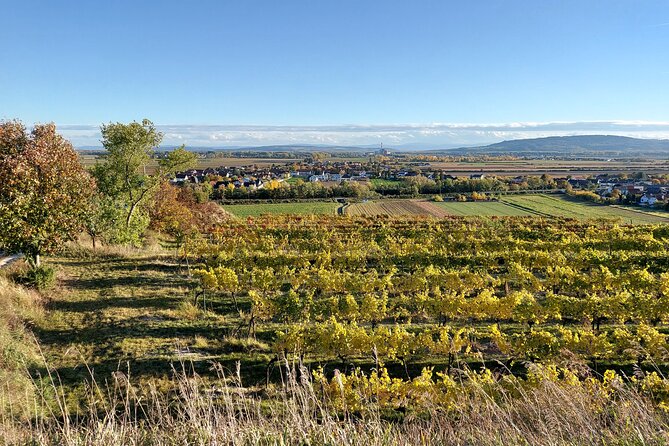
The final winery stop is WeinSchach in Langenlois, a producer devoted to sparkling wine. The winery works biologically, harvests by hand, and disgorges its bottles. Its goal is to make Pet Nat that can compete with serious traditional sparkling wines.
Pet Nat, short for pétillant naturel, is made through an earlier and often less controlled bottle fermentation process than classic sparkling wine. The method can produce wines with unusual texture and aroma. WeinSchach’s approach is experimental, and the producers openly treat each batch as a chance to test what works.
This is a useful stop for anyone who thinks Austrian wine begins and ends with still white wine. The tasting may show you how much character can come from bottle work, fermentation choices, and a producer’s willingness to start again when an experiment misses the mark.
You have about 40 minutes here. That allows enough time to discuss the method and taste the result without making the tour feel like a full sparkling-wine workshop. The biological farming and hand harvest also echo the organic focus found at earlier stops.
A short walk to the best view of the day
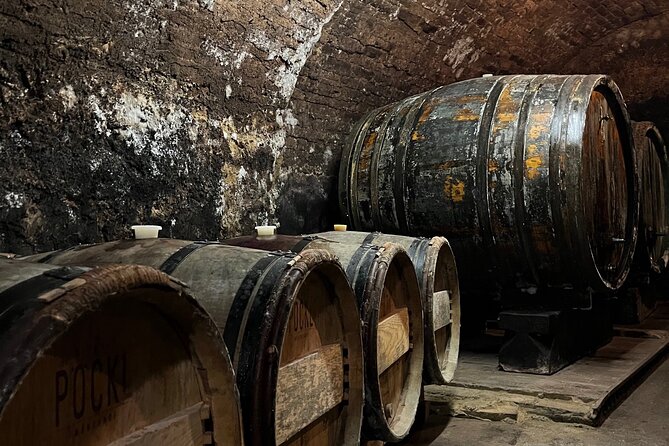
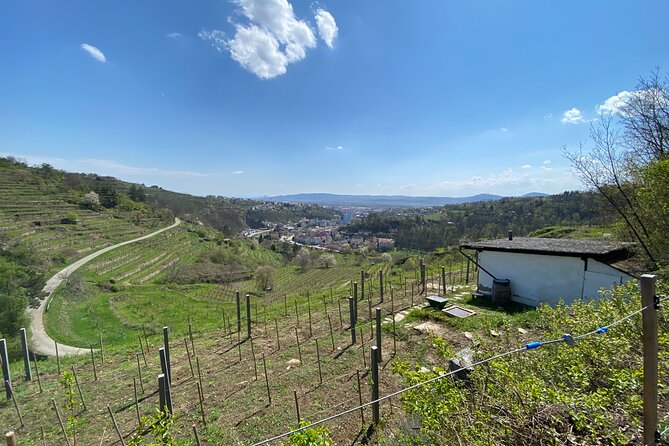
The tour ends with a 7 to 10 minute walk through vineyards to a viewpoint along the Welterbesteig. You look out over the surrounding wine region before returning to the meeting point.
This is not a major hike, but it is still part of the physical demands of the outing. Wear shoes that handle uneven paths and vineyard ground. The walk gives the tastings a sense of place. After hearing about slopes, river valleys, and individual parcels, you can look back across the area and see how the vineyards fit together.
The viewpoint is also a smart ending. You finish outdoors rather than in another cellar, with time to gather the different wine styles in your mind. The tour then returns to the starting point at Krems.
What you will taste and learn
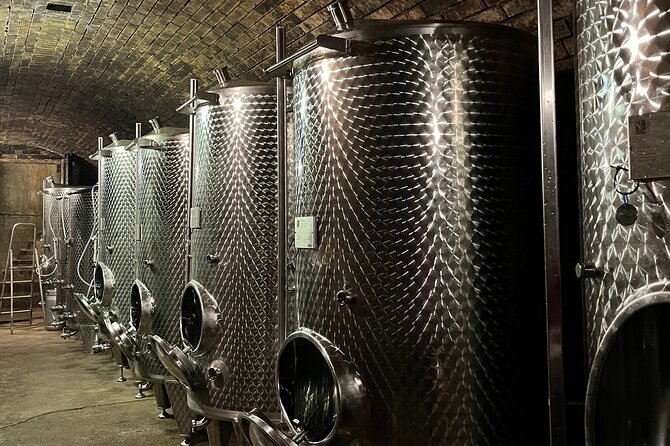
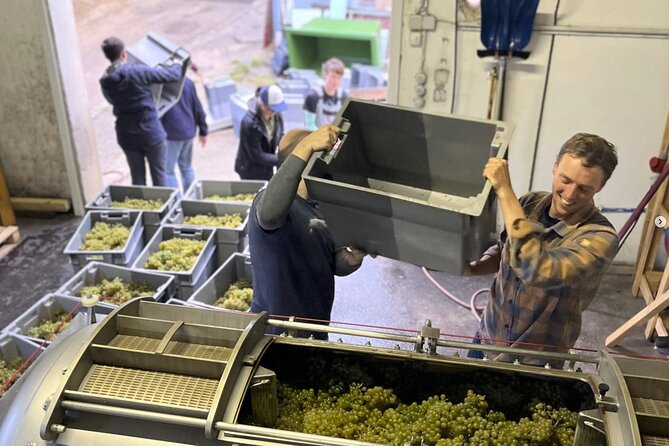
The exact wines can vary, but the experience may include classic Grüner Veltliner and Riesling, Roter Veltliner, Zweigelt, Pinot, and wines made from French varieties at Kapitel Zwei. Tastings can include finished bottles, barrel samples, and wine still developing through fermentation.
That range is valuable because it teaches you to compare more than grape names. You can taste the effect of age, vessel, vineyard, and production method. A barrel sample may be rougher or less settled than a bottled wine, but it offers a look at the process rather than just the final product.
The guide’s role is especially useful for solo drinkers and small groups. Chris can tailor the tasting to your questions and interests. If you want to focus on natural wine, organic vineyard work, sparkling wine, or classic Austrian grapes, say so early.
Do not expect a formal sommelier class with a printed lesson plan. The learning comes through conversation at each stop. That can be more memorable, though it also means you should participate and ask questions.
Price, timing, and practical value
The price is $114.02 per person for about three hours. For a private experience that includes transport between several wineries, direct contact with producers, multiple tastings, and a vineyard walk, I consider that a fair price for people who place real value on access and instruction.
It is less attractive if you only want a cheap countryside excursion. The tour is built around wine, and the value comes from the number of producers and the personal connection. You are paying for a small, focused visit rather than a large bus route with a standard tasting at one commercial estate.
The outing operates Monday through Saturday from noon to 7 p.m. between November 1, 2025 and October 31, 2026. Confirmation is sent within 48 hours, subject to availability. Book early if your Vienna schedule is tight, since the average booking lead time is about 55 days.
Free cancellation is available up to 24 hours before the start time. Cancellations or changes made less than 24 hours in advance are not accepted for a refund.
Is this tour right for you?
I would choose this experience if you want to understand Austrian wine through small producers, personal stories, and working vineyards. It is especially good for wine enthusiasts, sommeliers, curious beginners, and anyone looking for a day outside Vienna that feels local rather than packaged.
It also suits solo visitors and small groups well. The private format lets you talk without competing with a large crowd, and Chris can shape the tastings around your interests.
I would think twice if you dislike small rooms, cannot comfortably walk down into a cellar, or want a completely easygoing outing with no walking. Moderate physical fitness is required, and some hiking is part of the plan.
For most wine-focused visitors based in Vienna, I would book it. The strongest reason is not the number of stops. It is the chance to meet several small producers and understand why their wines taste different. Take the train or boat to Krems, leave room in your day for the return journey, wear sensible shoes, and come with questions. You will get far more from the tour that way.
FAQ
Where does the tour begin?
The meeting point is Bahnhofplatz 2, 3500 Krems an der Donau, Austria.
Does the tour return to the starting point?
Yes. The activity ends back at the meeting point in Krems.
Can I reach the tour from Vienna by train?
Yes. You can take a direct train to Krems, and the guide can meet you at the train station.
Can I arrive by boat from Vienna?
Yes. You can arrive at Krems by boat, and the guide can meet you at the boat station.
How long does the experience last?
The tour lasts about three hours. Around two and a half hours are spent on the tour itself, with about 30 minutes of driving between locations.
How many wineries are visited?
The listed route includes Kapitel Zwei Wine, Weingut Mantlerhof, Weingut Feldtheorie, and WeinSchach.
Is this a private tour?
Yes. Only your group participates in the activity.
Is walking required?
Yes. Some hiking is required, including a 7 to 10 minute walk through vineyards to a viewing point. The experience is not recommended for people who cannot walk down into a cellar.
What is the cancellation policy?
You can cancel up to 24 hours before the start time for a full refund. Cancellations or changes made less than 24 hours before the experience are not accepted for a refund.
Just added around Vienna
- World War II History Vienna Old Town Private Walking Tour★ 4.8 · 9 reviews
- From Krems: Wachau Valley River Cruise on the Danube★ 4.6 · 95 reviews
- Vienna: Winery and Wine Tasting Tour with a Wine Expert★ 5.0 · 5 reviews
- Vienna: Wine Tasting E-Bike Tour★ 4.9 · 46 reviews
- Vienna: Wine Tasting at Schönbrunn Palace★ 4.3 · 71 reviews
- Vienna: Wine Tasting Tour★ 4.8 · 61 reviews
- Vienna: Wiener Schnitzel and Strudel Cooking Class★ 4.9 · 126 reviews
- Vienna Urban Art Tour: Explore a different side of Vienna!★ 3.8 · 14 reviews
Tours, compared.
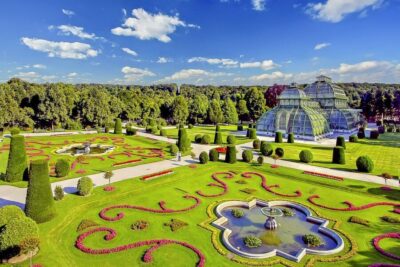
Schönbrunn Palace & Gardens Skip-the-Line Tour
Read our review →

Skip-the-Line Sisi Museum, Hofburg and Gardens Tour
Read our review →
Skip-the-Line Schönbrunn Palace & Gardens Tour
Read our review →
Guided Walking Tour of City Center Highlights
Read our review →