Reviewed · TOURS
Small Group Tour; Central Europe & the Balkans – Vienna to Tirana
Central Europe gives way to the Balkans on this long, road-based journey from Vienna to Tirana. You move from Lake Neusiedl and Bratislava to Budapest, Serbia, Sarajevo, Mostar, Kotor, Shkoder, Kosovo, Kruja, and Albania’s capital. It is a lot of ground, but that is the point: one trip covers eight countries and many layers of European history.
I like the small-group format, which should make border crossings, meals, and short walking tours less awkward than they can be in a large coach. I also like the mix of famous sights and everyday places: Sremski Karlovci wine cellars, Gjakova’s rebuilt bazaar, and the farm at Mrizi i Zanave give the journey more local character than a checklist of capitals.
The main caution is pace. Several days involve long drives and short visits, while the room price assumes shared occupancy in 3-star hotels. The group size also needs clarification: the tour is described as limited to eight people in one place and a maximum of ten elsewhere.
Key points at a glance
- Eight countries in fourteen days: Austria, Slovakia, Hungary, Serbia, Bosnia and Herzegovina, Montenegro, Albania, Kosovo, with an especially broad route.
- Private transportation throughout: Your tour leader collects you at a Vienna hotel and drops you in Tirana.
- Small-group travel: The published group limit is inconsistent, listed as eight in the highlights and ten in the additional details.
- Strong UNESCO content: Buda Castle, Mostar’s Old Bridge, Kotor, and the Dečani Monastery are central stops.
- Food and wine are part of the route: Expect free time for Hungarian dishes, Serbian and Kosovan wines, Albanian slow food, and local produce.
- Shared-room pricing: The $4,881.23 price is calculated for double, twin, triple, or quadruple occupancy in 3-star hotels.
Vienna to Rust: a gentle start beside Lake Neusiedl
The journey begins at 11:00 a.m. with hotel pickup in Vienna. That late-morning start is useful if you have already spent time seeing Vienna on your own, as the tour assumes you have had that chance before the group departs.
The first proper stop is Rust, in Burgenland. This is a pleasant change from grand imperial Vienna. You walk through a well-preserved old center of colorful houses, flower boxes, and traditional Austrian details. The surrounding vineyards and Lake Neusiedl provide the setting, and the lake is part of a UNESCO World Heritage area.
Rust is best treated as a scenic introduction rather than a major sightseeing day. You have about two hours, with time for a meal, a shop selling handmade decorations, or a glass of local wine overlooking the lake. I like this opening because it starts the trip at a human scale: small streets, regional food, and vineyards instead of another large museum.
You then continue toward Bratislava. The listed stop there is brief on the first day, so do not expect a full visit until the following morning. The drive is part of the experience, but you should be ready for regular time in the vehicle from the start.
Other Vienna days people book alongside this one:
- Vienna: Vivaldi’s Four Seasons Concert in Karlskirche
★ 4.7 · 14,951 reviews - Vienna: Spanish Riding School Training
★ 3.9 · 9,281 reviews - Vienna: Skip-the-cashier-desk-line Giant Ferris Wheel Ride
★ 4.5 · 7,859 reviews
Bratislava’s old lanes and castle views
Day two gives Bratislava more attention. The city’s Old Town is compact enough for an easy walking introduction, with the Old Town Hall, churches, cultural buildings, and the remains of its medieval defenses.
Michael’s Gate is the key surviving gate from those defenses. Its importance is not only visual. It helps you picture Bratislava as a walled medieval town, rather than simply a modern Slovak capital beside the Danube.
Bratislava Castle sits above the river and provides the day’s best broad view. The castle dates to the ninth century, and the hilltop walk adds a little effort after the flatter Old Town streets. Admission to the castle is included, which helps keep small costs under control.
You also get free time for a traditional café. That matters here. Bratislava is not a city you should rush through entirely with a guide pointing at facades. Use the hour to sit down, order coffee, and watch the city work around you.
The visit is short by city-break standards. You will see the central sights, but you will not have time to cover every museum or neighborhood. That is a recurring feature of this journey: it gives you a strong first taste, not an exhaustive stay.
Győr and Budapest: Hungarian history in two different sizes
Győr is the next stop, a smaller city shaped by rivers, Baroque buildings, churches, and Hungarian food. Its central streets are easy to walk, and the 59-meter Town Hall tower gives the city a recognizable marker.
The Cathedral of the Virgin Mary and Győr Synagogue add useful range to the visit. The cathedral reaches back to the 11th century, while the synagogue’s large gray dome reflects the city’s later Jewish heritage and wider Central European connections.
Baross Gábor Way is the natural place for free time. It is pedestrian-only and lined with cafés, shops, bars, and restaurants. You can use the hour for lunch or a local drink, including the blueberry beer specifically mentioned in the tour plan. Meals and drinks are not included, so budget for these breaks.
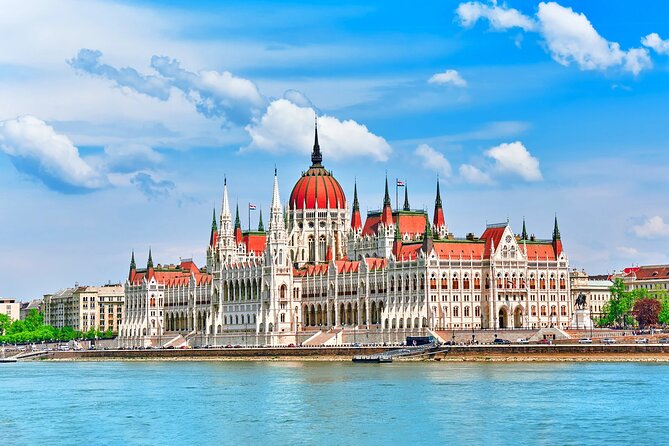
Budapest receives more attention on day four, though even this is a compact overview. You pass Saint Stephen’s Basilica, the Opera, Parliament, Heroes’ Square, and Fisherman’s Bastion. The route introduces both sides of the Danube: historic Buda and more urban Pest.
Buda Castle is the main included admission of the day and one of Budapest’s essential sights. The UNESCO-listed district brings together a hilltop setting, Baroque streets, and major views across the river. A free evening follows, and I would use it for dinner or a second look at the Danube after dark.
The tradeoff is clear. Budapest deserves several days, but this journey gives you a broad orientation and then moves on. If Budapest is your priority, plan extra nights before the Vienna pickup or after the tour ends.
Subotica, Novi Sad, and Sremski Karlovci
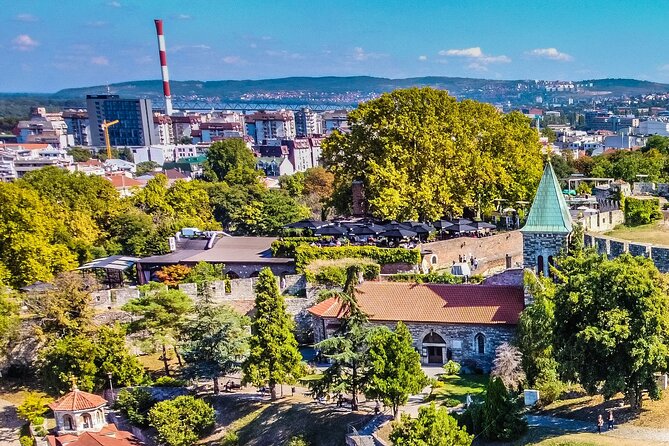
Crossing into Serbia changes the feel of the trip. Subotica carries the architectural imprint of the Austro-Hungarian period, with decorated buildings, strong color, and a central City Hall rather than a dominant cathedral.
The City Hall is surrounded by a park, fountains, and a large square. The visit also includes Saint Teresa of Avila Cathedral and the Synagogue, giving you a useful look at the city’s Catholic and Jewish traditions. Free time follows, with the chance to sit over coffee and explore without a strict set of stops.
Novi Sad gets three hours and an overnight stay, making it one of the more comfortable stops in the middle of the route. It is known as a cultural center of northern Serbia, and its mix of Austro-Hungarian and Ottoman influences becomes clear as you walk through the old center.
The pedestrian streets of Zmaj Jovina and Dunavska are good places to slow down. Petrovaradin Fortress, called the Gibraltar on the Danube, gives the day a larger historical setting and a view over the river. Novi Sad is one of the points where the schedule allows you to enjoy a city rather than simply photograph it.
The following day goes to Sremski Karlovci, a small town with a Baroque center and a long connection to Serbian culture, religion, and wine. The Four Lions fountain carries a local legend: drink from it and you are said to return and marry there. You can take the legend lightly and still enjoy the town’s old streets and wine cellars.
The wine stop is not an afterthought. Vineyards are a major part of this region, and the tour leaves time to taste local wines while looking toward the surrounding hills. Wine purchases and tastings are not included, so ask the tour leader about current costs before ordering.
Same Alps, a completely different kind of day:
- Vienna: Schönbrunn Palace & Gardens Skip-the-Line Tour
★ 4.7 · 7,739 reviews - Vienna: Light of Creation Votive Church Immersive Light Show
★ 4.8 · 6,779 reviews - Vienna Spanish Riding School Guided Tour
★ 4.7 · 6,765 reviews - Vienna: Classical Concert in the World-Famous Musikverein
★ 4.6 · 6,673 reviews
Belgrade to Sarajevo: major history in a short window
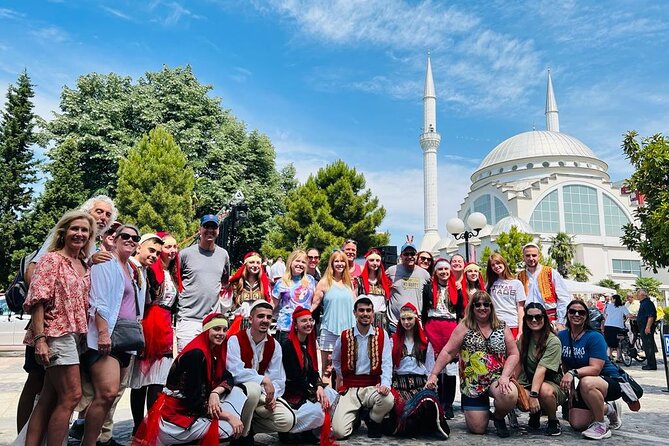
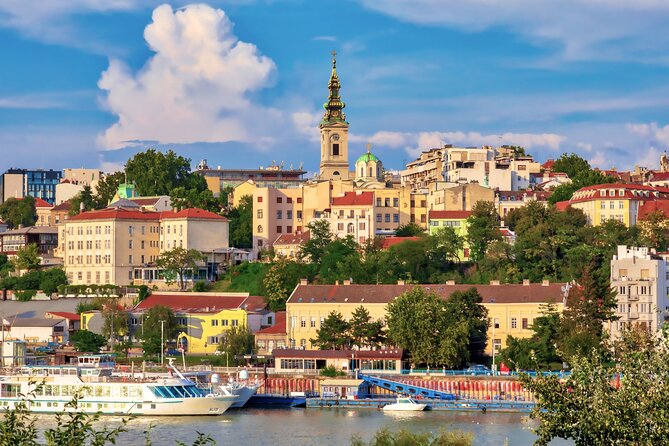
Day eight begins with Belgrade’s Fortress and Kalemegdan Park, set where the Sava and Danube meet. The position explains why this site mattered for centuries. The Pobednik monument in the Upper Town and the views over the rivers make this one of the most rewarding stops for photographs.
You then walk along Knez Mihailova to Republic Square, Belgrade’s social center. The contrast between the fortress park and the busy central street gives you a quick sense of the capital’s character.
Afterward, the road continues toward Bosnia and Herzegovina, with a stop in Zvornik along the Drina River. The schedule gives only about an hour there, so think of it as a pause and a first look at the country rather than a full town visit.
Sarajevo receives two hours of guided walking plus a stop at Latin Bridge. Expect uneven ground and visible reminders of the Yugoslav War, including bullet and cannon marks. The tour also explains Sarajevo’s older development, from the medieval Bosnian Kingdom through Ottoman and Austro-Hungarian rule.
This is where the trip’s cultural range becomes especially clear. Mosques, churches, synagogues, markets, and bazaars sit within a compact area. The city’s layered identity is not a museum display; it is part of the streets you walk.
At Latin Bridge, you hear the story of the assassination that helped trigger the First World War. You also have a chance to try Sarajevo’s meat dishes and desserts, though meals are your own responsibility.
Mostar follows with its famous Old Bridge, or Stari Most, a UNESCO World Heritage site. The surrounding bazaar has cobbled lanes, old mosques, and Turkish-influenced shops. Stones marked with Don’t Forget point to the city’s wartime past, so the visit carries both beauty and painful memory.
With only about an hour listed in Mostar, you will need to stay close to the center and manage your time carefully. The bridge and bazaar are easy to combine, but a longer visit would allow a more thoughtful look at the city.
Kotor, Budva, and Sveti Stefan on the Adriatic
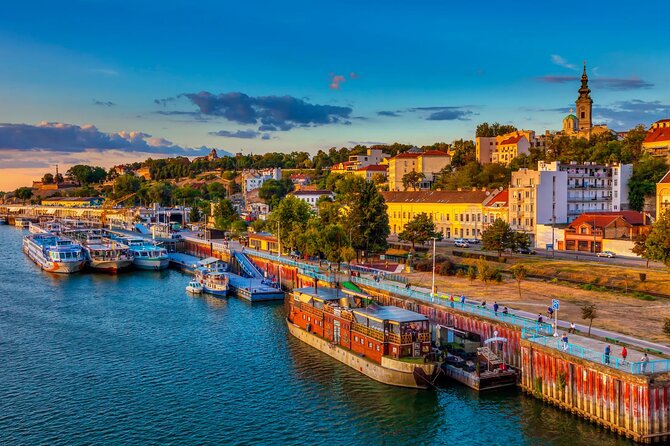
Kotor is given three hours, one of the better allocations for a major sight. Its UNESCO-listed Old Town is a maze of narrow stone streets, old churches, and buildings marked with plaques explaining their former use and construction dates.
The irregular street plan was designed to confuse attackers. Today, it makes wandering fun, though it also means you can lose a few minutes finding your way back to the meeting point. Saint Luke’s Church is included, and you have the afternoon to explore independently.
Kotor rewards a slow pace. Look up at the stonework, pause in a small square, and allow time for a meal or coffee. The tour does not include food, so this is another day when your personal budget matters.
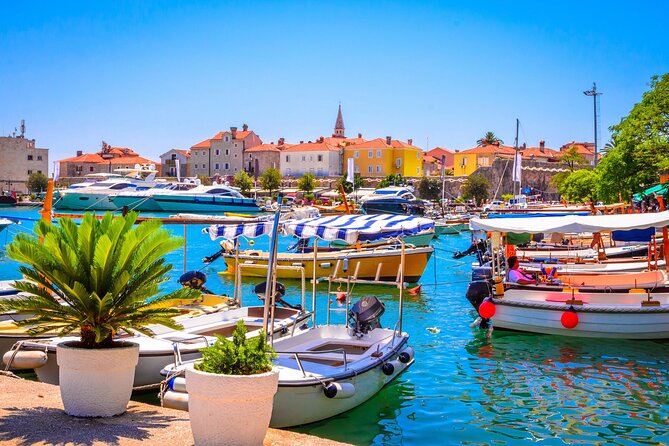
Budva is the next day’s main stop. The modern part has offices, shopping, restaurants, and bars, while the old center contains churches and medieval buildings. The guided visit focuses on Old Budva, giving you a useful contrast between the resort city and its older core.
A short stop near Sveti Stefan follows. The former fishing settlement now functions as an exclusive residential resort, and the island cannot be visited. You can still take in the view from the coast, but do not expect an island tour. This is a quick photo stop, not a full attraction.
Shkoder and Mrizi i Zanave: Albania begins with food
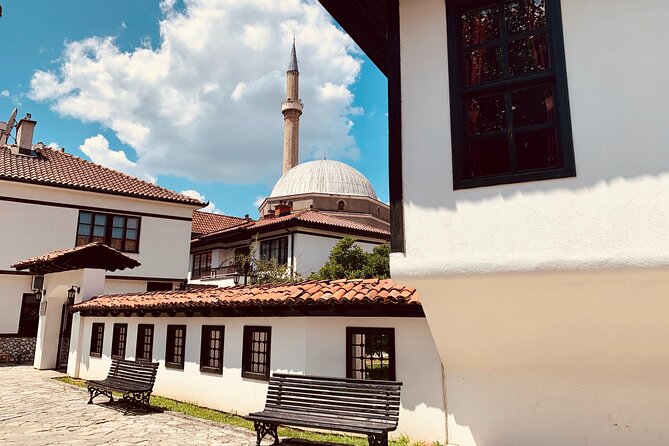
After crossing into Albania, you visit Shkoder, one of the country’s oldest cities. Rozafa Castle is the main sight, set above the city with views toward the lake and the rivers flowing toward the Adriatic.
The castle’s location gives the stop real weight. It also helps explain Shkoder’s long role in the region, while the city below shows Venetian influence. If your tour falls in February, the schedule notes the possibility of seeing the city’s carnival, known for handmade masks produced locally.
The next day shifts from old fortresses to food production at Mrizi i Zanave, an agricultural tourism farm. You walk around the property, hear how the family business adapted former communist buildings for storage, and see how regional organic products are collected and preserved.
The farm has created jobs for more than 400 people in nearby communities, making this more than a lunch stop. You can eat a traditional meal or buy fresh produce, but neither lunch nor purchases are included. I consider this one of the route’s most worthwhile experiences because it connects food to local work and modern rural life.
Prizren, Gjakova, and Dečani Monastery
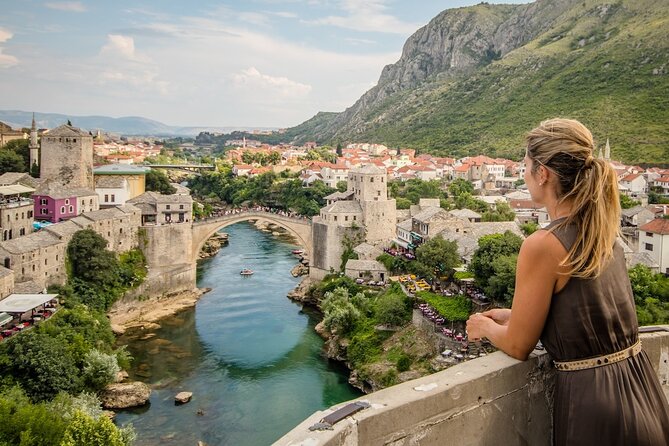
Prizren is presented as Kosovo’s cultural center, and the description fits the experience you can expect: a river through the old town, stone bridges, religious buildings, and a mix of Illyrian, Byzantine, and Ottoman influences.
The Sinan Pasha Mosque is the main included religious sight. Its arabesque patterns and color make it a memorable interior visit, but dress and behavior should be respectful. Kalaja Fortress sits above town and provides the best panorama. The climb is short but may feel warm or steep, so sensible shoes help.
You have free time in Prizren, which is important. Use it to walk beside the river, browse, and eat. The city is also home to Dokufest, an international short-film festival held in August, so that month may bring extra energy and higher demand.
Gjakova follows with Kosovo’s oldest and largest bazaar. It has been destroyed and rebuilt several times, including during the Kosovo War. Today, its shops sell handmade crafts and local goods, making it a better place for a useful souvenir than a generic roadside stop.
Dečani Monastery is the major Orthodox site. Orthodox monks still live there and produce food such as cheese. Its UNESCO status comes from its 14th-century frescoes and their connection to the Palaeologan revival of Byzantine painting.
The supplied tour details also refer to two Orthodox monasteries near Peja, but only Dečani is clearly named in the day-by-day plan. Ask for the exact second monastery and security requirements before departure if that sight is important to you.
Rahovec Valley adds one more wine stop. Grapes have been cultivated here since Illyrian times, and the vineyards sit on rolling ground between about 350 and 520 meters above sea level. September brings an annual wine festival, though festival dates should be confirmed before you book around it.
Kruja and Tirana: the final Albanian chapter
Kruja sits on rocky ground at about 560 meters above sea level and is linked to Albanian resistance against Ottoman expansion in the 15th century. The old bazaar is the star for shoppers, with wooden buildings and narrow lanes selling carpets, jewelry, and handmade souvenirs.
The castle visit includes local paths once used to leave the stronghold unseen during attacks. That detail gives the site a practical human story, rather than leaving you with only walls and dates.
You then have free time for lunch and shopping before the final drive to Tirana. The tour ends with hotel drop-off in the Albanian capital, but no Tirana sightseeing is listed. If you want to see Skanderbeg Square, museums, or the city’s cafés, arrange extra nights yourself.
What the $4,881.23 price really covers
At $4,881.23 per person, this is not a budget trip. Its value rests in the amount of transport and coordination included: private vehicle, fuel, road taxes, international car insurance, tourist taxes, a professional tour leader, hotel pickup in Vienna, hotel drop-off in Tirana, breakfast for all 13 nights, and entry fees for the listed included sites.
The price is based on shared occupancy in 3-star hotels. Solo occupants may pay more, while triple or quadruple rooms may change the per-person calculation. The included breakfasts are helpful, but you still need money for every lunch, dinner, drink, snack, wine tasting, and personal purchase.
I would compare this price with the cost of arranging eight countries, several border crossings, hotels, and a private vehicle yourself. For someone who values convenience and does not want to manage Balkan driving, the package can make sense. For an independent visitor who prefers longer stays and public transport, it will feel expensive and rushed.
The cancellation policy is strict: the experience is non-refundable and cannot be changed after booking. You also need your own health and travel insurance. Weather, strikes, holidays, closures, renovations, and other outside events can alter the route or timing.
Who should book this journey
You should consider it if you want a broad first look at Central Europe and the Balkans, prefer a small vehicle to a large coach, and enjoy moving on every day or two. It suits people who like castles, old centers, religious buildings, food, wine, and scenery more than long museum visits.
It is less suitable if you want restful mornings, deep time in Budapest or Sarajevo, or control over every hotel and meal. The schedule has many one-hour visits, and several border crossings can affect the day.
The most praised elements of the experience are its range, its memorable scenery, its food and wine opportunities, and the Kosovo section around Prizren, Peja, and Gjakova. Those places give the trip a strong sense of place. The small group should also make the long route more sociable and flexible, provided the final group size is confirmed.
Should you book it?
Book this tour if your goal is maximum geographic variety with minimum planning. You will see far more than you could comfortably arrange on a first visit, and the route includes excellent stops such as Rust, Novi Sad, Sarajevo, Mostar, Kotor, Prizren, and Kruja.
Think twice if you dislike long drives or want to linger. Before paying, confirm the exact group limit, the second Kosovo monastery, the hotel list, room arrangements, and any border requirements. If those details suit you, this is a strong introduction to a part of Europe that rewards curiosity, patience, and a willingness to keep moving.
FAQ
How long is the tour?
The journey lasts approximately 14 days, beginning in Vienna and ending in Tirana.
Where does the tour begin?
Pickup is offered from your hotel in Vienna. The listed start time is 11:00 a.m.
Where does the tour end?
The tour ends with hotel drop-off in Tirana, Albania.
Which countries does the route visit?
The route passes through Austria, Slovakia, Hungary, Serbia, Bosnia and Herzegovina, Montenegro, Albania, and Kosovo.
What accommodation is included?
Accommodation and breakfast are included for all overnight stays. Pricing is based on double, twin, triple, or quadruple occupancy in 3-star hotels.
Is transportation included?
Yes. Private transportation, petrol, road taxes, and international car insurance are included.
Are meals included?
Breakfast is included for all 13 nights. Lunches, dinners, drinks, and snacks are not included.
How large is the group?
The tour is described as limited to eight people in its highlights, while the additional details state a maximum of ten. Confirm the final group limit before booking.
Just added around Vienna
- Ottakringer Brewery tour★ 4.0 · 6 reviews
- New Hofburg Palace Tour House of Habsburg★ 4.5 · 5 reviews
- Private Van & Walk Tour – One Perfect Day in Vienna★ 5.0 · 21 reviews
- True Crime mobile puzzle rally Vienna★ 4.0 · 3 reviews
- Vienna Naschmarket Food Tasting Tour★ 4.0 · 30 reviews
- Vienna Nightlife Experience: Food, Wine, Cocktails & Vibes★ 5.0 · 119 reviews
- Myth Mozart★ 4.0 · 80 reviews
- ( Night Tour ) With Private Guide + wine or prosecco★ 4.0 · 12 reviews
Tours, compared.
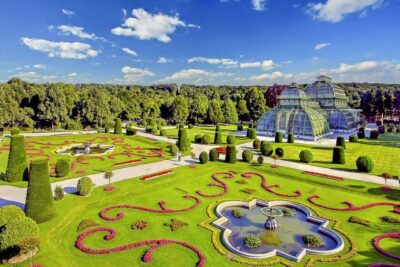
Schönbrunn Palace & Gardens Skip-the-Line Tour
Read our review →

Skip-the-Line Sisi Museum, Hofburg and Gardens Tour
Read our review →
Skip-the-Line Schönbrunn Palace & Gardens Tour
Read our review →
Guided Walking Tour of City Center Highlights
Read our review →