Reviewed · PRIVATE
Semi-Private Tour: Central Europe &Balkans from Vienna to Athens
The best thing about this 21-day journey from Vienna to Athens is its range. You move from Austrian vineyards and Danube cities to Ottoman bazaars, Adriatic towns, Albanian farms, Orthodox monasteries, and the cliff-top monasteries of Meteora. It is a big trip, but the small group keeps it from feeling like a bus tour.
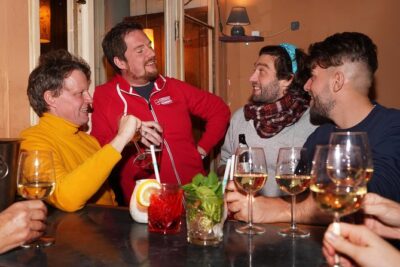
I like the private transport and the limit of 10 people. I also like the local food angle: wine in Rust and Sremski Karlovci, farm produce at Mrizi i Zanave, Albanian byrek and qofte, and raki in Tirana. The main drawback is the pace. You cover ten countries in 21 days, so several stops are short, and long drives and border crossings are part of the deal.
At a glance: what makes this tour different
- Ten countries in one overland route: Austria, Slovakia, Hungary, Serbia, Bosnia and Herzegovina, Montenegro, Albania, Kosovo, North Macedonia, and Greece.
- A small group of no more than 10: You get more personal attention than on a large coach trip, with easier group coordination at hotels, borders, and sights.
- Food and drink built into the route: Expect wine tasting opportunities, olive oil, raki, regional dishes, farm visits, and an Albanian cooking lesson at Kruje Castle.
- Private transport from Vienna to Athens: Hotel pickup begins in Vienna, and drop-off ends in Athens or at Igoumenitsa Port for the ferry to Corfu.
- Strong historic variety: You’ll see Habsburg town centers, Ottoman quarters, war memorials, castles, monasteries, mosques, synagogues, and communist-era sites.
- A practical hotel arrangement: The price is based on double, twin, triple, or quadruple occupancy in three-star hotels, with breakfast each morning.
Vienna to Rust, then across the Danube
Your tour begins with pickup at your Vienna hotel at 11 a.m. That is useful if you want to spend earlier days exploring Vienna on your own rather than arriving at a fixed meeting point across town.
The first drive heads south toward Rust in Burgenland. This is a pleasant opening to the trip because it starts with vineyards rather than a long city lecture. The road passes hilly wine country and views toward Lake Neusiedl, a UNESCO-listed area shared by Austria and Hungary.
Rust is compact and easy to explore on foot. Its old center has colorful houses, flower boxes, narrow streets, and traditional Austrian details. You get about three hours here, enough for a walk, a meal, and time among the local shops. I like the chance to browse goods made from natural materials, including objects made with old wine-barrel wood.
The timing also gives you a first chance to try Burgenland wine. Lunch and wine are not included, so set aside money for both. After Rust, you continue to Bratislava for the night. The first day is fairly gentle, but it establishes the pattern: scenic drives, compact historic centers, and meals taken independently.
A few more Vienna trips to weigh up
- Vienna: Private Walking Tour with a Local Guide
★ 4.6 · 1,420 reviews - Vienna: Private Walking Tour with a Guide
★ 4.7 · 962 reviews - Vienna: Wine Tasting Experience in a Private Wine Cellar
★ 4.8 · 413 reviews
Bratislava and the first Danube capital
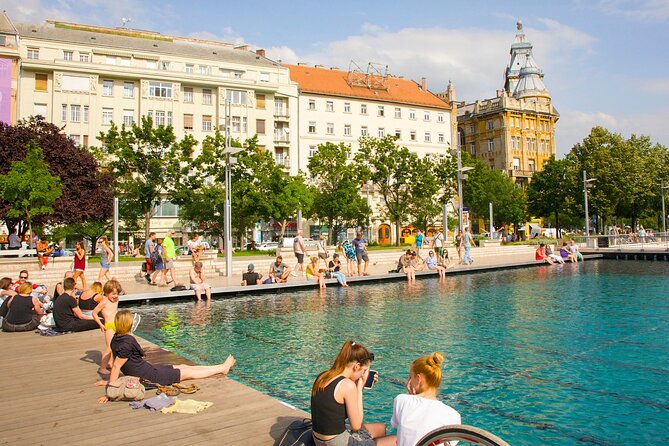
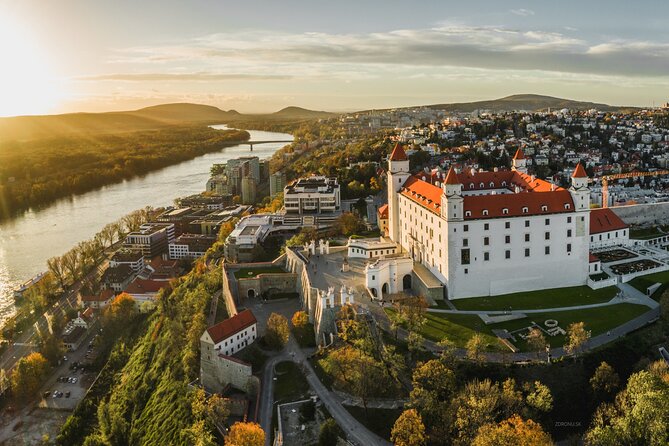
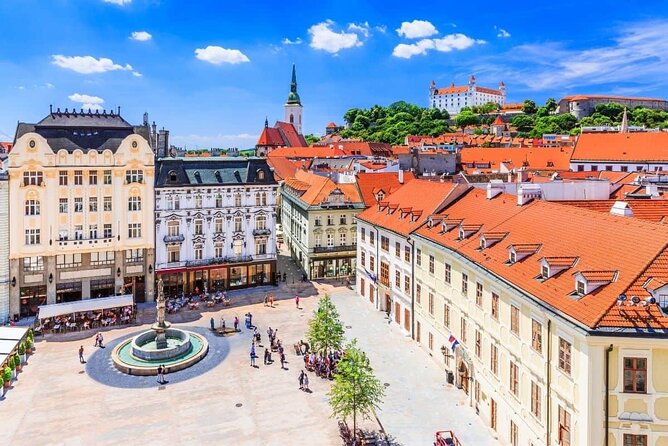
Bratislava receives a guided introduction on day two. You’ll walk through the Old Town, see the medieval Old Town Hall, and visit Michael’s Gate, the only surviving gate from the city’s medieval fortifications.
The city center is manageable on foot, though the route includes an uphill walk to Bratislava Castle. The climb is worth it for the view over the Danube and the Slovak capital. Entry to the castle is included, while some other admissions are listed separately, so your guide should clarify what you are entering and what you are viewing from outside.
The afternoon is free. I see this as a strength. Bratislava is small enough to explore without a rigid schedule, and its café tradition makes an easy break after the morning walk. You spend a second night here, which is better than rushing through the city with luggage in hand.
Győr and Budapest: Baroque streets and grand boulevards
On day three, the route crosses into Hungary for Győr, known as the City of Rivers. The center brings together colorful houses, churches, and Baroque architecture. You’ll see the 59-meter Town Hall tower, the Cathedral of the Virgin Mary, and the gray-domed synagogue.
Győr is a short stop, with about an hour at several points. That works for a first look, but it will not suit you if you want museum time or a slow architectural study. There is free time along Baross Gabor pedestrian street for coffee, food, or a local drink. The itinerary specifically mentions blueberry beer, an unusual regional tasting opportunity.
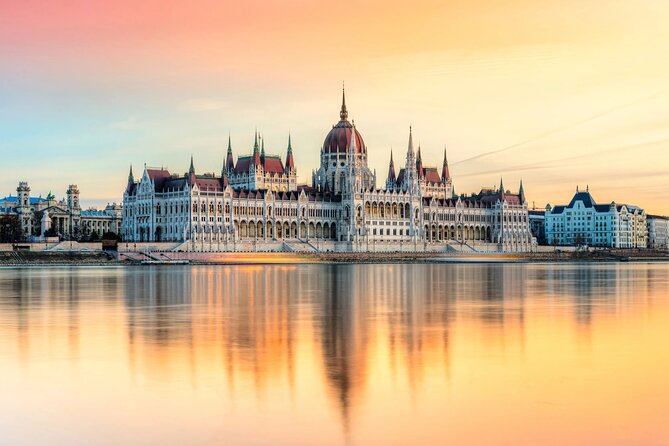
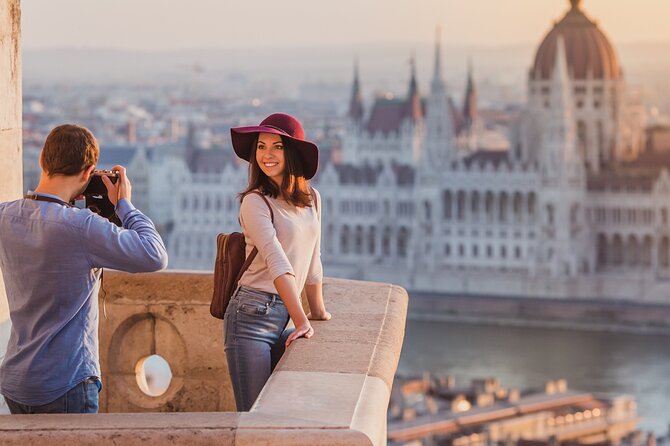
Budapest gets more attention on day four. You’ll pass St. Stephen’s Basilica, walk along major boulevards, and see the Opera, Parliament, Heroes’ Square, Fisherman’s Bastion, and Buda Castle. The city’s two sides, Buda and Pest, have very different personalities, and the route helps you understand that basic layout quickly.
The Buda Castle district and Fisherman’s Bastion offer some of the best city views. St. Stephen’s Basilica entry is included, while much of the city touring takes place outdoors. You also get a free evening, which matters in Budapest. You can choose your own restaurant, return to a favorite viewpoint, or simply enjoy the city after dark without being shepherded from one sight to another.
Subotica, Novi Sad, and Serbia’s wine country
The Serbian portion starts in Subotica, a city shaped by the Austro-Hungarian period and known for decorative buildings in bold colors. The City Hall dominates the central square, with a park, fountains, and open space around it.
The Cathedral of St. Teresa of Avila and the synagogue add to the city’s mix of religious and cultural traditions. You have time to eat and explore independently. Subotica is not given a full day, so I would treat it as a strong introduction rather than a complete visit.
Novi Sad follows on day six. It is often described as northern Serbia’s cultural capital, and the city’s position between the former Ottoman and Austro-Hungarian worlds shows in its architecture and street plan. The pedestrian streets of Zmaj Jovina and Dunavska are good places to walk at an easy pace.
Petrovaradin Fortress, called the Gibraltar on the Danube, is the key sight. You get around three hours in Novi Sad, followed by an overnight stay. That extra night is welcome after several short city visits.
Day seven shifts from city culture to wine. Sremski Karlovci has a Baroque center, old wine cellars, and a long connection to Serbian religious and cultural life. You’ll hear the local legend of the Four Lions fountain, which says that anyone who drinks from it will return and marry there.
The wine tasting is not simply an add-on here. It gives you a reason to understand the area beyond its pretty streets. Since drinks and meals are not generally included, confirm which tastings are covered and which are paid locally.
Same Alps, a completely different kind of day:
- Vienna: Vivaldi’s Four Seasons Concert in Karlskirche
★ 4.7 · 14,951 reviews - Vienna: Spanish Riding School Training
★ 3.9 · 9,281 reviews - Vienna: Skip-the-cashier-desk-line Giant Ferris Wheel Ride
★ 4.5 · 7,859 reviews - Vienna: Schönbrunn Palace & Gardens Skip-the-Line Tour
★ 4.7 · 7,739 reviews
Belgrade, Zvornik, and Sarajevo’s layered past
Belgrade begins with Kalemegdan Park and the fortress above the meeting point of the Sava and Danube rivers. The Pobednik monument, open paths, and wide views make this a good orientation to the Serbian capital.
You then walk along Knez Mihailova to Republic Square. The scheduled city time is short, so you should not expect a full survey of Belgrade. The value here is seeing the fortress and central pedestrian spine before continuing toward Bosnia and Herzegovina.
Zvornik is a practical stop on the road. It sits beside the Drina River and gives you time for lunch or a short walk. The stop breaks up the drive, but it is not a major sightseeing day.
Sarajevo brings a more serious historical focus. The walking tour covers the Ottoman and Austro-Hungarian quarters, places of worship, markets, bazaars, and reminders of the Yugoslav War. Bullet holes and cannon marks remain visible in parts of the city, so this is not a lightweight old-town stroll.
At the Latin Bridge, you’ll learn how the assassination of Archduke Franz Ferdinand helped trigger World War I. Sarajevo’s appeal is its mix of cultures in a very compact area, but the walking can include uneven ground and ruined sites. Wear sturdy shoes and expect a thoughtful, sometimes difficult visit.
Mostar, Kotor, Budva, and Shkoder
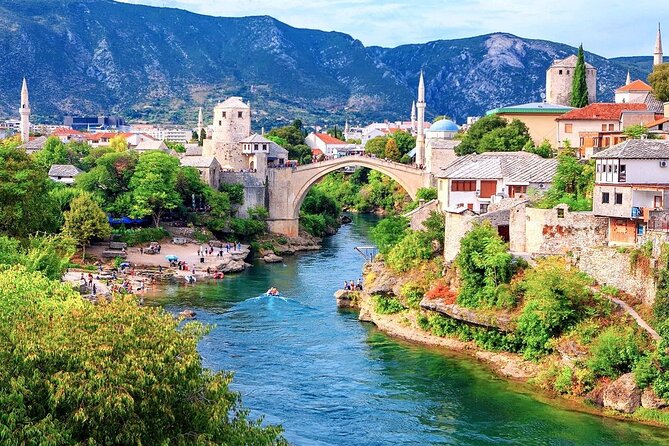
Mostar follows Sarajevo on day nine. The Old Bridge, Stari Most, is the centerpiece, and the surrounding bazaar has cobbled lanes, small shops, mosques, and Turkish-influenced architecture. Stones marked with Don’t Forget keep the city’s recent past close at hand.
You get free time to wander, which is important because Mostar is best understood slowly. The formal visit is only about an hour, so use the later free period to cross the bridge area, browse the bazaar, and find a place for a local meal.
Kotor is next, with about two hours in the UNESCO-listed old town. Its narrow streets were designed to confuse attackers, and that tangled plan remains part of the charm. Small plaques on old buildings explain their former uses and dates.
The visit includes St. Luke’s Church, a place regarded locally as a symbol of unity. Kotor’s old town is compact but paved with uneven stone, so comfortable shoes matter. You have the afternoon to explore independently, but the itinerary does not promise a climb to the fortress above town.
Budva gives you a look at Montenegro’s coast, with a clear contrast between the modern part and the medieval old town. You’ll visit the old churches and lanes before stopping at a viewpoint near Sveti Stefan. The island resort is not open for ordinary visits, but it is photogenic from the coast.
The route then crosses into Albania for Shkoder. Rozafa Castle offers broad views toward the lake, three rivers, and the Adriatic. Shkoder’s Venetian influence and long settlement history make it a useful introduction to northern Albania.
Albania through farms, bazaars, and local food
Day twelve brings one of the tour’s most distinctive stops: Mrizi i Zanave, a slow-food agro-tourism farm. You’ll tour the property, learn how it creates work for people in the surrounding area, and see how old communist buildings were adapted for storage.
The farm gathers and preserves local organic products. You can eat a traditional lunch or buy fresh produce, though the meal is not included in the tour price. This stop adds something that monuments alone cannot provide: a look at how local food production can support a rural community.
Prizren follows, with its river, bridges, old streets, and Ottoman-era buildings. Sinan Pasha Mosque is included, as is Kalaja Fortress, where you get a broad view over town. The free afternoon gives you time for the bazaar and local food.
The next day includes Gjakova’s rebuilt bazaar, with handmade crafts and traditional goods. You’ll also visit the Monastery of Dečani, an Orthodox monastery still inhabited by monks. Its frescoes date to the 14th century, and the site is UNESCO listed.
Rahovec Valley adds another wine stop. Grapes have been grown here since Illyrian times, and the vineyards sit on gentle hills between 350 and 520 meters above sea level. If your trip coincides with the September wine festival, the area may feel especially lively, but the festival is not guaranteed.
Kruje is one of the strongest cultural stops in Albania. The old bazaar has wooden houses and narrow lanes lined with rugs, jewelry, and handmade souvenirs. The castle sits above the town and includes old escape paths used when enemies surrounded it.
The tour also promises a cooking lesson at Kruje Castle, one of the more memorable hands-on parts of the route. Confirm exactly what dish you’ll prepare and how long the lesson lasts, since the sightseeing schedule lists roughly an hour for the castle visit.
Tirana is approached through food. You’ll try byrek at a small local spot, visit Tregu Çam, taste Albanian coffee, and stop at Pazari i Ri for qofte, bread, or bread with gjize for vegetarians. Raki is included in the tasting portion of the experience.
Bunk’Art 2 then shifts the mood. The museum occupies a bunker built for communist leader Enver Hoxha and his inner circle during the Cold War. Its displays cover the communist army and everyday life under the regime. I like this pairing of food and political history because it gives you both the daily life and the difficult past of modern Albania.
Ohrid, St. Naum, and Berat
After Albania, you cross into North Macedonia. Struga is a brief stop for a drink near the source of the Drin River. Ohrid gets more time, with its UNESCO-listed lake and old town.
You’ll see the viewpoint near St. John’s Church, St. Nicholas Church, and the Halveti Hayati Tekke. Ohrid is an important Orthodox center, and local tradition speaks of 365 churches, one for each day of the year. The route mixes Christian and Muslim landmarks, which fits the wider theme of the trip.
St. Naum Monastery comes the next morning. It sits near the source of the Crni Drim, beside clear spring water and protected parkland. Entry is included. The setting is one of the calmer moments of the trip, though the short visit means you may need to choose between lingering outdoors and seeing every part of the complex.
Tushemisht and Drilon National Park follow after the border crossing into Albania. Drilon is a small, quiet park around spring-fed water, with willows and greenery. It is a welcome pause before Berat.
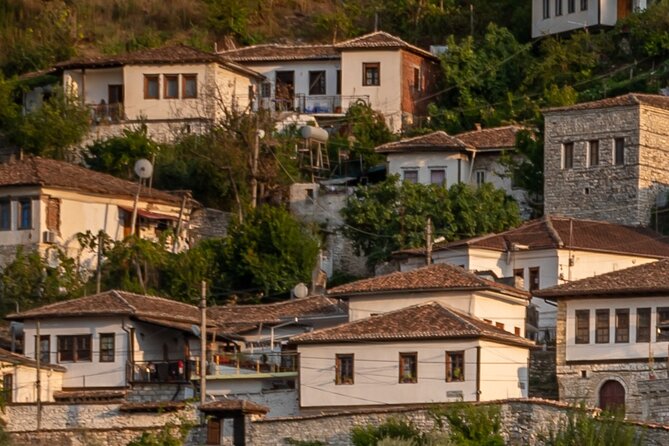
Berat, the town of 1,001 windows, receives about three hours. Medieval homes climb the hills, and people still live inside the castle walls. You’ll see old churches, mosques, a stone bridge, museums, and traces of the communist period.
Berat rewards slow walking, but the stone streets and slopes require moderate fitness. The schedule gives a good first look, not enough time for every church and museum.
Gjirokaster, Ioannina, and Meteora
Gjirokaster is known as the Stone City. Its houses have a fortress-like appearance, and the old bazaar climbs the hillside in narrow stone lanes. You’ll visit Skenduli House, one of the best-preserved traditional homes, with original furnishings and construction.
This is one of the tour’s most useful home visits because it shows how people lived, not just how rulers built. The hour allocated to Gjirokaster and the hour at the bazaar will feel short if you enjoy craft shops and architecture.
Ioannina introduces Greece through its old town and Byzantine-era castle. The lanes contain Ottoman and Byzantine traces, along with cafés where you can try Greek food and local specialties. It is a compact final cultural stop before Meteora.
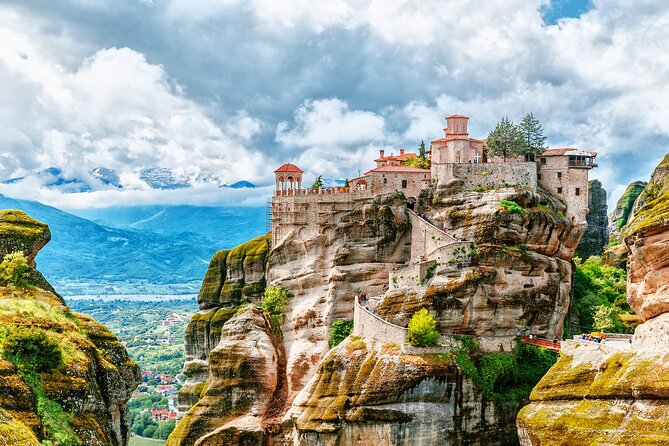
Meteora is the visual high point of the last full day. Monasteries built on tall rock formations create an extraordinary sight, especially at sunset. The listed visit is about an hour, so check whether you’ll enter a monastery or view the formations from designated points. The schedule promises sunset timing, but weather and road conditions can affect that.
The final day offers two endings. Your tour leader can drop you at your Athens hotel, or take you to Igoumenitsa Port, with ferry tickets included for onward travel to Corfu. Confirm your preferred ending before booking, as these are different routes and the Athens transfer includes about four hours, while the port transfer is listed at about two.
What the $7,315 price includes
At $7,315.17 per person, this is a major purchase. The price covers private transport, petrol, road taxes, international car insurance, tourist taxes, a professional tour leader, 20 breakfasts, listed entry tickets, and hotel drop-off in Athens or port transfer with ferry tickets to Corfu.
Accommodation is based on three-star hotels and double, twin, triple, or quadruple occupancy. That room arrangement matters. If you want a private room, ask about the supplement before paying. Lunches, dinners, drinks, snacks, souvenirs, and personal spending are extra.
I see the value mainly in the route and transport. Organizing ten countries, multiple border crossings, private driving, hotels, and sightseeing on your own would take serious planning. The tour also removes the burden of finding roads and parking in places such as Kotor, Mostar, Berat, and Gjirokaster.
Still, the price does not mean every major expense is covered. Budget for meals, wine tastings, café stops, and optional admissions. Since the cancellation policy is completely non-refundable, travel insurance is a sensible safeguard, though it is not included.
Comfort, pace, and the role of the guide
The maximum group size is 10, which is one of the strongest practical features. You’ll spend many hours in the vehicle, and a small group makes that more comfortable socially and logistically.
The tour leader matters greatly on a route with so many borders and changing traditions. Sokol is specifically praised for helping make the journey smooth and enjoyable. The food and wine also receive strong praise, with plentiful meals and good wine highlighted as memorable parts of the experience.
Do not mistake small-group travel for a relaxed schedule. Some days include several countries or long drives, and border delays can change the plan. Weather, strikes, holidays, temporary closures, or other events can also force changes.
You should be comfortable walking on cobblestones, uneven ground, hills, castle paths, and old stone streets. A moderate fitness level is required. Pack light enough for frequent hotel changes, bring shoes with grip, and keep some local cash available for meals and small purchases.
Who should book this Central Europe and Balkans route
I recommend this tour if you want a broad first look at the region and prefer a guide and private vehicle over trains, buses, and self-drive planning. It suits you if castles, religious buildings, food traditions, wine, recent political history, and border-crossing geography all interest you.
It is especially good for someone who wants Albania and Kosovo included without having to arrange every transfer. The farm visit, Kruje cooking lesson, Bunk’Art 2, Sarajevo, and Meteora give the route more depth than a simple capital-city tour.
I would hesitate if you want long stays in each city. Budapest, Sarajevo, Mostar, Kotor, Gjirokaster, and Meteora all deserve more time than the schedule allows. You should also think carefully about the price, room occupancy, and extra meal costs before committing.
FAQ
How long is the tour?
The tour lasts approximately 21 days, beginning in Vienna and ending in Athens or at Igoumenitsa Port for the ferry to Corfu.
Where does the tour begin?
The tour begins in Vienna, Austria, with hotel pickup at 11 a.m.
Where can the tour end?
You can be dropped at your hotel in Athens or at Igoumenitsa Port. The port option includes ferry tickets to Corfu Port.
How many people are in the group?
The group has a maximum of 10 travelers.
What accommodation is used?
The price is calculated using double, twin, triple, or quadruple room occupancy in three-star hotels.
Are meals included?
Twenty breakfasts are included. Lunches, dinners, drinks, and snacks are not included.
Is transportation included?
Yes. Private transport, petrol, road taxes, international car insurance, and tourist taxes are included.
Are attraction entry fees included?
Entry tickets for the sites that are scheduled to be visited are included. The itinerary also lists some attractions with admission not included, so confirm the exact ticket arrangements with the operator.
Is the tour physically demanding?
A moderate fitness level is required. The route includes walking on uneven ground, cobbled streets, hills, castle paths, and historic areas.
Should you book it?
Book this trip if you want maximum geographic variety with minimum transport planning. The strongest reasons are the small group, private vehicle, food experiences, and access to places that can be awkward to connect independently, especially Kosovo, Albania, and the inland Balkan towns.
Skip it if you prefer slow travel or dislike frequent hotel changes. At this price, you should confirm room arrangements, meal expectations, included admissions, and your Athens or Corfu ending before paying. For the right kind of explorer, this is a bold, food-filled route through a part of Europe that rewards curiosity and patience.
Just added around Vienna
- Ottakringer Brewery tour★ 4.0 · 6 reviews
- New Hofburg Palace Tour House of Habsburg★ 4.5 · 5 reviews
- Private Van & Walk Tour – One Perfect Day in Vienna★ 5.0 · 21 reviews
- True Crime mobile puzzle rally Vienna★ 4.0 · 3 reviews
- Vienna Naschmarket Food Tasting Tour★ 4.0 · 30 reviews
- Vienna Nightlife Experience: Food, Wine, Cocktails & Vibes★ 5.0 · 119 reviews
- Myth Mozart★ 4.0 · 80 reviews
- ( Night Tour ) With Private Guide + wine or prosecco★ 4.0 · 12 reviews
Private, compared.
Wine Tasting Experience in a Private Wine Cellar
Read our review →
Private Day Tour Trip Salzburg Hallstatt and Melk from Vienna
Read our review →
Private Hidden Vienna Walk — Stories Behind Quiet Corners
Read our review →