
Reviewed · CITY TOURS
Roman City of Carnuntum Admission
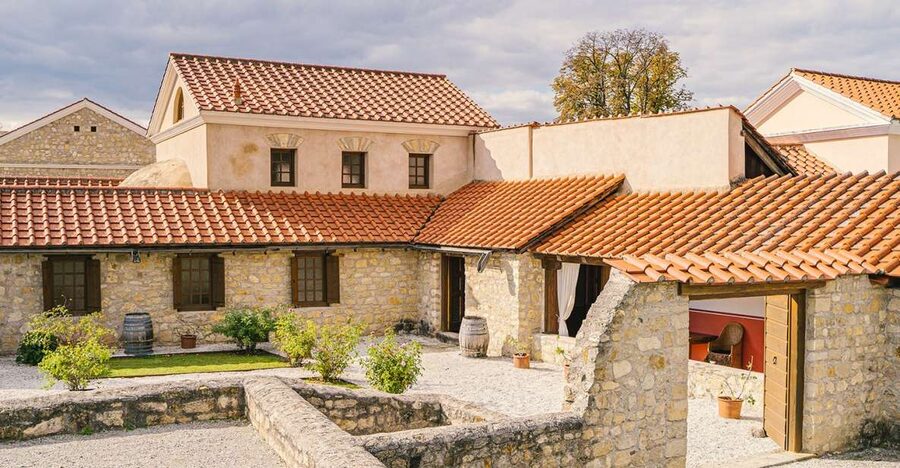
Carnuntum lets you walk through a Roman neighborhood rebuilt on its original foundations, not just stare at broken stones in a field. You can step into furnished homes, see decorative details based on finds from the site, and picture daily life in this important Roman settlement.
I like the reconstructed living spaces and the chance to pair them with the Carnuntinum Museum, where the objects give context to what you see outdoors. The main catch is that the military-city amphitheatre is closed for renovation, so you should not expect all of the area’s major Roman monuments to be open.
Key points to know
- Roman homes and baths: Enter reconstructed buildings placed on their original locations, with furniture and decoration based on archaeological evidence.
- Two included attractions: Your admission covers the Roman Quarter in Petronell-Carnuntum and the Carnuntinum Museum in Bad Deutsch-Altenburg.
- Heathen’s Gate: Add this striking Roman monument to your day, with the nearby amphitheatre of the Civil City also available to see.
- Easy from Vienna: Take the hourly S7 train from Wien Mitte to Petronell-Carnuntum, then walk about 15 minutes by following the signs.
- Current closure: The amphitheatre in the Military City is being renovated and is not open.
- Flexible booking: You can cancel up to 24 hours ahead for a full refund, and reserve now while paying later.
Why Carnuntum feels different from a typical Roman ruin
Carnuntum was a Roman settlement in what is now Lower Austria, close to the Danube and not far from Vienna and Bratislava. The appeal here is not one grand monument. It is the chance to understand how an entire Roman quarter worked.
At many Roman sites, you see foundations, scattered columns, and a helpful sign explaining what once stood there. Carnuntum takes a different approach. Part of the city quarter has been rebuilt in its original location, using archaeological evidence from the site. That gives you walls, rooms, doors, roofs, baths, and furnishings to look at as actual spaces.
I find this especially useful if you are not an ancient-history expert. A plan of Roman streets can be hard to read, but a reconstructed room is clear at once. You can see how rooms connect, where people lived, and how decoration and household objects fit into ordinary life.
The reconstruction also means you should treat the site as an interpretation of the evidence, not as a perfectly preserved Roman town. The buildings are modern recreations, but their placement and details are tied to what archaeologists found. That balance makes Carnuntum more approachable than a bare ruin while still keeping the focus on evidence.
A few more Austria trips to weigh up
- Vienna: Guided Walking Tour of City Center Highlights
★ 4.7 · 4,989 reviews - Vienna: City Cruise with Optional Lunch
★ 3.4 · 3,982 reviews - Vienna: City Cruise
★ 3.3 · 2,978 reviews
Entering the Roman Quarter at Petronell-Carnuntum
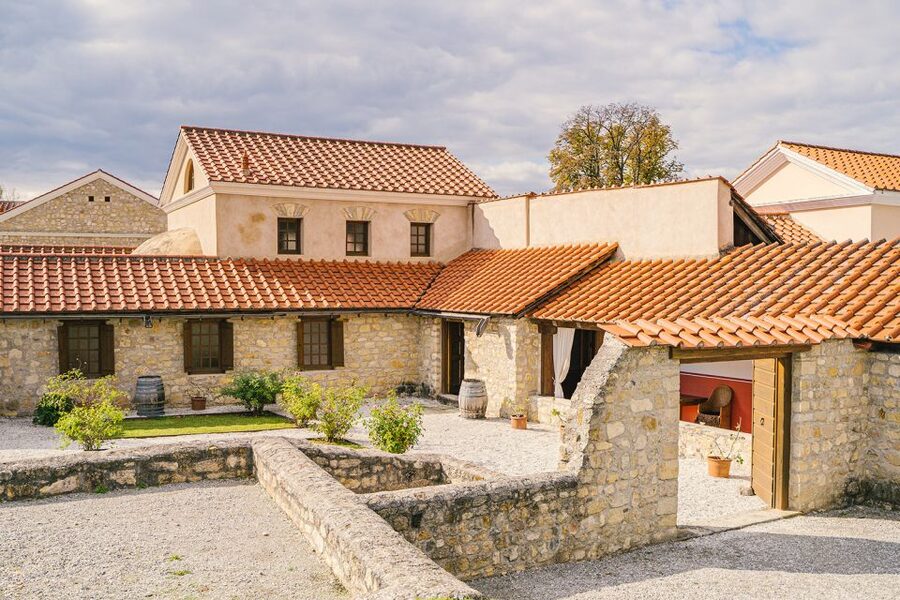
The Roman Quarter is in Petronell-Carnuntum, the outdoor part of the experience. This is where you get the strongest sense of Roman life. Rather than moving from one isolated relic to another, you move through a small group of re-erected buildings.
The interiors are an important part of the visit. Decorative features and furniture are based on discoveries made at Carnuntum, so the rooms help you picture more than military power and imperial monuments. You might find yourself paying attention to small things: the arrangement of domestic spaces, the surface decoration, or the way a bath was designed.
The reconstructed houses are also useful for families and anyone who prefers visual explanation. Children can understand a Roman home more easily when they can walk through it. Adults who have seen Roman remains in Rome, Pompeii, or along the Danube will find a different emphasis here: Carnuntum shows how a provincial Roman city functioned away from the most famous imperial centers.
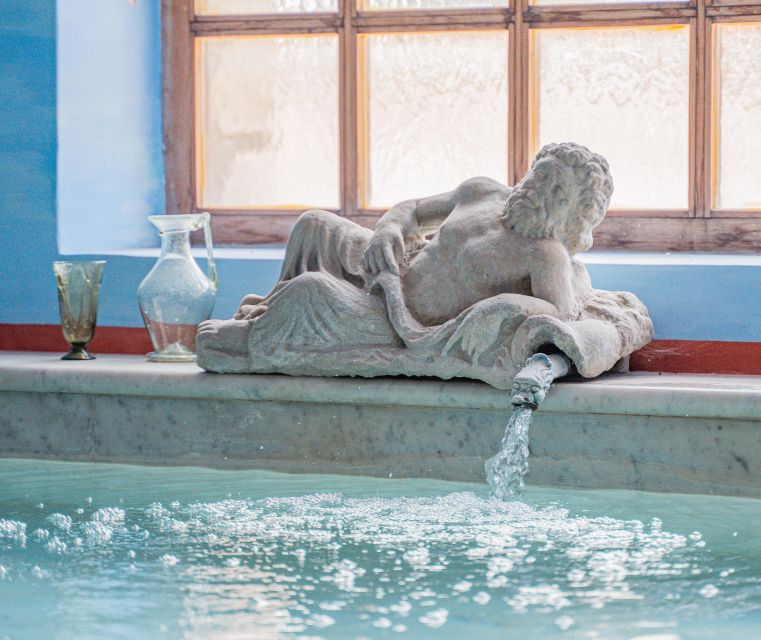
The ancient baths are one of the most memorable parts. Roman bathing was not simply about washing. It was connected to routine, social life, and Roman ideas about comfort. At Carnuntum, the restored spaces give you a better sense of the building as a whole than a few surviving walls would.
Allow time to look closely rather than rushing through for a quick photograph. The value is in the combination of the rooms, surfaces, and furnishings. If you only have a short window, you can still see the main quarter, but a full day gives you room to connect the outdoor site with the museum and nearby monuments.
What the reconstructions can and cannot tell you
The Roman Quarter is at its best when you use it as a guide to everyday life. You can picture people eating, bathing, storing goods, receiving visitors, and moving through the city. The site turns archaeology into something you can read with your eyes.
At the same time, the rebuilt buildings should not be confused with original Roman structures. The supplied information makes clear that the project reconstructs part of the quarter from archaeological finds made on-site. That is a strong basis, but it still involves interpretation.
I recommend taking the time to notice the difference between original remains and rebuilt elements. The original location matters because it preserves the relationship between buildings and streets. The recreated details matter because they make the spaces understandable. Together, they offer a practical middle ground between a modern museum display and a ruin that requires a lot of imagination.
If you are looking for intact ancient masonry at every turn, this may not be the right Roman site for you. If you want to understand Roman domestic life without needing to decode a ground plan, Carnuntum is a smart choice.
The Carnuntinum Museum in Bad Deutsch-Altenburg
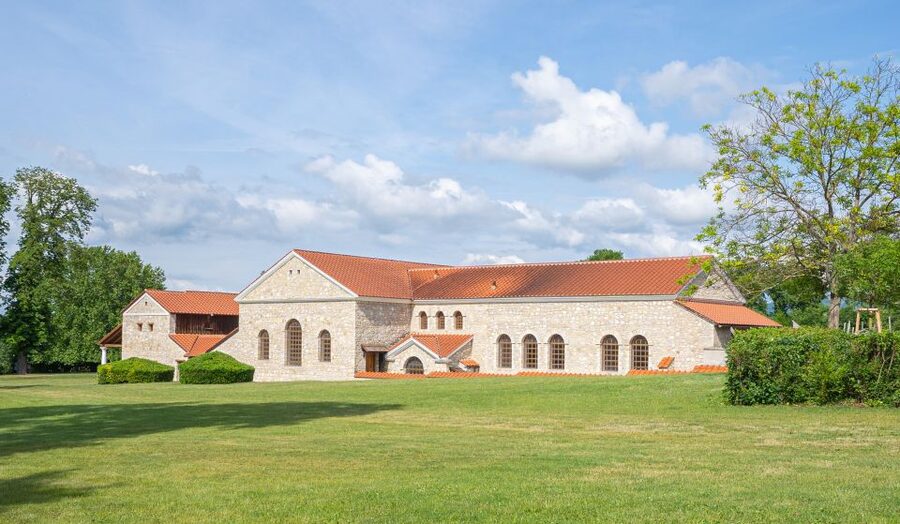
Your admission also includes the Carnuntinum Museum in Bad Deutsch-Altenburg. Plan this as a separate part of the day, since it is not in the same rebuilt quarter.
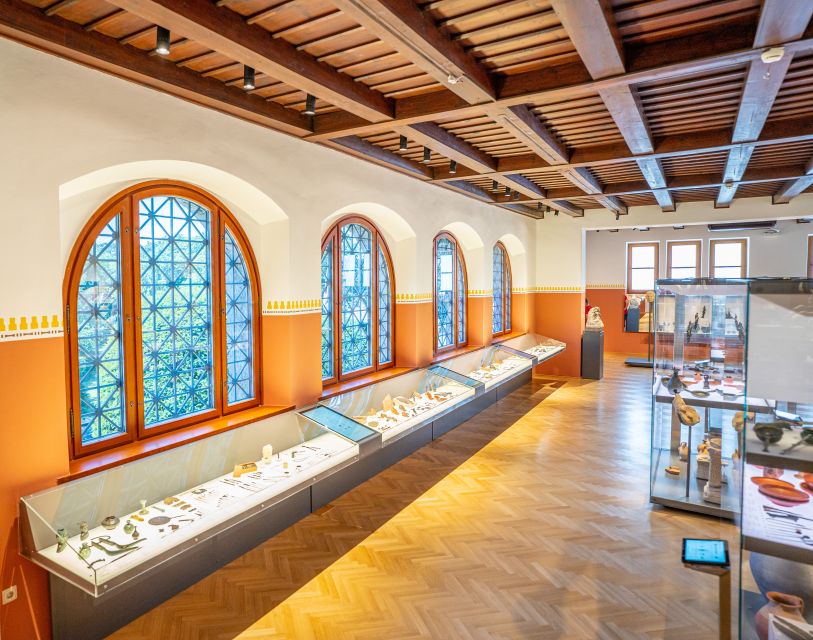
The museum is where the smaller discoveries get their proper setting. Objects found in and around Carnuntum help explain the people, customs, work, art, and culture behind the buildings. After walking through the Roman homes and baths, the museum gives you a chance to think about the actual objects that support the reconstruction.
I like this two-part arrangement. The outdoor quarter gives you scale and atmosphere, while the museum gives you archaeological detail. One helps you picture the rooms. The other helps explain how researchers know what those rooms and decorative features may have looked like.
The museum also keeps the visit from becoming a simple parade of recreated buildings. You are not asked to accept the reconstruction on its own. The finds provide the evidence and show that Carnuntum was more than a military outpost.
You can visit the Roman Quarter and museum in either order, depending on your transport and the opening schedule on your chosen date. Since the admission is valid for one day, you have the flexibility to build a fuller excursion rather than treating the experience as a quick stop.
Same Alps, a completely different kind of day:
- Vienna: Vivaldi’s Four Seasons Concert in Karlskirche
★ 4.7 · 14,951 reviews - Vienna: Spanish Riding School Training
★ 3.9 · 9,281 reviews - Vienna: Skip-the-cashier-desk-line Giant Ferris Wheel Ride
★ 4.5 · 7,859 reviews - Vienna: Schönbrunn Palace & Gardens Skip-the-Line Tour
★ 4.7 · 7,739 reviews
Heathen’s Gate and the civil-city amphitheatre
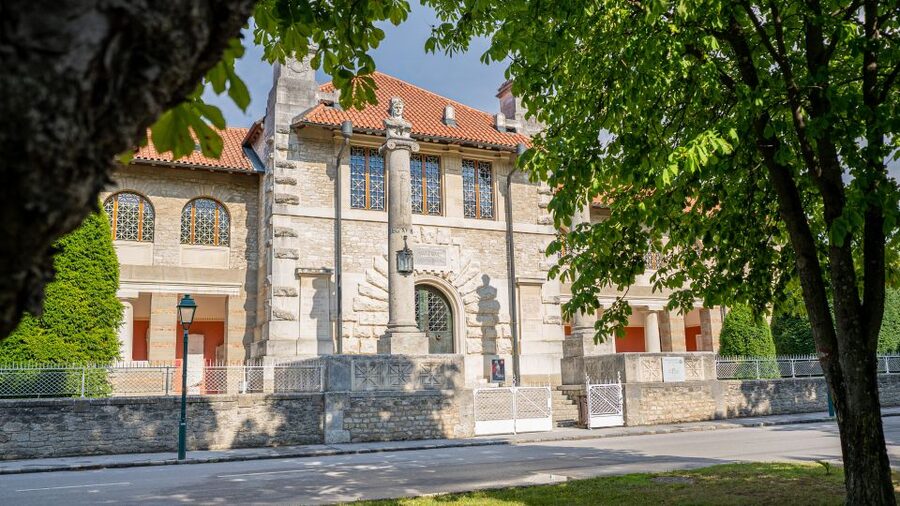
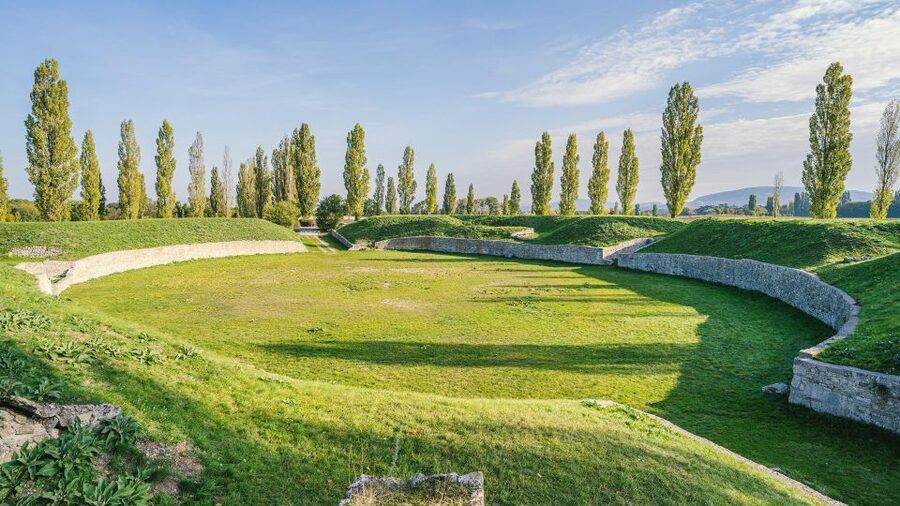
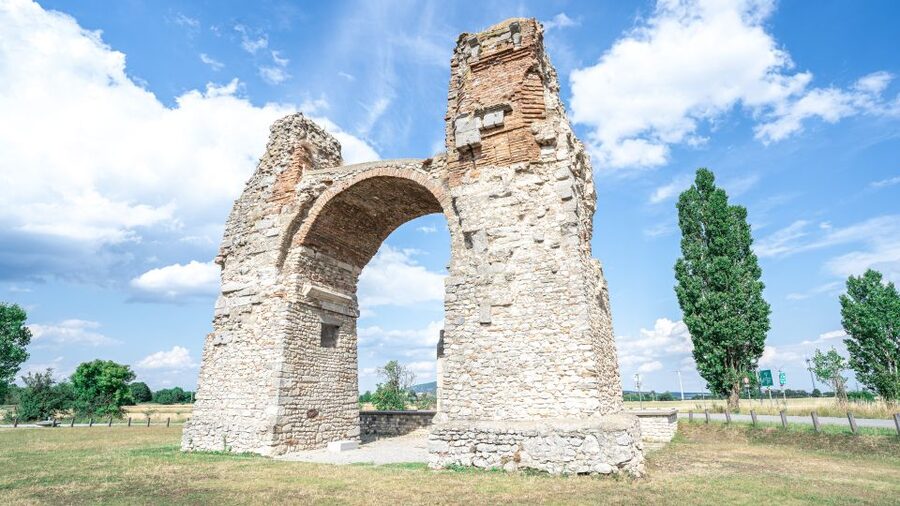
Complete your Carnuntum outing with the Heathen’s Gate, a large Roman monument in the area. It gives you a different kind of experience from the reconstructed quarter. Here, the focus is on a surviving landmark and the scale of Roman public architecture.
The nearby amphitheatre of the Civil City is also available to see. This matters because the military-city amphitheatre is currently closed for renovation. You can still add an amphitheatre to your day, but it is important to understand that the open site is the civil-city version, not the closed military-city monument.
This distinction is worth checking before you book. The basic admission specifically covers the Roman Quarter and Carnuntinum Museum. The information also directs you to Heathen’s Gate and the nearby civil-city amphitheatre while the military amphitheatre is being renovated. If seeing the military amphitheatre is your main reason for coming, wait until its renovation status changes.
The closure is the one real limitation to the current visit. It does not remove the main Roman Quarter or museum, but it reduces the number of major sites you can enter. One recent booking found the missing military amphitheatre disappointing after expecting three historic sites, so set your expectations clearly before arrival.
Getting from Vienna by train
Carnuntum is practical as a day trip from Vienna. From Wien Mitte, also called Landstraße, take the S7 in the direction of Wolfsthal. Trains run every hour. Get off at Petronell-Carnuntum station, then walk about 15 minutes to the Roman City by following the signs.
That train connection is a major part of the experience’s value. You do not need to arrange a private transfer or rent a car just to reach the site. The walk from the station is short enough for most people, though you should allow time for it when planning your day.
I would not build your schedule around a tight connection. The train is straightforward, but you still need to account for the walk, finding the entrance, and the distance between the Roman Quarter and Bad Deutsch-Altenburg. Check the operating schedule and attraction hours for your selected date before leaving Vienna.
By car from Vienna, take the A4 toward Budapest and the airport, then use the Fischamend exit and continue on the B9, the Pressburger Bundesstraße, toward Hainburg an der Donau. Follow directions for Petronell-Carnuntum or Bad Deutsch-Altenburg.
From Bratislava, take the B9 toward Vienna and follow signs for the same two towns. This makes Carnuntum a reasonable stop for a day trip from either capital, especially if you are already exploring the region by car.
How much value do you get for $16?
At $16 per person, the admission is good value if you plan to see both included attractions. You are paying for a full day of access to the Roman Quarter and Carnuntinum Museum, with Heathen’s Gate and the civil-city amphitheatre adding more to the outing.
The value depends on how you use the ticket. If you rush through the Roman Quarter, skip the museum, and only take a quick look at one monument, the price may feel less compelling. If you treat Carnuntum as a complete day trip, the cost is modest for the amount of history and archaeological material involved.
The closed military amphitheatre complicates the calculation. You are not currently receiving access to that renovated site, so anyone expecting a three-site visit should take note. The open Roman Quarter and museum remain the main paid attractions, and the available outdoor monuments still make the excursion worthwhile, but the closure should be reflected in your expectations.
The reserve-now-and-pay-later option is helpful if your Vienna plans are still changing. You can also cancel up to 24 hours in advance for a full refund. Those terms reduce the risk of booking ahead, though you should still confirm availability and starting times for your date.
Who will enjoy Carnuntum most?
I would recommend this experience to you if you like history but prefer places that explain themselves through buildings and objects. It suits families, first-time visitors to Roman archaeological sites, and anyone who wants a break from Vienna’s city streets.
It is also a good choice if you have already visited major Roman sites and want a different angle. Carnuntum focuses on provincial city life, reconstructed interiors, baths, and archaeological finds rather than only monumental ruins.
You may want to choose another activity if your priority is a guided tour with a named specialist, a tightly organized group itinerary, or access to every major monument in the area. No guide names or fixed guided-tour format are provided here, so you should think of this primarily as a self-directed admission.
The experience is wheelchair accessible, which is useful for planning. Still, the day includes an outdoor archaeological setting and, if you arrive by train, a 15-minute walk from the station. Check the current site arrangements if you need precise route details.
A simple way to plan your day
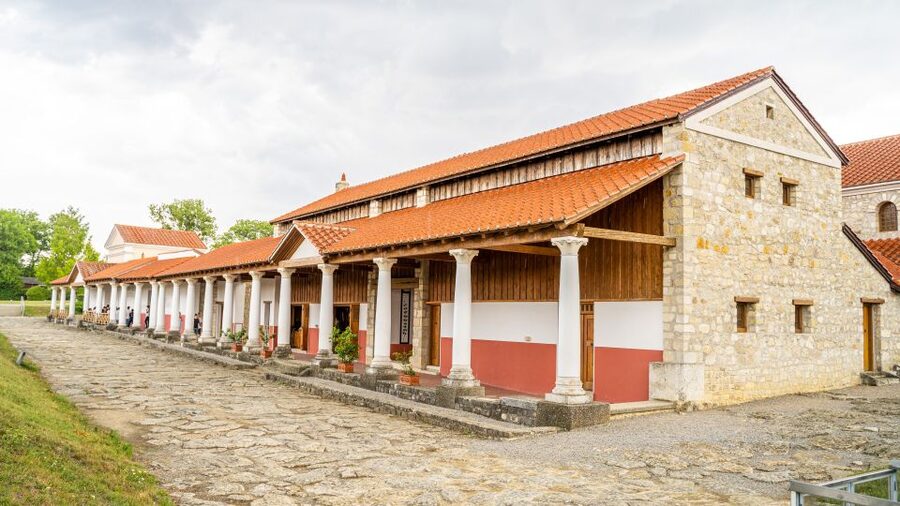
Start with the Roman Quarter in Petronell-Carnuntum. This gives you the basic picture of Roman homes, baths, furnishings, and decorative details before you encounter the museum objects.
Next, visit the Carnuntinum Museum in Bad Deutsch-Altenburg. Use it to connect the objects and archaeological finds with the buildings you have just seen. The museum is not a substitute for the outdoor quarter, and the outdoor quarter is not a substitute for the museum. The two parts work best together.
Finish with Heathen’s Gate and the civil-city amphitheatre if timing and transport allow. Keep the military amphitheatre closure in mind, and do not assume it can be added to the route.
Because your admission is valid for one day, you can take a slower pace. That is useful here. Carnuntum rewards attention to the layout and details more than a hurried checklist.
Should you book Roman City of Carnuntum Admission?
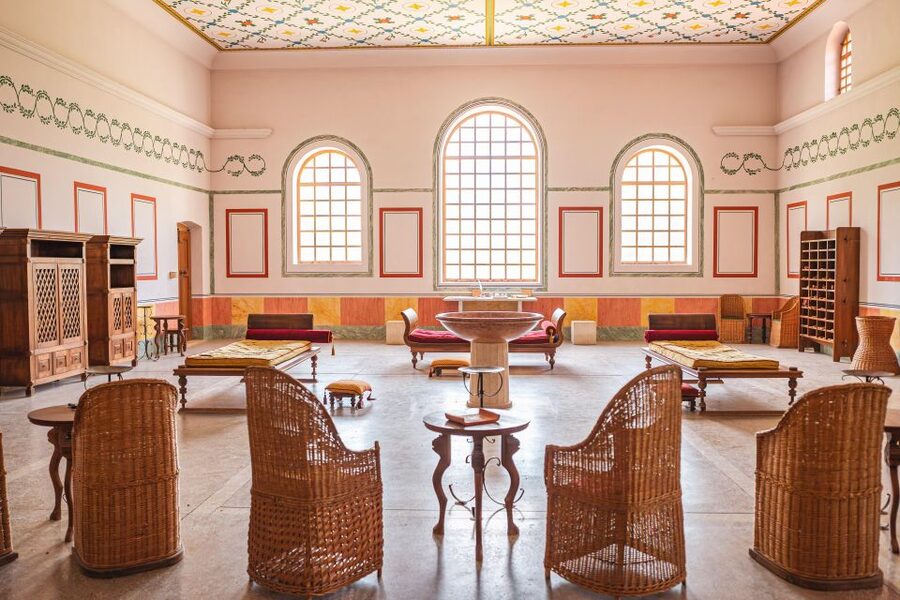
Book it if you want an accessible, reasonably priced Roman day trip from Vienna with reconstructed homes, baths, a museum, and open-air monuments. The strongest reason to come is the Roman Quarter, where the original locations and evidence-based interiors make ancient daily life easier to understand.
I would book with one qualification: the military-city amphitheatre is closed for renovation. If you accept that limitation, the $16 admission offers a solid day of Roman history, especially when you include the Carnuntinum Museum and Heathen’s Gate.
FAQ
What does the Roman City of Carnuntum admission include?
The admission includes entry to the Roman Quarter in Petronell-Carnuntum and the Carnuntinum Museum in Bad Deutsch-Altenburg.
Is the military-city amphitheatre open?
No. The amphitheatre in the Military City is currently closed for renovation.
Can I still see an amphitheatre at Carnuntum?
Yes. The nearby amphitheatre of the Civil City can be visited, along with Heathen’s Gate.
How do I reach Carnuntum from central Vienna?
From Wien Mitte, also called Landstraße, take the S7 toward Wolfsthal. Get off at Petronell-Carnuntum station and walk about 15 minutes, following the signs to the Roman City.
How long is the admission valid?
The admission is valid for one day. Starting times and availability should be checked for your chosen date.
Is the experience wheelchair accessible?
Yes, the activity is listed as wheelchair accessible.
Just added around Austria
- Ottakringer Brewery tour★ 4.0 · 6 reviews
- Private Van & Walk Tour – One Perfect Day in Vienna★ 5.0 · 21 reviews
- True Crime mobile puzzle rally Vienna★ 4.0 · 3 reviews
- New Hofburg Palace Tour House of Habsburg★ 4.5 · 5 reviews
- Vienna Naschmarket Food Tasting Tour★ 4.0 · 30 reviews
- Vienna Nightlife Experience: Food, Wine, Cocktails & Vibes★ 5.0 · 119 reviews
- Myth Mozart★ 4.0 · 80 reviews
- ( Night Tour ) With Private Guide + wine or prosecco★ 4.0 · 12 reviews
City Tours, compared.
Guided Walking Tour of City Center Highlights
Read our review →
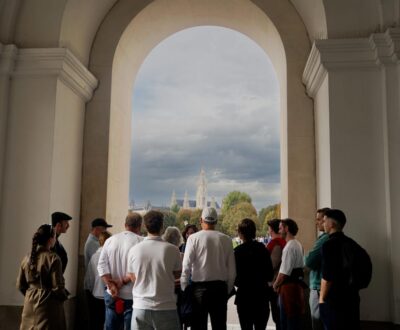
Guided Walking Tour of City Highlights & Hidden Gems
Read our review →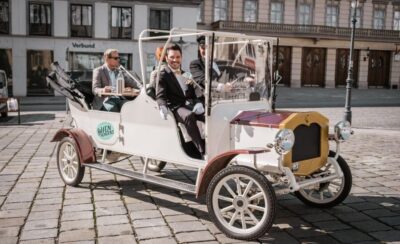

Skip-the-Line Schonbrunn Palace Guided Tour and Vienna Historical City Tour
Read our review →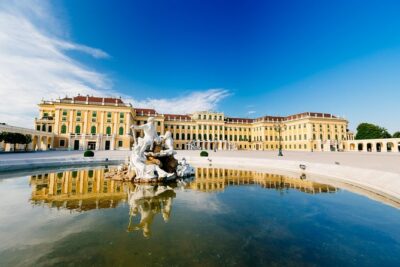

Browse the lists this tour appears in