Reviewed · VIENNA TOURS
Italian VIENNA
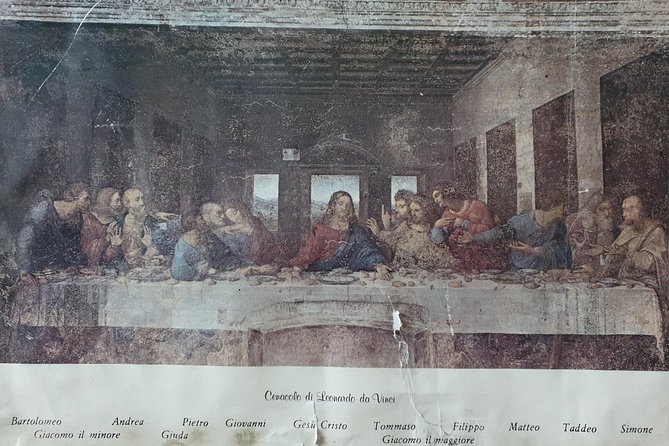
Vienna’s Italian side is easy to miss. This walking tour brings it into view by connecting the city’s Baroque image with Italian painters, architects, builders, composers, preachers, adventurers, and military figures. The story begins at Minoritenkirche, the church of Vienna’s Italian community, and finishes at St. Stephen’s Cathedral.
I like two things right away. First, the theme gives familiar central Vienna a fresh angle, so even a second visit can feel different. Second, Mario Casalone’s style mixes facts, anecdotes, daily-life details, and plenty of room for questions. The main consideration is that the tour lasts about two and a half hours outdoors, and it requires good weather.
Key points to know before booking
- Italian Vienna rather than standard imperial Vienna: The tour explains how Italian art and culture helped shape the city you see today.
- Mario Casalone leads the walk: His warm, expressive style and ability to connect facts with stories are central to the experience.
- Two clearly identified landmarks: You begin at Minoritenkirche and visit the Hofburg before ending at Stephansplatz.
- A useful second-look tour: It can work especially well if you have already seen central Vienna and want a new way to read its buildings.
- Small enough for a guided experience: The maximum group size is 30 people.
- Good value at $33.20: With roughly 150 minutes of guided interpretation and no listed admission fees for the stops, the price is reasonable for central Vienna.
Why Italian influence matters in Vienna
Most first-time visits to Vienna focus on the Habsburgs, grand palaces, classical music, coffeehouses, and monumental churches. Those subjects are important, but they can make Vienna seem like a self-contained Austrian world.
This walk offers a different explanation. Vienna’s appearance was shaped by people and ideas that crossed the Alps. Italian artists and architects helped give the city its Baroque character, while Italian cultural influence touched music, religion, court life, and military affairs.
That makes the tour more than a list of Italian names. It asks you to look at the city as a meeting point between Austria and Italy. You may pass a familiar building and see it differently because the guide points out the Italian connection behind its design, decoration, or story.
I find that approach useful for two kinds of people. If you already enjoy Italian art, architecture, or culture, the tour gives you a way to follow those interests outside Italy. If Vienna is new to you, it gives the city a clear theme that helps organize what you see during the rest of your stay.
The emphasis is also personal rather than purely academic. Mario Casalone is described as friendly, patient, lively, and comfortable answering questions. That matters on a walking tour because a long string of dates and names can quickly become tiring. A guide who can explain ideas with anecdotes and humor makes the material easier to remember.
Other Vienna days people book alongside this one:
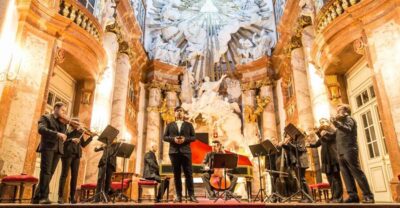
- Vienna: Vivaldi’s Four Seasons Concert in Karlskirche
★ 4.7 · 14,951 reviews - Vienna: Spanish Riding School Training
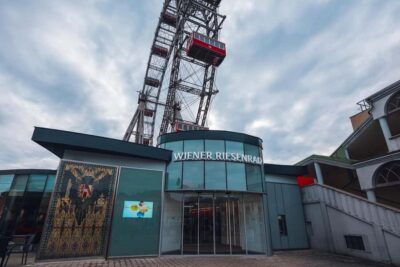
★ 3.9 · 9,281 reviews - Vienna: Skip-the-cashier-desk-line Giant Ferris Wheel Ride
★ 4.5 · 7,859 reviews
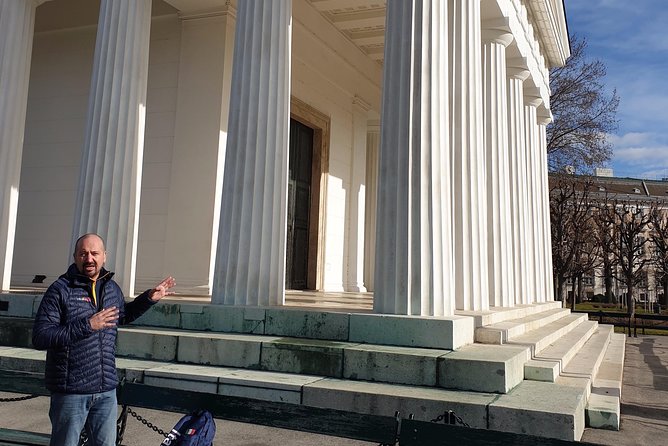
Starting at Minoritenkirche, Vienna’s Italian church
The meeting point is Wiener Minoritenkirche, at Minoritenplatz 2A in Vienna’s first district. This is not just a convenient starting place. It is the church of Vienna’s Italian community, so it gives the tour an immediate and fitting introduction.
You begin with a place that represents an ongoing Italian presence in the city, then move outward into Vienna’s artistic and political story. That is a stronger opening than starting with a generic square and adding the Italian theme later.
The listed stop lasts about 15 minutes, with free admission. Since no paid entrance is included here, the focus is on what Mario explains rather than on a long interior visit. You should expect an introductory stop, not a full church service, museum visit, or extended architectural study.
This part may be especially useful if you know little about Italian connections in Vienna. It sets up the central idea that Italian influence was not limited to a few imported paintings. It was tied to communities, institutions, and people who lived and worked in the city.
The church is also a practical meeting point. Minoritenplatz is in central Vienna and close to public transportation. Check your mobile ticket carefully for the scheduled starting time, then arrive with enough time to locate the church and guide without rushing.
The Hofburg and the Habsburg connection
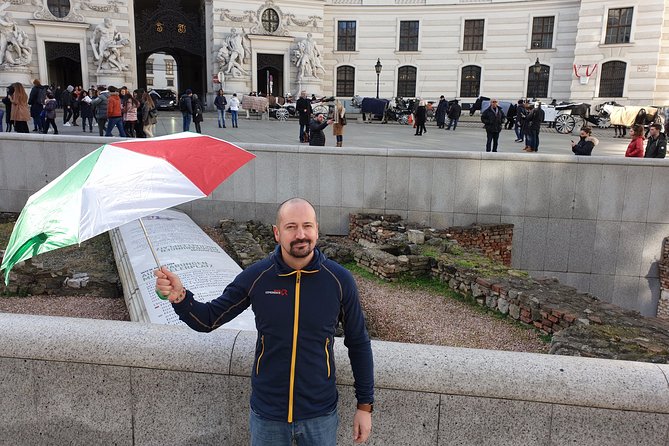
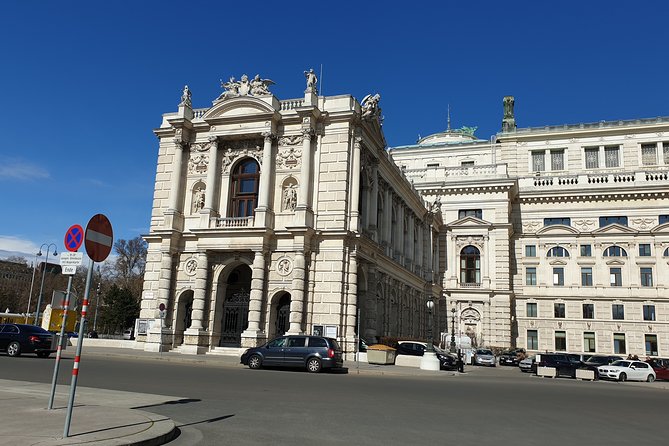
The second named stop is the Hofburg, the imperial palace of the Habsburg family. The visit focuses on the palace area associated with Emperor Franz Joseph and Empress Elisabeth, widely known as Sissi.
The Hofburg is a natural place to discuss cultural exchange. It represents the ruling court that commissioned buildings, supported artists, and shaped the public image of Vienna. In this setting, Italian architects, artists, and builders become part of a wider story about power and taste.
The stop is listed at about 15 minutes and has no admission charge as part of the walk. That wording is important. You are not booking entry to the Hofburg’s imperial apartments or a museum collection. You are visiting the exterior area and hearing the guide’s explanation.
If you want a detailed look inside the imperial apartments, the Sisi Museum, or other Hofburg attractions, plan those separately. This tour gives you context around the palace rather than replacing a full paid visit.
That can be a good choice for a short stay. You get the main setting, learn how it fits the Italian Vienna theme, and keep moving through the historic center. The trade-off is limited time at each formally listed stop. The value comes from the connections Mario makes along the route, not from spending a long time inside one attraction.
Following the route to Stephansplatz
The walk ends at Stephansplatz, the cathedral square of St. Stephen’s Cathedral. This gives you a strong finish in one of Vienna’s best-known central locations.
Stephansplatz is useful as an endpoint because you can continue your sightseeing from there. You are left near one of the city’s major landmarks, with easy access to central streets, shops, restaurants, and public transportation. The tour does not list an admission ticket to the cathedral, so think of the square as the final setting rather than a guaranteed interior visit.
The route between the named stops is where much of the tour’s storytelling takes place. The supplied information does not provide a full stop-by-stop street plan, exact walking distance, or a complete list of buildings. I would therefore book this for the theme and the guide, not for a fixed checklist of attractions.
That open format may suit you if you enjoy learning as you walk. Mario can use the streets and buildings around him to show how Italian influence appears across the center. It may suit you less if you prefer a tightly published route with every stop and minute listed in advance.
Same Alps, a completely different kind of day:
- Vienna: Schönbrunn Palace & Gardens Skip-the-Line Tour
★ 4.7 · 7,739 reviews - Vienna: Light of Creation Votive Church Immersive Light Show
★ 4.8 · 6,779 reviews - Vienna Spanish Riding School Guided Tour
★ 4.7 · 6,765 reviews - Vienna: Classical Concert in the World-Famous Musikverein
★ 4.6 · 6,673 reviews
Mario Casalone’s guiding style
The guide is Mario Casalone, who operates as MarioViennaGuide. His biggest strength appears to be communication. He is described as prepared, approachable, eloquent, and entertaining, with a talent for making complicated subjects feel conversational.
The strongest pattern in the feedback is not one particular landmark. It is the way Mario tells the story. He combines art, architecture, political history, small curiosities, and everyday life instead of delivering a dry lecture.
That blend makes a difference during two and a half hours on foot. You may be interested in Italian architects but less interested in military history. Or you may enjoy stories about composers and preachers more than formal discussions of Baroque design. A guide who moves between those subjects gives you more chances to stay engaged.
His patience with questions is another plus. You are not limited to listening silently while the group moves from place to place. If something sparks your interest, you can ask for clarification or a wider connection.
The guide’s Italian background also seems to shape the tone. The experience has an Italian touch in its humor and storytelling, while the subject remains firmly rooted in Vienna. That balance is important. This is not simply a tour of Italy transplanted into Austria. It is a tour of Vienna seen through its Italian connections.
What the $33.20 price gets you
At $33.20 per person, the tour sits in a sensible range for a specialized central-city walk. You are paying for about 150 minutes of live guiding, a focused subject, and a route linking major central landmarks.
The two listed stops have free admission, so the price is not being driven by entrance tickets. That is both good and limiting. Good, because you do not pay for attractions you may not want to enter. Limiting, because the tour’s value depends heavily on the quality of the explanation.
In this case, the theme gives the fee a clear purpose. A standard orientation walk might cover Vienna’s main sights at a broad level. This experience aims at something more specific: the Italian artists, architects, cultural figures, and historical links behind the city’s public image.
I would call it good value if you enjoy guided interpretation and want a fresh angle on the center. It is less useful if you only want entrance to palace rooms or a long visit inside a church. Those are separate experiences.
The maximum group size is 30. That is not a private tour, and the experience may feel more public if the group reaches its limit. Still, a cap of 30 is more manageable than an unregulated crowd. Since Mario’s style depends on storytelling and questions, a smaller departure would likely feel more personal, but the supplied information does not promise a smaller number.
Who should book this walk
I would recommend Italian Vienna to you if you fit one or more of these descriptions:
- You enjoy architecture and want to understand who shaped Vienna’s Baroque appearance.
- You have already seen the central sights and want a new interpretation.
- You are interested in links between Italy and Austria.
- You prefer stories and conversation to a museum audio guide.
- You like history presented through personalities, anecdotes, and places.
- You want a guided walk that finishes in the heart of the city.
It should also work well for people with mixed interests. One person in your group may care about architecture, another about the Habsburg court, and another about music or unusual historical stories. The broad subject range gives the guide room to appeal to all three.
I would be more cautious if you need a fully detailed architectural tour, a dedicated music tour, or a palace interior visit. The description promises a broad journey through Italian Vienna, not specialist study of one building or access to exclusive rooms.
The tour is listed as suitable for most people, with public transportation nearby. Since it is an outdoor walking activity, wear comfortable shoes and check the weather before you go. No special physical requirement is given, but anyone who dislikes standing and walking for roughly two and a half hours should take that into account.
Weather, timing, and cancellation details
Good weather is required. If poor weather causes the tour to be canceled, you are offered another date or a full refund. That policy is reassuring, but it also tells you to avoid placing the tour at the very end of a tightly planned Vienna visit.
You can cancel for a full refund up to 24 hours before the scheduled start time. Cancellations or changes made less than 24 hours ahead are not refunded or accepted, and the cut-off follows local Vienna time.
The experience also requires a minimum number of participants. If that minimum is not met, you are offered another date or experience, or a full refund.
Because the walk begins at Minoritenkirche and ends at Stephansplatz, it is easy to pair with other central sightseeing. Still, leave yourself breathing room afterward. A two-and-a-half-hour walk can run close to its stated duration, especially when questions and stories take the conversation beyond the formal stops.
The strongest reasons to choose it
The tour has a clear identity. It is not a general introduction to Vienna, and that is its advantage. You will spend your time asking why Italian people, styles, and ideas appear in the Austrian capital.
I also like that it can change how you see places you have already visited. A palace, church, or square can feel familiar after a day or two in Vienna. A new guide can give that same place another layer, especially when the explanation links art with court life, religion, music, or personal stories.
Mario’s approach seems suited to this subject. Italian influence could easily become a dry catalog of architects and dates. His use of humor, curiosity, and everyday examples keeps the subject human.
The high recommendation level and five-star rating from 14 reviews support the idea that the experience delivers well on its central promise. The number is still modest, so I would treat it as encouraging rather than definitive. The most consistent praise concerns Mario’s warmth, storytelling, breadth of knowledge, and willingness to answer questions.
Is Italian Vienna worth booking?
Book it if you want Vienna to feel less familiar and more connected to the wider European world. At $33.20, the cost is fair for a two-and-a-half-hour guided walk with a distinct theme, especially if you enjoy architecture, art, court culture, or Italian history.
Skip it if your priority is entering the Hofburg rooms, spending a long time inside Minoritenkirche, or following a fully itemized sightseeing route. Those are not the main purpose here.
For most visitors who like thoughtful walking tours, I would put Italian Vienna on the shortlist. Start at Minoritenkirche, listen closely for the links between Italy and Vienna, and finish at Stephansplatz with a new way to read the city’s grand center.
FAQ
How long does Italian Vienna last?
The experience lasts approximately 2 hours and 30 minutes.
How much does the tour cost?
The listed price is $33.20 per person.
Where does the tour begin?
The tour begins at Wiener Minoritenkirche, Minoritenplatz 2A, 1010 Vienna, Austria.
Where does the tour end?
The walk ends at Stephansplatz, the cathedral square of St. Stephen’s Cathedral.
Is admission included at the listed stops?
Admission is listed as free for both Minoritenkirche and the Hofburg stops.
What happens if I need to cancel?
You can receive a full refund if you cancel at least 24 hours before the experience start time. Cancellations made less than 24 hours in advance are not refunded.
Just added around Vienna
- Ottakringer Brewery tour★ 4.0 · 6 reviews
- New Hofburg Palace Tour House of Habsburg★ 4.5 · 5 reviews
- Private Van & Walk Tour – One Perfect Day in Vienna★ 5.0 · 21 reviews
- True Crime mobile puzzle rally Vienna★ 4.0 · 3 reviews
- Vienna Naschmarket Food Tasting Tour★ 4.0 · 30 reviews
- Vienna Nightlife Experience: Food, Wine, Cocktails & Vibes★ 5.0 · 119 reviews
- Myth Mozart★ 4.0 · 80 reviews
- ( Night Tour ) With Private Guide + wine or prosecco★ 4.0 · 12 reviews
Vienna Tours, compared.
Vivaldi’s Four Seasons Concert in Karlskirche
Read our review →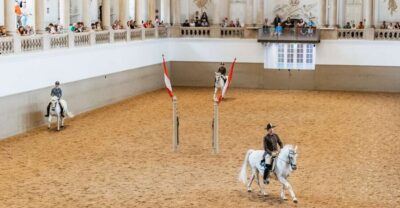
Skip-the-cashier-desk-line Giant Ferris Wheel Ride
Read our review →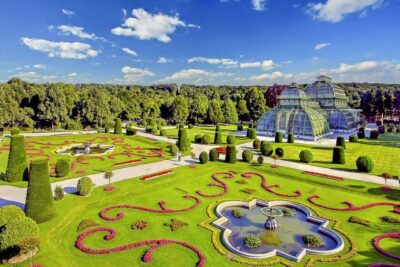
Schönbrunn Palace & Gardens Skip-the-Line Tour
Read our review →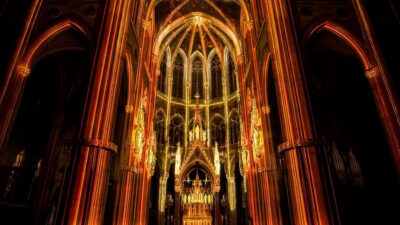
Light of Creation Votive Church Immersive Light Show
Read our review →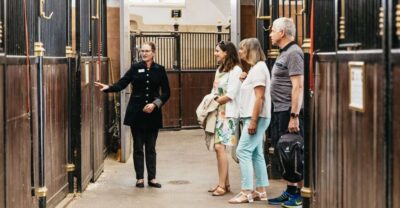
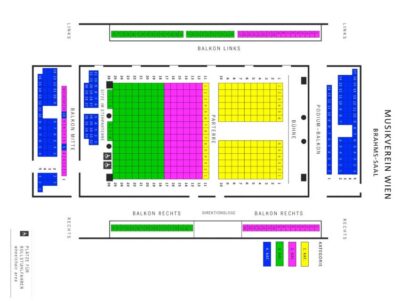
Classical Concert in the World-Famous Musikverein
Read our review →