
Reviewed · SCHONBRUNN PALACE TOURS
Grand Schoenbrunn Palace and Carriage Museum Tour Small Group
Schönbrunn tells two imperial stories in one afternoon: the grand public world of Habsburg ceremony inside the palace, and the more personal story of royal travel at the Carriage Museum. You’ll see rooms made for court life, then the vehicles used for weddings, coronations, childhood, and even Empress Elisabeth’s final days.
I like the small group of no more than 10 because it keeps the guide close and makes questions practical. I also like the mix of indoor rooms and open-air gardens, especially the Great Gallery, Neptune Fountain, Roman Ruin, and the view toward the Gloriette.
The main consideration is the pace and footing. You’ll be walking on uneven surfaces outdoors, and the tour operates in all weather. The zoo, Palm House, park trains, food, and drinks are not included, so this is best for a focused palace visit rather than a full-day Schönbrunn outing.
Key points to know before booking
- Two imperial collections in one visit: Schönbrunn Palace and the Kaiserliche Wagenburg Wien are both included.
- A genuinely small group: The maximum is 10 people, with audio headsets supplied so you can follow the guide clearly.
- Priority palace entry: Reserved access helps keep the visit moving during a busy afternoon.
- A strong guide can make the difference: Guide Dace Schaerf is specifically associated with a clear, casual presentation and a well-judged pace.
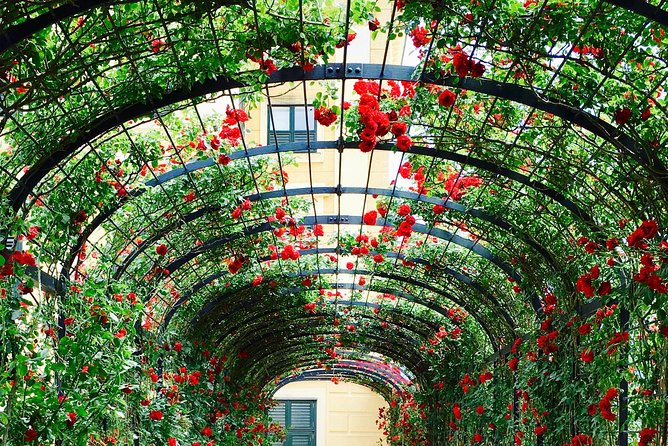
- The gardens are part of the experience: You’ll see the Great Parterre, Neptune Fountain, Roman Ruin, exotic plants, and tree-lined avenues.
- Extra attractions cost more: The zoo, Palm House, trains, food, and drinks are outside the $44 tour price.
Why Schönbrunn works best with a guide
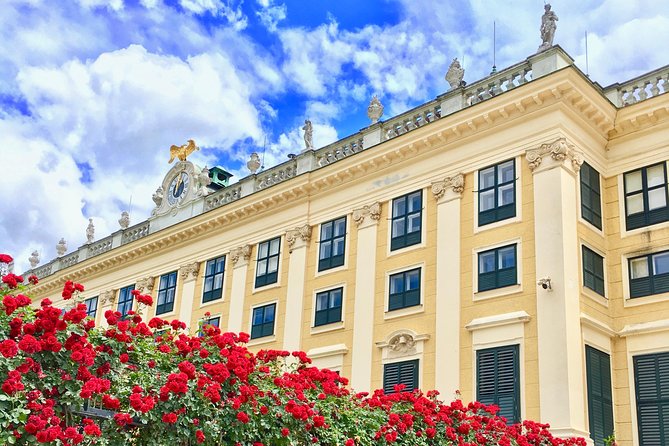
Schönbrunn is not simply a pretty palace with yellow walls. It was a working imperial residence, a place for ceremony, family life, political theater, and royal display. Without context, you can admire the rooms and move on. With a guide, the decoration begins to explain how the Habsburg court wanted to be seen.
The tour takes about two and a half hours and begins at 2:00 pm outside the Museum Shop at Schönbrunner Schloßstraße 47. That start time gives you a useful afternoon visit, though you should allow extra time before or after the tour if you want to see the zoo, Palm House, or more of the park.
The group limit matters here. Schönbrunn can be crowded, and large groups often turn an explanation into a struggle to hear. This experience supplies audio headsets, and a maximum of 10 people gives you a better chance to ask about a room, a person, or a detail that catches your eye.
When Dace Schaerf leads the visit, expect a relaxed presentation with plenty of detail but no needlessly formal tone. The pace is designed to last about two and a half hours, so you get more than a quick look without committing an entire day.
More Schonbrunn Palace Tours in Vienna:
- Vienna: Schönbrunn Palace & Gardens Skip-the-Line Tour
★ 4.7 · 7,739 reviews - Vienna: Skip-the-Line Schönbrunn Palace & Gardens Tour
★ 4.8 · 5,411 reviews - Vienna: Bus & Schönbrunn Palace Skip-the-Line Guided Tour
★ 4.3 · 2,802 reviews
Inside the palace: ceremony, family, and royal display
The palace section is the heart of the experience. Reserved priority access is included, which is useful because a famous palace can lose much of its charm when you spend the visit waiting to get inside.
The rooms named for the Napoleon period and Marie Antoinette point to the wider family network of European royalty. Schönbrunn’s story is not limited to Vienna. The Habsburg family was tied to courts across Europe, and the rooms help place Austria’s imperial household within that larger royal world.
You’ll also see the Great Gallery, the palace’s grand ballroom. This is the room to watch for scale. A ceremonial hall such as this was meant to impress before anyone spoke, danced, or negotiated. The long room, formal decoration, and use for lavish court events show how architecture helped stage power.
The palace rooms are polished and formal, so do not expect a hands-on museum or an open-ended wander. You follow the guide through selected interiors, listening to the story of the people who used them and the public image they created.
That guided structure is a strength if you want background and a limitation if you prefer to stop wherever you like. The tour is built around a set route and a fixed schedule, not a private exploration of every corner.
The Carriage Museum and Empress Elisabeth’s personal story
The Kaiserliche Wagenburg Wien adds something the palace rooms cannot: a direct look at how the imperial family moved through the world.
The Sisi path follows Empress Elisabeth from her wedding to her tragic death. You’ll see her entry carriage as an imperial bride, children’s carriages, the golden imperial carriage used for her coronation in Budapest, and the carriage she used in Geneva shortly before her assassination.
The display ends with the imposing black hearse that carried her to her grave. That final object changes the mood. Royal carriages can seem decorative at first, but this sequence connects them to specific moments in a woman’s life, from marriage and motherhood to ceremony and death.
The carriage collection is included in the admission, along with the palace. That makes the $44 price easier to justify than a palace-only walk, especially if you want more than architecture.
You should keep expectations clear. The carriage museum visit lasts about 20 minutes, so it is an important part of the route but not a long standalone museum tour. The value comes from the focused sequence and the guide’s explanation, not from having hours to inspect every vehicle.
The Neptune Fountain and the Great Parterre
Outside, the mood changes quickly. The formal rooms give way to broad garden paths, lawns, fountains, sculptures, and long views.
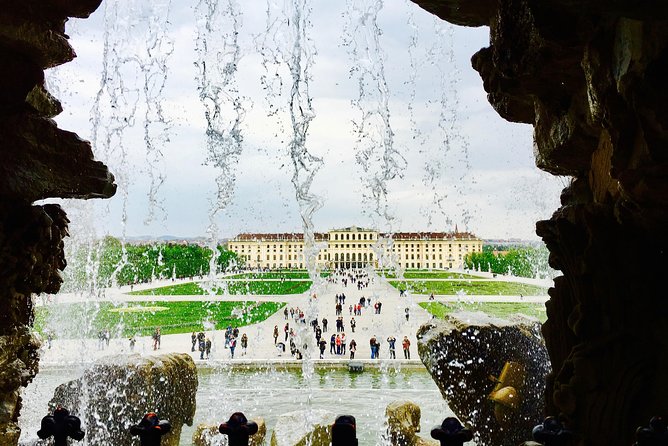
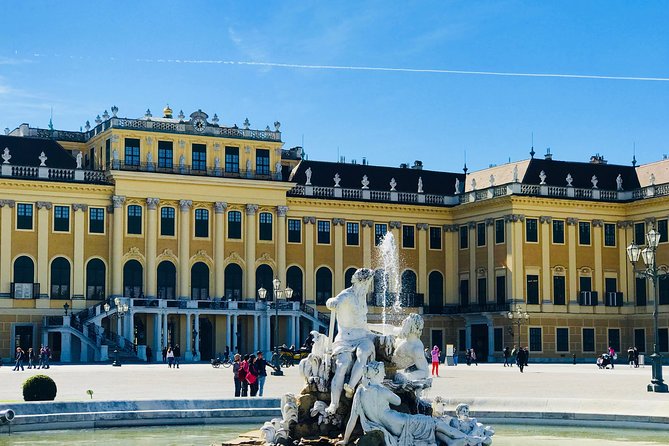
The Neptune Fountain is one of the main visual stops. It sits within the palace gardens and helps anchor the Great Parterre, the French-style garden area between the palace and the fountain. This is the part of Schönbrunn that most clearly shows the palace as a planned imperial setting rather than an isolated building.
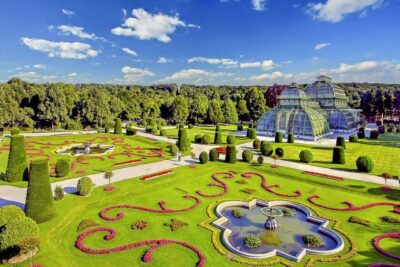
The Great Parterre uses Greek sculptures and carefully ordered planting. Look along the central axes and tree-lined avenues. The garden is designed to control what you see, when you see it, and how the palace appears from different positions.
This is also where the tour becomes more dependent on weather. The gardens are free to enter, but you’ll be outside for roughly 30 minutes, with other garden stops adding more time in the open air. Wear shoes suited to uneven surfaces and bring clothing for the conditions.
The garden walk is not just a pause between indoor rooms. It explains the scale of Schönbrunn. Inside, imperial power is shown through ceilings, galleries, and ceremony. Outside, it is shown through distance, symmetry, fountains, and ordered space.
A few more Vienna trips to weigh up
- Vienna: Skip-the-Line Sisi Museum, Hofburg and Gardens Tour
★ 4.8 · 5,918 reviews - Vienna Kunsthistorisches Museum Day Admission Ticket
★ 4.6 · 3,690 reviews - Tickets for the Albertina Exhibitions
★ 4.7 · 2,126 reviews - Vienna: Chocolate Workshop in Chocolate Museum w/ Tasting
★ 4.5 · 1,802 reviews
Roman Ruin, exotic plants, and the palace park
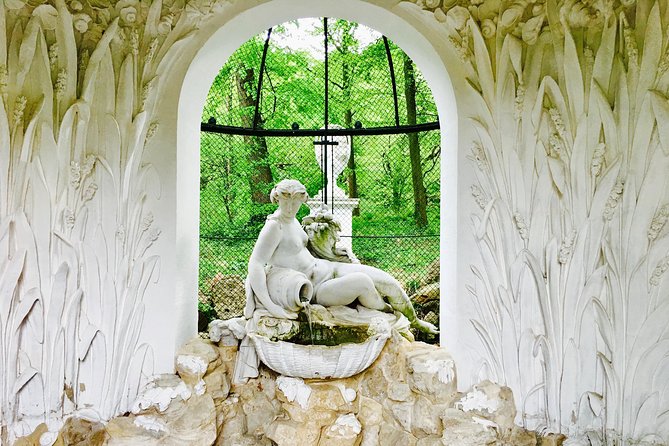
The Roman Ruin is a picturesque architectural group set within the park. Its purpose was symbolic: it represented the remains of a heroic past connected to the Habsburg dynasty.
That idea is worth noticing. The ruin is not simply an old fragment left to decay. It was placed in the park as part of the design, giving the imperial grounds a sense of age and classical authority.
The route also passes the imperial collection of exotic plants. The supplied schedule does not promise a full indoor visit to every plant collection, so treat this as a garden feature along the walk rather than a separate botanical tour.
The Orangery has its own royal connection. It once served as a winter quarter for citrus plants and is now used as a concert hall. You’ll see it as part of the palace complex, but admission to a concert is not part of this experience.
The park also contains Tiergarten Schönbrunn, the royal zoo described as the world’s oldest zoo. The tour makes a brief stop near it, but zoo admission is not included. If the zoo is a priority, plan a separate visit and do not assume the palace ticket covers it.
The same warning applies to the Palm House and park trains. They are available as separate activities, but they are outside the tour price.
The Gloriette view and the value of the garden walk
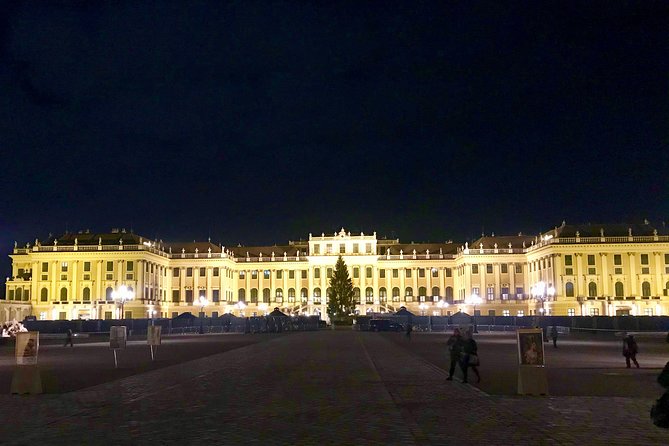
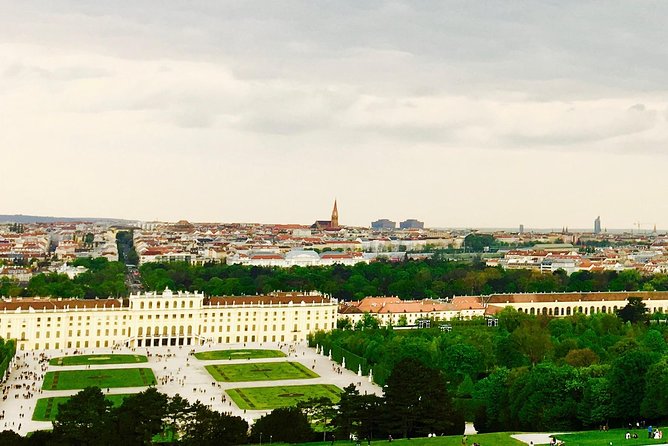
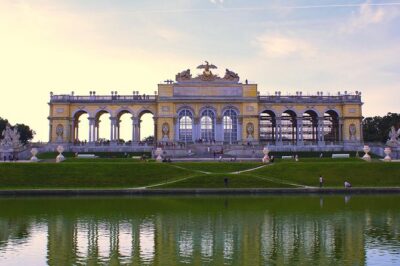
The Gloriette is one of the best reasons to keep your camera ready. From the garden side, it gives you a strong visual finish to Schönbrunn’s formal design, with the palace, lawns, and long avenues arranged below.
The supplied route does not give a separate admission or timed stop for the Gloriette, so the exact amount of time there can depend on the guide’s route and conditions. Still, the gardens provide the setting for the view, and the tour specifically points you toward this photographic moment.
I would not book this experience solely for an extended Gloriette visit. If you want to linger, take many photographs, or walk the full park at your own pace, you’ll need extra time after the guided portion.
The garden section works best for you if you want an introduction to the major features without having to plan your own route. You’ll see the most important landmarks, hear why they were placed there, and finish back at the meeting point.
Is $44 fair for two and a half hours?
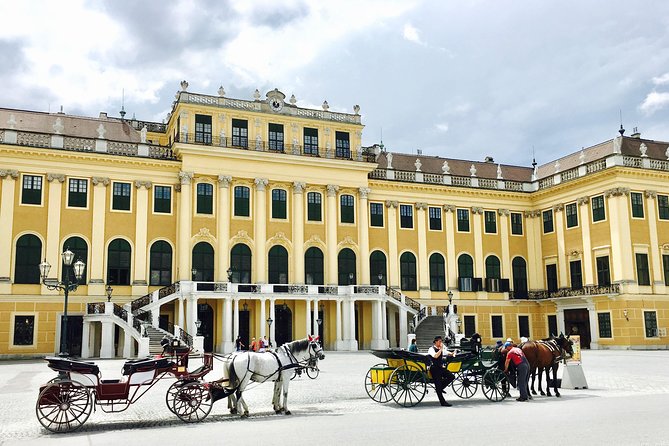
At $44, the price is reasonable for a visitor who wants structure and included admissions. Palace entry, reserved priority access, the professional local guide, audio headsets, and Carriage Museum admission are all covered.
The strongest value comes from combining three things that are easy to separate when visiting alone: the palace interiors, the carriage collection, and the main garden features. You are paying for interpretation and time management as well as entry.
The price is less attractive if you only want to walk through the gardens. The gardens are free, and the extra attractions are not included. You may also find a self-guided palace visit better if you prefer reading at your own speed and spending more time in one room.
For many first visits, though, the small group makes the difference. A group of 10 is far more manageable than a large coach party, and the headsets reduce the usual problem of losing the guide’s explanation in a crowded room.
The tour has a rating of 4.8 from 20 reviews, with 100 percent marked as recommended. The most consistent praise centers on the guide’s English, clear explanations, relaxed manner, and good pacing. Those are practical strengths, not decorative extras, because a palace tour can become tiring when the guide talks too fast or buries the rooms under dates.
Timing, meeting point, and practical fit
You meet at the Museum Shop on Schönbrunner Schloßstraße 47 in Vienna’s 1130 district. The meeting point is near public transportation, and the tour ends back where it begins.
The stated duration is about 2 hours and 30 minutes. The published stop times do not add up neatly to the full duration, so allow the entire afternoon window rather than treating each stop as a strict appointment. Palace entry, movement between rooms, explanations, and the garden route all take time.
A moderate level of physical fitness is needed. The experience is not recommended for people with walking disabilities because of uneven surfaces. You should be ready for regular walking, outdoor paths, and standing during explanations.
The tour runs in all weather, so dress for the day. A poor-weather cancellation is possible under the stated policy, with a different date or a full refund offered. The operator can also cancel if the minimum number of participants is not reached.
The mobile ticket is convenient, but you still need to arrive at the correct shop meeting point for the 2:00 pm start. Free cancellation is available up to 24 hours before the start time. Within 24 hours, the payment is not refunded, and late changes are not accepted.
Who will enjoy this Schönbrunn tour most?
I would choose this tour if you are visiting Schönbrunn for the first time and want the major palace rooms explained without spending a whole day on the site.
It suits you especially well if you like:
- Imperial history presented through both buildings and objects
- A small group rather than a large organized party
- A guide who can answer questions in clear English
- A fixed route that covers the main sights efficiently
- A balance of indoor palace rooms and outdoor gardens
- A short but meaningful look at Empress Elisabeth’s life
It may not suit you if you want a slow, private visit, extensive time in the zoo, a concert at the Orangery, or a full exploration of the gardens. It is also a poor fit if uneven paths or extended walking are difficult for you.
Families can find useful variety here, since carriages, fountains, ruins, and royal rooms offer different kinds of visual interest. Still, the fixed pace and historical explanations may work better for older children than for very young ones. The available information does not specify a child age range, so you should judge that based on your group.
Should you book it?
Book this Schönbrunn experience if you want a well-organized introduction to the palace, the main gardens, and the imperial carriage collection, all in a group capped at 10 people. The $44 price has solid value because the palace and carriage admissions are included, along with priority access and audio equipment.
Choose another plan if your main goal is the zoo, Palm House, park train, or a long independent walk. Those extras cost more and are not part of the tour.
For most first-time visitors who want context without giving up an entire day, this is a sensible choice. The palace provides the grand spectacle, the Carriage Museum adds a personal royal story, and the gardens give you the views that make Schönbrunn feel larger than a collection of decorated rooms.
FAQ
Where does the tour start?
The tour starts at the Museum Shop, Schönbrunner Schloßstraße 47, 1130 Vienna, Austria.
What time does the tour begin?
The scheduled start time is 2:00 pm.
How long does the tour last?
The experience lasts approximately 2 hours and 30 minutes.
Is palace admission included?
Yes. Reserved priority access to Schönbrunn Palace is included.
Is the Carriage Museum included?
Yes. Admission to the Kaiserliche Wagenburg Wien, also called the Carriage Museum, is included.
Are the zoo and Palm House included?
No. Admission to the zoo, Palm House, park trains, and other extra activities at Schönbrunn is not included.
Can I cancel for a full refund?
Yes, if you cancel at least 24 hours before the experience start time. Cancellations within 24 hours are not refunded.
Just added around Vienna
- Ottakringer Brewery tour★ 4.0 · 6 reviews
- New Hofburg Palace Tour House of Habsburg★ 4.5 · 5 reviews
- Private Van & Walk Tour – One Perfect Day in Vienna★ 5.0 · 21 reviews
- True Crime mobile puzzle rally Vienna★ 4.0 · 3 reviews
- Vienna Naschmarket Food Tasting Tour★ 4.0 · 30 reviews
- Vienna Nightlife Experience: Food, Wine, Cocktails & Vibes★ 5.0 · 119 reviews
- Myth Mozart★ 4.0 · 80 reviews
- ( Night Tour ) With Private Guide + wine or prosecco★ 4.0 · 12 reviews
Schonbrunn Palace Tours, compared.
Schönbrunn Palace & Gardens Skip-the-Line Tour
Read our review →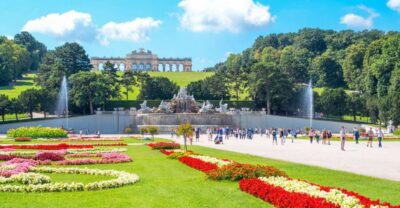
Skip-the-Line Schönbrunn Palace & Gardens Tour
Read our review →
Bus & Schönbrunn Palace Skip-the-Line Guided Tour
Read our review →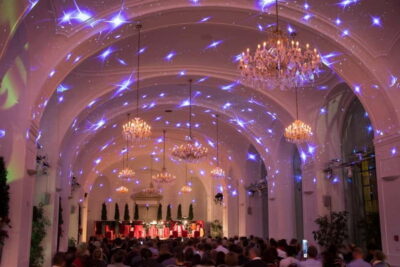
Skip the Line Schönbrunn Palace and Gardens Guided Tour
Read our review →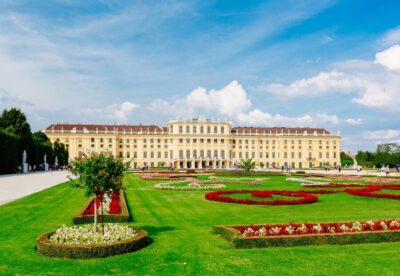
Schönbrunn Palace & Garden Skip-the-Line Guided Tour
Read our review →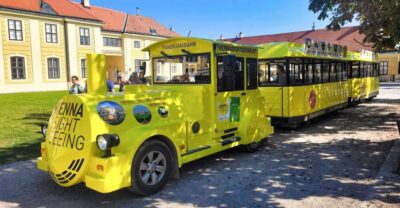
Panorama Train Tickets to explore Schönbrunn Palace
Read our review →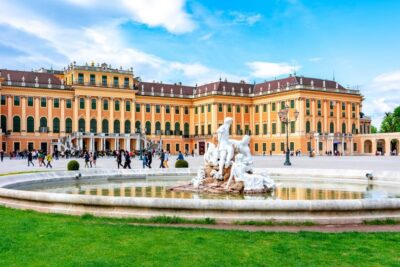
Skip-the-Line Schönbrunn Palace and Gardens Tour
Read our review →Browse the lists this tour appears in