Reviewed · VIENNA TOURS
Freud – Inside the mind of a Genius
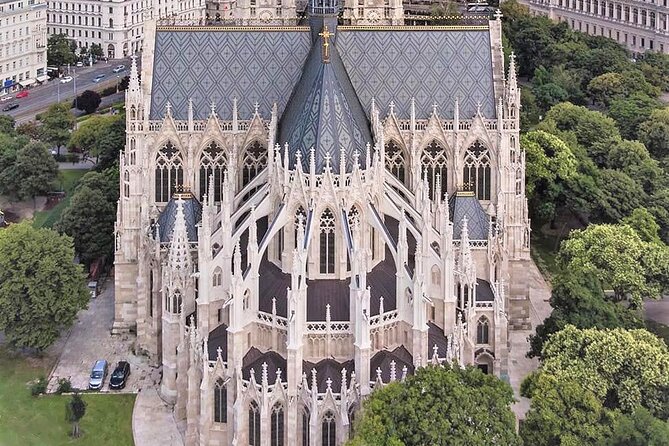
Freud’s Vienna feels most revealing when you leave the famous theories behind and look at the streets, schools, colleagues, and neighbors that shaped his work. This small-group walk connects the University of Vienna, the Votivkirche area, the Old University Quarter, and Freud’s former home at Berggasse 19.
I like the maximum group size of 10, which should make questions easier and keep the walk personal. I also like the way the tour links Freud’s private life to late-19th-century medicine, rather than treating him as an isolated genius. The main drawback is that the Freud Museum ticket costs extra, so the advertised price is not the full cost of the experience.
Key points to know before booking
- Follow Freud’s actual Vienna route: Start at the University of Vienna and finish at Berggasse 19, where Freud and his family lived.
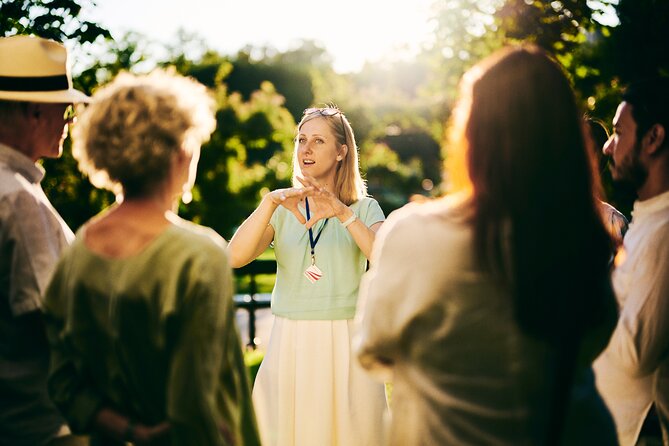
- Expect a small group: The tour is capped at 10 people, a useful size for conversation and questions.
- Meet Lisa Marie if she is your guide: She has been praised for making Freud’s story informed and entertaining.
- See the city behind the theories: The walk covers Freud’s study quarter, the Votivkirche neighborhood, and medicine in old Vienna.
- Budget for the museum separately: Admission to the Sigmund Freud Museum is not included in the $45.38 tour price.
- Plan for a moderate walk: You will move between several central Vienna stops and should be comfortable on foot.
Why Freud’s Vienna works better on foot
This is not a standard museum visit with a short biography followed by a room full of objects. The experience begins outdoors, where the city gives you a setting for Freud’s education, friendships, medical training, and family life.
That approach matters because the tour is built around connections. At the University of Vienna, you look at the setting where late-19th-century medicine was taught. Near Votivkirche, you hear about the friends and bright minds in Freud’s circle. In the Old University Quarter, the focus turns to the kind of medicine Freud encountered while studying.
The final stop brings the story into sharper focus. Freud’s former home at Berggasse 19 is where he and his family lived for many years, and it is also the place associated with his practice. The visit raises a difficult question: why did Freud have to leave, and what happened to his family afterward?
You will not spend the whole experience inside a museum. Instead, the walk gives you context first, then sends you into the museum with a clearer sense of place. I find that a good fit if you enjoy history through streets and buildings, rather than only through displays.
Other Vienna days people book alongside this one:
- Vienna: Vivaldi’s Four Seasons Concert in Karlskirche
★ 4.7 · 14,951 reviews - Vienna: Spanish Riding School Training
★ 3.9 · 9,281 reviews - Vienna: Skip-the-cashier-desk-line Giant Ferris Wheel Ride
★ 4.5 · 7,859 reviews
Starting at the University of Vienna
The meeting point is Universität Wien Studienzulassung at Universitätsring 1, in Vienna’s 1010 district. The tour begins at 2:00 p.m., so give yourself enough time to reach the university and find the precise starting point.
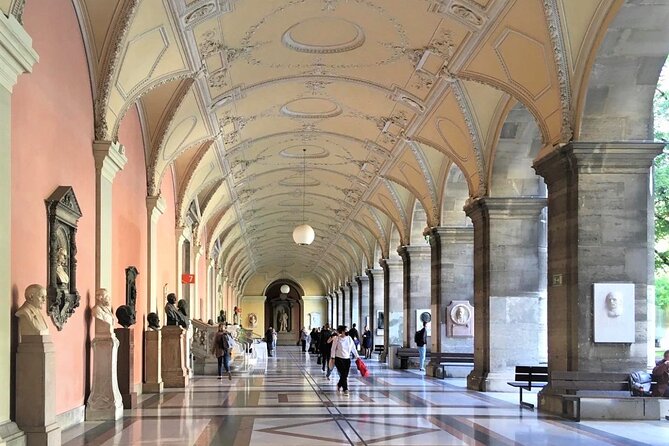
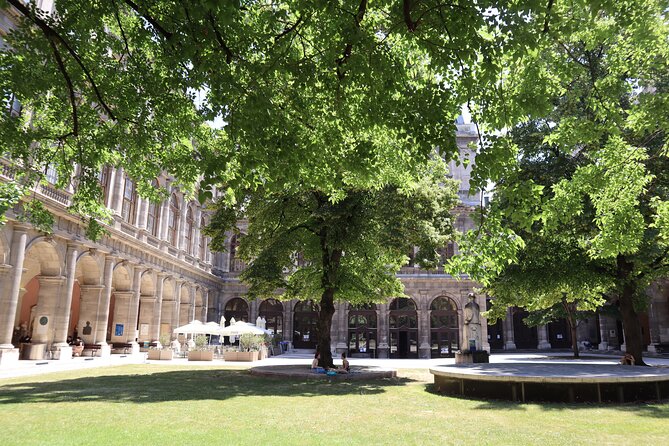
The first stop lasts about 15 minutes. You look into the striking courtyard of the University of Vienna and travel back to the late 19th century, when Freud was developing his medical career.
This opening is brief, but it sets the tone. You are not simply told that Freud studied medicine. You are asked to consider the academic world around him and the medical ideas that shaped his early work.
I like beginning here because it puts Freud into an institution. His later theories did not appear out of nowhere. The university stop helps explain the professional and intellectual setting he had to work within.
Do not expect a long indoor university tour. Admission is free, and the listed stop centers on viewing the courtyard and hearing the guide’s explanation. The value comes from the interpretation, so your experience will depend in part on how well the guide links the place to Freud’s life.
The Votivkirche neighborhood and Freud’s circle
The walk continues toward Votivkirche, with about 10 minutes devoted to the area. The focus here is on Freud’s friends and the people around him.
This is one of the more personal sections of the experience. Freud can easily be presented as a solitary figure, sealed off with his theories and patients. The Votivkirche stop instead asks you to think about the people who influenced, challenged, or supported him.
The exact route and the amount of time spent at each point may vary with the guide, but the stated theme is clear: this neighborhood was connected to friends and bright minds in Freud’s life. That makes the stop useful if you want more than a basic timeline of his career.
I would especially value this part if you already know Freud’s name but not much about his social world. One of the strongest parts of the experience is its attempt to show how a person’s work grows out of ordinary surroundings, friendships, and professional contacts.
The stop is short, so do not expect every person in Freud’s circle to receive a full biography. Think of it as a compact introduction before the walk moves into the Old University Quarter.
Medicine in Freud’s Old University Quarter
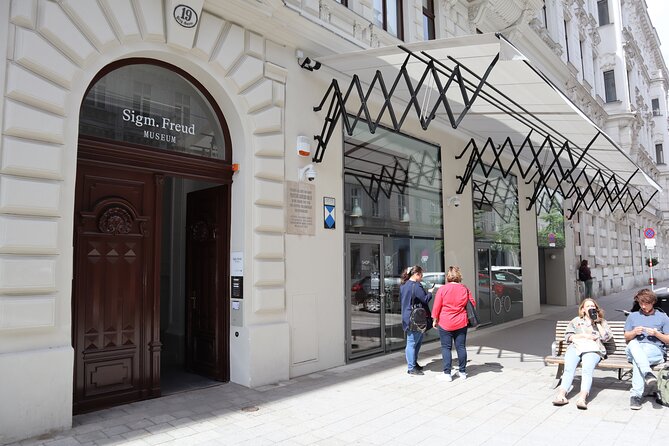
The third stop takes about 15 minutes in the Old University Quarter, where Freud studied. Here, the guide discusses medicine in the old days and the intellectual setting in which Freud formed his ideas.
This is likely the most useful stop for anyone interested in psychology, psychiatry, or medical history. It moves the conversation away from Freud as a famous name and toward the training, assumptions, and debates that shaped his professional life.
A psychologist should find this section especially relevant. One psychologist who took the tour came to Vienna hoping to experience the places where Freud lived and worked, and found that learning about his background and challenges helped make his theories easier to understand.
That point is important. You may not agree with Freud’s ideas, and the tour is not presented as a defense of every part of his work. Instead, it gives you a way to consider how his background and struggles influenced the theories he developed.
The Old University Quarter also breaks up the walk nicely. You are moving through a real part of Vienna rather than standing in one room while listening to a lecture. Still, the stop lasts only about 15 minutes, so people wanting a full history of Viennese medicine will need another museum or dedicated tour.
Same Alps, a completely different kind of day:
- Vienna: Schönbrunn Palace & Gardens Skip-the-Line Tour
★ 4.7 · 7,739 reviews - Vienna: Light of Creation Votive Church Immersive Light Show
★ 4.8 · 6,779 reviews - Vienna Spanish Riding School Guided Tour
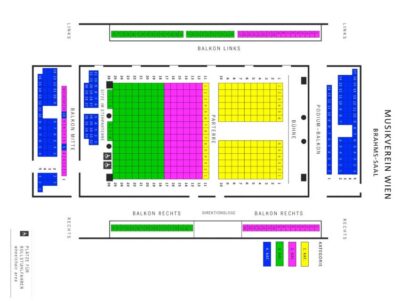
★ 4.7 · 6,765 reviews - Vienna: Classical Concert in the World-Famous Musikverein
★ 4.6 · 6,673 reviews
Finishing at Berggasse 19
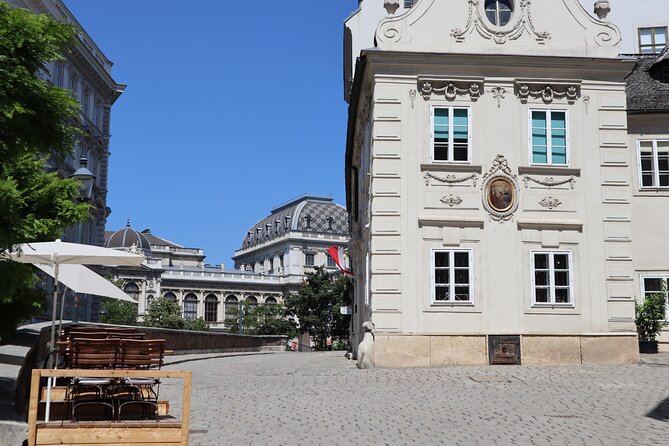
The walk ends at the Sigmund Freud Museum at Berggasse 19 in Vienna’s 1090 district. This is the address where Freud and his family lived for many years.
The supplied schedule gives this final stop an unusually long entry of 20 hours, while the overall experience is described as approximately two hours. Treat the total duration as about two hours and consider the 20-hour figure a scheduling error. The practical point is that you should expect the guided portion to finish at the museum, not spend an entire day there.
The museum ticket is not included. You will need to pay admission separately if you want to go inside, so check the current museum price when planning your budget. The tour’s $45.38 fee covers the guided walk and the stated tax, but not the museum entry.
That extra cost can be worthwhile because the museum is the place where the walking tour’s questions become tangible. You have heard about Freud’s home, his family, and his decision to leave. Inside, you can continue that story at your own pace.
The museum visit also gives you a natural way to spend more time with the subjects that interest you most. If you care mainly about Freud’s theories, you can focus on the professional side. If you are more interested in his family and the circumstances that forced him to leave, the final stop gives that part of the story greater weight.
You should not assume the museum admission is guided unless that is confirmed separately. The supplied experience ends at the museum, and its ticket is your responsibility.
What makes the small group valuable
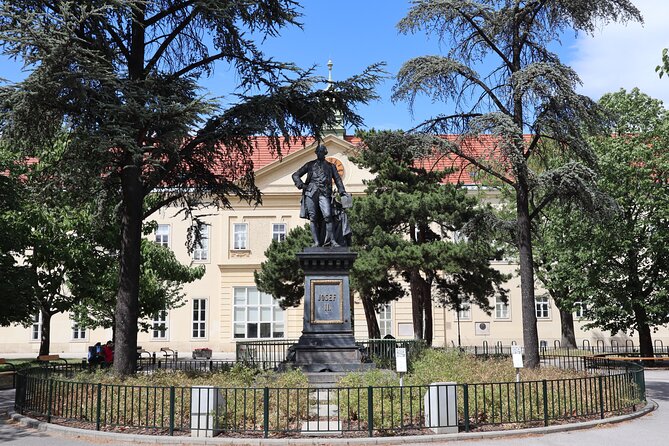
A maximum of 10 people is one of the strongest practical features here. Freud’s life raises questions, and a small group gives you a better chance to ask them without turning the tour into a crowded lecture.
Small numbers also help on a city walk. The guide can keep the group together more easily, and you can usually hear explanations without standing directly beside the guide. That matters around public buildings and busy streets.
Lisa Marie has been praised for being well informed and entertaining. That combination is important for a subject that can become heavy or overly academic. A guide who can explain Freud clearly while keeping the tone lively will make the two-hour route easier to follow.
The experience has a current rating of 3.9 from seven ratings, so I would keep expectations sensible. The strongest praise centers on the guides, the unusual subject, and the way the tour brings research to life. This is not a guaranteed fit for someone seeking a broad Vienna sightseeing tour or a long museum visit.
Is $45.38 a fair price?
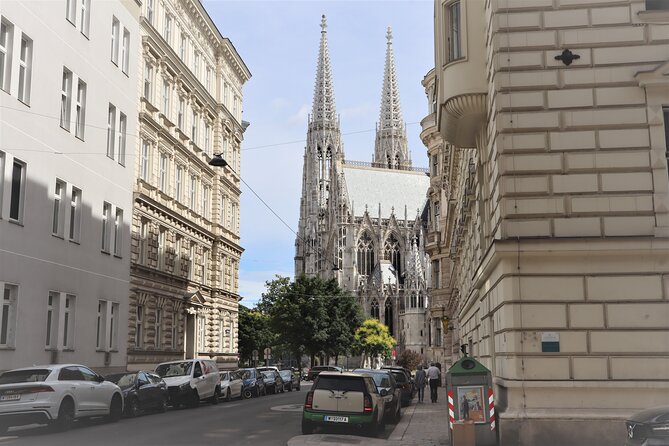
At $45.38 per person, this is not the cheapest way to walk through central Vienna. You are paying for a specialist subject, a guide, and a small group rather than for a list of major sights.
The price makes more sense if you have a serious interest in Freud, psychology, medicine, or the cultural life of Belle Époque Vienna. The route covers several meaningful locations, and the small group should provide a more focused experience than a large city walk.
The value drops if you only want to see the outside of the Freud Museum or if you expect admission to be included. You must pay for the museum separately, and the guided stops themselves are fairly short: 15 minutes at the university, 10 minutes near Votivkirche, and 15 minutes in the Old University Quarter before the final museum stop.
I would think of the price as covering a guided introduction to Freud’s Vienna. The museum is an additional part of the day, not an included feature. If you plan to visit the museum anyway, the walking tour can give that visit more meaning.
Who should book this experience?
I would recommend it most strongly to:
- People who already have an interest in Freud or psychology
- Visitors who want a focused historical walk instead of a general city tour
- Anyone curious about medicine in late-19th-century Vienna
- People who value small groups and the chance to ask questions
- Visitors who plan to see the Sigmund Freud Museum and want context first
You may want to skip it if your time in Vienna is very limited and this is your first visit. The route does not focus on Vienna’s major tourist sights, and much of the payoff comes from following one person’s life in detail.
It may also disappoint you if you want a long, formal museum tour. The experience is primarily a guided walk, and the museum ticket is extra. You should be comfortable with moderate physical activity and moving between several stops on foot.
Service animals are allowed, and the meeting and ending points are near public transportation. The start and finish are in different districts, so public transport can help after the museum, although no specific connection is provided.
Timing, cancellations, and planning advice
The tour starts at 2:00 p.m. and lasts about two hours. I would arrive early at the University of Vienna rather than trying to find the meeting point at the last minute.
Wear comfortable shoes and plan for an outdoor walk. The physical requirement is listed as moderate, which means you should be ready to walk between stops and remain on your feet for much of the experience.
You receive confirmation at booking, and free cancellation is available if you cancel at least 24 hours before the start time. A cancellation made less than 24 hours before the tour does not receive a refund, and changes inside that period are not accepted. Cutoff times use Vienna’s local time.
Should you book the Freud walking tour?
Book it if you want to understand Freud through the city that shaped his education, friendships, medical training, and family life. The small group, the walk through the Old University Quarter, and the final arrival at Berggasse 19 give the experience a clear purpose.
I would be especially inclined to book if Lisa Marie is your guide, since her clear and entertaining style has been singled out as a strength. Just budget for the Freud Museum separately and remember that the guided portion is an introduction, not a full day of museum access.
If Freud is only a minor interest, spend your $45.38 elsewhere in Vienna. If his ideas, background, and complicated life have long held your attention, this focused walk offers a thoughtful way to see the city through his eyes.
FAQ
Where does the Freud walking tour start?
It starts at Universität Wien Studienzulassung, Universitätsring 1, 1010 Vienna, Austria.
What time does the tour begin?
The tour starts at 2:00 p.m.
Where does the experience end?
It ends at the Sigmund Freud Museum, Berggasse 19, 1090 Vienna, Austria.
Is admission to the Sigmund Freud Museum included?
No. The museum ticket is not included in the tour price and must be purchased separately.
How large is the group?
The experience has a maximum of 10 people.
Can I cancel for a full refund?
Yes, if you cancel at least 24 hours before the experience starts. Cancellations made less than 24 hours before the start time are not refunded.
Just added around Vienna
- Ottakringer Brewery tour★ 4.0 · 6 reviews
- New Hofburg Palace Tour House of Habsburg★ 4.5 · 5 reviews
- Private Van & Walk Tour – One Perfect Day in Vienna★ 5.0 · 21 reviews
- True Crime mobile puzzle rally Vienna★ 4.0 · 3 reviews
- Vienna Naschmarket Food Tasting Tour★ 4.0 · 30 reviews
- Vienna Nightlife Experience: Food, Wine, Cocktails & Vibes★ 5.0 · 119 reviews
- Myth Mozart★ 4.0 · 80 reviews
- ( Night Tour ) With Private Guide + wine or prosecco★ 4.0 · 12 reviews
Vienna Tours, compared.
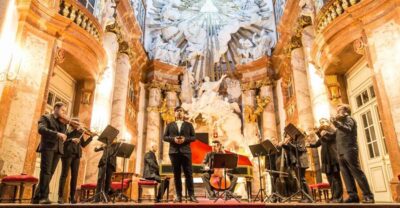
Vivaldi’s Four Seasons Concert in Karlskirche
Read our review →
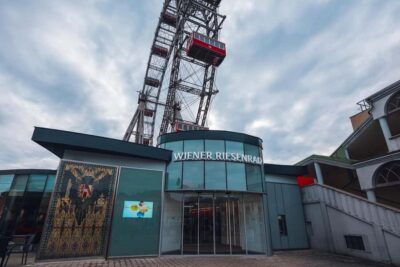
Skip-the-cashier-desk-line Giant Ferris Wheel Ride
Read our review →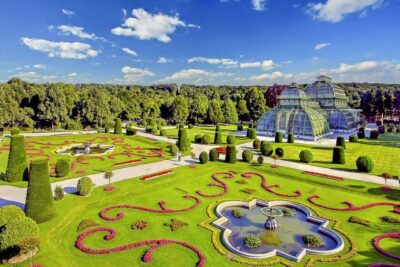
Schönbrunn Palace & Gardens Skip-the-Line Tour
Read our review →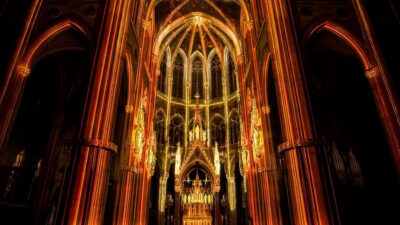
Light of Creation Votive Church Immersive Light Show
Read our review →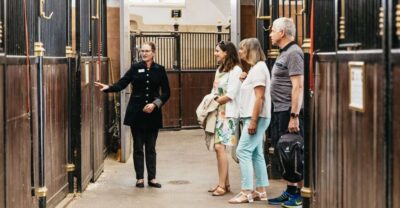
Classical Concert in the World-Famous Musikverein
Read our review →