Reviewed · TOURS
Fall in Love with Vienna Tour- the best of Vienna on foot!
Vienna reveals itself best on foot, and this tour covers a remarkable stretch of the old center in about three hours. You move from Mozart and St. Stephen’s Cathedral through baroque churches, Habsburg palaces, imperial squares, famous coffee houses, and the Opera House.
I like the way the tour gives you a useful first look at the city, rather than trapping you inside one museum. I also like the practical touches: guides such as Nicoleta and Moritz take photos, answer questions, suggest places to eat or visit later, and provide a printed information pack and map.
The main consideration is the pace and crowd. The route covers roughly 5 kilometers, with cobblestones and many short stops. A group may reach 18 people, and on busy days it can be hard to hear every word in a crowded square.
Key points to know before booking
- Covers a lot of central Vienna: The route links more than 20 sights, from Mozarthaus to the State Opera.
- Best for a first day: You get bearings, history, café ideas, and suggestions for the rest of your stay.
- Short stops keep the tour moving: Most sights receive five to ten minutes of explanation rather than a long indoor visit.
- Coffee culture is part of the experience: From January through November, an extra 30-minute break at a traditional Viennese coffee house is included.
- Guides add personal help: Nicoleta, Moritz, and Reka have been praised for clear explanations, flexibility, and local recommendations.
- Bring good shoes: Expect moderate walking, some uneven cobblestones, and little time for sitting except during the café break.
Why this three-hour walk works well in Vienna
Vienna’s central sights are close together, but the city’s story is not always easy to follow on your own. One square points to the Habsburg court, the next to a composer, the next to plague, religion, coffee, or modern Austrian politics.
This walk gives those pieces a sensible order. You begin near Mozarthaus Vienna and finish in front of the Wiener Staatsoper on the Ringstrasse. Along the way, you see the old city center from several angles without spending the whole morning inside one palace.
The tour is offered in English, with morning and afternoon departure choices. I would choose the morning if you can. One early-start group finished before the streets became crowded, which made the walk easier and the explanations clearer.
The size is capped at 18 people. That is still large enough that you should stay close to your guide, especially in busy areas. The benefit is that the tour remains more personal than a large coach excursion, and the guides can usually answer questions and adjust the walk to the group.
Other Vienna days people book alongside this one:
- Vienna: Vivaldi’s Four Seasons Concert in Karlskirche
★ 4.7 · 14,951 reviews - Vienna: Spanish Riding School Training
★ 3.9 · 9,281 reviews - Vienna: Skip-the-cashier-desk-line Giant Ferris Wheel Ride
★ 4.5 · 7,859 reviews
Mozart, wafers, and St. Stephen’s Cathedral
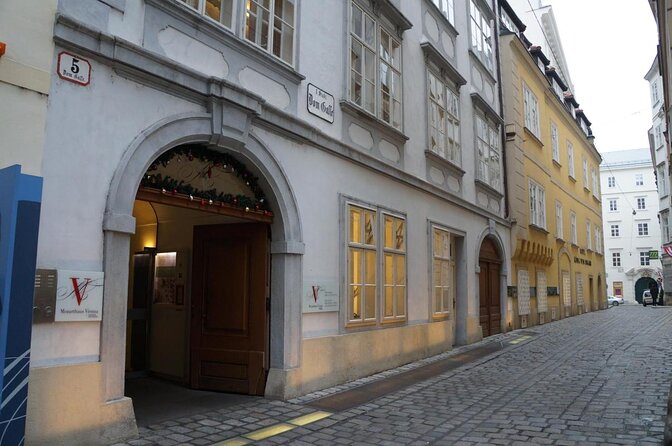
The starting point is Mozarthaus at Domgasse 5, near Mozart’s former Vienna residence. You do not enter the museum as part of the tour, but the guide uses the building to introduce Mozart’s life and his time in the city.
This is a good opening because it places Vienna’s music story in a real setting. You hear about the composer before moving into the main pedestrian streets, rather than meeting his name only as a statue or souvenir.
The next part brings you to the central outlet of a well-known wafer and candy maker near St. Stephen’s Cathedral. It is a quick look, not a formal tasting session, but it gives you a chance to see the wide choice of wafers and sweets. If you enjoy food stops, this is a useful place to note for a later purchase.
Stephansdom, or St. Stephen’s Cathedral, is one of Vienna’s essential sights. The building dates back to the 11th century and dominates the city center with its tall tower and patterned roof.
The stop lasts about five minutes, so you should not expect a full cathedral visit. Instead, the guide explains why the church matters and helps you notice its place in Vienna’s street plan. You can return afterward if you want more time inside.
Baroque churches and Vienna’s coffee tradition
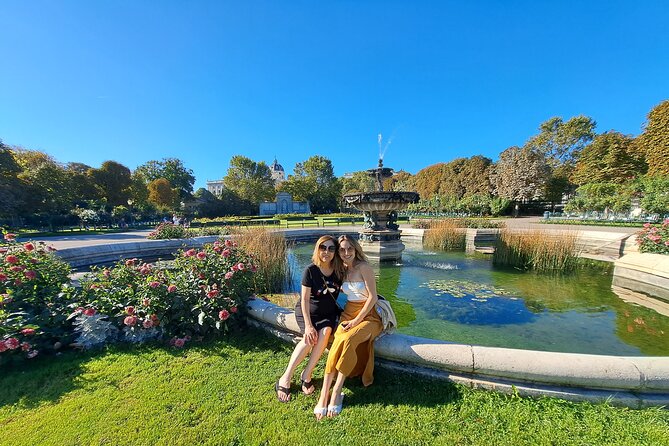
The route continues to the Pestsäule, or Plague Column, a tall baroque memorial on the Graben. Emperor Leopold ordered it as a religious expression of gratitude after the plague epidemic.
The column is easy to pass without understanding what you are seeing. A short explanation gives the monument meaning and connects it to the city’s difficult past. This is one of the tour’s strengths: the guide does not need a long stop to make an ordinary-looking street corner worth another glance.
Nearby Peterskirche offers a different style of baroque Vienna. The Roman Catholic church was rebuilt after the original structure was destroyed in the 16th century, and its interior looks more like a compact art gallery than a plain parish church.
The walking route also introduces Viennese coffee culture at the Julius Meinl café on Kohlmarkt. This is one of Vienna’s central and costly shopping streets, and the guide explains how coffee became part of local life.
That context matters. In Vienna, a coffee house is not simply a place to grab a drink. It is tied to conversation, newspapers, pastries, music, and the old social life of the city. The extra 30-minute coffee break offered from January through November gives you more time to experience this for yourself.
The break can also make a big difference on a warm day or when someone in your group needs to slow down. One guide added a café stop during hot weather, and another adjusted the pace when an 80-year-old participant needed more time.
The Hofburg and the world of the Habsburgs
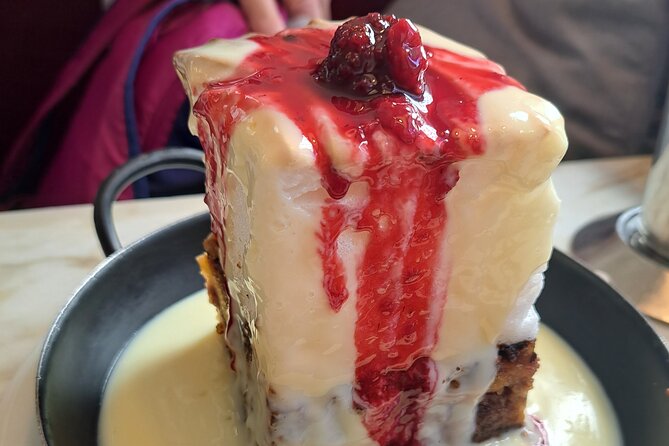
From the coffee streets, the tour reaches St. Michael’s Church and the Hofburg complex. St. Michael’s dates to the 12th century and forms part of the old imperial center.
The Hofburg deserves more than a quick photograph. For about ten minutes, the guide explains where Elisabeth, Franz, and Maria Theresa lived, how the palace grew, and what life was like for both the Habsburg family and the people who served them.
This is where the tour’s storytelling becomes especially useful. Vienna can feel like a collection of grand façades until someone explains how the palace developed over 700 years of Habsburg rule. You get stories about court life, habits, interests, and less polished personal details.
The Sisi Museum and Imperial Apartments are connected to this area. The tour discusses Empress Elisabeth, known as Sisi, and the way her public image became a legend. You do not receive museum admission, so plan a separate visit if you want to see the interiors and exhibits at length.
Heldenplatz, the Heroes’ Square, opens in front of the Hofburg. It serves as an entrance to the Winter Palace and is surrounded by museums and the palace’s large ballroom. This is one of the best places to pause and understand the scale of imperial Vienna.
Same Alps, a completely different kind of day:
- Vienna: Schönbrunn Palace & Gardens Skip-the-Line Tour
★ 4.7 · 7,739 reviews - Vienna: Light of Creation Votive Church Immersive Light Show
★ 4.8 · 6,779 reviews - Vienna Spanish Riding School Guided Tour
★ 4.7 · 6,765 reviews - Vienna: Classical Concert in the World-Famous Musikverein
★ 4.6 · 6,673 reviews
Roses, Greek columns, and the Ringstrasse
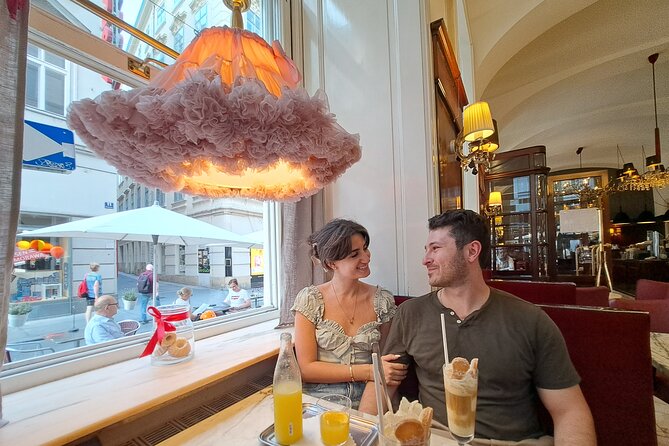
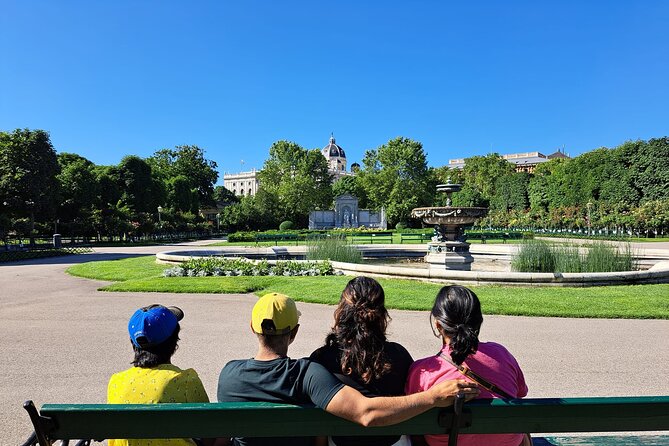
Volksgarten provides a welcome change from palace walls and stone streets. Created in 1821, the park is known as the Garden of 1,000 Roses. The guide points out its plantings and layout, making this more than a passing walk through a green space.
Inside the park is a Greek-style temple, a reminder of the Habsburg emperors’ interest in Greece. It is a small but pleasing surprise, and it gives the route some visual variety.
The walk then heads toward the Austrian Parliament and the Pallas-Athene-Brunnen. The fountain shows the goddess Athena, and the guide explains what she holds and what those objects represent.
You continue past Vienna’s City Hall, famous for its neo-Gothic architecture and public events. The square hosts festivals throughout the year and becomes home to Vienna’s largest Christmas market. Timing matters here: an afternoon tour may offer a different feel from a winter visit during the market season.
The Burgtheater follows. Built in the 18th century under Maria Theresa, it is one of the city’s major theater buildings. The stop is brief, but it helps explain Vienna’s long connection with opera, theater, music, and court culture.
Freud, Beethoven, and old coffee houses
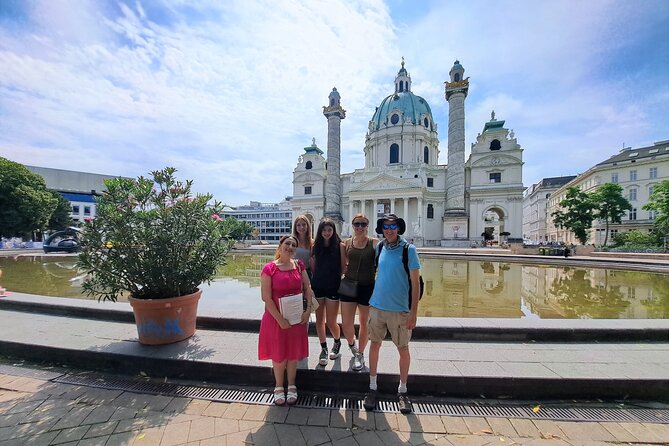
Café Landtmann is linked with Sigmund Freud, who favored the coffee house. The tour uses it to continue the story of Vienna’s café culture and intellectual life.
You also pass Beethoven’s Pasqualatihaus, one of the composer’s former residences and now a museum. Again, the tour does not include entry, but the address adds a human detail to the composer’s place in Vienna. Beethoven was not simply a name attached to concert halls. He lived and worked in the city’s ordinary streets.
Schottenkirche, or the Scots Church, dates to the 13th century and includes a monastery and museum. The guide discusses Vienna’s early churches and points out the building’s distinctive features.
Palais Ferstel is another architectural highlight. Its passage contains cafés, restaurants, shops, and a fountain, making it a pleasant place to revisit after the tour. This is the sort of stop that can help you plan an evening meal or a coffee break away from the most crowded squares.
Café Central is Vienna’s most famous coffee house and occupies a historic palace. It is a natural place to mark on your map, but do not assume the tour includes a table or meal there. The café is a stop for explanation and orientation, not a reserved dining visit.
Demel, just outside the Hofburg, is associated with Empress Elisabeth and is known for chocolates, cakes, and pancakes. You can hear the story behind its imperial connection and decide later if the sweets justify a return visit.
Riding horses, royal hearts, and the Opera
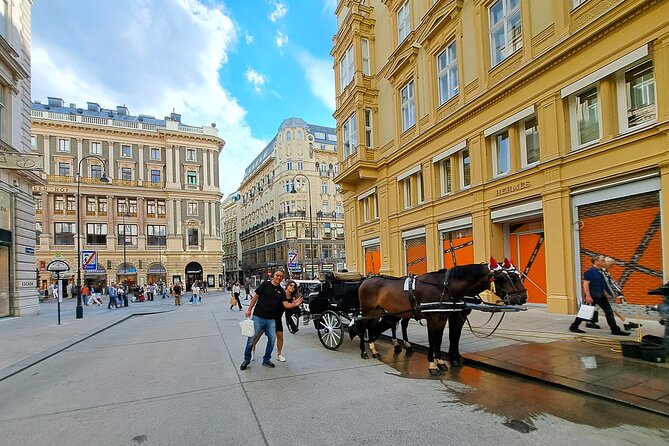
The Spanish Riding School brings another side of imperial Vienna into view. The tradition reaches back to Emperor Maximilian, when trained horses were part of a strong military presence.
The guide explains the school’s history and the training of its famous horses. The route does not include a performance or museum ticket, so you would need a separate booking for that. Still, the outside explanation helps you decide if the riding school deserves space in your schedule.
At Augustinerkirche, the route pauses over a remarkable Habsburg detail: a small chapel holds the hearts of 50 Austrian emperors and empresses, preserved since the 17th century. This is the kind of unusual fact that makes the walk memorable.
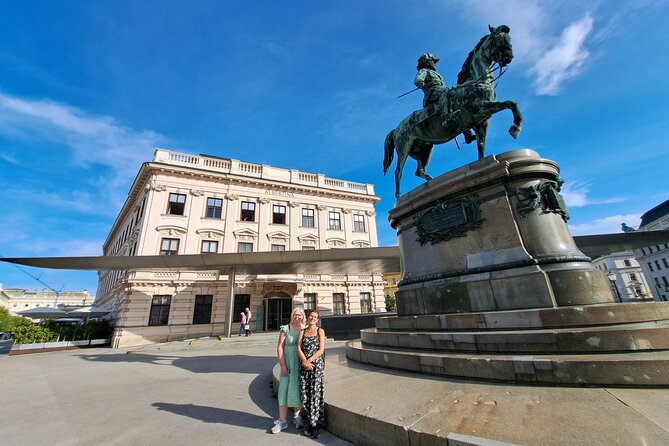
Albertinaplatz marks the final section of the Winter Palace. Here you find the Albertina museum, a memorial to Vienna’s Jewish community, and the city’s central tourist information office.
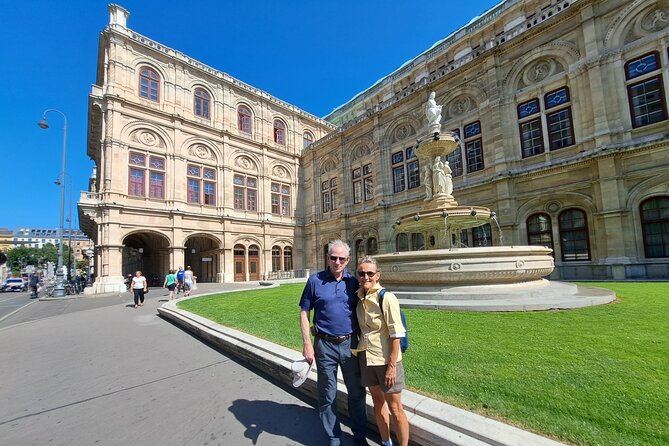
The tour finishes at Hotel Sacher, birthplace of the Sacher cake, then continues to the Wiener Staatsoper. The guide explains the story behind the famous cake and points out the Opera House, built in 1869 on the Ringstrasse.
The endpoint at Herbert-von-Karajan-Platz is practical. You finish near public transportation, major sights, and the Ringstrasse, with the rest of the city easy to reach.
What the price includes, and what it does not
At $72.59 per person, this is not the cheapest way to get a quick look at Vienna. Its value depends on how much you want from a guide.
You are paying for three hours of personal explanation, a route through a large number of central sights, local suggestions, a city map, and a printed Vienna information package. The guide can also take photos, recommend museums and restaurants, and help you choose concert venues. One guide even helped a group buy subway tickets after the walk, which shows the kind of practical assistance you might receive.
You are not paying for museum admission, concert tickets, food, drinks, or tips. The tour can arrange concert tickets on request, but those are separate. The cafés and pastry shops are stops, not an all-inclusive food tour.
For a first visit, the price can make sense if the walk saves you time and helps you choose what to do next. If you already know central Vienna well, or prefer to explore every interior at your own pace, you may find the route too broad.
Walking conditions and group comfort
Expect about 5 kilometers of walking over mostly manageable city streets. There are no hills noted, but Vienna’s cobblestones can be uneven, so wear shoes with good support.
The route includes many short explanations of five or ten minutes. That means you see a great deal, but you do not spend long periods studying one building. I would treat this as an orientation walk, then return later to the Hofburg, Sisi Museum, cathedral, Albertina, or riding school that interests you most.
The tour requires moderate physical fitness. Morning departures are a smart choice during warmer months, and the café break from January through November offers a useful pause. In December, confirm the current arrangements if the coffee stop matters to you, since the included extra break is specified only for January through November.
The biggest practical risk is hearing the guide in a crowd. A group of 17 or 18 can be comfortable, but busy streets and open squares make it important to stay close. Ask questions during the coffee break, when conversation is easier.
Who should book this Vienna walking tour?
I would choose this tour for a first-time visitor, a short-stay visitor, or anyone who likes to start a city break with a clear sense of direction. It is also a good fit if you enjoy history, music, palace stories, cafés, and small details such as the Habsburgs’ preserved hearts.
Families can use it as a framework for the city, though children may find the number of churches and palace explanations tiring. The candy stop, horses, and stories about royal life may help.
This is less suited to anyone who wants long indoor visits, a slow photography walk, or a focused tour of one subject. You will see the exteriors and hear the background, then return on your own for museum time.
Free cancellation is available up to 24 hours before the start time. Changes made within 24 hours are not accepted, and poor weather or failure to meet the minimum group size can lead to a rescheduled tour or full refund.
Should you book Fall in Love with Vienna?
Book it if you want a fast, story-led introduction to central Vienna and plan to explore the city further afterward. The strongest part is the combination of landmarks and usable advice: where to return, which museums may suit you, how coffee culture fits the city, and what to notice in the palace district.
Choose the morning departure if you want cooler streets and fewer crowds. Bring good walking shoes, keep close to the guide, and save your museum visits for later.
Skip it if your priority is entering every major sight or moving at a very slow pace. For most first visits, though, this walk gives you a strong map of Vienna and enough stories to make the grand buildings feel personal.
FAQ
How long is the Fall in Love with Vienna Tour?
The guided walking tour lasts about three hours. From January through November, an extra 30-minute break in a traditional Viennese coffee house is included.
Where does the tour begin?
The tour begins at Mozarthaus Vienna, Domgasse 5, 1010 Vienna, Austria.
Where does the tour end?
It ends on Herbert-von-Karajan-Platz in front of the Wiener Staatsoper, near the Ringstrasse.
Is the tour offered in English?
Yes. English is the stated language of the experience.
What is the maximum group size?
The tour has a maximum of 18 participants.
Are museum entrance fees included?
No. Admission fees to museums are not included. The tour visits and explains sights such as the Sisi Museum, Albertina, and Beethoven’s Pasqualatihaus, but separate entry is required.
Can I cancel for a full refund?
Yes. You can cancel at least 24 hours before the start time for a full refund. Cancellations or changes made less than 24 hours before the start time are not refunded or accepted.
Just added around Vienna
- Ottakringer Brewery tour★ 4.0 · 6 reviews
- New Hofburg Palace Tour House of Habsburg★ 4.5 · 5 reviews
- Private Van & Walk Tour – One Perfect Day in Vienna★ 5.0 · 21 reviews
- True Crime mobile puzzle rally Vienna★ 4.0 · 3 reviews
- Vienna Naschmarket Food Tasting Tour★ 4.0 · 30 reviews
- Vienna Nightlife Experience: Food, Wine, Cocktails & Vibes★ 5.0 · 119 reviews
- Myth Mozart★ 4.0 · 80 reviews
- ( Night Tour ) With Private Guide + wine or prosecco★ 4.0 · 12 reviews
Tours, compared.
Schönbrunn Palace & Gardens Skip-the-Line Tour
Read our review →

Skip-the-Line Sisi Museum, Hofburg and Gardens Tour
Read our review →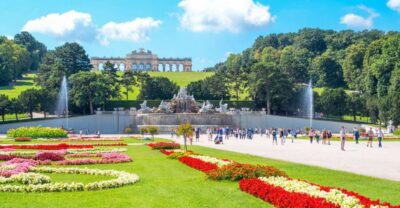
Skip-the-Line Schönbrunn Palace & Gardens Tour
Read our review →
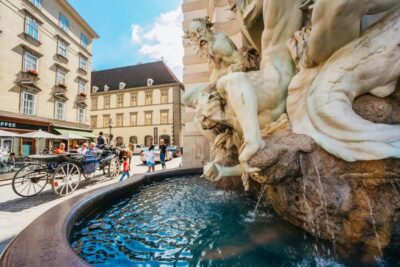
Guided Walking Tour of City Center Highlights
Read our review →