Reviewed · TOURS
E-Scooter Tour through amazing Vienna!
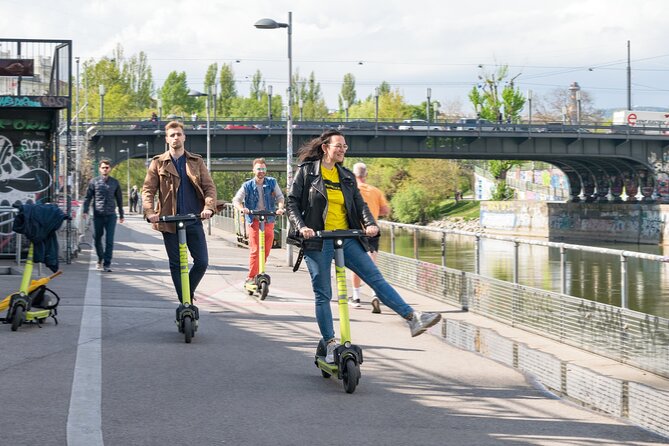
Vienna can feel grand and spread out on foot, so an electric scooter is a useful way to cover ground without turning your morning into a march. This two-hour ride links Karlskirche, the Hofburg area, the University of Vienna, Donaukanal, and Hundertwasserhaus with a guide explaining what you are seeing along the way.
I like the small group limit of 10 people, which should make it easier to hear the guide and ask questions. I also like the included 15-minute free ride afterward, giving you a little time to enjoy the scooter without the tour moving on. The main consideration is weather: Vienna can be very windy in autumn and winter, and helmet hire must be requested rather than assumed.
Key points to know
- Six central Vienna sights in two hours: The route covers major imperial landmarks, university streets, the canal, and Hundertwasserhaus.
- Small groups capped at 10: You get a better chance to stay close to the guide and receive personal attention.
- A 15-minute free ride follows the tour: Use it for a short extra spin at no added cost.
- English is offered: Guide names are not provided, but a local guide leads the ride.
- Helmet arrangements need checking: The tour information says helmets can be booked on request.
- Weather matters: Warm clothing, especially a hat and gloves, is sensible in the colder months.
Seeing Vienna by scooter instead of by foot
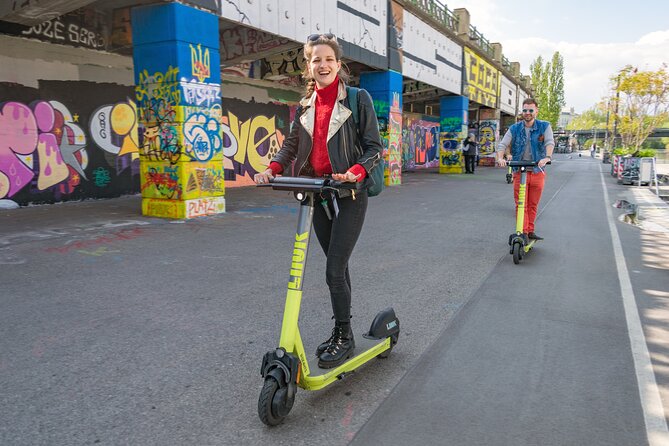
This is a sightseeing tour for people who want an overview of Vienna without spending the whole morning walking between landmarks. The electric scooter does the hard work, while the guide supplies the setting and context.
You will not spend long inside each sight. The listed stops allow about 15 minutes at Karlskirche, Josefsplatz, Heldenplatz, the University of Vienna, Donaukanal, and Hundertwasserhaus. That makes this a city orientation tour, not a museum visit or a detailed architectural study.
I see the format working best early in a Vienna stay. After two hours, you should have a clearer sense of how the central districts connect, which places deserve a longer return visit, and how far apart the major sights really are.
The tour starts at 10:00 am at KUNSTVEREIN GARTENHAUS, Piaristengasse 26, 1080 Vienna. It finishes back at the same meeting point. The starting area is near public transportation, which helps if you are coming from another part of the city.
A few more Vienna trips to weigh up
- Vienna: Guided Tour by Kick Bike or E-Scooter with a Local
★ 4.5 · 51 reviews
Karlskirche gives the tour a grand opening
Karlskirche is an excellent first stop because it immediately shows you Vienna at its most formal and theatrical. The church is one of the city’s best-known Baroque landmarks, with a broad façade and a prominent dome that is easy to appreciate from the open space around it.
The planned 15 minutes is enough for a look at the exterior, photographs, and a short explanation from the guide. It is not enough for a slow interior visit, so you should treat this stop as an introduction rather than a full church tour.
I like starting here because the setting makes a strong first impression. It also gives the guide a natural place to explain how Vienna’s grand public buildings fit together before the group moves toward the old imperial center.
Josefsplatz brings you into imperial Vienna
The ride then reaches Josefsplatz, one of the elegant squares tied to Vienna’s former imperial court. Its orderly architecture and formal proportions make it feel very different from the more open setting around Karlskirche.
The attraction here is the connection between the square and the Habsburg world. Your guide can help you read the buildings as part of a larger court district rather than as isolated façades. With only 15 minutes, you will get a quick orientation and a chance to look around, not an extended palace visit.
This is one place where a guide’s historical command matters. The tour’s supplied feedback describes a German guide who knew Vienna’s history well, which suggests that the explanation may be strongest when the subject is dates, institutions, and major events. At the same time, the same feedback indicates that some people might prefer a guide who has lived in Vienna for a longer period and can add more local color.
That is a useful distinction. If you want a clear history lesson, this format may suit you. If you are seeking personal stories, favorite cafés, or a strong local voice, the guide’s individual style will matter a great deal.
Heldenplatz covers Vienna’s imperial stage
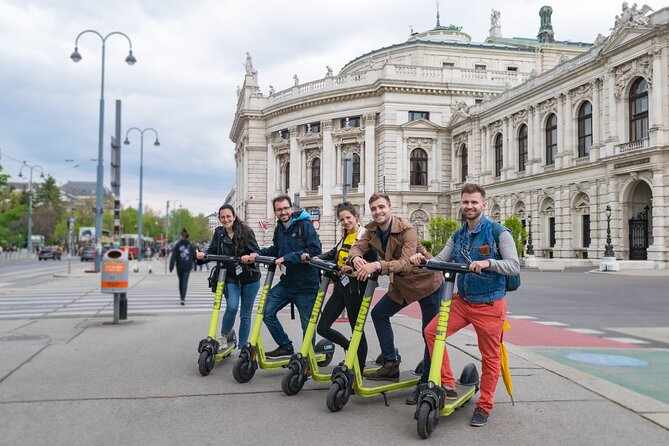
Heldenplatz is one of Vienna’s most important public spaces. It sits beside the Hofburg complex and presents the city’s imperial power in a wide, formal setting.
A 15-minute stop lets you see the scale of the square and understand its place beside the former palace. This is a good moment to listen carefully to the guide because Heldenplatz carries political as well as architectural meaning. The open space has been used for public ceremonies and major speeches, so the square tells you more than its buildings alone.
The scooter is helpful here because it lets you arrive with enough energy to pay attention. On foot, a morning built around several large squares can start to feel repetitive. By scooter, each stop remains short and distinct.
Do keep your expectations in check. This tour does not include a stated palace admission or a long guided visit inside the Hofburg. You are seeing the city from the outside, with the option to return later if one area catches your interest.
Same Alps, a completely different kind of day:
- Vienna: Vivaldi’s Four Seasons Concert in Karlskirche
★ 4.7 · 14,951 reviews - Vienna: Spanish Riding School Training
★ 3.9 · 9,281 reviews - Vienna: Skip-the-cashier-desk-line Giant Ferris Wheel Ride
★ 4.5 · 7,859 reviews - Vienna: Schönbrunn Palace & Gardens Skip-the-Line Tour
★ 4.7 · 7,739 reviews
The University of Vienna adds a younger note
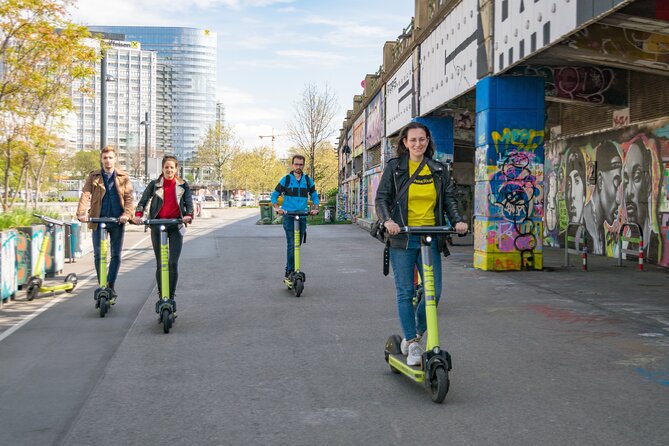
The University of Vienna changes the mood. After the ceremonial buildings around the Hofburg, the university area brings a more everyday academic setting into the route.
The stop is listed as Universitat Wien, with about 15 minutes for a look around. This gives the guide a chance to explain the role of the university in Vienna’s intellectual life and to point out the character of the surrounding area.
I appreciate this stop because it keeps the route from becoming a parade of palaces and churches. Vienna is not only an imperial capital preserved in stone. It is also a working city with students, public institutions, and ordinary daily movement.
Still, this is another exterior orientation rather than a campus tour. If university interiors or detailed architecture are important to you, you will need to arrange more time separately. The value here is the contrast with the grander parts of the route.
Donaukanal offers a change of scenery
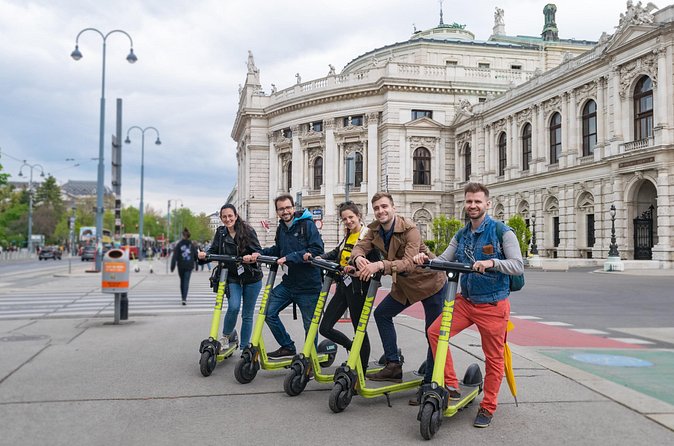
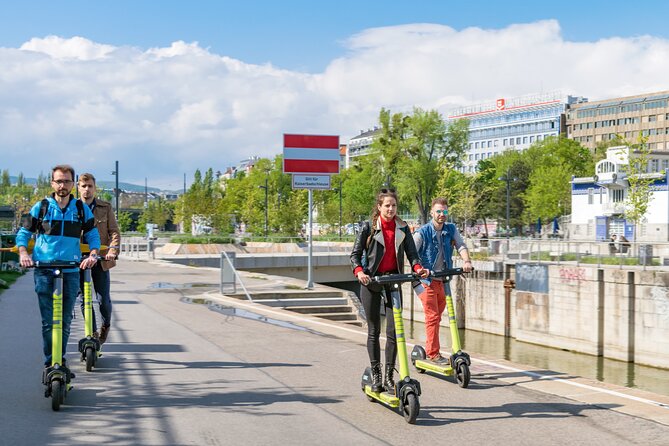
The Donaukanal gives you a break from monumental Vienna. The canal corridor has a more open, linear feel, and the ride itself becomes part of the sightseeing.
This section should be especially welcome after several formal central stops. You can see a different side of the city and experience the scooter in motion rather than simply using it to travel from one photo stop to another.
The canal stop is also a reminder that this is an active riding tour. The exact riding conditions and pace are not specified, so you should be ready to follow the guide and pay attention to your surroundings. The tour requires good weather, and the canal can feel particularly exposed when the wind picks up.
That weather rule is practical, not a minor footnote. The provider may cancel if conditions are poor, offering another date or a full refund. If you are visiting Vienna for only a short time, keep that possibility in mind when arranging your schedule.
Hundertwasserhaus finishes with color and imagination
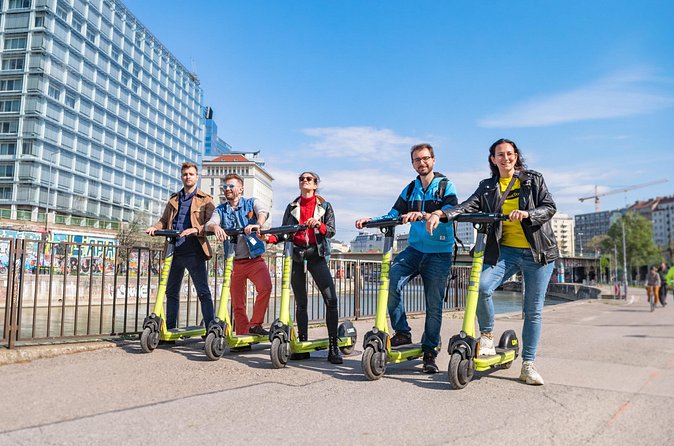
Hundertwasserhaus is a lively contrast to the straight lines and formal symmetry of imperial Vienna. The building is known for its irregular design and colorful appearance, making it one of the easiest stops on this route to recognize later.
The 15-minute visit gives you time to take in the façade and hear the basic story behind its unusual look. It is a fitting final stop because it shows that Vienna’s architecture is not limited to Baroque churches and palace squares.
As with the other stops, the schedule favors a quick exterior visit. You should not expect a lengthy interior tour or a detailed study of the architect’s work. The point is to add a modern, playful architectural note to a route otherwise weighted toward the historic center.
I like ending here because it leaves you with a different picture of Vienna. You see the city as both imperial and inventive, formal and eccentric.
What the 10-person limit means in practice
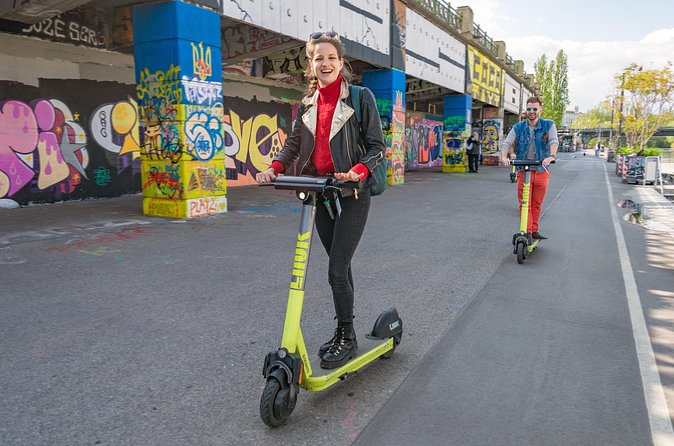
The maximum group size is 10 people. That is small enough to keep the group together without the impersonal feel of a large sightseeing procession.
A small group matters on a scooter tour for two reasons. First, you need to hear safety instructions and directions before moving off. Second, you want the guide to notice if someone is struggling with the scooter or has a question at a stop.
The tour information does not describe the riding route in technical detail, and it does not state a minimum age, height requirement, or skill requirement. I would ask the provider about those points before booking if they affect your plans.
Most people can participate, according to the practical information provided. Even so, you should be comfortable standing and steering an electric scooter for the duration of the outing. The tour lasts about two hours, followed by the optional 15-minute free ride.
Scooter, helmet, clothing, and comfort
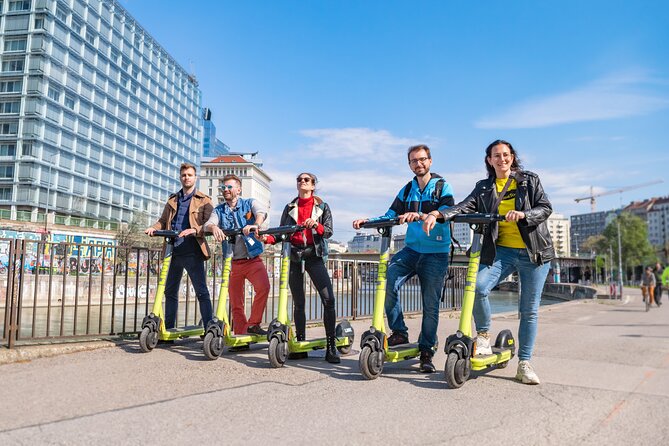
Electric scooters are provided. The helmet information needs more attention: the highlights say scooters and helmets will be provided, while the inclusion details say a helmet can be booked on request and list it as not included. Because of that conflict, request or confirm a helmet when booking rather than relying on an assumption.
Wear clothing suited to the weather. Vienna can be surprisingly windy in autumn and winter, and a warm hat and gloves are specifically recommended. A coat that closes well is more useful than stylish but loose clothing when you are riding.
The tour is offered in English. No guide name is supplied, so you cannot select a particular guide in advance based on the available information. One piece of feedback describes a German guide who knew the history well, while also noting that a longer-term Vienna resident might bring a more local perspective. I would read that as a reminder to value both clear historical explanation and personal knowledge of the city.
Is $107.17 a fair price?
At $107.17 per person, this is not the cheapest way to see Vienna. You are paying for the scooter, guide, taxes and fees, a small group, and the convenience of covering several districts in one outing.
The value depends on how you like to sightsee. If you want to see a lot in a short time and you enjoy riding, the price can make sense. You are getting about two hours with a guide, plus a 15-minute ride afterward, and the small group should offer a more focused experience than a large bus tour.
The value is weaker if you want extended time at each landmark. Six listed stops in roughly two hours means the route has to keep moving. You will see the outside of major sights, hear an explanation, and make notes about where to return. You will not receive a full guided visit to each place.
I would also compare this cost with your own plans. If you already intend to walk the historic center slowly, you may prefer to spend the money on an interior admission or a longer specialist tour. If your time is limited, the scooter adds speed and variety.
The free 15-minute ride afterward is a pleasant extra, but it should not be the main reason you book. The real value is the combination of transport, orientation, and guided sightseeing.
Who will get the most from this ride?
I think this tour suits you if you want a fast first look at Vienna, enjoy a small group, and do not mind seeing major landmarks mostly from the outside. It may also work well for families with teenagers, since the supplied feedback specifically describes teenagers enjoying the outing.
It is a good fit for people who find long walking tours tiring but still want to be outdoors. The scooter lets you cover more ground while keeping the experience active.
You may want another type of tour if you need step-by-step instruction, a very local storytelling style, or long visits inside buildings. The feedback suggests the guide may be strong on formal history, but the personal character of the tour can vary.
Book with extra care if your Vienna schedule is tight. The activity requires good weather and a minimum number of participants. If it is canceled for either reason, you can choose another date or experience, or receive a full refund, but a replacement may not fit your plans.
Cancellation and planning advice
You can cancel free of charge up to 24 hours before the 10:00 am start time for a full refund. Cancellations or changes made less than 24 hours before the start are not accepted for a refund.
The cut-off follows Vienna local time. I would avoid placing this tour on the final morning of a short visit, especially in colder months when weather may be less reliable.
Confirmation arrives when you book. The meeting point is near public transportation, and the tour returns to KUNSTVEREIN GARTENHAUS at the end.
Should you book this Vienna scooter tour?
Book it if you want a compact, active introduction to Vienna and like the idea of moving between famous sights without walking the full distance. The small group, English guide, broad route, and 15-minute free ride make it more useful than a simple scooter rental.
Skip it if your priority is entering monuments, spending a long time at each stop, or getting a highly personal local portrait of the city. At this price, the tour works best as an overview that helps you plan the rest of your stay.
Before paying, confirm the helmet arrangement and make sure the forecast looks sound. If those details suit you, this is a practical way to connect Vienna’s grand imperial center with its canal and modern architectural side in one brisk morning.
FAQ
Where does the tour start?
It starts at KUNSTVEREIN GARTENHAUS, Piaristengasse 26, 1080 Wien, Austria.
What time does the tour begin?
The scheduled start time is 10:00 am.
Where does the tour finish?
The activity ends back at the meeting point.
How long does the tour last?
The main tour lasts approximately two hours. It also includes a free 15-minute ride after the tour.
Is the tour offered in English?
Yes. English is listed as the available language.
What sights are included?
The route includes Karlskirche, Josefsplatz, Heldenplatz, the University of Vienna, Donaukanal, and Hundertwasserhaus.
Is a helmet included?
The tour information is inconsistent. It says helmets are provided in the highlights, but also says a helmet can be booked on request and is not included. Confirm or request one when booking.
Can I cancel for a full refund?
Yes. You can cancel at least 24 hours before the start time for a full refund. Poor weather or failure to meet the minimum number of participants can also lead to a different date or a full refund.
Just added around Vienna
- Ottakringer Brewery tour★ 4.0 · 6 reviews
- New Hofburg Palace Tour House of Habsburg★ 4.5 · 5 reviews
- Private Van & Walk Tour – One Perfect Day in Vienna★ 5.0 · 21 reviews
- True Crime mobile puzzle rally Vienna★ 4.0 · 3 reviews
- Vienna Naschmarket Food Tasting Tour★ 4.0 · 30 reviews
- Vienna Nightlife Experience: Food, Wine, Cocktails & Vibes★ 5.0 · 119 reviews
- Naschmarkt Food Tour★ 4.0 · 14 reviews
- Myth Mozart★ 4.0 · 80 reviews
Tours, compared.
Schönbrunn Palace & Gardens Skip-the-Line Tour
Read our review →

Skip-the-Line Sisi Museum, Hofburg and Gardens Tour
Read our review →
Skip-the-Line Schönbrunn Palace & Gardens Tour
Read our review →
Guided Walking Tour of City Center Highlights
Read our review →