
Reviewed · MUSEUMS
Admission Pass to The Roman Quarter and the Museum Carnuntinum
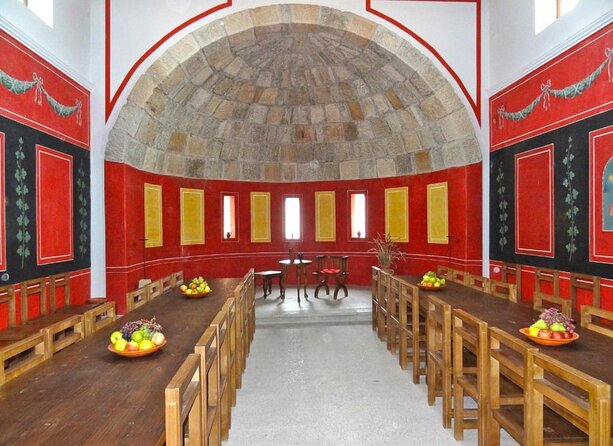
The best part of Carnuntum is that you do not have to rely on ruins and floor plans to picture Roman life. Fully reconstructed houses show you rooms, furniture, decorations, gardens, and working baths in a way that makes the ancient city feel close at hand. The nearby Carnuntinum Museum then fills in the wider story with objects from 2,000 years of Roman life along the Danube.
I especially like the working Roman bathhouse, where water actually splashes through the thermal complex, and the careful details inside the villa urbana and House of Lucius. The main consideration is distance: the Roman Quarter and museum are separate stops, so allow time to move between them. A weekend shuttle bus has been provided during the current season, which may help.
Key things to know before you go
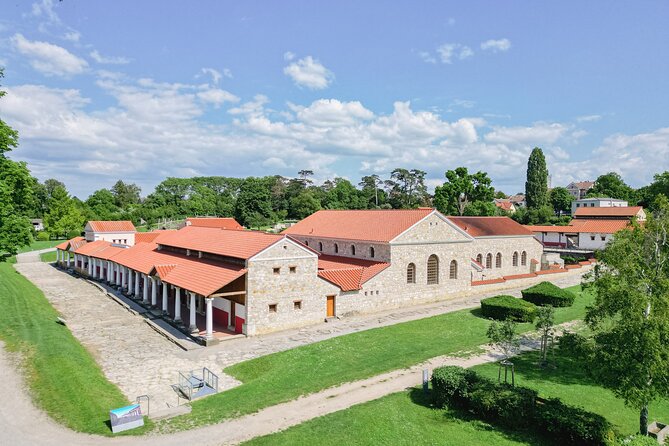
- Four reconstructed Roman houses: See a bathhouse, city palace, oil merchant’s home, and House of Lucius with furnishings and decoration.
- A museum visit completes the picture: The Carnuntinum Museum presents finds from Carnuntum and the Danube Limes.
- Plan on about three hours: The Roman Quarter takes roughly 1 hour and 20 minutes, while the museum needs about one hour.
- Self-guided admission: Fees and taxes are included, but guided tours are not.
- Good value at $16.21: The ticket covers both major sites and a large outdoor area with gardens and meadows.
- Open daily from 9 a.m. to 5 p.m.: The stated season runs from April 23 through November 15, 2025.
Why Carnuntum feels different from a typical Roman ruin
Many ancient sites ask you to look at foundations and imagine the walls above them. Carnuntum takes another route. At the Roman Quarter, four buildings have been reconstructed as functioning spaces, with decoration, objects, and household details that help you understand how the rooms were used.
That choice makes the visit especially useful for families and for anyone who finds bare archaeology hard to read. You can see the shape of a room, notice how spaces connect, and think about daily routines instead of only military dates and imperial names.
The setting also gives the site room to breathe. The Roman Quarter includes a large outdoor area with trees and meadows, a children’s playground, a visitor center, and the Forum Culinarium restaurant. You can spend a few hours here without feeling confined to a series of display cases.
Carnuntum was important enough that Roman emperors, including Marcus Aurelius, were connected with major events in the area. The site’s position along the Danube helped make it an important Roman center, and the museum places that local story within the wider Danube frontier.
A few more Austria trips to weigh up
- Vienna: Skip-the-Line Sisi Museum, Hofburg and Gardens Tour
★ 4.8 · 5,918 reviews - Vienna Kunsthistorisches Museum Day Admission Ticket
★ 4.6 · 3,690 reviews - Tickets for the Albertina Exhibitions
★ 4.7 · 2,126 reviews
Entering the Roman Quarter and its four working buildings
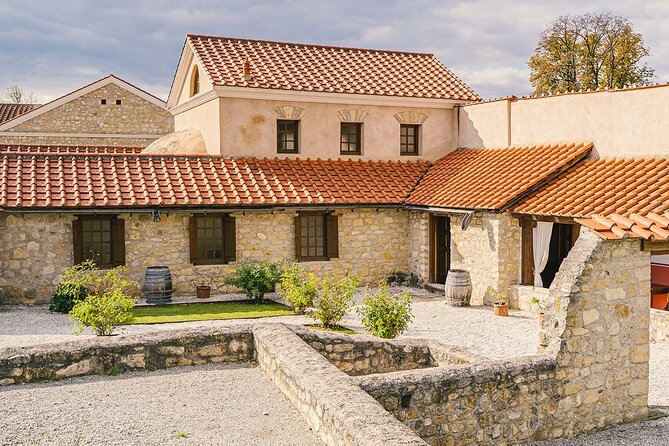
Start with the Roman Quarter, the main visual attraction of the experience. The buildings are not simply empty shells. They have been reconstructed with interiors, furnishings, and decorative touches, allowing you to move through rooms that suggest how Roman residents lived and worked.
The Roman Therme is one of the strongest stops. It is a fully functional bathhouse, and the sound of splashing water helps explain why Roman baths were more than a place to wash. They were part of the rhythm of city life, with carefully planned rooms and water systems at their center.
You do not need to know every Roman architectural term to appreciate the bathhouse. Look at how the rooms are arranged, notice the role of water, and consider the labor and engineering needed to maintain such a facility. This is one of the places where reconstruction offers more than a wall plan could.
The villa urbana gives you a different view of Roman life. This stately city palace includes striking murals, which add color and atmosphere to the rooms. The effect is useful because it corrects the common image of Roman buildings as plain stone structures. Color, decoration, and comfort mattered to wealthy residents.
The House of the Oil Merchant shifts the focus toward trade and business. Its name points to the kind of commercial activity that helped support a Roman city. You can use this building to think about the people behind the imperial system: merchants, suppliers, craftsmen, household workers, and customers.
Then take time in the House of Lucius. This bourgeois home includes a garden, giving you a more personal sense of domestic life. A garden may seem like a small detail, but it helps show that Roman homes were not only places for sleeping. They could include work areas, social rooms, private corners, and outdoor spaces.
The best approach is to slow down inside each building. Do not rush from one room to the next while looking only for the most impressive decoration. The value of Carnuntum comes from the accumulated details, such as a furnished room, a painted wall, a garden, or water moving through the bath complex.
What the 1 hour 20 minute visit requires
The suggested time for the Roman Quarter is about 1 hour and 20 minutes. That is enough for a purposeful visit, but you may want longer if you read every panel, stop often for photographs, use the playground, or take a meal break at Forum Culinarium.
The site covers a sizable outdoor area, and the separation between locations matters. Wear comfortable shoes and leave some flexibility in your schedule. If you are visiting on a weekend during the current season, the shuttle bus may help with the distances between the sites.
The open setting is a strength, but it also means this is not a quick indoor attraction. Weather can shape your visit, especially since much of the experience involves walking outdoors. The stated hours are 9 a.m. to 5 p.m., Monday through Sunday, from April 23 through November 15, 2025.
The visitor center is useful for getting oriented before you head among the buildings. I would begin there, then visit the bathhouse and homes with a little context in mind. Finish by taking a calm walk through the grounds rather than treating the Roman Quarter as a checklist.
From reconstructed homes to the Carnuntinum Museum
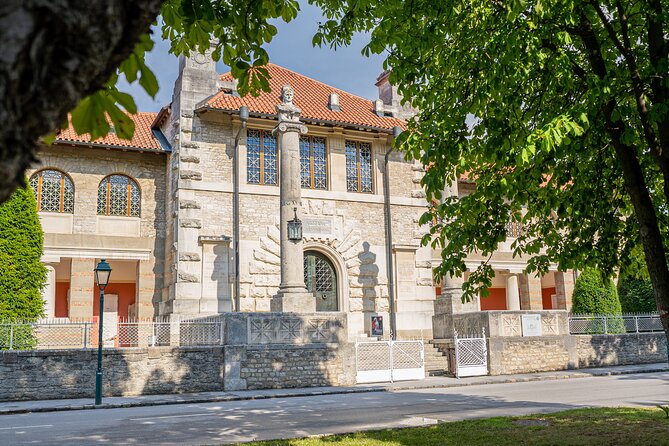
The Carnuntinum Museum is the essential second half of the visit. The Roman Quarter shows you reconstructed spaces, while the museum presents original finds connected with Carnuntum and its inhabitants.
The current exhibition, Weltstadt am Donaulimes, or Metropolis at the Danube Limes, focuses on the history of Carnuntum, the people who lived there, and its place within the UNESCO World Heritage area near Vienna. That focus gives you a broader view than the houses alone can provide.
Plan about one hour inside. The museum is especially helpful after the Roman Quarter because you have already seen the types of spaces and activities that the objects relate to. A bathhouse, home, or merchant’s building can seem abstract in a case. After walking through reconstructed rooms, the museum’s archaeological material has a clearer setting.
The collection covers finds from around 2,000 years of Roman history in Carnuntum. You can use the exhibits to connect everyday life with the larger forces that shaped the city: imperial power, trade, military presence, and the Danube frontier.
One advantage of the museum is that it adds evidence to the reconstructed buildings. Reconstruction can make an ancient site easy to picture, but original objects provide a needed check. Together, the two stops balance imagination with archaeology.
Same Alps, a completely different kind of day:
- Vienna: Vivaldi’s Four Seasons Concert in Karlskirche
★ 4.7 · 14,951 reviews - Vienna: Spanish Riding School Training
★ 3.9 · 9,281 reviews - Vienna: Skip-the-cashier-desk-line Giant Ferris Wheel Ride
★ 4.5 · 7,859 reviews - Vienna: Schönbrunn Palace & Gardens Skip-the-Line Tour
★ 4.7 · 7,739 reviews
How the two stops work together
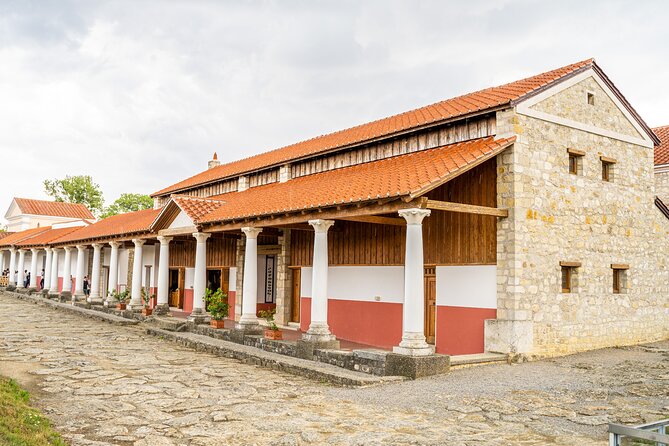
The Roman Quarter is the more physical and theatrical part of the visit. You walk through rooms, gardens, and a bathhouse. The Carnuntinum Museum is quieter and more object-based, with exhibits that explain the city and its people.
I recommend seeing both rather than choosing only the Roman Quarter. If you visit the houses alone, you get a memorable picture of Roman domestic life but less information about the larger site. If you visit only the museum, you miss the unusual chance to enter full-scale Roman buildings.
The combination also suits different interests within one group. Children can respond to the reconstructed homes, open grounds, playground, and moving water. Adults interested in archaeology, architecture, or Roman politics can spend more time with the museum displays and historical setting.
The experience does not include guided tours, so you control the pace. That is good if you like to stop where your interest takes you. It is less ideal if you want a specialist to explain every building or answer questions as you go.
Guided visits in English are available at the site according to the supplied information, but they are not part of this admission pass. If a guided explanation matters to you, check the schedule before arrival rather than assuming one is included.
Price, timing, and practical value
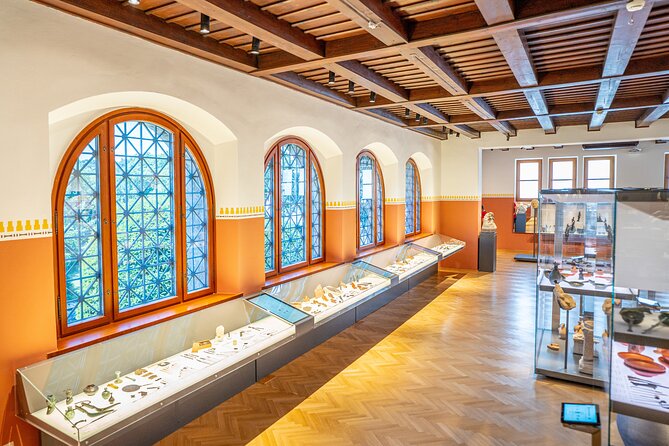
At $16.21 per person, this pass offers solid value if you visit both locations. You are paying one admission price for the Roman Quarter and the Carnuntinum Museum, with all fees and taxes included. The suggested total time is about three hours, so the cost compares well with many short attractions.
The value is strongest for people who enjoy seeing both reconstructed spaces and original objects. The Roman Quarter alone may satisfy someone looking for a visual visit, while the museum rewards anyone who wants more historical detail. Together, the ticket gives you a fuller experience without requiring a full-day commitment.
The experience is commonly booked about 17 days in advance. That does not tell you that you must book weeks ahead, but it is a useful planning signal during the April to November season. If your schedule is fixed, booking in advance gives you a confirmed place and the option of free cancellation up to 24 hours before the start time.
The attraction is near public transportation, and most people can participate. Service animals are allowed. Specific accessibility details beyond that are not provided, so you should check directly if you need information about surfaces, distances, or transport between the Roman Quarter and museum.
Who will get the most from Carnuntum
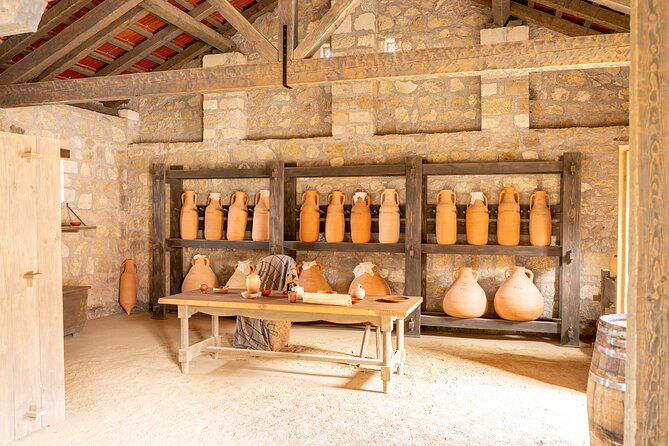
I would recommend this experience to families, casual history fans, architecture enthusiasts, and anyone making a Roman-themed day trip from the Vienna area. The reconstructed buildings give non-specialists an easy way into the subject, while the museum supplies enough evidence and context for a more serious visit.
It also works well for people who prefer to explore independently. You can move at your own pace, spend extra time in the villa urbana, or keep the museum visit short if the reconstructed homes are your main interest.
You may want to reconsider if you dislike outdoor walking, want a tightly guided tour, or have only a brief window. The two locations take time to reach and explore, and the admission does not include a guide. This is not a quick stop where you see everything in half an hour.
The site can also feel a little theatrical because the buildings are reconstructed rather than preserved in their original form. I see that as an educational strength, but purists may prefer a ruin where every stone is original. The museum helps balance that concern by presenting actual archaeological finds.
Is the Roman Quarter too reconstructed?
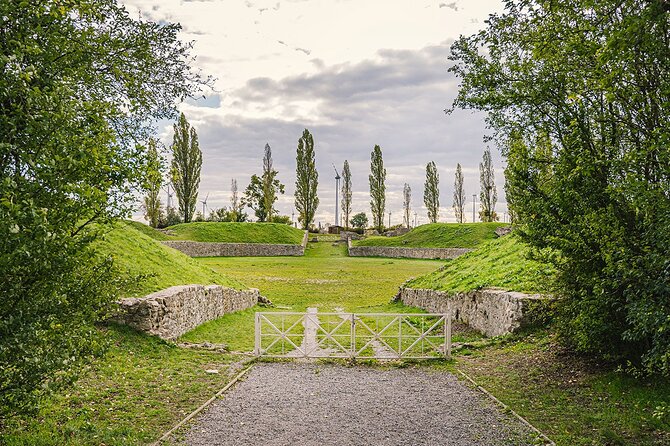
This is the main question to ask before booking. Carnuntum’s reconstructions are designed to show how Roman buildings may have looked and functioned, including furniture, decoration, murals, gardens, and working installations.
That approach makes history easier to understand, but it also asks you to accept an interpretation. You are not looking at a perfectly preserved Roman neighborhood. You are looking at a modern reconstruction based on archaeological knowledge.
For me, the method works best when you treat the buildings as visual explanations, then use the museum to see the surviving evidence. The bathhouse, villa, merchant’s home, and House of Lucius each give you a different view of Roman life. The museum adds the objects and historical setting needed to keep the picture grounded.
Booking advice and cancellation terms
The attraction is open daily from 9 a.m. to 5 p.m. during the stated 2025 season, from April 23 through November 15. Since the Roman Quarter and museum are separate stops, I would avoid arriving too close to closing time.
You receive confirmation at booking. Free cancellation is available if you cancel at least 24 hours before the experience start time. Cancellations or changes made inside that 24-hour window are not accepted for a refund, and cut-off times use local time.
Should you book the Carnuntum admission pass?
Book it if you want Roman history presented in a clear, hands-on way and have roughly three hours available. The working bathhouse, furnished houses, painted villa, and garden make the Roman Quarter unusually easy to picture, while the Carnuntinum Museum adds original finds and a wider Danube story.
Skip it if you need a guided experience, dislike walking between separate locations, or want only untouched ruins. For most people interested in Roman daily life, though, the $16.21 price is fair, and visiting both stops gives you a balanced look at Carnuntum rather than a quick glimpse.
FAQ
What does the admission pass include?
The pass includes admission to Roman City Carnuntum’s Roman Quarter and the Carnuntinum Museum. All fees and taxes are included.
Are guided tours included?
No. Guided tours are not included in this admission pass.
How long does the experience take?
The estimated duration is about three hours. The Roman Quarter takes about 1 hour and 20 minutes, and the Carnuntinum Museum takes about one hour.
What are the opening hours?
The stated opening hours are 9 a.m. to 5 p.m., Monday through Sunday, from April 23 through November 15, 2025.
What can I see in the Roman Quarter?
You can visit four reconstructed Roman buildings: the Roman Therme bathhouse, the villa urbana, the House of the Oil Merchant, and the House of Lucius. The area also includes a visitor center, restaurant, playground, trees, and meadows.
What is displayed at the Carnuntinum Museum?
The museum houses finds from about 2,000 years of Roman history in Carnuntum. The current exhibition is Weltstadt am Donaulimes, or Metropolis at the Danube Limes.
Is the site near public transportation?
Yes. The experience information states that it is near public transportation.
Can I cancel for a full refund?
Yes, if you cancel at least 24 hours before the experience start time. Cancellations or changes made less than 24 hours in advance are not accepted for a refund.
Just added around Austria
- Ottakringer Brewery tour★ 4.0 · 6 reviews
- New Hofburg Palace Tour House of Habsburg★ 4.5 · 5 reviews
- Private Van & Walk Tour – One Perfect Day in Vienna★ 5.0 · 21 reviews
- True Crime mobile puzzle rally Vienna★ 4.0 · 3 reviews
- Vienna Naschmarket Food Tasting Tour★ 4.0 · 30 reviews
- Vienna Nightlife Experience: Food, Wine, Cocktails & Vibes★ 5.0 · 119 reviews
- ( Night Tour ) With Private Guide + wine or prosecco★ 4.0 · 12 reviews
- Naschmarkt Food Tour★ 4.0 · 14 reviews
Museums, compared.

Skip-the-Line Sisi Museum, Hofburg and Gardens Tour
Read our review →
Vienna Kunsthistorisches Museum Day Admission Ticket
Read our review →

Chocolate Workshop in Chocolate Museum w/ Tasting
Read our review →
St. Stephen’s Cathedral & Dom Museum Wien Tickets
Read our review →

Browse the lists this tour appears in