
Reviewed · TICKETS
DomQuartier Day Ticket
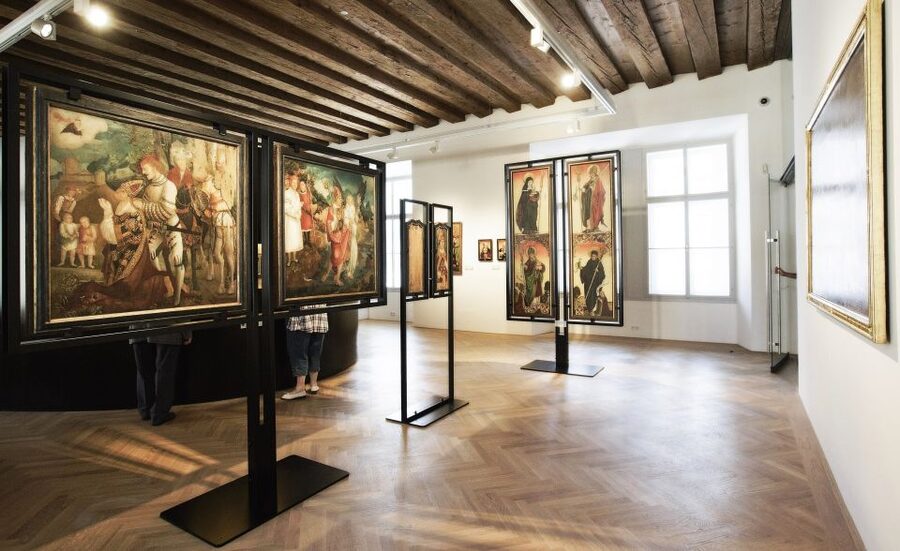
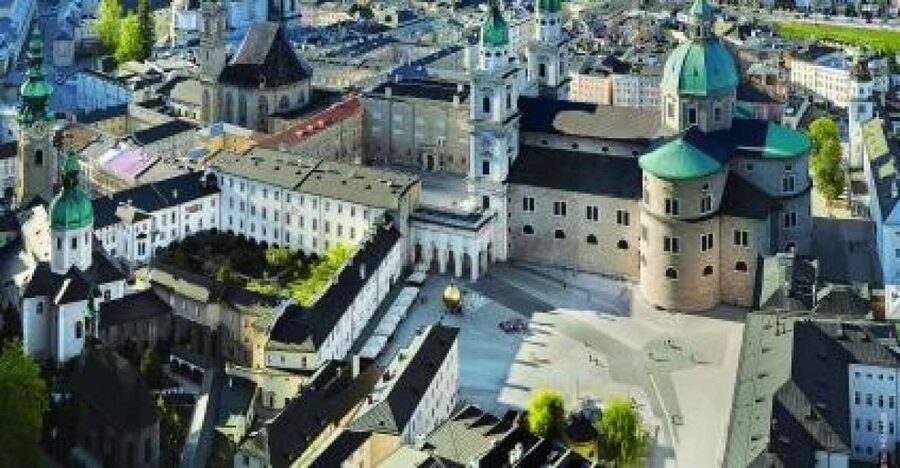
The most revealing part of Salzburg’s DomQuartier is not a single painting or grand room. It is the way the route reconnects the Residenz, cathedral, and St. Peter’s Abbey, three places that once worked as one powerful church-state complex. You walk through old passages, galleries, and terraces that were closed off for about 200 years.
I like the clear route, which takes you through the complex without much guesswork, and I like the freedom to use the ticket for multiple admissions in one day. The Cathedral Arches Terrace is another strong point, giving you a fresh view of Salzburg between the secular palace and the cathedral.
The main drawback is timing. This is a large museum route, and arriving only an hour before closing may not be enough for entry or a proper visit. Large bags, cameras, food, drinks, and umbrellas are not allowed, so plan accordingly.
Key points to know before you go
- One ticket covers a 15,000-square-meter complex: See around 2,000 objects spanning 1,300 years of art and culture.
- The route links Salzburg’s power centers: Move from the Residenz state rooms to the cathedral, gallery spaces, and St. Peter’s Abbey.
- The Cathedral Arches Terrace is a highlight: Pause for a view of Salzburg from above the connecting arches.
- You control the pace: The ticket allows multiple admissions on its valid day, so you can stop and return later.
- Your smartphone can be the audio guide: Use the online guide with an up-to-date browser and an Internet connection.
- Allow real time for the visit: The route is too substantial for a rushed final-hour stop.
Why the DomQuartier matters in Salzburg
Salzburg is often presented as a city of music, domes, and handsome Baroque streets. The DomQuartier explains who paid for that splendor and how the city was organized.
For centuries, the prince archbishops governed Salzburg as both religious leaders and secular rulers. Their palace, cathedral, art rooms, and nearby Benedictine abbey formed a connected center of power. Doors and passages once linked these buildings, but after the Salzburg prince archbishopric ended in 1803, that unity disappeared.
The DomQuartier reopened the historic connections to the public in 2014. That makes this more than a standard palace tour. You are not simply entering a sequence of decorated rooms. You are following the movement between government, worship, art, and monastic life.
That context gives the visit its value. The interiors make more sense when you understand that the rulers wanted to project authority through architecture, ceremony, paintings, and elaborate decoration. The route lets you see those parts together rather than as isolated attractions.
A few more Salzburg trips to weigh up
- Salzburg: Hohensalzburg Fortress Admission Ticket
★ 4.6 · 2,236 reviews - Salzburg: Salt Mine Entrance Ticket
★ 4.8 · 258 reviews - Salzburg: The Magic Flute at Marionette Theater Ticket
★ 4.7 · 255 reviews
Starting in the Salzburg Residenz state rooms
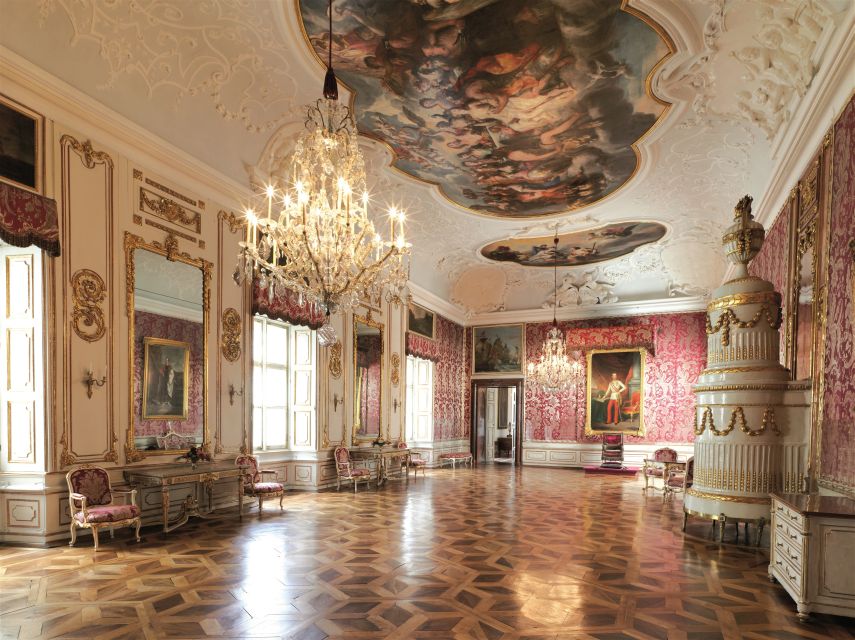
Begin with the State Rooms of the Salzburg Residenz, the former living quarters and official seat of the prince archbishops. This is the most obvious display of worldly power on the route.
Look up as much as you look around. The rooms feature decorative stucco and ceiling frescoes designed to make the residence feel grand and authoritative. These were not modest private chambers. They were spaces meant to support formal life and present the rulers in magnificent fashion.
I find the Residenz useful as an opening chapter because it gives you a visual sense of the system behind Salzburg’s Baroque center. The palace is the secular side of that system. Soon, the route will connect it to the cathedral and the abbey.
You should not expect every room to hold a major museum object. Much of the appeal comes from the complete interior setting, where decoration, architecture, and political purpose work together. Use the audio guide to add context rather than rushing from room to room.
European paintings in the Residenz Gallery
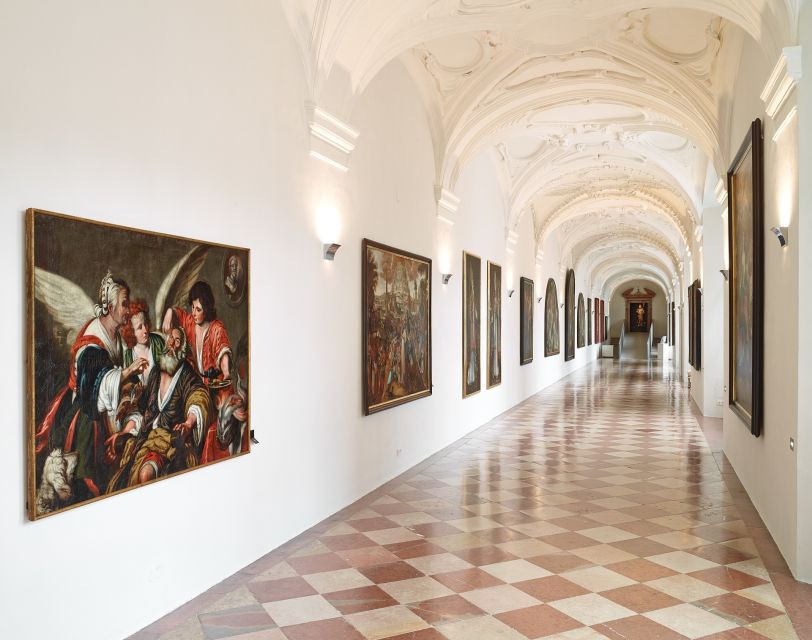
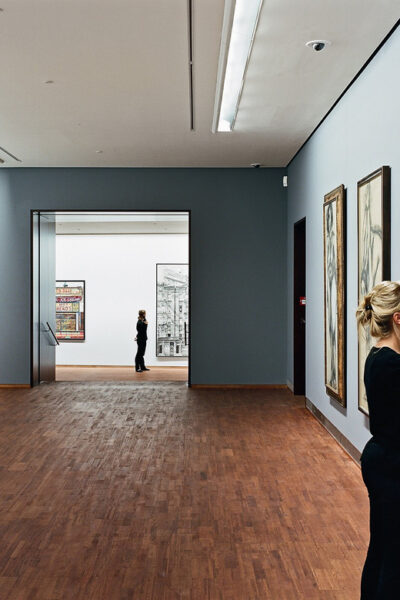
The Residenz Gallery follows the state rooms and shifts your attention from architecture to painting. Its collection covers European art from the 16th through the 19th centuries, with a clear emphasis on the Baroque period.
This section helps explain the visual language of the palace. Baroque art favors drama, movement, strong contrasts, and carefully arranged displays of status. You can compare that style with the stucco and frescoes you have just seen in the Residenz.
The gallery is also a practical stop for anyone who prefers a focused collection to a huge general museum. You are seeing European paintings within the setting of a former ruling residence, not in a detached modern building.
The exact amount of time you spend here depends on your interest in painting. If you mainly want architecture and views, keep moving at a steady pace. If you enjoy European art, this is one of the places where the DomQuartier can easily fill half a day.
The Cathedral Arches Terrace and Salzburg views
The route then reaches the Cathedral Arches Terrace. This is one of the most enjoyable changes of pace in the complex.
After enclosed rooms and gallery walls, you step into a position between the palace and the cathedral. The terrace brings the secular and spiritual sides of Salzburg together, while also giving you a view across the city. It is a useful place to pause, get your bearings, and understand how closely the major buildings sit together.
The view is not an optional extra in the usual sense. It helps you read the architecture you have just visited. From this elevated walkway, the cathedral and Residenz are no longer separate stops on a map. They become parts of one planned center.
The terrace can close in exceptional cases, including a special event or storm warning. If the view matters to you, check conditions before visiting. Drinks can be purchased in the museum shop in the Residenz Gallery on the third floor, with access to the terrace, but food and drinks are not allowed inside the museum route.
Same Alps, a completely different kind of day:
- The Original Sound of Music Tour in Salzburg
★ 4.5 · 6,129 reviews - Salzburg: Original Sound of Music Tour
★ 4.8 · 5,059 reviews - From Salzburg: Half-Day Tour to Hallstatt
★ 4.6 · 3,596 reviews - Salzburg: Mozart Concert at Mirabell Palace
★ 4.8 · 3,498 reviews
The North Oratory and changing exhibitions
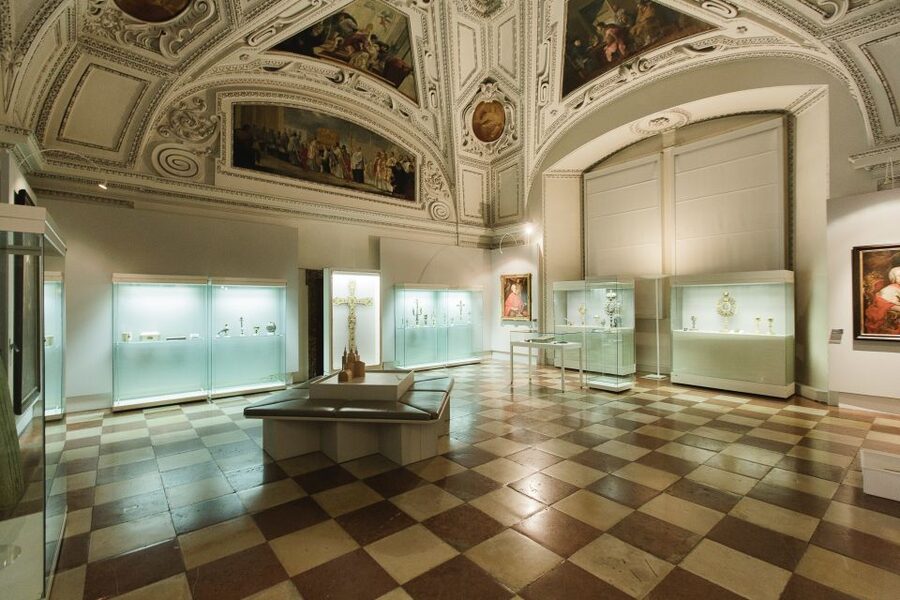
The original North Oratory of the cathedral is used for special exhibitions. The exact display can change, so this section may feel different from one visit to the next.
The space adds a useful layer to the route because it shows how the DomQuartier continues to serve as an exhibition center, not just a preserved historic complex. The Salzburg Museum’s Rossacher collection has been presented here as an early exhibition guest.
Because the North Oratory program can change, you should treat it as a bonus rather than the main reason to buy the ticket. It is worth checking what is on display before your visit if temporary exhibitions are important to you.
The cathedral organ loft and Cathedral Museum
The route continues toward the cathedral through the organ loft. This gives you an impressive view into the cathedral itself and makes the building feel less distant than it does from the main floor.
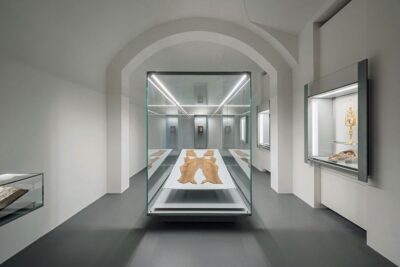
The Cathedral Museum presents centuries-old art treasures connected with Salzburg’s religious and cultural life. The collection is part of the wider story: the cathedral was not only a place for worship, but also a center where art, ceremony, and political authority met.
I like this section because the route changes your viewpoint. You are not simply looking at the cathedral from outside or entering it as a regular church visitor. The organ loft and connecting passages let you see the building as part of the larger complex.
The museum setting also rewards patience. Some objects may speak to you immediately, while others need the audio guide to explain their place in Salzburg’s story. If you are visiting with children, a specially made children’s audio guide is available in German, English, and Italian.
The Kunstkammer and Long Gallery
The Kunstkammer adds another type of collection to the visit. Instead of focusing only on large paintings or grand rooms, this part points toward the former treasure-chamber tradition, where unusual and valuable objects were gathered and displayed.
The Long Gallery at St. Peter’s Abbey continues the art-focused side of the route. It was created as part of the Baroque building work associated with Prince Archbishop Guidobald von Thun, who shaped much of Salzburg during his rule from 1654 to 1668.
Von Thun’s building program included the cathedral arches, Residenz and cathedral squares, the art gallery, and the passageways linking the cathedral, Residenz, and St. Peter’s Abbey. Knowing his role makes the route easier to understand. You can see the complex as the result of a single ambitious plan, even though the buildings now house several collections.
Museum St. Peter and the abbey’s treasures
The Museum St. Peter presents objects from the Benedictine monastery directly beside the cathedral and Residenz. St. Peter’s is considered the oldest continuously operating monastery in the German-speaking countries, and it played a major part in Salzburg’s intellectual and cultural life.
The abbey’s collection is estimated at around 40,000 objects. The museum shows a selection of its finest pieces in a specially designed permanent display. These treasures had not been presented in this way since 1982, so this section gives you access to a part of the abbey’s collection that is easy to miss elsewhere in the city.
This is where the DomQuartier feels most different from a palace visit. You move from the prince archbishops’ official rooms into the long cultural life of a Benedictine community. The change in tone is helpful. Salzburg’s story is not only about rulers and grand ceremonies. It is also about religious institutions, learning, collecting, and preservation.
Ending through the Franciscan Church and Carabinieri Hall
Near the end, you look into the Gothic choir of the Franciscan Church. The church provides a contrast to the more heavily decorated Baroque rooms, with a different architectural mood and a reminder that Salzburg contains several periods side by side.
The route ends in the Carabinieri Hall of the Salzburg Residenz. Returning to the palace for the final space gives the visit a sense of order. You began with the prince archbishops’ residence, followed their connections to the cathedral and abbey, and finish back in the ceremonial world of the Residenz.
A well-marked route is especially useful here. The complex has many doors, passages, and adjoining institutions, but the intended path keeps you from wondering if you have skipped something important. That clear organization was one of the best practical features noted in the supplied feedback, and it matters in a building this large.
How much time should you allow?
The ticket is valid for one day, and you can leave and return multiple times on that day. That flexibility is valuable because the DomQuartier contains enough material for a long visit, with one visitor saying they could have spent half a day there.
I would not plan this as a quick 45-minute attraction. You need time for the palace interiors, Residenz Gallery, terrace, cathedral-related spaces, North Oratory, Long Gallery, and Museum St. Peter. Your pace will depend on how closely you listen to the audio guide and how much time you give the paintings and objects.
Arrive well before closing. If you enter only an hour before the museum closes, you may not be admitted, and even if you are, the route will feel hurried. A good plan is to visit earlier, take a break elsewhere in central Salzburg, then return with the same ticket if you want a second look.
The route starts and ends at DomQuartier Salzburg. No transfer is included, but the central location makes this best combined with other sights in the historic center rather than treated as a separate day trip.
Audio guide, languages, and practical restrictions
The audio guide is included online and works on your own smartphone. You do not need to install an app, but you do need a phone with an up-to-date web browser and an Internet connection. Free Wi-Fi is available in the museum.
The guide is offered in German, English, Dutch, Italian, French, Spanish, Russian, Mandarin, Korean, and Japanese. A children’s version is available in German, English, and Italian.
From 2025, a physical audio guide can be borrowed for a fee of €2. If you use your own phone, bring enough battery power for the visit. The online format is convenient, but it makes your phone part of the museum equipment.
The site is wheelchair accessible. Smoking, food, drinks, pets other than assistance dogs, flash photography, cameras, selfie sticks, umbrellas, luggage, and large bags are not allowed. These rules can affect your plans, especially if you are carrying a daypack or shopping bags.
Some areas in the State Rooms or cathedral may close briefly for conversion work or events. You can ask DomQuartier about possible partial closures before your visit.
Is the $14 ticket good value?
At $14 per person, the ticket is strong value if you plan to see most of the route. You are paying for several connected museums, historic interiors, a terrace, and access to a large collection of art and cultural objects rather than one short exhibit.
The value improves if you use the one-day re-entry option. You can visit the palace in the morning, see another Salzburg sight, and return later for the cathedral museum or St. Peter’s displays. That is a better use of the ticket than trying to force everything into one rushed pass.
The ticket is less useful if you want only a quick look at the cathedral or a single panoramic view. In that case, the full route may feel too museum-heavy. You should buy it when you are interested in how Salzburg’s buildings and collections fit together, not just in taking photographs.
The overall rating supplied for the experience is 4.6 from 89 reviews. The strongest praise centers on organization, the amount to see, and the way the complex explains Salzburg’s history and architecture. The practical warning about arriving at least two hours before closing is worth taking seriously.
Who should book the DomQuartier?
I would recommend this to you if you enjoy historic interiors, European painting, religious art, and the story behind a city’s grand buildings. It is also a good choice for repeat visitors who have already seen Salzburg’s exterior sights and want to understand what lies behind the famous façades.
Families can use the children’s audio guide, though the number of galleries and formal rooms may be too much for very young children. The ability to leave and return helps families avoid forcing the entire route into one sitting.
This is also a sensible rainy-day plan. Much of the visit takes place indoors, and the audio guide lets you move at your own speed without depending on a scheduled live tour. Since no live guide is included, you need to be comfortable exploring independently.
Should you book it?
Book the DomQuartier Day Ticket if you want one organized route through Salzburg’s palace, cathedral, galleries, and monastery collections. The restored connections between the buildings are the real reason to visit, and the terrace gives the long indoor route a welcome pause.
Skip it if you have very little time, dislike museums, or mainly want a single church visit. If you do book, arrive early, bring a charged smartphone, leave large bags behind, and plan enough time to use the re-entry privilege. For $14, it is one of Salzburg’s better-value cultural visits when you give it the hours it deserves.
FAQ
Where does the DomQuartier visit start and end?
The visit starts at DomQuartier Salzburg and ends back at the same meeting point.
How long is the ticket valid?
The ticket is valid for one day. It allows multiple admissions on that day, so you can interrupt the visit and return later.
What does the ticket include?
It includes admission to the DomQuartier, access to the Cathedral Arches Terrace, free Wi-Fi, and an online audio guide.
Is an audio guide included?
Yes. You can use the online audio guide on your own smartphone. From 2025, a physical audio guide can also be borrowed for €2.
Which languages are available for the audio guide?
The audio guide is available in German, English, Dutch, Italian, French, Spanish, Russian, Mandarin, Korean, and Japanese. A children’s guide is available in German, English, and Italian.
Is the DomQuartier wheelchair accessible?
Yes, the experience is wheelchair accessible.
Can I bring luggage, food, or a camera?
No. Luggage and large bags are not allowed, and food, drinks, cameras, flash photography, umbrellas, and selfie sticks are also prohibited. Assistance dogs are allowed.
Can the Cathedral Arches Terrace close?
Yes. The terrace may close in exceptional cases, such as a special event or storm warning. Some areas of the State Rooms or cathedral may also have partial closures because of events or conversion work.
Just added around Salzburg
- Zell am See Alpine Village Private Day Trip from Salzburg★ 5.0 · 3 reviews
- Private Werfen Ice Cave and Golling Waterfall from Salzburg★ 5.0 · 15 reviews
- Viator Exclusive: ‘The Sound of Music’ Private Tour★ 5.0 · 28 reviews
- Private transfer from Salzburg to Vienna, 2 hours for sightseeing★ 4.5 · 7 reviews
- Werfen World’s Largest Ice Caves and Golling Waterfalls Tour★ 4.5 · 7 reviews
- Musical Salzburg: Follow the Trail of the Beloved Movie★ 5.0 · 5 reviews
- Private Transfer from Salzburg to Munich with 2 hours for sightseeing★ 5.0 · 8 reviews
- Private Austrian Food Tasting Tour in Salzburg’s Old Town★ 4.5 · 3 reviews
Tickets, compared.
Classic Ensemble Vienna in St. Peter’s Church Ticket
Read our review →
Vienna Kunsthistorisches Museum Day Admission Ticket
Read our review →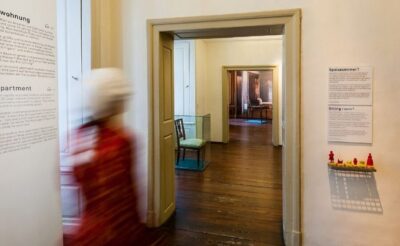
Tickets for Mozarthaus Vienna with Audio Guide
Read our review →
Skip-the-Line Entrance Ticket to the Danube Tower
Read our review →
St. Stephen’s Cathedral & Dom Museum Wien Tickets
Read our review →Browse the lists this tour appears in