Reviewed · TOURS
Vienna: Time Traveling Virtual Reality Sightseeing Tour
Vienna’s past arrives in short, vivid bursts on this walking tour. At six stops, you put on 360-degree virtual reality glasses and watch history unfold around you: a medieval procession, the Ottoman siege of 1683, the plague, Sisi and Franz Joseph, 1920s opera life, and Soviet troops entering the city in 1945. It is a fresh way to get your bearings in the old town.
I like the mix of real streets and reconstructed scenes, and I like that the guide adds context between headset stops. The 3.2-kilometer route is flat, the audio is offered in several languages, and guides such as Julian and Dr. Reiner have helped make the history easy to follow. The main caution is that the virtual scenes can look a little blurry and dated, and much of the tour is still ordinary walking with audio rather than constant VR action.
Key points to know before you book
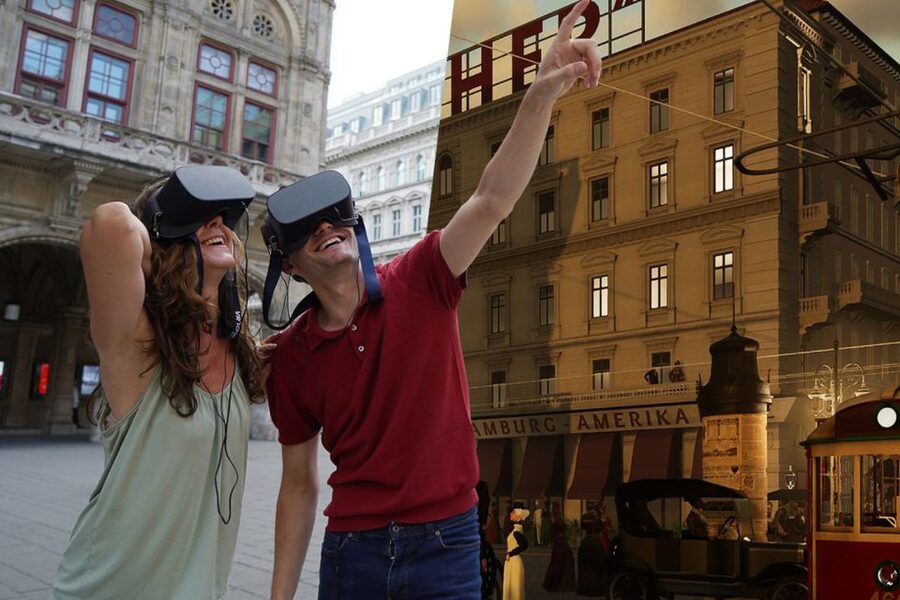
- Six historic VR scenes: See Vienna at key moments in 1483, 1683, during the plague, in the late nineteenth century, in the 1920s, and at the end of World War II.
- A useful first-day activity: The route links major old-town areas and gives you a broad introduction before you explore museums and palaces on your own.
- 3.2 kilometers on flat streets: You walk from Neuer Markt to the Albertina, with several pauses for the headset scenes.
- Live guidance plus multilingual audio: The guide speaks English or German, while the included audio guide also offers Spanish, Dutch, French, Italian, and Russian.
- VR is a supplement, not the whole tour: You spend much of the time walking and listening, then use the headset at selected locations.
- Plan for changing weather: Heavy rain or storms can lead to a last-minute cancellation, so avoid placing this tour on your tightest day.
What this Vienna VR tour is really like
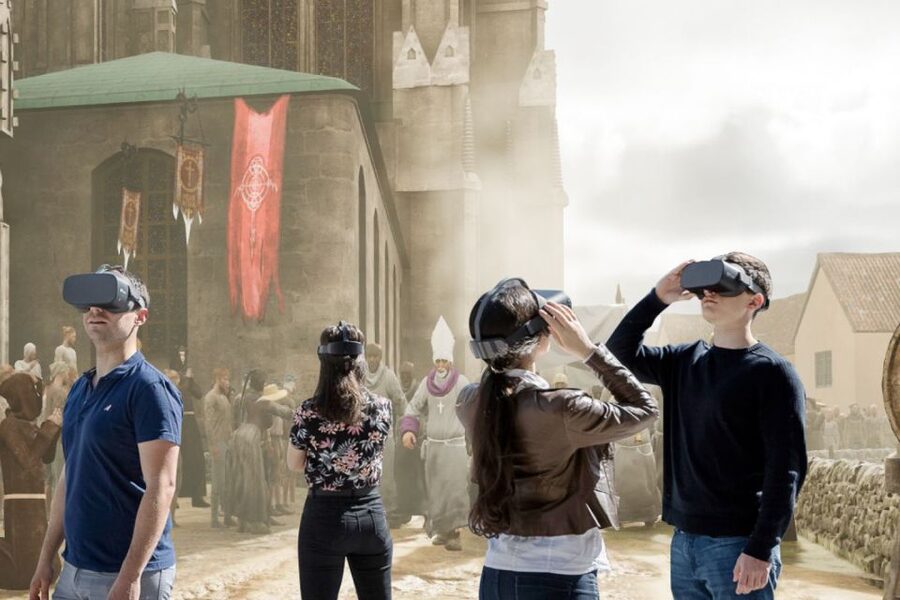
The experience begins at Neuer Markt 6, where you should arrive 15 minutes early and look for the turquoise entrance. You start indoors, which is helpful in cold weather and gives the guide time to explain the headsets and earphones before the group heads outside.
The advertised duration is 100 minutes, while the route information puts the guided portion at about 105 minutes. I would set aside two hours, especially if your group moves slowly or the guide needs extra time to explain the equipment.
This is not a standard walking tour with a headset running from start to finish. You move through Vienna’s streets, listen to narration, and stop at six historic locations. At each one, the VR scene lets you look around in every direction, giving you a sense of the buildings, crowds, and events that once filled the same space.
That format works best for visitors who want a clear story rather than a long list of dates. The real city gives you the physical setting, while the headset fills in what you cannot see today.
Other Vienna days people book alongside this one:
- Vienna: Vivaldi’s Four Seasons Concert in Karlskirche
★ 4.7 · 14,951 reviews - Vienna: Spanish Riding School Training
★ 3.9 · 9,281 reviews - Vienna: Skip-the-cashier-desk-line Giant Ferris Wheel Ride
★ 4.5 · 7,859 reviews
Neuer Markt to the first medieval procession
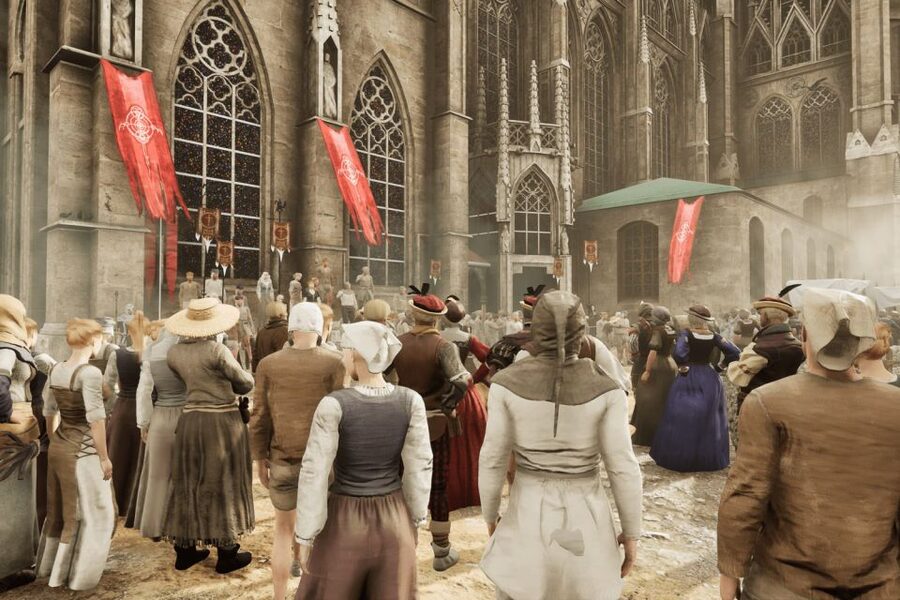
Neuer Markt is a practical starting point because you are already in Vienna’s central old town. From here, the group heads through historic streets toward the first scene, a White Sunday procession in 1483.
This was one of the few occasions when important religious ornaments were brought out for public display. The VR sequence helps you picture the movement and ceremony of medieval Vienna, a time when public religious events shaped city life in a way that is difficult to grasp from modern streets alone.
I find this opening scene useful because it starts with daily and ceremonial life rather than jumping straight to war. You see how the city functioned as a medieval center, then continue walking through the same urban core in its modern form.
The VR images are not high-end film effects. Faces may be indistinct, and some viewers may find the graphics slightly blurry. Still, the all-round view gives the scene more force than a flat photograph or a spoken description.
The 1683 Ottoman siege near Vienna
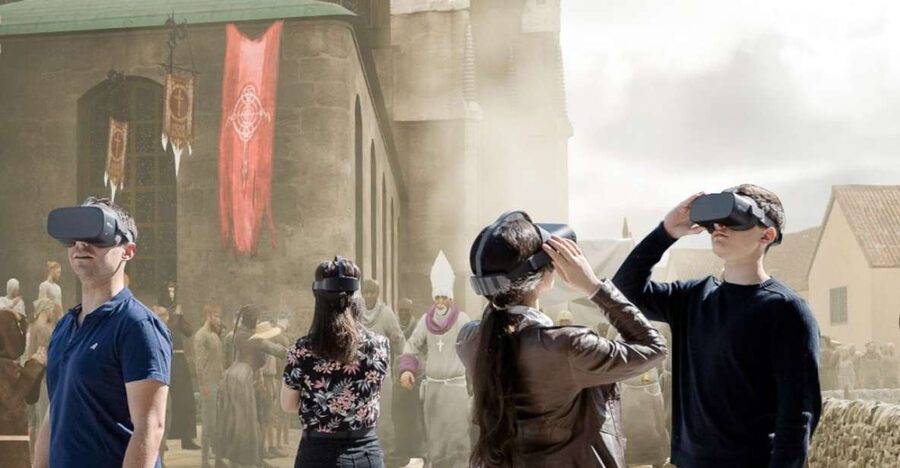
The next major stop takes you into the second Ottoman siege of Vienna in 1683. Instead of simply hearing that the city was attacked, you can look around as the bombardment takes place and get a sense of the danger facing people inside the walls.
This scene gives the tour a strong historical center. The siege helped shape Vienna’s later identity and its place in European history, but the important point here is scale. The headset places you in the middle of an event that affected the entire city, not just in front of a plaque describing it.
The guide’s explanation matters at this stop. The VR scene supplies atmosphere, while the live narration can clarify what you are seeing and connect the event to the streets around you. The balance keeps the experience from becoming a video-game-style spectacle.
You should not expect a long museum lecture. The tour aims to give you a memorable outline of Vienna’s past, then leave you with enough context to recognize why the city’s fortifications, central buildings, and political role mattered.
The plague and Augustin’s dark humor
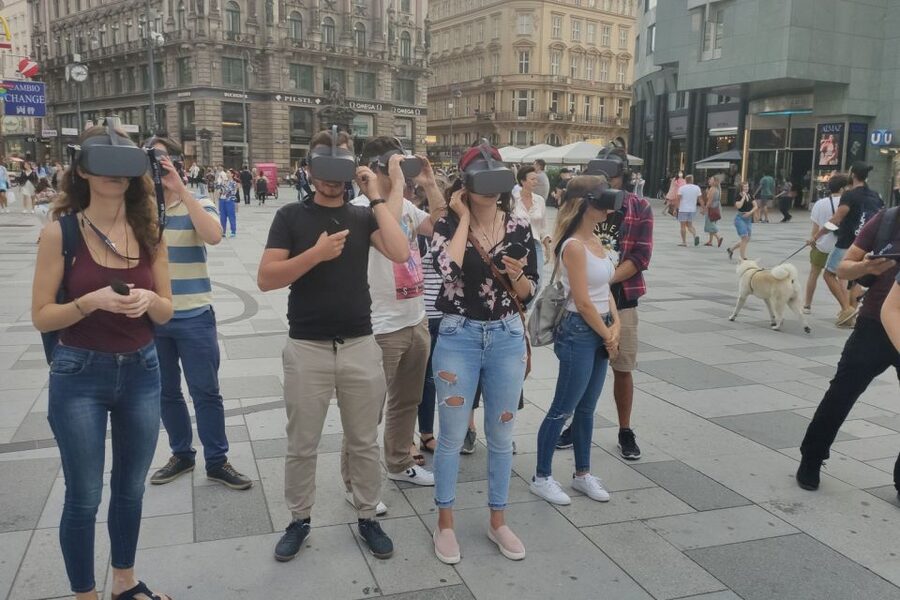
The plague scene changes the mood. You see Vienna during a devastating outbreak that killed a large share of Europe’s population, with the city shown in darkness and fear.
This is one of the more atmospheric sections of the tour. It does not present Vienna only as a city of imperial ceremony and grand music. Disease, death, and public anxiety also shaped urban life, and the VR setting gives the subject an emotional edge.
The scene introduces Augustin, a singer associated with humor and music during terrible times. His story shows another side of Vienna’s character: the ability to use music and wit to face hardship.
I like the contrast between this stop and the earlier procession. One scene shows public ceremony at its most formal, while the other shows how ordinary people might have coped when normal life broke down. If you prefer only light sightseeing, this section may feel somber, but it gives the tour needed balance.
Same Alps, a completely different kind of day:
- Vienna: Schönbrunn Palace & Gardens Skip-the-Line Tour
★ 4.7 · 7,739 reviews - Vienna: Light of Creation Votive Church Immersive Light Show
★ 4.8 · 6,779 reviews - Vienna Spanish Riding School Guided Tour
★ 4.7 · 6,765 reviews - Vienna: Classical Concert in the World-Famous Musikverein
★ 4.6 · 6,673 reviews
Hofburg, Sisi, and Franz Joseph
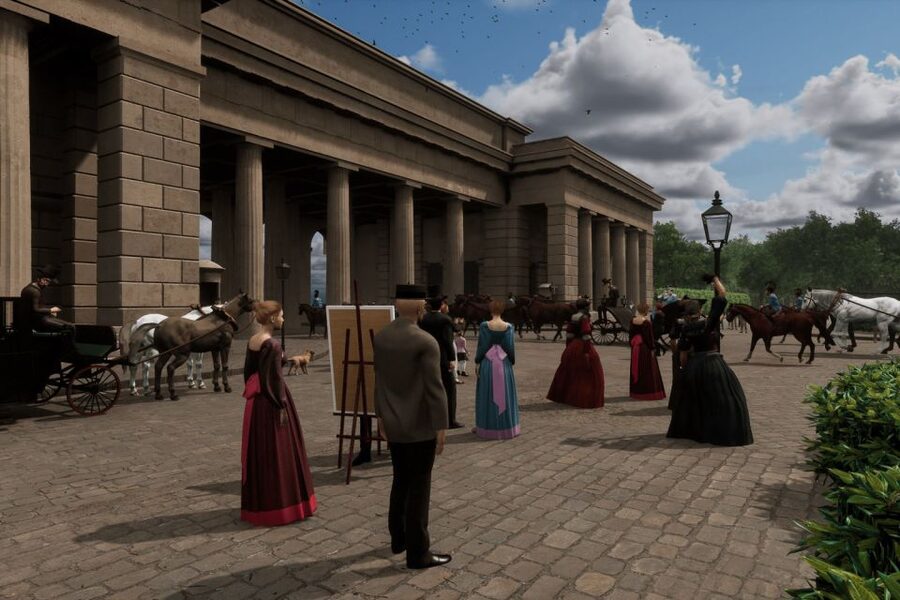
Near the Hofburg, the tour shifts to imperial Vienna. On a sunny day, you walk around the palace area and see Empress Sisi and Emperor Franz Joseph on a hunting trip.
The scene is built around a small personal moment rather than a major political event. You are placed close to the road as the imperial couple passes, with the playful instruction to wink. That detail gives the headset sequence a lighter tone after the plague.
The Hofburg is already one of Vienna’s essential sights, so this stop works well as a bridge between the historical story and the city you see today. You can look at the palace complex, then use VR to imagine the people and activity that once moved through its surroundings.
Do not expect a full account of Sisi’s life or the Habsburg dynasty here. The stop is brief and visual. If you want detailed imperial history, you will need more time at the Hofburg’s museums and apartments. This tour gives you a lively introduction, not a substitute for them.
Vienna’s Opera House in the 1920s
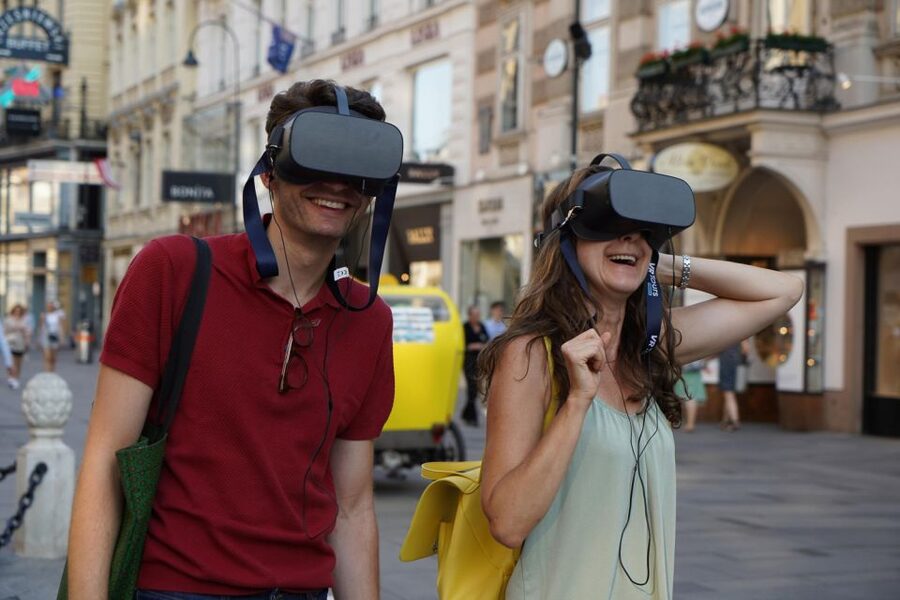
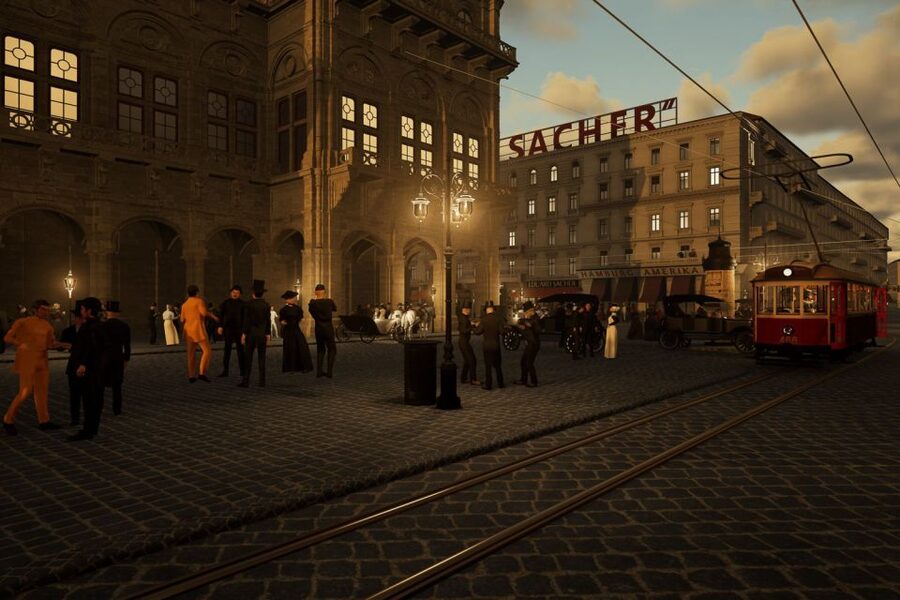
At the Opera, the VR scene moves into Vienna’s golden 1920s. You see the preparations for an opera performance and get a look at the social world around the theater.
This is a valuable change of pace. Vienna’s story did not end with the imperial era, and the scene shows the city as a modern cultural capital. The Opera becomes more than an impressive facade. Through the headset, you get a glimpse of the people and preparations behind a night at the theater.
The scene’s visual quality is also where expectations matter most. Some people may want more action, dancing, period clothing, and movement. The reconstruction can feel limited, with less going on than the setting suggests. I would treat it as a short historical snapshot rather than a fully developed virtual show.
Still, the location and subject fit together well. You are standing near one of Vienna’s most famous cultural institutions while seeing how an earlier generation prepared for an evening there.
St. Stephen’s Square and the end of World War II
The final scene takes place at St. Stephen’s Square, where you see St. Stephen’s Cathedral burning during the last month of World War II. You also witness Soviet troops driving the last German soldiers from the city.
This is the most dramatic ending. The cathedral is one of Vienna’s central symbols, so seeing it damaged in wartime gives the story a direct link to the building in front of you. The sequence also shows how the war reached the city center and marked the end of Nazi control.
Ending here gives the tour a clear timeline, from a medieval religious procession to the destruction and political change of 1945. You finish at the Albertina, close to several major sights, so the location is useful for continuing your day.
The subject is serious, and the tour does not turn it into entertainment. The headset simply lets you picture a vanished moment while the guide helps explain what happened. For many visitors, this final stop will be the one they remember most clearly.
The guide, headsets, and audio languages
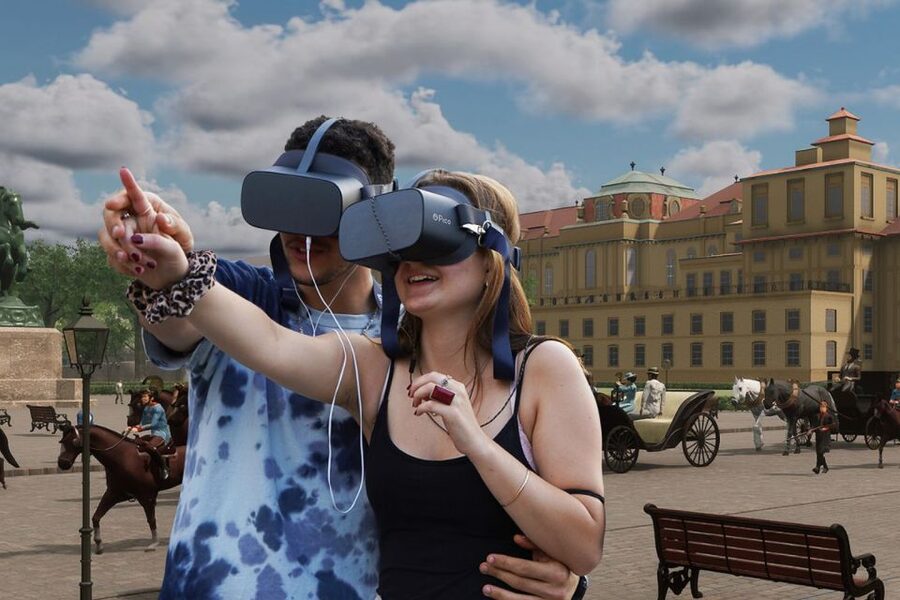
The live guide speaks English or German. The guide explains how to use the VR glasses and earphones, which is important because the equipment can feel awkward the first time you put it on in a busy city setting.
Julian has led tours in both English and German, and Dr. Reiner has also been praised for clear help with the equipment and the history. Guide quality can affect this experience more than on a standard sightseeing walk. The transitions between real streets, audio narration, and virtual scenes need to be handled well.
The included audio guide is available in English, Spanish, Dutch, French, Italian, and Russian. That makes the tour easier to follow if your preferred language is not the live guide’s language.
If a group combines English and German speakers, explanations may take longer and the rhythm can feel less smooth. A separate group in your preferred language would be easier to follow, but the tour does offer a practical option for mixed-language parties.
How much walking and waiting should you expect?
The route covers 3.2 kilometers over flat terrain. You do not need to prepare for steep hills, but you should wear comfortable shoes because the tour takes place on city streets and includes repeated stops.
The headsets are used only at certain points. Between them, you walk and listen to the guide or audio presentation. This matters if you are booking because you want nonstop VR. You will get six substantial virtual scenes, not 100 minutes inside a digital world.
The stop-and-go rhythm suits most sightseeing days. You walk enough to connect the places, but the route is not an exhausting march. The headset sections give your feet a break, though you may need to remain standing while looking around.
The tour is wheelchair accessible, and the route is flat. Children under eight cannot join, and the activity is not suitable for people with epilepsy because of the virtual reality equipment.
Is $45 a fair price?
At $45 per person, this costs more than a basic self-guided walk and less than many specialized private tours. The value comes from the combination of a live guide, a central walking route, equipment, and six custom historical reconstructions.
I think the price makes sense if you enjoy technology and want a structured introduction on your first day. You get more than a city walk, but less than a full museum program or a private historian-led tour.
The value is weaker if you mainly want detailed architecture, long time at each landmark, or polished cinematic VR. The graphics are somewhat rough, and the tour spends much of its time on regular streets with audio narration. In that case, a conventional walking tour may give you more direct commentary for less money.
The strongest reason to pay for this experience is the way it helps you imagine lost scenes. Vienna’s monuments can feel static when you see them only as buildings. The headset gives them motion, crowds, danger, and ceremony.
Weather, timing, and practical planning
Weather can affect the tour because it is an outdoor walk. Heavy rain or a storm may lead to cancellation, sometimes at short notice if conditions change quickly. I would avoid scheduling it immediately before a fixed museum reservation or train departure.
Arrive 15 minutes early at Neuer Markt 6 and look for the turquoise entrance. Starting indoors is useful in poor weather and gives you a place to get organized before walking.
The route ends at the Albertina rather than returning to Neuer Markt. That makes it easy to continue toward the Albertina, the Opera, or other central sights, but remember that your day’s next stop should be planned from the finish point.
Food and drinks are not included. The tour is short enough that this is rarely a problem, but you may want to eat before or after rather than expecting a refreshment break along the route.
Free cancellation is available up to 24 hours before the start for a full refund, and you can reserve now and pay later. Those terms are useful when your Vienna schedule is still changing.
Who will enjoy this most?
I would recommend the tour to first-time Vienna visitors who want a broad story before exploring the city in detail. It is also a good fit for families with children over eight, history fans who enjoy visual aids, and anyone who has already seen standard walking tours and wants a different format.
It suits you less if you dislike headsets, get motion discomfort from virtual reality, or want long, detailed explanations at each monument. The scenes are short, and the tour moves on after each one.
It can work well for mixed-age groups because the historic events are easy to see and hear. Just remember that the darker plague and wartime scenes may not suit very young or sensitive children.
Should you book the Vienna Time Traveling VR Tour?
Book it if you want an engaging first look at Vienna and like the idea of seeing the city’s past at the exact places where events happened. The combination of a flat old-town walk, six historical scenes, multilingual audio, and a live English or German guide gives you a useful introduction with a clear beginning and end.
Skip it if you expect cutting-edge graphics or a nonstop virtual attraction. The VR can look dated, and the Opera scene in particular may feel too quiet or simple. At $45, the tour is best value for curious visitors who see the technology as a tool for understanding Vienna, not as the entire attraction.
FAQ
Where does the Vienna VR tour begin?
The tour begins at Neuer Markt 6 in Vienna. Arrive 15 minutes before the start and look for the turquoise entrance.
Where does the tour finish?
The tour finishes at the Albertina.
How long does the tour last?
The activity is listed as 100 minutes, with the guided route described as about 105 minutes. Allow roughly two hours for a comfortable schedule.
How far do you walk?
The route covers 3.2 kilometers over flat terrain.
Which languages are available?
The live guide speaks English or German. The included audio guide is available in English, Spanish, Dutch, French, Italian, and Russian.
What does the tour include?
Virtual reality glasses and earphones for the audio guide are included. Food and drinks are not included.
Is the tour wheelchair accessible?
Yes, the tour is wheelchair accessible.
Is the experience suitable for children?
Children under eight are not permitted on the tour.
Can the tour be canceled because of weather?
Yes. Poor weather, including heavy rain or storms, can cause cancellation. Conditions may change quickly, so the decision can sometimes be made at the last minute.
Just added around Vienna
- Ottakringer Brewery tour★ 4.0 · 6 reviews
- New Hofburg Palace Tour House of Habsburg★ 4.5 · 5 reviews
- Private Van & Walk Tour – One Perfect Day in Vienna★ 5.0 · 21 reviews
- True Crime mobile puzzle rally Vienna★ 4.0 · 3 reviews
- Vienna Naschmarket Food Tasting Tour★ 4.0 · 30 reviews
- Vienna Nightlife Experience: Food, Wine, Cocktails & Vibes★ 5.0 · 119 reviews
- Myth Mozart★ 4.0 · 80 reviews
- ( Night Tour ) With Private Guide + wine or prosecco★ 4.0 · 12 reviews
Tours, compared.
Schönbrunn Palace & Gardens Skip-the-Line Tour
Read our review →

Skip-the-Line Sisi Museum, Hofburg and Gardens Tour
Read our review →
Skip-the-Line Schönbrunn Palace & Gardens Tour
Read our review →
Guided Walking Tour of City Center Highlights
Read our review →