
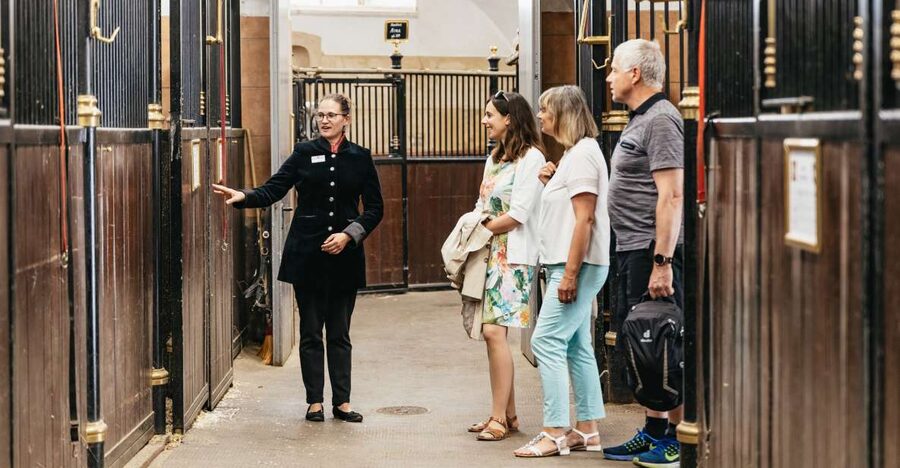
Reviewed · SPANISH RIDING SCHOOL TOURS
Vienna Spanish Riding School Guided Tour
The best part of this tour is getting close to the Lipizzaner stallions in their historic stalls, then seeing the elegant rooms where the Spanish Riding School’s famous performances take place. You get the old arena, the stables, the tack room, and the Summer Riding School in one short visit.
I like the mix of grand architecture and working horse care. I also like the guides, who explain everything from breeding and naming to the long training of riders and horses. The main drawback is firm: no photos, video, or touching the horses, and a large group can make the guide hard to hear.
Key Points
- See the Winter Riding School: Sit in the Baroque performance hall and learn how classical equitation is practiced.
- Visit the Stallburg stables: Look into the historical home of the Lipizzaner stallions at close range.
- Explore the Summer Riding School: See the world’s largest oval horse walker.
- Hear the daily story: Guides explain breeding, training, rider selection, and horse care.
- Allow time at the ticket counter: Exchange your mobile voucher for a ticket, with pickup available no earlier than one hour before the tour.
Inside Vienna’s Spanish Riding School
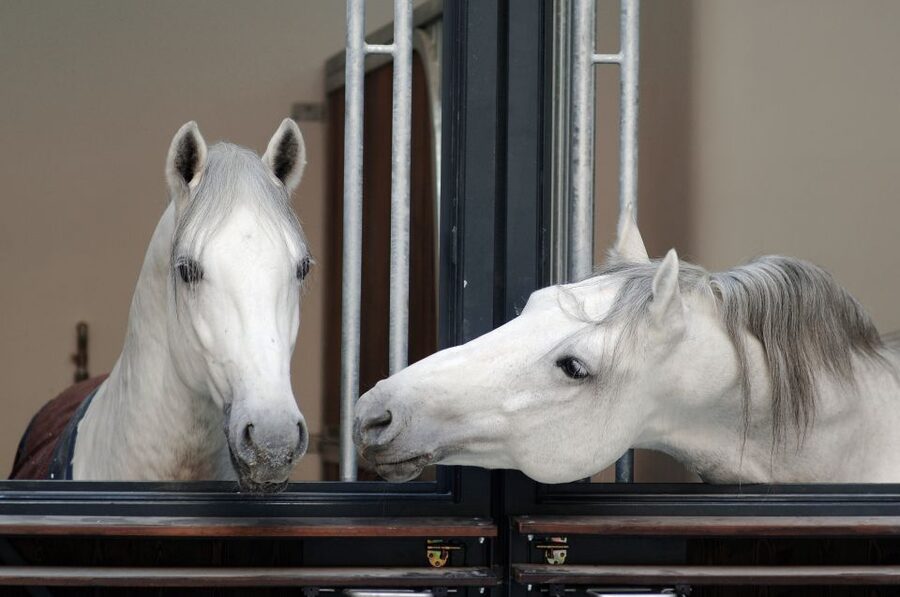
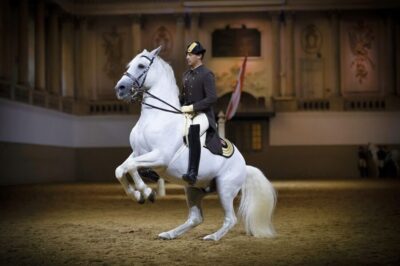
The Spanish Riding School has operated for more than 450 years. Its work is based on classical equitation in the Renaissance tradition of the Haute Ecole, a demanding system in which horse and rider train for years to perform precise movements.
You do not need to be an expert in horses to enjoy this tour. One particularly useful aspect is the way the guide connects the graceful public performance with the less glamorous work behind it. You see where the horses live, learn how riders are trained, and gain a better sense of the patience required before a stallion appears in the arena.
At about $28 per person, this is priced as a short cultural visit rather than a full performance. For 55 minutes, it gives you access to parts of the school that you would not see from the audience seats. If you want to watch the horses perform, you need a separate show or morning exercise ticket. Those are not included here.
More Spanish Riding School Tours in Vienna:
- Vienna: Spanish Riding School Training
★ 3.9 · 9,281 reviews - Performance Of The Lipizzans At Spanish Riding School
4,190 reviews - Vienna: Spanish Riding School 45-Minute Performance Show
★ 3.9 · 731 reviews
The Winter Riding School and Its White Arena
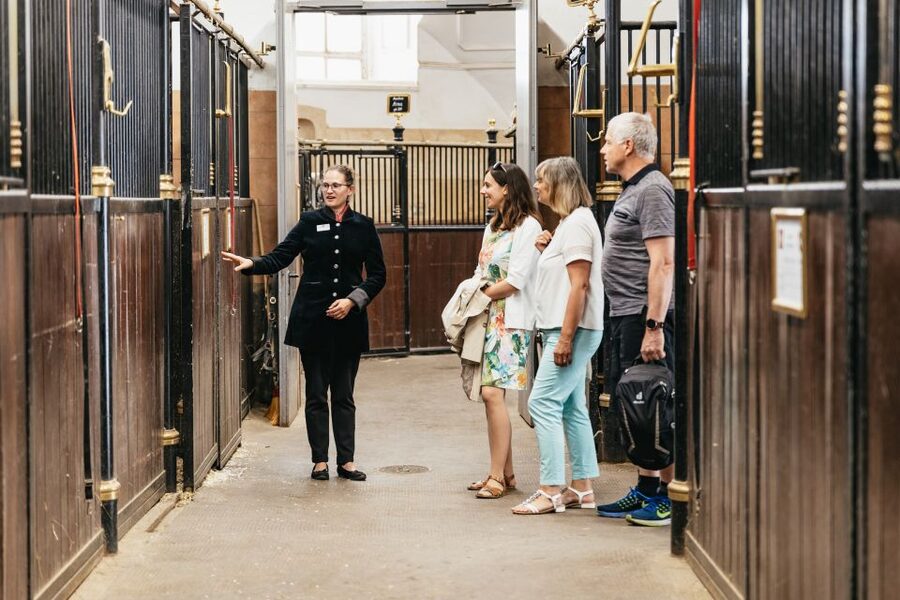
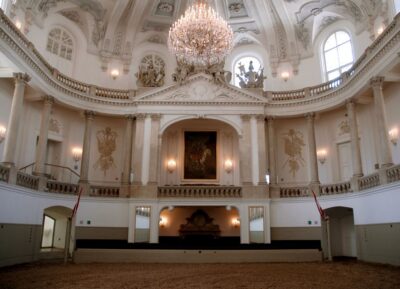
The tour usually begins in the Winter Riding School, the grand indoor arena associated with the Spanish Riding School’s public displays. This is the room most people picture when they think of Lipizzaner performances: polished, formal, and built for ceremony as much as for riding.
Your guide explains the school’s long tradition while you take in the architecture. The room is not just a pretty backdrop. It is the setting where the school’s methods become visible, from the formal presentation of the horses to the precise work of the riders.
This stop works well even if you cannot attend a performance. You can sit in the arena and hear how the school operates, then watch for details you might otherwise miss if you later attend a show. Several guides use humor along with historical facts, which keeps the talk from becoming a dry lecture.
The arena visit is also a good point to ask questions. Guides including Sisi, Natasha, Inga, and Lorelei have been praised for making room for questions and explaining complex horse-training subjects in plain terms. The quality of the tour depends partly on who leads your group, but the strongest guides clearly enjoy both the horses and the institution.
One practical issue is group size. The tour can include enough people that it becomes difficult to hear in parts of the building. Stay near the guide when possible, especially in the arena and along the indoor route.
The Stallburg, Vienna’s Renaissance Horse Home
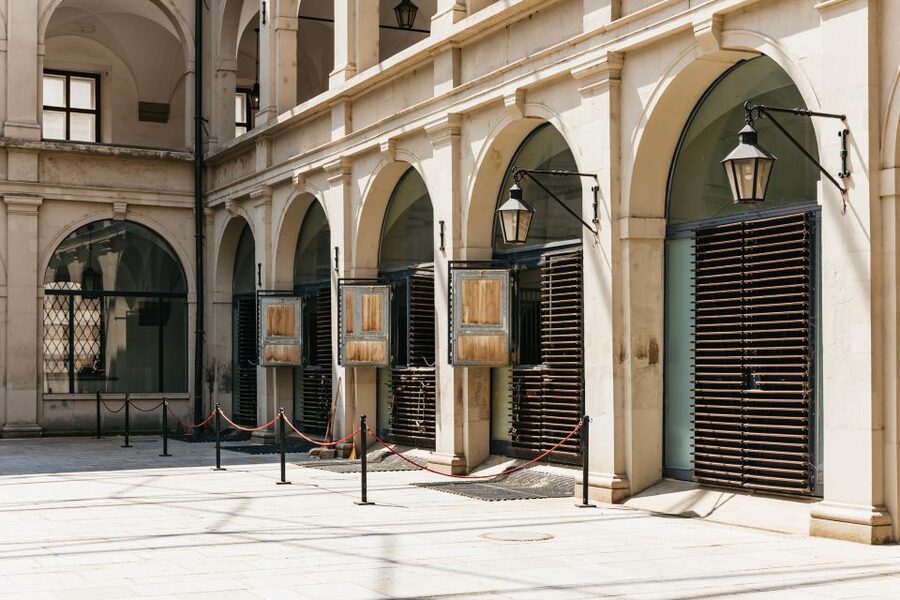
From the arena, the tour continues into the Stallburg, Vienna’s most significant Renaissance structure. Its arcade courtyard and historic stables give the visit a different feel from the formal Winter Riding School.
Here, the Spanish Riding School feels less like a ceremonial attraction and more like a working institution. The horses are kept in stalls around the historic complex, and you can see them at close range, within the limits set by the school.
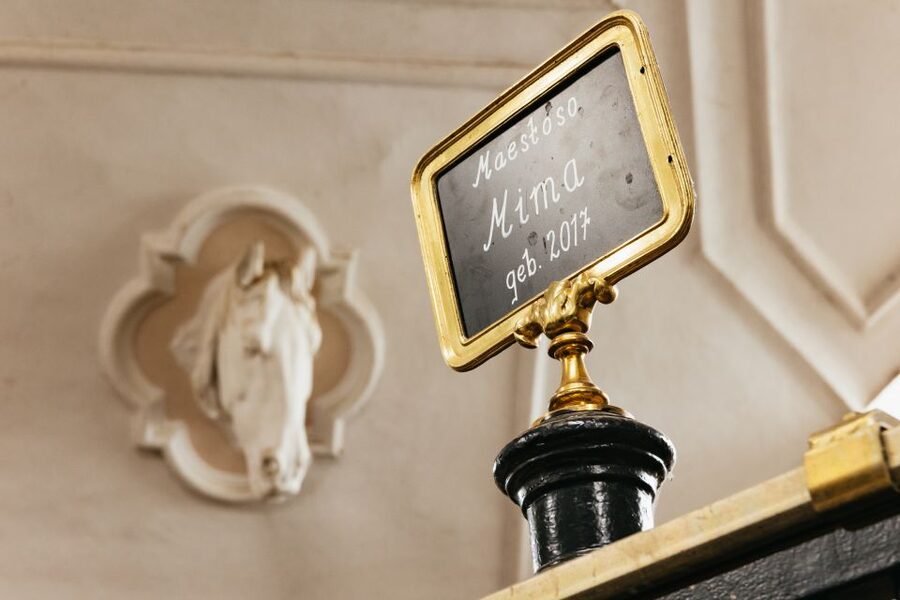
The stallions are the clear stars. You may see horses of different ages, and the guide explains their breeding, lineage, names, daily care, and training. One unusual detail described during a tour was a rare bay Lipizzaner that never turned white, a reminder that the breed’s famous color is not as simple as the public image suggests.
You cannot pet the horses. You also cannot take photographs or video, including inside the stables. This can disappoint visitors who expect a chance to stroke a stallion or collect close-up pictures, but the rule protects the animals and keeps the stable calm.
The no-touch rule is especially important because the horses are working animals, not a petting-zoo display. You are close enough to study their size, posture, and presence, but the visit asks you to behave quietly and respect the space.
You may also see the school’s working cats around the tack room and stable areas. They help control mice and seem entirely unimpressed by the attention of a tour group. It is a small detail, but it adds a bit of everyday life to a place that can otherwise feel very formal.
The Summer Riding School and the Horse Walker
The Summer Riding School provides another view of how the horses are exercised. It houses the world’s largest oval horse walker, a practical feature that helps explain the daily routine behind the polished performances.
This section is valuable because it shifts the focus away from showmanship. A Lipizzaner does not simply appear in the Winter Riding School ready to perform. The horse needs regular movement, conditioning, training, and careful handling. The guide uses the spaces you visit to show how those demands fit together.
The school’s horses also spend time away from the central Vienna site. The tour explains that the stallions are not kept in the city for long, uninterrupted periods and that they have time in the countryside. During summer, many horses may be away on holiday, so you might see fewer stallions than expected.
That seasonal point matters when choosing your date. A July visit can still include enough horses to make the trip worthwhile, but you should not assume every stall will be occupied. Seeing the Summer Riding School and learning how the horses live away from Vienna helps balance that limitation.
A few more Vienna trips to weigh up
- Vienna: Guided Walking Tour of City Center Highlights
★ 4.7 · 4,989 reviews - Vienna: Vienna Central Cemetery Guided Walking Tour
★ 4.8 · 3,307 reviews - Vienna: Bus & Schönbrunn Palace Skip-the-Line Guided Tour
★ 4.3 · 2,802 reviews - Vienna: Tickets for Mozarthaus Vienna with Audio Guide
★ 4.2 · 2,344 reviews
The Tack Room and the Tools of the Trade
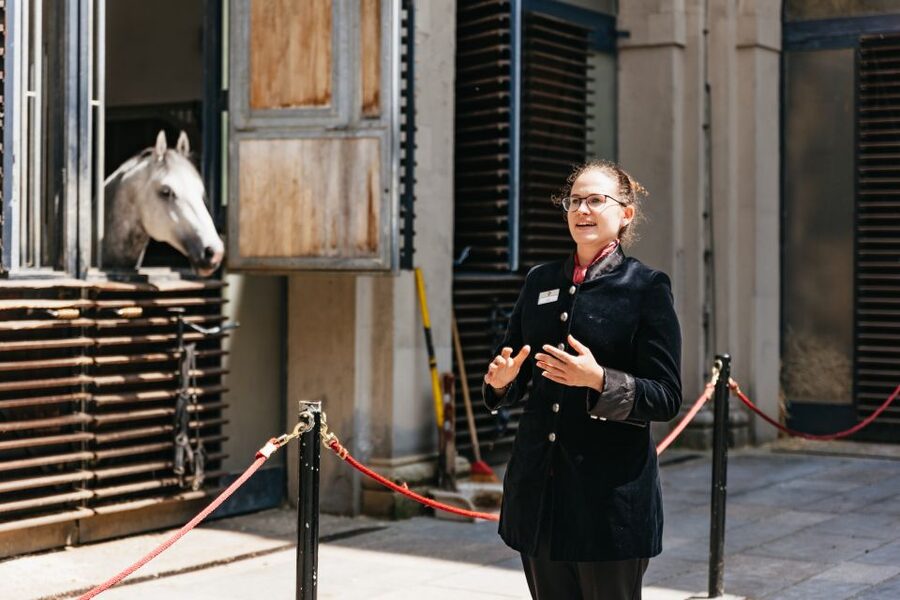
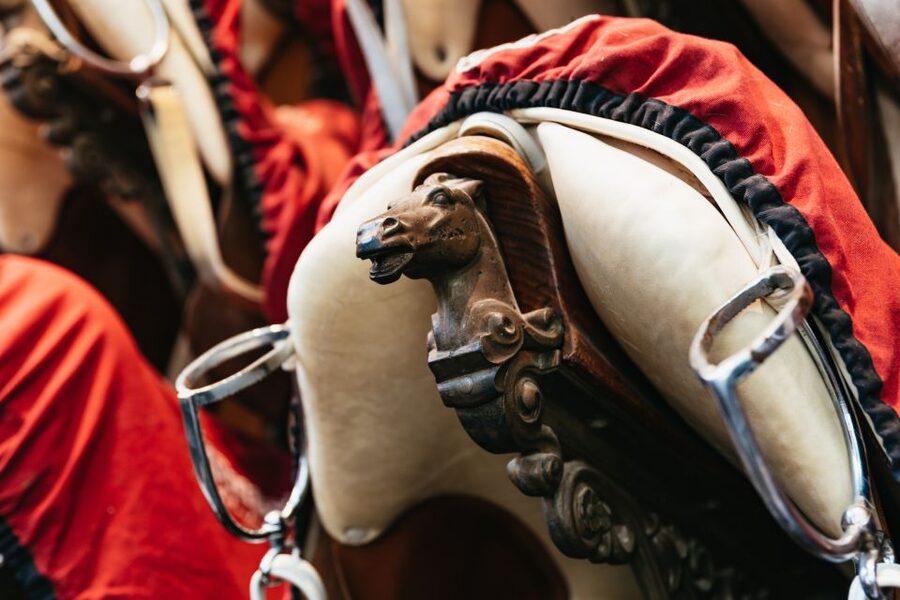
The tack room is one of the more memorable stops for anyone curious about riding equipment. You see the gear used for training and performances while the guide explains how it fits into the school’s methods.
This is where the idea of classical equitation becomes more concrete. Instead of only hearing about riders and horses in the abstract, you can look at the equipment that supports their work. Guides also answer questions about how riders are selected and trained, and how horses progress over many years.
The tack room can appeal even to people who do not ride. One visitor who came mainly to see the building found the historical and current practices interesting despite having little horse experience. That is a good measure of the tour’s reach: the subject is specialized, but the guide’s explanation makes it accessible.
You should still keep your expectations realistic. This is not a hands-on lesson, and you do not handle the equipment. It is a guided look at the objects and routines that support the school’s daily work.
What the Tour Teaches About Lipizzaner Training
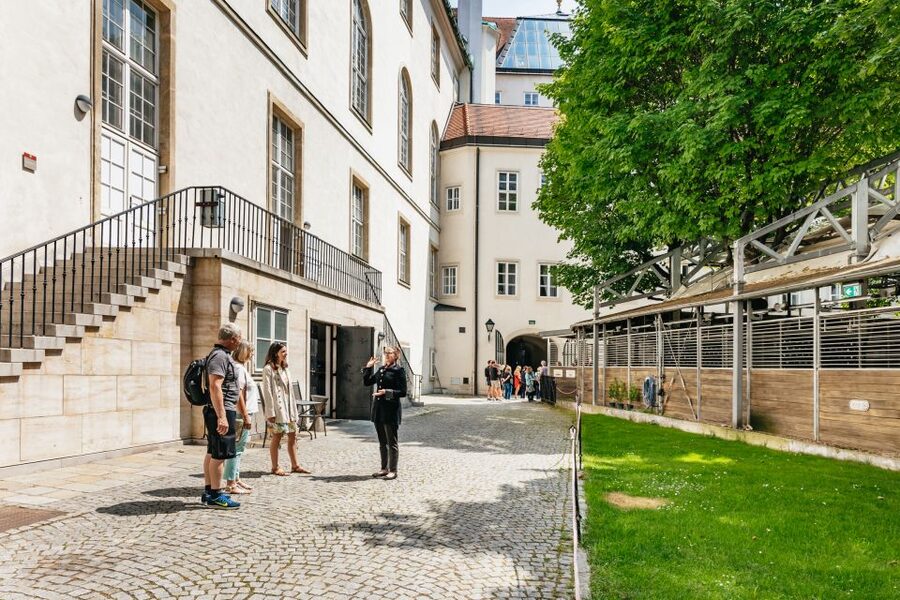
The most useful part of the visit is learning how much time goes into producing the polished performance associated with the Spanish Riding School. The horses and riders must meet demanding standards, and the guide explains the stages of training and selection.
You learn about the stallions’ breeding and lineage, the ways they are cared for, and the work required to prepare them for classical movements. The tour also covers the riders, including their own long training process. That makes the performance feel less like a brief spectacle and more like the visible result of years of practice.
The guides vary in style. Lorelei has been praised for answering detailed questions from people who already work with horses, while also handling basic questions from newcomers. Other guides, including Sisi and Inga, are noted for warmth, humor, and enthusiasm. Natasha has been singled out for combining history with practical day-to-day information.
You may be assigned an English or German tour, depending on the time you choose. The live guide speaks one of those languages, and separate language groups may be arranged. Check the available start time before booking if language is important to you.
How This Visit Compares With a Performance
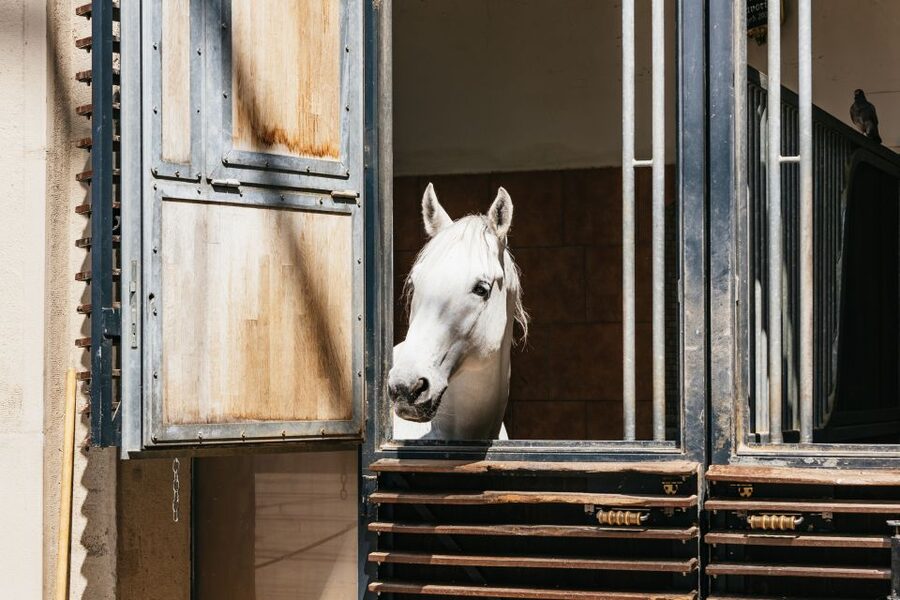
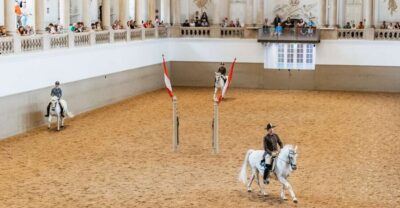
This guided tour and a performance serve different purposes. A performance gives you the spectacle of trained stallions and riders in the Winter Riding School. This visit explains the institution and lets you see areas behind that spectacle.
You do not receive a morning exercise ticket with the tour. You also do not receive a performance as part of the 55 minutes. Some visitors arrive expecting to see a short riding presentation and are disappointed when the horses are on holiday or not scheduled to work.
I see the tour as a good choice if performance tickets are unavailable, too expensive, or do not fit your schedule. It is also a smart first visit before a show because you will understand more about the horses, riders, equipment, and movements when you later take your seat.
If seeing horses in motion is your main goal, book carefully. The tour can show you the arena and the horses in their stalls, but it cannot promise a live demonstration. Those who want both experiences should arrange a separate performance or exercise ticket.
Price, Timing, and Practical Details
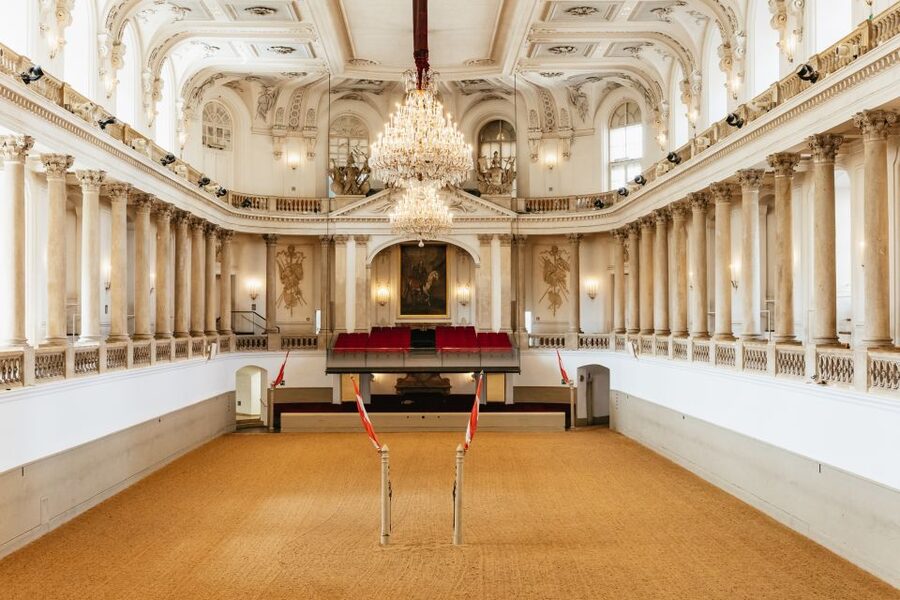
The $28 price is reasonable for a guided 55-minute visit in central Vienna, particularly because you enter several parts of the complex rather than seeing only the public arena. I would consider it good value for anyone interested in architecture, Austrian tradition, or horses.
The time commitment is also convenient. You can fit the tour between major sights without giving up half a day. The short length makes it suitable for a first morning in Vienna or a gap between other appointments.
Meet at Michaelerplatz 1, at the main entrance of the Spanish Riding School. Show your mobile voucher at the ticket counter, but remember that the voucher must be exchanged for a paper ticket. Ticket pickup is available no earlier than one hour before the activity, so do not plan to collect it far ahead of time.
The tour is not suitable for wheelchair users, and guided tours are not wheelchair accessible. Children under three are not allowed. Pets are not permitted.
Cameras and video recording are forbidden. Treat that as a strict rule rather than a suggestion. Put your camera away before entering the tour areas, and do not touch the horses.
Free cancellation is available up to 24 hours before the activity for a full refund. You can also reserve now and pay later, which helps if you are still arranging the rest of your Vienna schedule.
Who Will Enjoy This Tour Most
I would recommend this to horse lovers first. You get close to the stallions, learn about their care, and see the places connected to their work. It is a satisfying visit even if you never attend a performance.
It also suits architecture fans. The Winter Riding School offers Baroque grandeur, while the Stallburg brings you into a major Renaissance building with an arcade courtyard and historic stables.
You do not need prior riding experience. A good guide can explain the subject to complete beginners while still answering detailed questions from experienced riders. The tour is also useful for anyone whose schedule does not match the morning exercise or evening performance times.
I would hesitate only if you need photographs, want to pet animals, or expect to watch a riding display. The no-photo policy and lack of included performance are central parts of the experience, not minor details.
Should You Book the Spanish Riding School Tour?
Book it if you want a compact, informative look behind Vienna’s most famous equestrian institution. The combination of arena, Summer Riding School, Stallburg stables, tack room, and close views of Lipizzaner stallions gives you much more context than a quick look at the building entrance.
Choose a performance instead, or add one separately, if the horses in motion are your priority. For everyone else, especially visitors curious about how the school works day to day, this 55-minute tour earns its place in a Vienna itinerary.
FAQ
How long is the Spanish Riding School guided tour?
The guided tour lasts 55 minutes.
What areas do I visit?
The tour includes the Winter Riding School, the Summer Riding School, and the Stallburg stables. The route also includes the historic stable areas and tack room.
Does the tour include a performance or morning exercise session?
No. Morning exercise tickets are not included, and the guided tour does not include a performance.
Can I take photos or videos?
No. Photography and video recording are not permitted during the tour.
Can I touch or pet the horses?
No. You may see the Lipizzaner stallions close up, but touching them is not allowed.
What languages are available?
Live guided tours are available in English and German.
Where do I collect my ticket?
Meet at Michaelerplatz 1, at the main entrance of the Spanish Riding School. You must exchange your mobile voucher for a ticket at the cashier’s desk, and pickup is available no earlier than one hour before the activity.
Just added around Vienna
- Ottakringer Brewery tour★ 4.0 · 6 reviews
- True Crime mobile puzzle rally Vienna★ 4.0 · 3 reviews
- New Hofburg Palace Tour House of Habsburg★ 4.5 · 5 reviews
- Private Van & Walk Tour – One Perfect Day in Vienna★ 5.0 · 21 reviews
- Vienna Naschmarket Food Tasting Tour★ 4.0 · 30 reviews
- Vienna Nightlife Experience: Food, Wine, Cocktails & Vibes★ 5.0 · 119 reviews
- Myth Mozart★ 4.0 · 80 reviews
- ( Night Tour ) With Private Guide + wine or prosecco★ 4.0 · 12 reviews
Spanish Riding School Tours, compared.
Spanish Riding School 45-Minute Performance Show
Read our review →
Spanish Riding School Guided Architectural Tour
Read our review →Browse the lists this tour appears in