
Reviewed · SPANISH RIDING SCHOOL TOURS
Vienna: Spanish Riding School Training
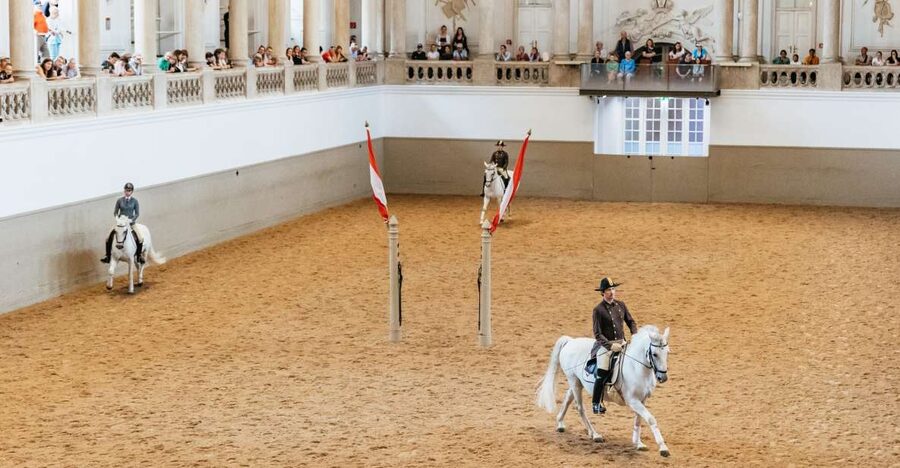
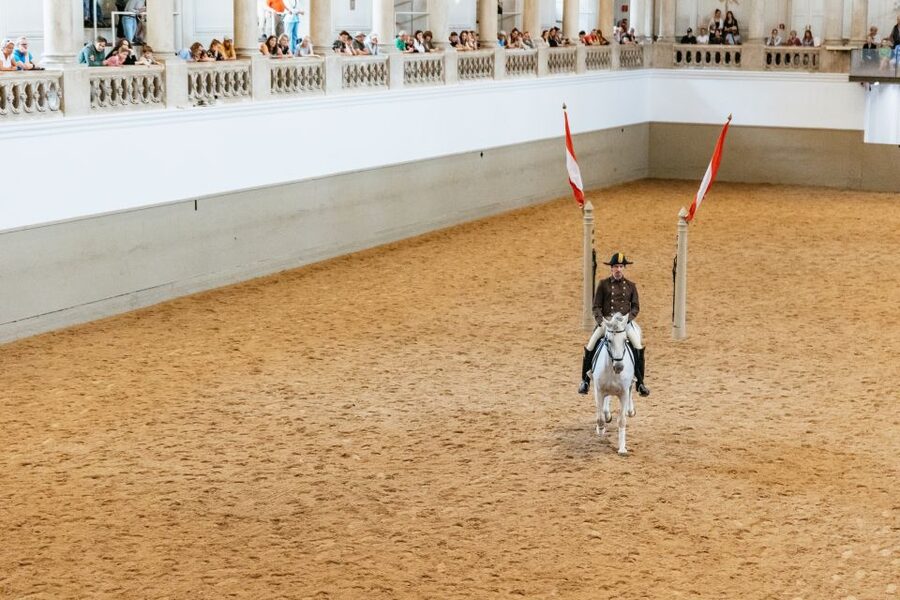
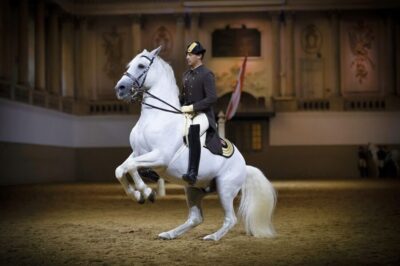
The most memorable part of this one-hour experience is the setting: white Lipizzaner stallions working beneath chandeliers in Vienna’s Baroque Winter Riding Academy. You watch riders and horses repeat small, careful movements that build toward the spectacular haute école seen in full performances.
I like the honest glimpse behind the finished show, and I like the price. At $20, this is a sensible way to see the school when performance tickets are too costly or sold out. The main drawback is that morning training is practice, not a full equestrian show. You may see elegant dressage and groundwork, but the famous jumps are not performed every day.
Key points to know before you book
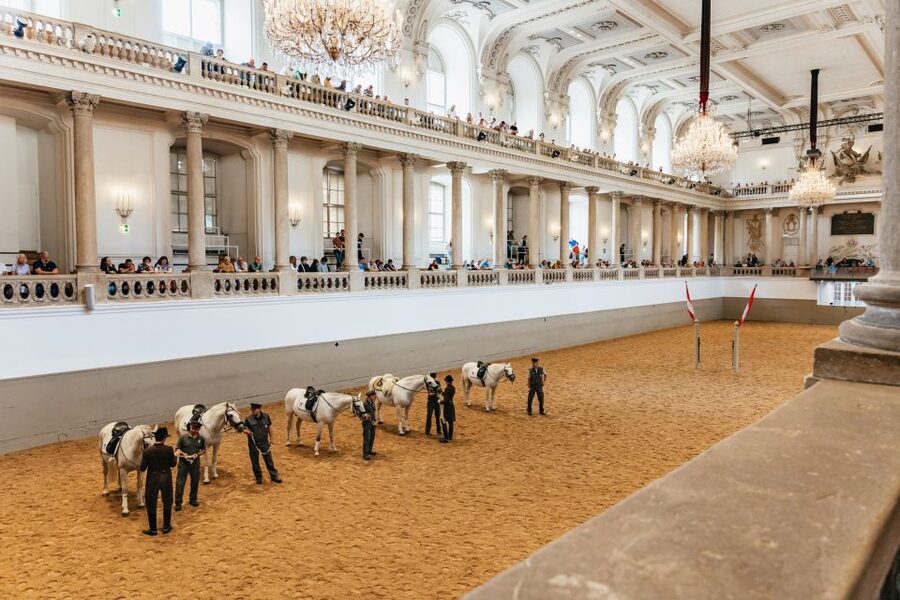
- The Winter Riding Academy is part of the experience: The grand hall, chandeliers, sand arena, and historic atmosphere make even simple exercises worth watching.
- Training is deliberately varied: You may see relaxation work, trotting, changes of lead, sidestepping, lunging, and exercises that strengthen the horses’ muscles.
- The famous jumps are not guaranteed: Levade, courbette, and capriole appear only occasionally during morning exercise.
- Standing tickets can be good value: They cost less, but standing for an hour may be tiring, and some upper-level seats require you to lean forward.
- Get your ticket early: Present your voucher at the entrance and exchange it for a paper ticket, with collection available no earlier than one hour before the activity.
- Photography and video are forbidden: The rule is repeated inside, so bring your eyes rather than your phone camera.
Why morning training is worth your Vienna morning
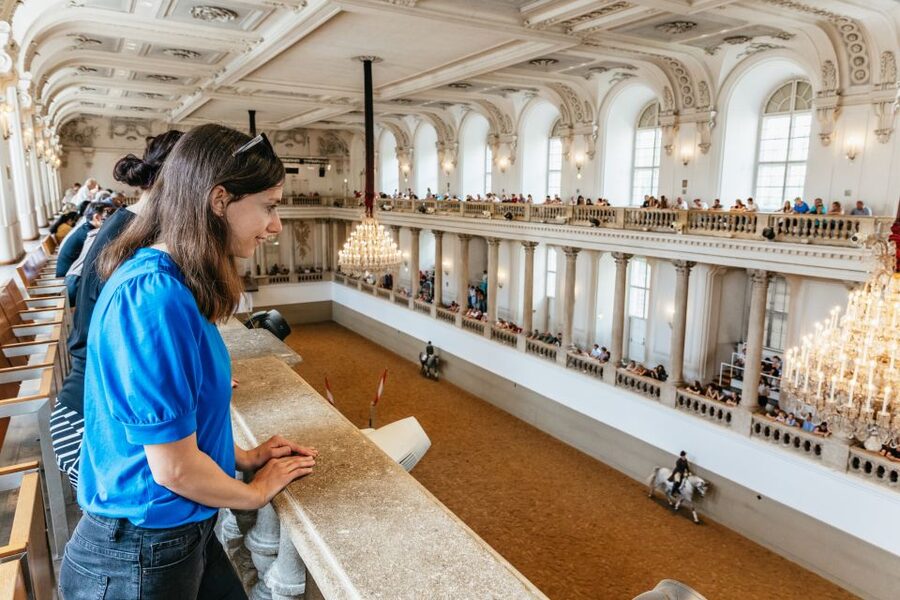
The Spanish Riding School is famous for polished performances, but training shows how that polish is made. You see horses and riders at different stages, not just the finished movements. One rider may work on a basic transition while another horse repeats a more advanced exercise.
That difference is useful. A performance can make the horses’ skills look effortless. Training reminds you that every precise step comes from repetition, patience, balance, and careful muscle work.
The morning exercise is designed to maintain the stallions’ athletic condition and health. Riders also work on specific muscle groups needed for the difficult movements of classical dressage. Some exercises are simple and relaxing. Others refine the horse’s movement and prepare it for more demanding work.
Classical Viennese music accompanies the session. It gives the hour a graceful rhythm, though the music is not the only sound you will notice. Hooves, instructions, and the movement of several horse-and-rider teams all share the arena.
I would not book this expecting a continuous parade of tricks. The school jumps, including the levade, courbette, and capriole, are part of major performances but are not practiced every day. Seeing one is a matter of timing and luck. The real subject here is training itself.
More Spanish Riding School Tours in Vienna:
- Vienna Spanish Riding School Guided Tour
★ 4.7 · 6,765 reviews - Performance Of The Lipizzans At Spanish Riding School
4,190 reviews - Vienna: Spanish Riding School 45-Minute Performance Show
★ 3.9 · 731 reviews
Entering the Winter Riding Academy
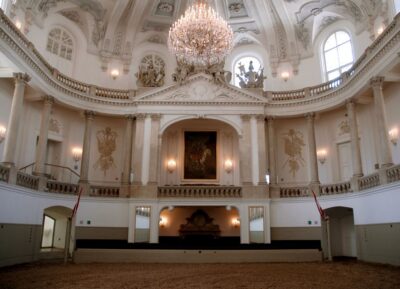
The hall is a major reason to book this activity, even for someone with only a passing interest in horses. The Baroque Winter Riding Academy has a formal, almost theatrical appearance, with chandeliers hanging above the sand school. It is a striking contrast to the practical work taking place below.
You watch the riders guide the stallions through the arena while the horses build strength and learn control. The contrast between the grand room and the quiet discipline of the session gives the experience its special character.
The arena has different viewing areas, and your exact position matters. Some people with standing tickets have found stone seating or open places where they could sit, but you should not count on that. If you need a chair, buy a seated ticket if that option is offered for your time.
Upper-level seating can provide a broad view, but it is not perfect for everyone. A high wall may block part of the arena, forcing you to lean forward or stand for much of the hour. Some side positions also make it harder to see the entire floor. If you have a choice, a central or middle section should make it easier to follow both the horses and any spoken explanation.
What happens during the one-hour session
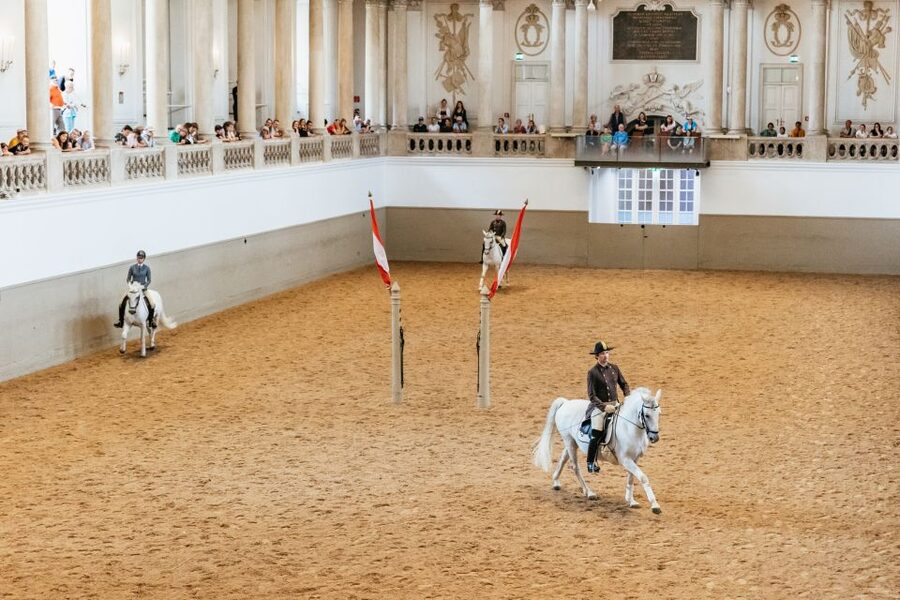
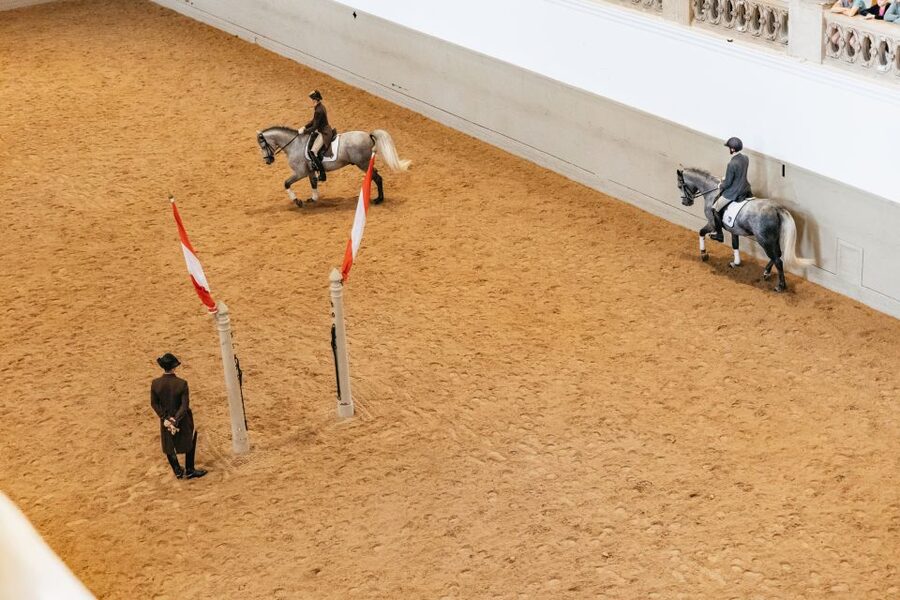
The exact program can change, but the structure is built around morning exercise. You may see several horses working in the arena, sometimes in more than one group during the hour. One session included two groups, while other accounts describe about five horses and riders working at one time.
That number affects how you watch. With several horses moving together, you cannot always follow one pair from start to finish. Instead, look for contrasts: an older, more experienced stallion beside a younger horse; a polished rider beside a student still receiving close instruction; a simple exercise beside a more refined movement.
The work may include walking, trotting, changes of lead, sidestepping, lunging, and groundwork. You might also see a rider repeat a movement several times while an instructor guides the horse and student. This repetition can look modest, but it is the point of a training session.
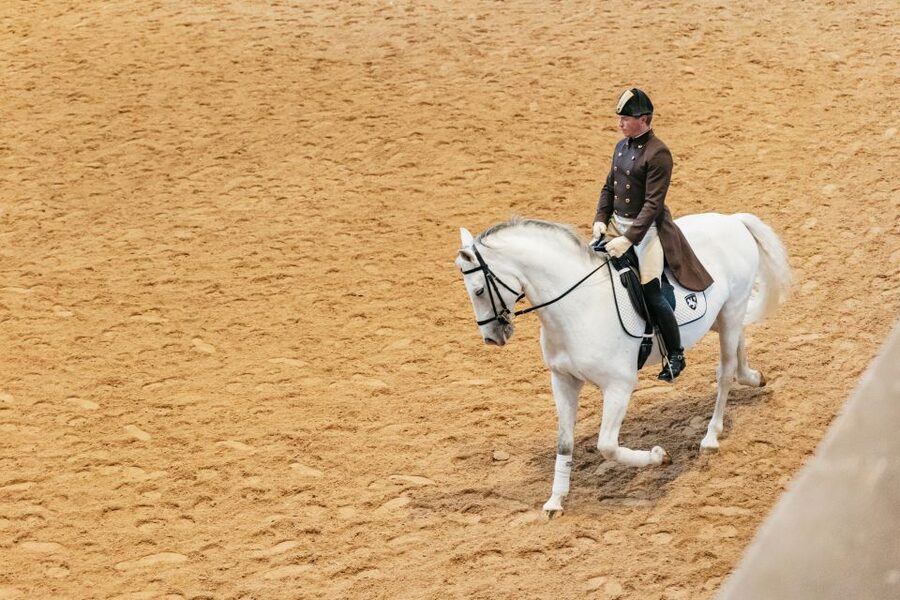
The riders’ clothing can help you identify different stages of instruction. A rider in a different uniform and riding hat may be a student receiving more intensive guidance. Watching that teaching relationship is one of the most interesting parts for anyone who rides.
The stallions are not simply being put through a set routine for an audience. Their fitness, balance, obedience, and muscle development come first. That explains why some sections may look slow or repetitive. The session is work, not a staged spectacle.
The horses and riders are the real subject
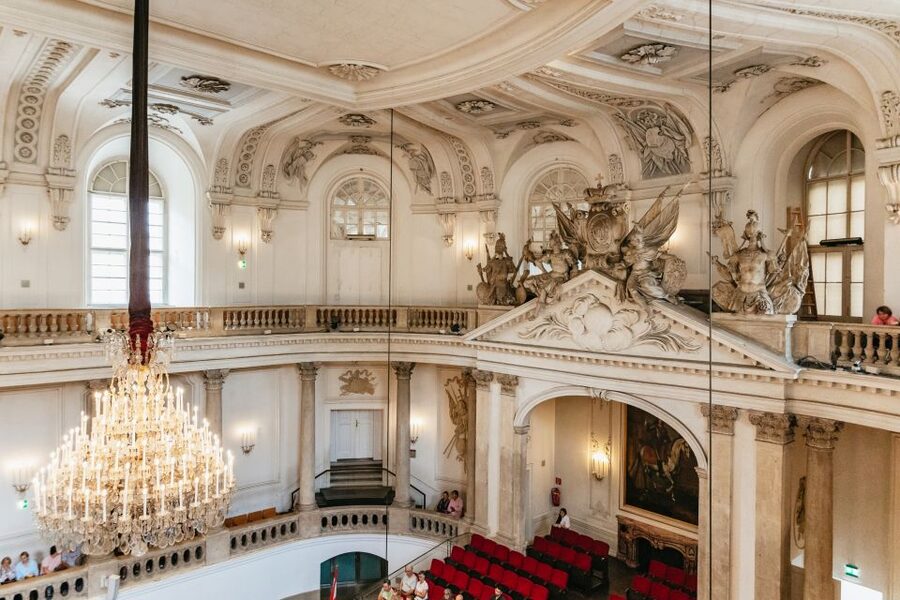
The Lipizzaners are the focus, but the riders deserve equal attention. You see the pair working as a team, with the rider using small movements and careful timing. The goal is not speed. It is control, rhythm, posture, and a willing response from the horse.
I find the training especially useful for readers who ride, because you can watch the teaching process rather than only admire the final result. You may see a young rider being corrected, a horse repeating a basic pattern, or a more advanced pair refining a movement they already know.
You do not need equestrian experience to enjoy this. The horses are beautiful, the riding is graceful, and the room is impressive. But a little curiosity about dressage will help you appreciate why a simple change of lead or sidestep matters.
The school’s stated purpose for the exercise also gives the session substance. The horses are maintaining athleticism and strengthening the muscles required for haute école. In other words, what looks like a calm morning ride is part of a long training process.
Same Alps, a completely different kind of day:
- Vienna: Vivaldi’s Four Seasons Concert in Karlskirche
★ 4.7 · 14,951 reviews - Vienna: Skip-the-cashier-desk-line Giant Ferris Wheel Ride
★ 4.5 · 7,859 reviews - Vienna: Schönbrunn Palace & Gardens Skip-the-Line Tour
★ 4.7 · 7,739 reviews - Vienna: Light of Creation Votive Church Immersive Light Show
★ 4.8 · 6,779 reviews
How much information will you hear?
A commentary is provided, with information about the horses, riders, history, and training techniques. The quality of the spoken explanation may depend on where you sit. High seats can make the narration difficult to hear, and the commentary may sound muffled or move too quickly.
If the educational side matters to you, choose a central or middle section rather than the highest tier. Sit or stand where the speaker’s voice can reach you clearly. You can still enjoy the horses from a less ideal audio position, but you may miss useful context about what you are seeing.
The commentary does not turn the activity into a guided tour of every horse. You should not expect each stallion and rider to receive a detailed personal introduction. The session works best when you treat the explanation as background and watch the movements carefully.
Standing or seated tickets: choose with care
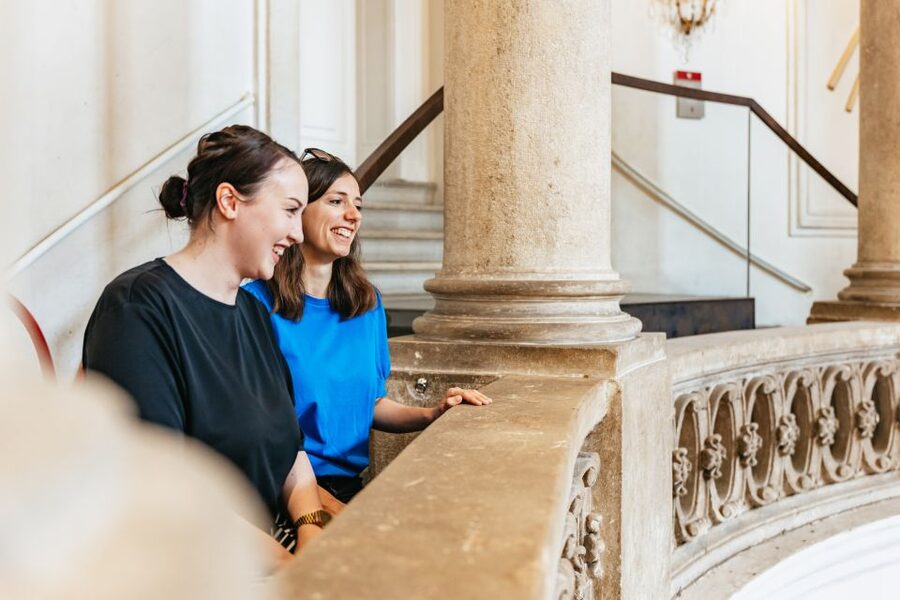
The lower price is one of the strongest reasons to choose training instead of a full performance. Standing tickets can make the school accessible to more people, and some people prefer standing because it allows them to shift position.
Still, standing for a full hour can be demanding. If you have mobility concerns, back trouble, or difficulty balancing, do not assume a spare seat will be available. The arena has stairs, and the upper areas may require a lot of climbing.
Seated tickets cost more, but the extra comfort may be worth it. Some seats have limited legroom, and a high balcony wall can mean leaning forward to see the arena. The best view is not necessarily the most expensive seat, so ask about the section when booking if the ticket choice is unclear.
Families should think about this too. Children aged 3 to 5 may enter free if they sit on an adult’s lap. Children aged 6 to 18 receive discounted admission. Children under 3 are not admitted. A one-hour session is manageable for many children, especially those already interested in horses, but standing and stairs can make it harder for young children and older adults.
Practical arrival advice inside the palace complex
You exchange your voucher for a ticket at the Spanish Riding School entrance. Ticket collection is available no earlier than one hour before the activity, so do not arrive far in advance expecting to collect it.
Allow time for the exchange. A mobile voucher is not necessarily your final admission ticket, and a rushed ticket pickup can make the start stressful. Arrive early enough to find the correct entrance, exchange the voucher, and reach your viewing area without hurrying.
There is no hotel pickup or drop-off. Plan to reach the school on your own and allow extra time for the building’s stairs and queues. The program can change, so keep your schedule slightly flexible if you are connecting this with another timed activity.
Photography and video recording are not allowed inside. Staff make repeated announcements, but some people still try to use their phones. I recommend putting the phone away completely. You will see more when you are not trying to take a hidden picture, and you avoid distracting those around you.
Accessibility and comfort concerns
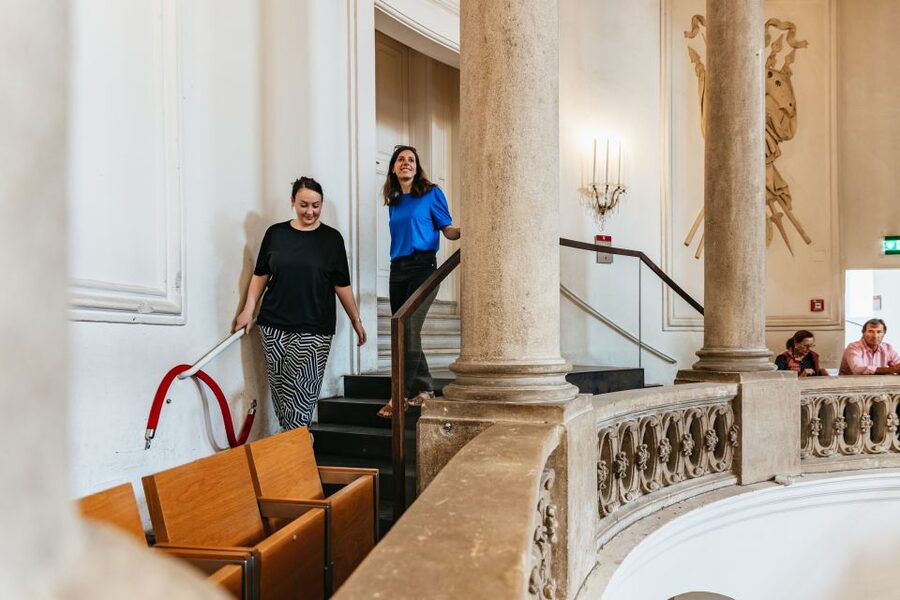
The building is protected as a monument and has no elevator. Anyone using a wheelchair or anyone with serious difficulty walking should send a request in advance. Do not wait until arrival to explain your needs.
Stairs are a recurring practical issue. Even when an accessibility request has been made, the assigned area may not be easy to reach, so confirm the arrangements before booking. Access to an accessible toilet key may also involve the busy cashier area.
If you have mild mobility limits, contact the school before paying and ask exactly how many stairs lead to your section. A one-hour activity can be wonderful, but only if the viewing position is workable for you.
Is $20 good value?
At $20 per person, the morning exercise is one of Vienna’s better-value ways to encounter the Spanish Riding School. You get the famous venue, the Lipizzaner stallions, the riders, music, commentary, and a full hour of activity.
The value depends on what you want. If you want the full spectacle with carefully planned choreography and the famous airs above the ground, save for a performance. If those performances are sold out, or if your budget is tight, training gives you the atmosphere and the horses without the full ticket cost.
I also like that training can be more revealing than a polished show. You see errors, corrections, younger riders, and uneven levels of ability. That can make the school feel less like a tourist display and more like a working institution.
The limitation is clear: you may spend much of the hour watching horses walk or trot around the arena. If you are hoping for repeated rearing and jumping, $20 will not change what happens that morning.
Who will enjoy this most?
I would recommend the session first to horse lovers, dressage students, and anyone curious about how elite riding is taught. You will get the most from it if you enjoy watching small improvements rather than waiting for constant dramatic action.
It also suits first-time visitors who cannot find performance tickets. The building alone makes the visit worthwhile, and the training lets you see the stallions in a less formal setting.
Families with children can consider it because the session lasts only one hour and discounted admission is available for ages 6 to 18. Check the seating and stairs carefully, especially for younger children or older relatives.
Casual sightseers should book it only if they are happy with a quiet, disciplined activity. You may love the spectacle of the room and horses, but you should know that the program is not guaranteed to include the most advanced movements.
Final verdict: book it for the horses, not guaranteed tricks
Book the Spanish Riding School training if you want a low-cost hour in one of Vienna’s grandest rooms, a close look at Lipizzaner training, and a chance to see riders teaching horses at different levels. It is an excellent fallback when a formal performance is unavailable, and it can be the better choice for anyone interested in the process behind the show.
Skip it if you need guaranteed jumps, a detailed individual presentation of every horse, or easy step-free access. Choose your seating carefully, arrive early for the voucher exchange, and treat the no-photo rule seriously. With those expectations, this is a graceful and good-value Vienna experience.
FAQ
How long does the Spanish Riding School training last?
The training session lasts one hour.
How much does the training cost?
The listed price is $20 per person.
What horses will I see?
You will watch the school’s white Lipizzaner stallions during their training.
Will I see the levade, courbette, or capriole?
Possibly, but these famous school jumps are not practiced every day and are only sometimes seen during morning exercise.
Is music included during the training?
Yes. The morning exercise is accompanied by classical Viennese music.
Can I take photographs or record video?
No. Photography and video recording are not allowed inside the riding school.
Where do I exchange my voucher?
Present your voucher at the Spanish Riding School entrance to exchange it for an admission ticket.
How early can I collect my ticket?
You can collect your ticket no earlier than one hour before the activity.
Are young children admitted?
Children under 3 are not admitted. Children aged 3 to 5 receive free admission but must sit on an adult’s lap. Children aged 6 to 18 receive discounted admission.
Just added around Vienna
- Ottakringer Brewery tour★ 4.0 · 6 reviews
- True Crime mobile puzzle rally Vienna★ 4.0 · 3 reviews
- New Hofburg Palace Tour House of Habsburg★ 4.5 · 5 reviews
- Private Van & Walk Tour – One Perfect Day in Vienna★ 5.0 · 21 reviews
- Vienna Naschmarket Food Tasting Tour★ 4.0 · 30 reviews
- Vienna Nightlife Experience: Food, Wine, Cocktails & Vibes★ 5.0 · 119 reviews
- Myth Mozart★ 4.0 · 80 reviews
- ( Night Tour ) With Private Guide + wine or prosecco★ 4.0 · 12 reviews
Spanish Riding School Tours, compared.
Spanish Riding School 45-Minute Performance Show
Read our review →
Spanish Riding School Guided Architectural Tour
Read our review →Browse the lists this tour appears in