
Reviewed · CONCERTS
Vienna: Romantic Classics Piano, Violin, and Cello Concert
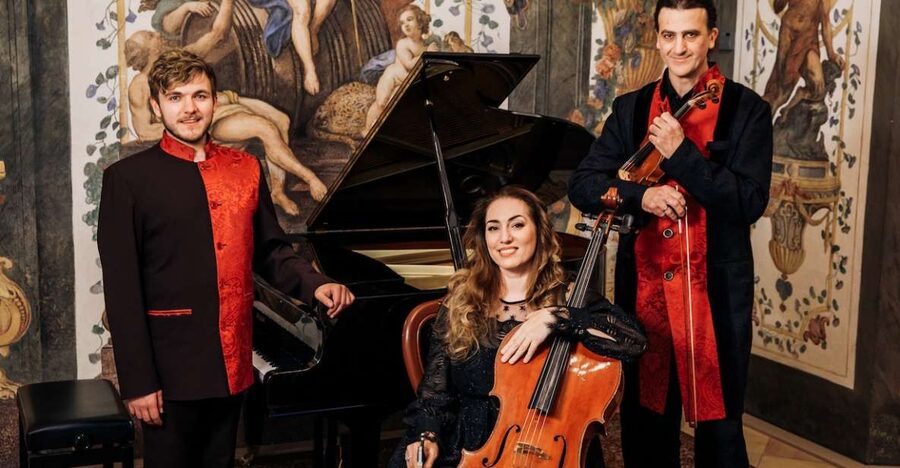
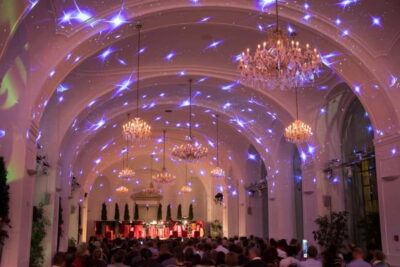
Vienna’s Romantic Classics concert puts you close to the music in the frescoed Sala Terrena, a small historic room just 150 meters from St. Stephen’s Cathedral. The program moves from Beethoven’s Moonlight Sonata and Liszt’s Un sospiro to Chopin, Mozart, Bach, Paganini, Saint Saëns, Massenet, and Schubert.
I like the intimate setting, where the compact room and clear acoustics help every note reach you without the distance of a large concert hall. I also like the 90-minute format, which gives you a satisfying evening of major works without taking over your whole night.
The main consideration is seating. You can choose student tickets, back row seats, or places closer to the performers, and the experience may feel quite different depending on your choice. Refreshments are not part of the ticket, and any drinks sold during the break require cash.
Key Points
- Sala Terrena setting: Hear chamber music inside a historic room with expressive frescoes, only 150 meters from St. Stephen’s Cathedral.
- Broad musical program: The 90-minute concert includes Beethoven, Chopin, Mozart, Liszt, Schubert, Brahms, Haydn, Bach, Paganini, Saint Saëns, and Massenet.
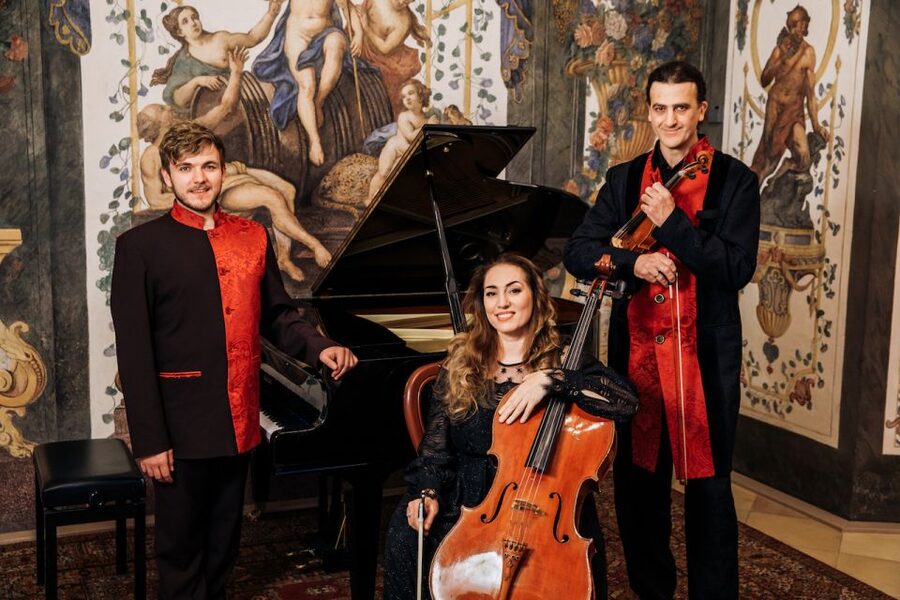
- Named performers: Violinist Claudio Bentes, pianist Dushan Sretovic, and soloist Teodora Miteva appear in the concert presentation.
- Clear, close-up sound: The small venue offers strong acoustics and a direct view of the musicians.
- Flexible seating: Student, back row, and closer-to-the-performer tickets let you match the price to your priorities.
- Easy central location: Enter through the Deutschordenskirche gate and arrive 15 minutes before the start.
A Chamber Concert Beside St. Stephen’s Cathedral
This is a good choice if you want classical music in Vienna without committing to a formal opera night or a long symphony program. The venue is close to the center of town, the concert lasts 90 minutes, and the music covers many of the names you likely came to Vienna hoping to hear.
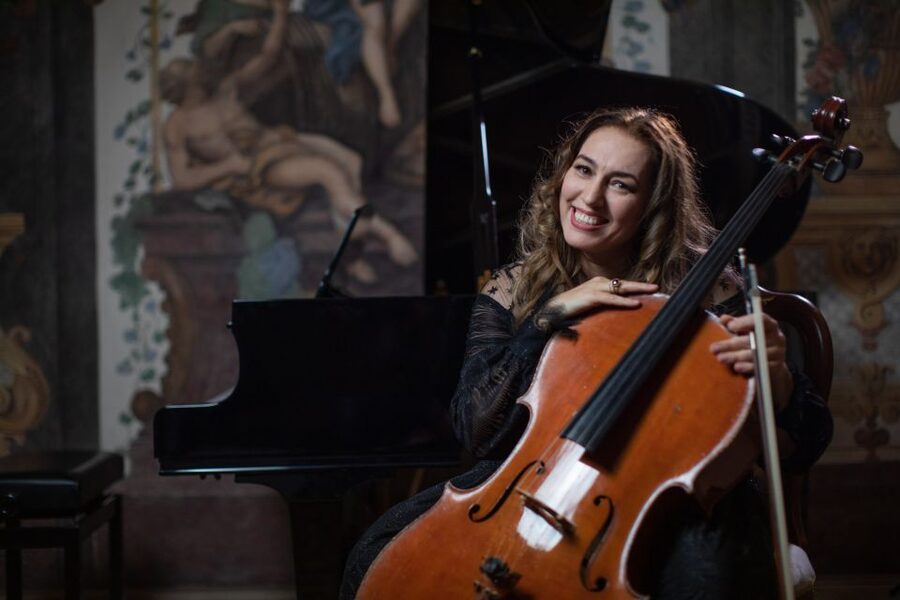
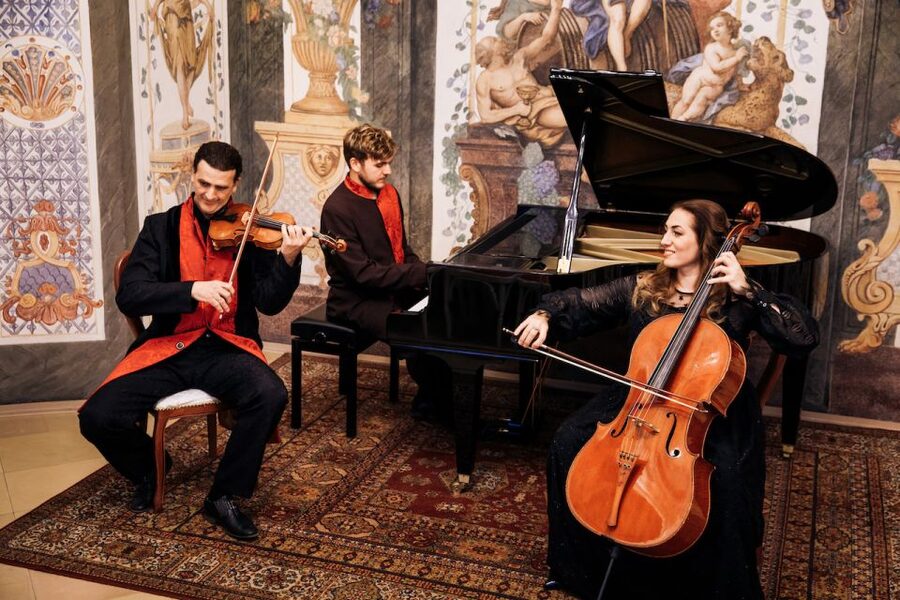
The Sala Terrena gives the evening much of its character. Its frescoes create a more personal setting than a modern auditorium, and the room’s size keeps you near the performers. A compact venue also lets you notice the small details of chamber music: the exchange between instruments, the changes in touch at the piano, and the way a melody passes from one player to another.
The setting is historic and atmospheric, but it is not a theatrical production. The appeal comes from the room, the instruments, and the performers. If you want costumes, stage effects, or a large orchestra, this is not that kind of night.
A few more Vienna trips to weigh up
- Vienna: Vivaldi’s Four Seasons Concert in Karlskirche
★ 4.7 · 14,951 reviews - Vienna: Classical Concert in the World-Famous Musikverein
★ 4.6 · 6,673 reviews - Vienna: Classical Concert at St. Stephen’s Cathedral
★ 4.1 · 4,177 reviews
Finding the Deutschordenskirche Entrance
The concert venue is 150 meters from St. Stephen’s Cathedral, so you can fit it into an evening walk through central Vienna. Look for the gate at Deutschordenskirche. A poster stand for concerts at Mozarthaus helps identify the entrance.
Arrive 15 minutes early. That gives you time to find the gate, use the cloakroom, and settle into your seat before the first piece. Since the venue is close to major sights, I would not leave the search until the last minute, especially if you are arriving after dinner or in winter darkness.
The central location is one of the strongest practical points here. You do not need a separate trip across the city, and the concert can work well before or after time around St. Stephen’s Cathedral. The activity does not include transportation, but none is needed once you are in the cathedral district.
The Sala Terrena Experience
The room matters almost as much as the program. The Sala Terrena’s frescoes add visual interest during quieter passages, while the intimate layout keeps the performance from feeling remote. The room is small, and that is both its charm and its limitation.
A small space can produce excellent clarity. One of the strongest points of this concert is the acoustics, with individual notes remaining easy to hear and the instruments staying distinct. That is especially useful in a program that shifts between piano, violin, and cello works.
The tradeoff is that you should not expect the grand scale of the Musikverein or a major orchestral hall. Beethoven’s sonata and Schubert’s trio gain warmth and detail here, but they will not have the full force of a large ensemble. I see this as a chamber music evening rather than a substitute for a full symphony concert.
The venue has a cloakroom, which is helpful if you are carrying coats during Vienna’s colder months. A short break is included in the evening, though the practical arrangements around it are modest. Toilet signs could be clearer, and refreshments are not included. Drinks may be available for cash purchase outside during the break, so do not count on paying by card or receiving a complimentary drink.
A Program That Moves From Haydn to Schubert
The concert opens with Joseph Haydn’s Trio all’ungarese, Hob XV:25. Its Andante, Poco Adagio, and Rondo finale provide a lively introduction to the piano, violin, and cello combination. The final Rondo gives the program movement and brightness before the more familiar Romantic works arrive.
Beethoven follows with the Adagio from the Moonlight Sonata. This slow movement is one of his most recognizable pieces, and in a smaller room its restrained mood can feel especially direct. It is a quiet opening into the emotional heart of the concert, though listeners hoping for the whole sonata should note that the program presents the Adagio rather than the complete work.
Mozart’s La tartine de beurre, or The Buttered Bread, adds a light touch. It is a short, playful piece and a welcome change after Beethoven’s solemn opening. The program then returns to Beethoven with the Allegro con brio from Sonata Op. 2, bringing quicker energy and a more forceful piano style.
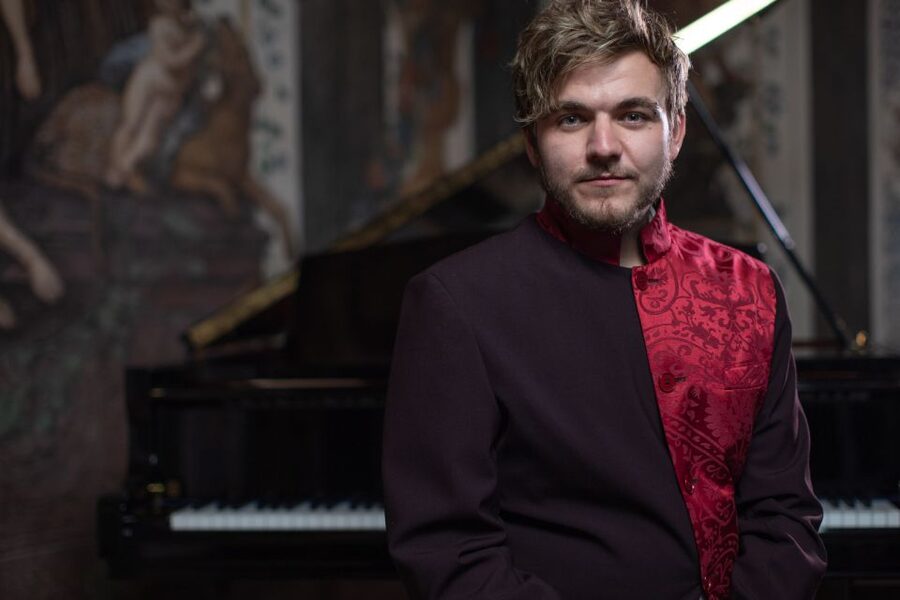
Franz Liszt’s Un sospiro is one of the evening’s most lyrical piano moments. The title suggests a sigh, and the piece is built around flowing lines and a singing quality. Dushan Sretovic is featured as a piano virtuoso known for Chopin interpretations on international stages, so listeners particularly interested in piano music will find this part of the program worth noting.
Same Alps, a completely different kind of day:
- Vienna: Spanish Riding School Training
★ 3.9 · 9,281 reviews - Vienna: Skip-the-cashier-desk-line Giant Ferris Wheel Ride
★ 4.5 · 7,859 reviews - Vienna: Schönbrunn Palace & Gardens Skip-the-Line Tour
★ 4.7 · 7,739 reviews - Vienna: Light of Creation Votive Church Immersive Light Show
★ 4.8 · 6,779 reviews
Chopin, Bach, and the Solo Moments
The Chopin selections offer two different views of the composer. The Nocturne in C minor, Op. 48, No. 1, is serious and dramatic, with a broad emotional range. The Étude Op. 10, No. 1 in C major is a technical showpiece built around wide, flowing piano patterns.
Together, these works show why Chopin fits this concert so well. One piece asks the performer to shape a long, expressive line. The other demands control and agility. If you prefer melody and atmosphere, the Nocturne may be your highlight. If you enjoy virtuoso piano technique, listen for the Étude.
Johann Sebastian Bach’s Cello Suite in G major, BWV 1007, brings the cello into the foreground with its Allegro. Solo cello music can sound unusually personal in a small room, since there is no orchestra to cover the instrument’s grain and resonance.
Paganini’s Caprice No. 13 then shifts the focus to the violin. Paganini is associated with demanding technique, and a short caprice gives the violinist a chance to show speed, precision, and control. Claudio Bentes is the violinist named for this presentation, and his role helps give the program a clear solo violin feature rather than treating the instrument only as part of the trio.
Saint Saëns, Massenet, and the Final Trio
Camille Saint Saëns’ The Swan is the gentlest cello selection on the program. Its smooth, singing line is familiar to many listeners, and it offers a calm contrast to Paganini’s technical intensity.
Jules Massenet’s Thaïs Meditation continues that lyrical mood. The piece is often associated with violin, and its long melodic phrases give the instrument a chance to sing above the accompaniment. These two selections form a softer middle-to-late section before the closing work.
The concert ends with Schubert’s Trio in E flat major, Op. 100, Andante con moto. This is a substantial and emotionally layered ending, with the three instruments sharing the musical conversation. The title’s Andante con moto suggests a moderate pace with forward motion, and the work brings together the warmth of the cello, the expressive reach of the violin, and the structure provided by the piano.
Teodora Miteva is presented as an award-winning soloist with international competition success. Her participation is part of the event’s appeal for listeners who want more than background music. The performers are central to the experience, and the close seating lets you watch their timing and coordination.
Choosing Your Seat for the Best Value
At $69 per person, this concert sits in the moderate range for an evening cultural activity in central Vienna. The value depends on what you want from the night. You are paying for a live performance, a historic venue, a central location, a cloakroom, and a focused 90-minute program.
The choice of ticket type is useful. Student tickets offer a lower-cost route for eligible visitors. Back row tickets make sense if you mainly want the music and the room, while closer seats suit you if watching the performers is part of the pleasure.
I would not automatically pay more for the closest seat if your main concern is sound. The room is small, and the acoustics are reported to be clear throughout. Closer seats are more appealing if you want to see the musicians’ hands, posture, and interaction.
The $69 price does not include refreshments. If you are budgeting closely, plan to eat before the concert or bring enough cash for anything available during the break. That small detail can affect the total cost of the evening.
Who Will Enjoy This Concert Most
I would recommend this for first-time Vienna visitors who want an easy introduction to classical music. The program includes many famous composers and recognizable works, but it also adds pieces such as Haydn’s Trio all’ungarese and Mozart’s playful Buttered Bread.
It also suits experienced classical listeners who prefer chamber music to large halls. The close setting and clear sound let you focus on individual instruments. The program’s variety keeps the evening moving, with piano solos, violin features, cello music, and trio works.
Couples may like the romantic tone of Liszt, Chopin, Massenet, and Schubert. Solo visitors can also enjoy it without needing to understand formal concert etiquette. The 90-minute length is short enough to fit around dinner or sightseeing.
This may be less suitable if you want a complete Beethoven sonata, a full orchestra, or a long uninterrupted concert. The program offers excerpts and individual pieces from many composers rather than a single composer’s full evening. It is designed for variety and atmosphere.
The event is wheelchair accessible. English and German are the listed languages, and the host or greeter can assist in either language. The music itself does not require translation, but the language information is useful if you need help finding the entrance or understanding the arrangements.
Practical Details That Shape the Evening
The concert is presented by Konzerte im Mozarthaus KG. The listed performers include violinist Claudio Bentes, pianist Dushan Sretovic, and soloist Teodora Miteva. Since the experience centers on live music, the performers matter more here than a sightseeing guide would.
Starting times vary, so check availability when selecting a date. The concert lasts 90 minutes, with a break indicated in the practical information. Arriving 15 minutes early is the safest plan, especially if you need the cloakroom or want time to locate Deutschordenskirche.
Free cancellation is available up to 24 hours before the start for a full refund. You can also reserve now and pay later, which helps if your Vienna schedule is still changing.
The overall rating is 4.7 from 60 reviews, with especially strong praise for the historic atmosphere, close seating, clear acoustics, and musicians’ precision. Those strengths match what the format is built to provide. The weaker practical points are simple but worth knowing: toilet signs may be hard to spot, and refreshments are not part of the ticket and may require cash.
Should You Book the Romantic Classics Concert?
Book it if you want a central, compact classical concert with famous composers, strong acoustics, and the atmosphere of an old Viennese room. It gives you a lot of musical variety in 90 minutes and avoids the time and formality of a larger evening performance.
I would choose a closer seat if you enjoy watching performers, or a back row ticket if you mainly want good sound at a lower price. Bring cash if you might want a drink during the break, and arrive early enough to find the Deutschordenskirche gate without rushing.
Skip it if your priority is a full orchestra, a complete sonata, or a grand concert hall. For everyone else, especially visitors already exploring St. Stephen’s Cathedral, this is a practical and atmospheric way to add live classical music to a Vienna evening.
FAQ
How long does the concert last?
The concert lasts 90 minutes.
Where is the concert held?
The venue is in the Sala Terrena, entered through the Deutschordenskirche gate, about 150 meters from St. Stephen’s Cathedral.
How early should I arrive?
You should arrive 15 minutes before the concert begins.
Which composers are included?
The program includes Haydn, Beethoven, Mozart, Liszt, Chopin, Bach, Paganini, Saint Saëns, Massenet, and Schubert. Brahms is also listed among the composers featured in the concert series description.
Who performs in the concert?
The named performers include violinist Claudio Bentes, pianist Dushan Sretovic, and soloist Teodora Miteva.
What seating choices are available?
You can choose from student tickets, back row tickets, and tickets closer to the performers.
Is the venue wheelchair accessible?
Yes, the activity is listed as wheelchair accessible.
Can I cancel my booking?
Yes. You can cancel up to 24 hours in advance for a full refund. You can also reserve now and pay later.
Just added around Vienna
- World War II History Vienna Old Town Private Walking Tour★ 4.8 · 9 reviews
- From Krems: Wachau Valley River Cruise on the Danube★ 4.6 · 95 reviews
- Vienna: Winery and Wine Tasting Tour with a Wine Expert★ 5.0 · 5 reviews
- Vienna: Wine Tasting E-Bike Tour★ 4.9 · 46 reviews
- Vienna: Wine Tasting at Schönbrunn Palace★ 4.3 · 71 reviews
- Vienna: Wine Tasting Tour★ 4.8 · 61 reviews
- Vienna: Wiener Schnitzel and Strudel Cooking Class★ 4.9 · 126 reviews
- Vienna: Unforgettable Private City Tour★ 5.0 · 7 reviews
Concerts, compared.
Vivaldi’s Four Seasons Concert in Karlskirche
Read our review →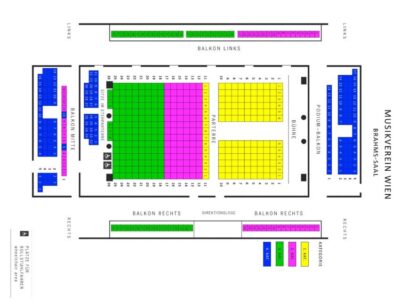
Classical Concert in the World-Famous Musikverein
Read our review →
Classical Concert in St. Anne’s Church (Annakirche)
Read our review →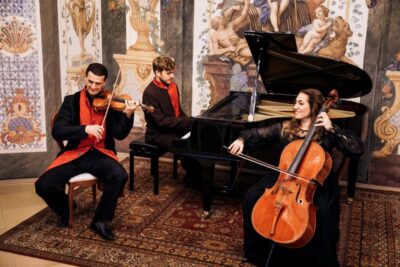
Browse the lists this tour appears in