Reviewed · VIENNA TOURS
Vienna: Mythos Mozart Experience
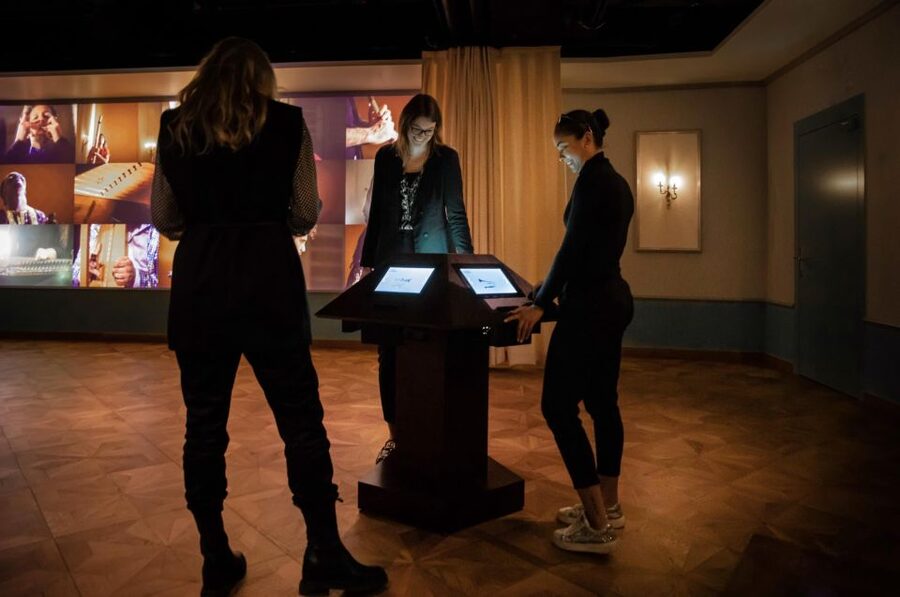
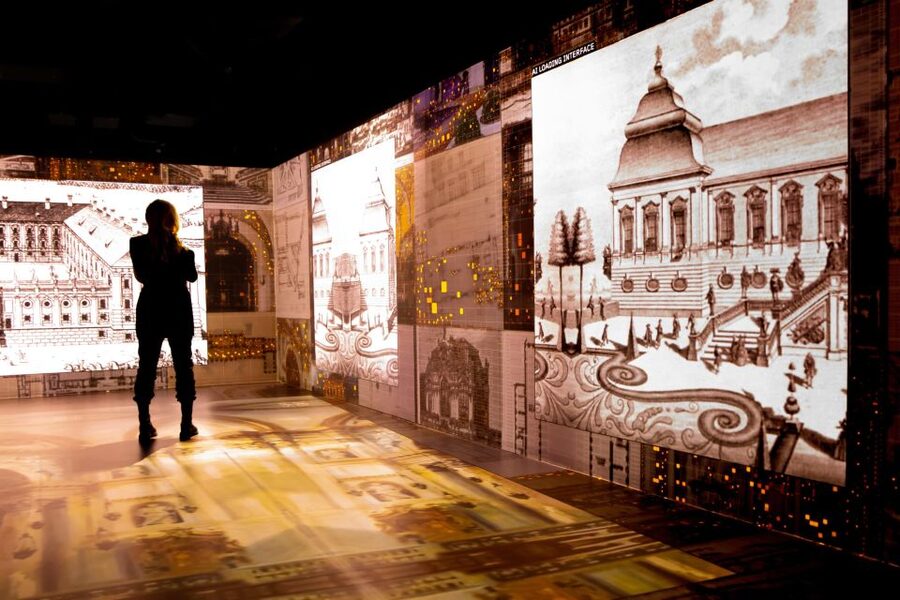
The most striking thing about Mythos Mozart is its setting: you enter the building where Mozart spent the last year of his life, then move through rooms shaped by music, light, film, and digital art. It is less a traditional museum and more a theatrical portrait of Mozart’s final Vienna.
I like the 1,500-candle Requiem room, which gives the opening a quiet, solemn mood, and the playful Little Night Music room, where you can experiment with instruments from around the world. The main drawback is that the hour passes quickly, and some people may want more clear commentary about Mozart’s life and compositions.
Key points to know before you go
- Mozart’s final address: The exhibition occupies the building where he lived and died in 1791, and where he worked on The Magic Flute and The Requiem.
- A strong visual opening: The Requiem room uses 1,500 candles and lighting by Moritz Waldemeyer to create the most atmospheric part of the visit.
- Vienna from above and inside: The Vienna 1791 room shows 360-degree views of the 18th-century city, while the roof terrace gives modern views of St. Stephen’s Cathedral and Karlskirche.
- Hands-on music: The Little Night Music room lets you play different instruments rather than simply look at them.
- Good for non-specialists: You do not need musical training or a deep interest in classical music to follow the experience.
- Allow exactly an hour: Most visitors find the pace relaxed, but one hour may feel short if you want to study every detail.
What Mythos Mozart is really offering
Mythos Mozart is best understood as a sensory introduction to Mozart, not a conventional museum about his life. You will not spend an hour reading long panels beside original objects. Instead, the experience uses projected images, music, lighting, historical scenes, and interactive displays to place you inside Mozart’s world.
That distinction matters. If you want manuscripts, instruments, furniture, or a carefully dated account of every stage of Mozart’s career, this may leave you wanting more. If you want to feel the mood of late 18th-century Vienna and hear Mozart’s music in a memorable setting, the format works well.
I especially like that the exhibition does not assume you can read music or identify every composition. It gives you a way into Mozart through your eyes, ears, and movement. Families, teenagers, and adults who rarely choose classical concerts can all find something to do.
The building gives the experience extra weight. Mozart spent his final year here, died here in 1791, and composed major works including The Magic Flute and The Requiem during this period. The exhibition does not turn the address into a dusty memorial. It uses the location as a starting point for an artistic presentation of Mozart’s final chapter.
Other Vienna days people book alongside this one:
- Vienna: Vivaldi’s Four Seasons Concert in Karlskirche
★ 4.7 · 14,951 reviews - Vienna: Spanish Riding School Training
★ 3.9 · 9,281 reviews - Vienna: Skip-the-cashier-desk-line Giant Ferris Wheel Ride
★ 4.5 · 7,859 reviews
Beginning among 1,500 candles
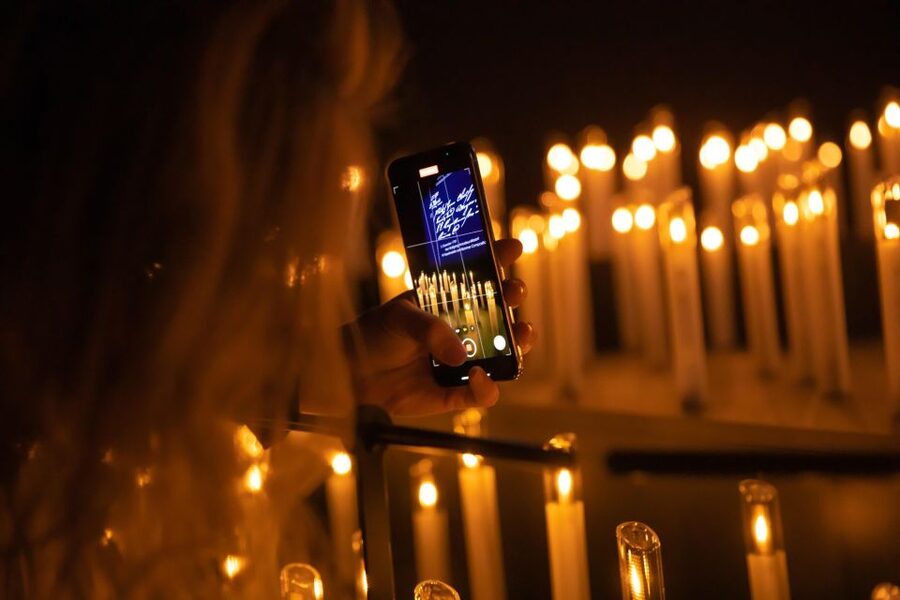
Your visit starts in the Requiem: Mozart’s Death room. The room is filled with 1,500 candles, arranged as part of a lighting installation by British-German designer Moritz Waldemeyer.
This opening is quiet, dark, and serious. It sets a very different mood from the playful rooms later in the visit. The candlelight gives the room a feeling of ceremony, and the music makes Mozart’s death feel present rather than like a date in a textbook.
For many people, this is the most memorable part of the experience. It also explains why the exhibition may not suit everyone in exactly the same way. If you prefer a direct introduction with dates, facts, and a clear explanation of the route, beginning with death can feel slightly unexpected. One practical point is that the room may feel intense for young children or anyone sensitive to dark spaces and strong atmosphere.
Still, I think the choice is effective. Mozart’s final year was a period of extraordinary creative work, and the Requiem gives you an immediate sense of the contrast between mortality and musical achievement. You are not simply told that Mozart died young. You are asked to pause and consider the unfinished work and the music connected with his final days.
Walking through Vienna in 1791
The next major section is Vienna 1791: Mozart’s City. Here, the exhibition shifts from candlelight to a broad digital picture of the city Mozart knew.
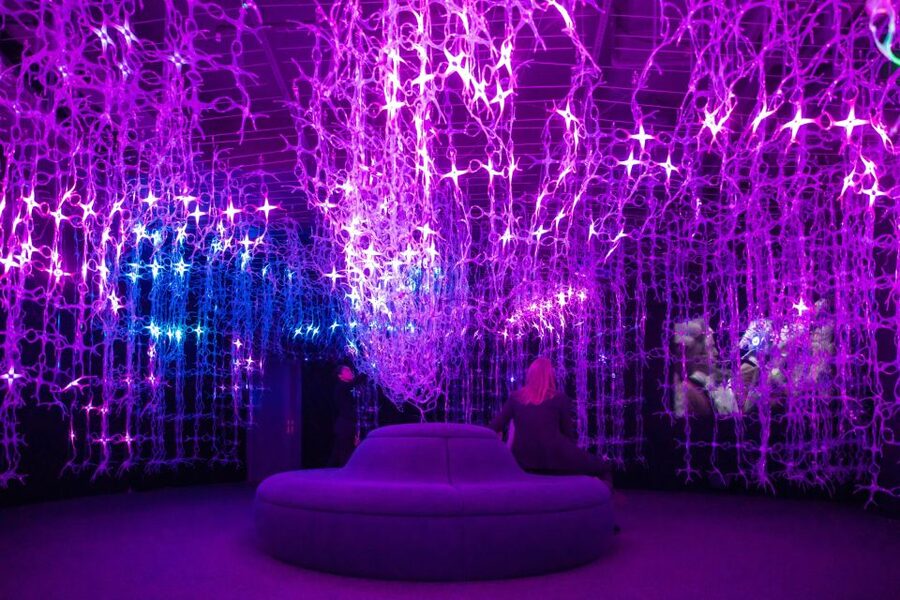
You can stroll through busy 18th-century streets, climb over rooftops in a balloon, and find yourself in front of the house where Mozart died. The room uses 360-degree panoramic views to make Vienna feel larger than the building around you.
This is a useful part of the visit because Mozart’s music did not come from an empty room. He worked in a city of churches, courts, theatres, markets, musicians, and royal patrons. The historical scenes help you picture the streets and buildings that framed his daily life.
The balloon and rooftop elements add a playful touch. You are not just watching a film from a fixed seat. The room encourages you to look around and take in the city from different angles. That makes it particularly effective for children and for anyone who learns best through images.
The tradeoff is that the digital presentation favors mood and movement over precise detail. You will gain a sense of Vienna in 1791, but you should not expect a full guided history of the city. If you want names, dates, and political context, you may need another museum or a guided walk through central Vienna.
The Little Night Music room
The Little Night Music room is the most openly interactive part of the experience. Here, you can play different instruments from around the world.
This room breaks up the solemn opening and the large-scale city projections. It also gives you a physical connection to sound. Instead of hearing about instruments in Mozart’s era, you get to experiment with them and notice how different sounds are made.
I like this stop because it gives children something clear to do, but it is not only for families. Adults can enjoy it too, especially after several minutes of watching projections. The experience works best when you allow yourself to play rather than worry about doing it perfectly.
You should keep your expectations realistic. The room is an interactive art installation, not a music lesson. It will not teach you to play an instrument or explain every technical detail. Its purpose is to make music feel active and social.
For visitors who are not classical music fans, this may be the room that makes the whole exhibition feel accessible. Mozart can seem distant if you only meet him through portraits and concert halls. Playing with sound gives you a more immediate connection.
Same Alps, a completely different kind of day:
- Vienna: Schönbrunn Palace & Gardens Skip-the-Line Tour
★ 4.7 · 7,739 reviews - Vienna: Light of Creation Votive Church Immersive Light Show
★ 4.8 · 6,779 reviews - Vienna Spanish Riding School Guided Tour
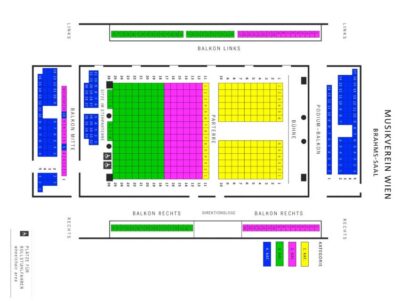
★ 4.7 · 6,765 reviews - Vienna: Classical Concert in the World-Famous Musikverein
★ 4.6 · 6,673 reviews
The music, projections, and final presentation
Across the exhibition, Mozart’s music is paired with animated images, LED screens, lighting, and historical scenes. The effect changes from room to room. At times, the music feels calming. At others, the scale of the images and sound creates a more dramatic response.
Several people find the final section especially powerful. The closing presentation brings Mozart’s music into contact with modern digital tools, including artificial intelligence. This is an interesting choice because it raises a question rather than simply retelling the past: what might Mozart have done with the technology available today?
Some visitors love this modern turn. Others may find it less connected to Mozart’s actual life. I think it helps to treat the final room as an artistic interpretation, not a factual display. It is not trying to prove what Mozart would have created. It is inviting you to think about his imagination and the possibilities of new tools.
The balance of sound and image is one of the exhibition’s strongest features. Even if you cannot follow every musical reference, you can still understand changes in mood and energy. This is also why the experience works well on a rainy afternoon, when you want something indoors that feels more lively than a standard gallery.
One limitation is the amount of spoken explanation. Some people find the information easy to follow, while others want more commentary or subtitles. English is identified as the language for the experience, and visitor feedback also refers to an informative audio guide. However, you should not book this expecting a personal guide who talks you through every room.
A short visit with a relaxed pace
The advertised duration is one hour. That is enough time to pass through the main rooms without rushing, and the timed entry helps manage the flow.
The pace is generally relaxed. You are given time to look around, listen, and interact. You are not pushed from one scene to the next like a station on a fast group tour.
At the same time, an hour is still an hour. If you like to replay sections, take many photographs, or read every available explanation, you may wish the visit lasted longer. One visitor found it a little short, and that is a fair criticism for the price.
I would schedule Mythos Mozart as a focused indoor stop rather than a full half-day activity. It fits neatly between other central Vienna sights. You could visit in the afternoon, then continue toward St. Stephen’s Cathedral, or make it an early evening activity before dinner.
Arrive at the Welcome Desk up to 15 minutes before your booked time slot. Advance booking is recommended, though spontaneous entry may be possible if the exhibition is not full. You exchange your ticket at the Welcome Desk, and the experience is wheelchair accessible.
The rooftop views at the end
The Sky and Roofgarden provides a welcome change of pace after the enclosed rooms. From the roof terrace, you can look across Vienna’s First District toward St. Stephen’s Cathedral, Karlskirche, and the famous ferris wheel.
The view is not the only reason to use this area. It gives you a moment to let the music and images settle before returning to the city streets. Vienna can feel abstract inside a projection room. Looking across the real rooftops brings you back to the city Mozart’s story is trying to describe.
The Sky Café and Restaurant also sells food and drinks. The large roof terrace makes it possible to extend the visit, though food and drinks are not included in the admission price. If you are building a tight sightseeing plan, treat the café as optional time rather than part of the one-hour exhibition itself.
Who will get the most from the $27 price
At $27 per person, Mythos Mozart is not a throwaway attraction, but it compares reasonably with other major cultural activities in central Vienna if you value production, setting, and a short visit.
I think the price is easiest to justify for three types of visitors:
- Mozart fans: You get his music, his final address, The Magic Flute and Requiem context, and a strong emotional setting.
- Families with older children: The balloon scenes, digital images, interactive instruments, and changing rooms offer more variety than a display of objects.
- First-time Vienna visitors on a rainy day: You can spend an hour indoors while still getting a sense of the city and its cultural identity.
The value is less certain if your priority is detailed scholarship. The exhibition gives you impressions, atmosphere, and selected facts, but it does not replace a serious Mozart biography or a museum with extensive original material.
I also would not choose this as your only Mozart experience in Vienna if you care deeply about his music. It is a good starting point, but a live concert, historic church, or more traditional museum could add the musical and historical detail that this presentation leaves out.
The booking terms are practical. You can cancel up to 24 hours before the visit for a full refund, and a reserve-now, pay-later option is available. Bring a passport or other ID, and bring a student card if you are using student status. Pets are not allowed.
Is Mythos Mozart family-friendly?
Yes, especially for children who enjoy visual effects and hands-on activities. The interactive instruments give younger visitors a clear reason to stay engaged, while the historical Vienna room offers movement and playful scenes.
The candle room and Mozart’s death may feel serious or slightly eerie. That is not necessarily a problem, but you know your own family best. The experience is not a loud amusement ride. It moves between quiet reflection, historical images, music, and playful interaction.
Teenagers can also enjoy it because the modern technology keeps the presentation from feeling like a formal lecture. One family visit included a 17-year-old who enjoyed the activity, and the format is accessible even if your child has little interest in classical music.
A few practical ways to enjoy it more
Book a time slot in advance, especially if your Vienna schedule is tight. You should report to the Welcome Desk 15 minutes before the start time, since late arrival can make the visit more stressful.
Wear comfortable shoes if you plan to continue sightseeing afterward, but there is no need to dress formally. Free lockers and toilets are available in the building, which is useful if you are carrying day bags.
Give yourself a little time after the final room for the roof terrace. The views toward St. Stephen’s Cathedral and Karlskirche are easy to overlook if you hurry straight out.
If you are looking for a detailed biography, read a short introduction to Mozart before you go. That will help you recognize the importance of his final year and understand why The Magic Flute and The Requiem matter. If you arrive with no background at all, the exhibition still works, but you may remember the images more clearly than the facts.
Should you book Mythos Mozart?
Book it if you want Mozart presented through music, light, projection, and participation, rather than through rows of museum objects. It is especially useful for a rainy day, a family outing, or a first introduction to Mozart.
Think twice if you want a long, fact-heavy account of his life or a serious study of his compositions. The one-hour format is polished and enjoyable, but it leaves some visitors wishing for more explanation.
For most people spending several days in Vienna, I think Mythos Mozart earns its place as a short cultural stop. The candle room, historical city scenes, interactive instruments, and rooftop views give you several different experiences in one building. At $27, it is a fair buy when you want something memorable and easy to fit into a busy central Vienna day.
FAQ
Where is Mythos Mozart located?
Mythos Mozart is in Vienna, in the building where Mozart spent the last year of his life and where he died in 1791.
How long does the experience last?
The stated duration is one hour. You move through several rooms, with time to listen, watch, and interact.
What does the ticket include?
The ticket includes entry to the Mythos Mozart immersive multimedia experience.
Is the experience available in English?
English is listed as the language for the activity, and an English host or greeter is provided at the venue.
Do I need to book a time slot?
Yes. All visitors should book a time slot in advance and report to the Welcome Desk up to 15 minutes before the start time. Spontaneous visits may be possible if there is space.
Is Mythos Mozart wheelchair accessible?
Yes, the experience is wheelchair accessible.
Can I buy food or drinks there?
Yes. Food and drinks can be purchased at the Sky Café and Restaurant, which has a large roof terrace and panoramic views. They are not included in the admission price.
Can I cancel my booking?
Yes. You can cancel up to 24 hours in advance for a full refund. A reserve-now, pay-later option is also available.
Just added around Vienna
- Ottakringer Brewery tour★ 4.0 · 6 reviews
- New Hofburg Palace Tour House of Habsburg★ 4.5 · 5 reviews
- Private Van & Walk Tour – One Perfect Day in Vienna★ 5.0 · 21 reviews
- True Crime mobile puzzle rally Vienna★ 4.0 · 3 reviews
- Vienna Naschmarket Food Tasting Tour★ 4.0 · 30 reviews
- Vienna Nightlife Experience: Food, Wine, Cocktails & Vibes★ 5.0 · 119 reviews
- ( Night Tour ) With Private Guide + wine or prosecco★ 4.0 · 12 reviews
- Naschmarkt Food Tour★ 4.0 · 14 reviews
Vienna Tours, compared.
Vivaldi’s Four Seasons Concert in Karlskirche
Read our review →
Skip-the-cashier-desk-line Giant Ferris Wheel Ride
Read our review →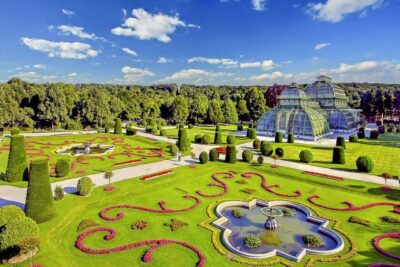
Schönbrunn Palace & Gardens Skip-the-Line Tour
Read our review →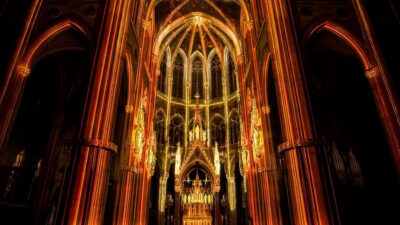
Light of Creation Votive Church Immersive Light Show
Read our review →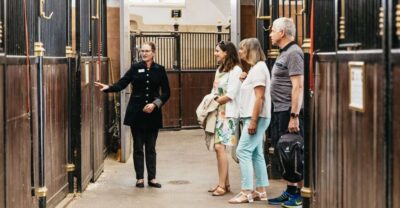
Classical Concert in the World-Famous Musikverein
Read our review →