Reviewed · TOURS
Vienna: ‘Armenia In The Heart Of Austria’ Tour
Vienna’s Armenian story is easy to miss, but this two-hour visit brings it into focus inside the Mekhitarist Monastery. You’ll see Maria Schutz Church, a remarkable library, Armenian art and coins, and a liqueur made by the community. I especially like the small-group size and the access to treasures you would not understand from a quick look around.
I also like the personal welcome from Father Vahan, whose warm, thoughtful style has made a strong impression on visitors. The main consideration is pace: two hours is not long for a church, museum, library, and tasting, so you’ll get the most from this tour if Armenian culture, religious art, and books genuinely interest you.
Key points to know before booking
- Small Armenia in Vienna: Learn how the Mekhitarist Congregation made Vienna an important center of Armenian religious and cultural life.
- Maria Schutz Church: See the 1874 church interior, including works linked to Camillo Sitte and Theophil von Hansen.
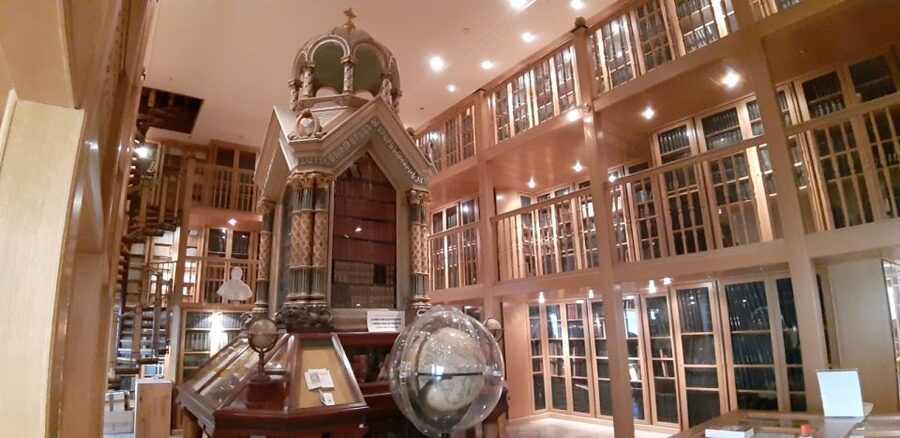
- Rare Armenian collections: View more than 2,800 Armenian manuscripts and a library of over 170,000 publications.
- Art beyond the church: The museum includes coins, ceramics, carpets, and three paintings by Ivan Aivazovsky.
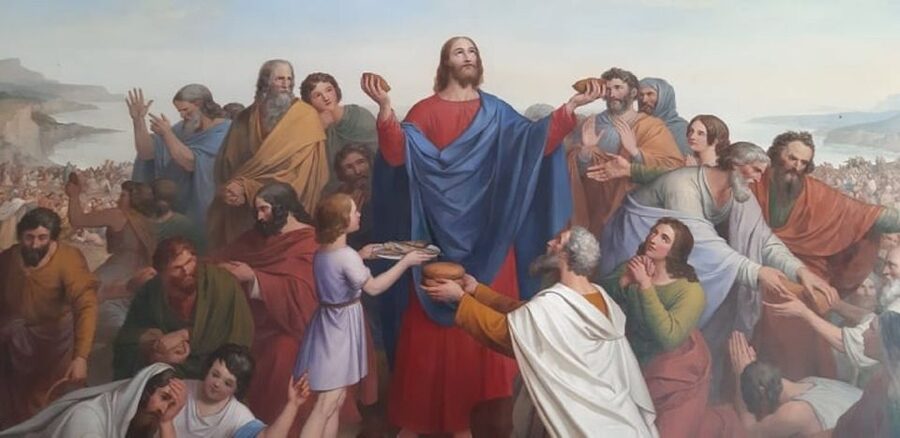
- A historic chapel and refectory: Visit the Loretto-Chapel and see Ludwig Ferdinand Schnorr von Carolsfeld’s painting of The Feeding of the Five Thousand.
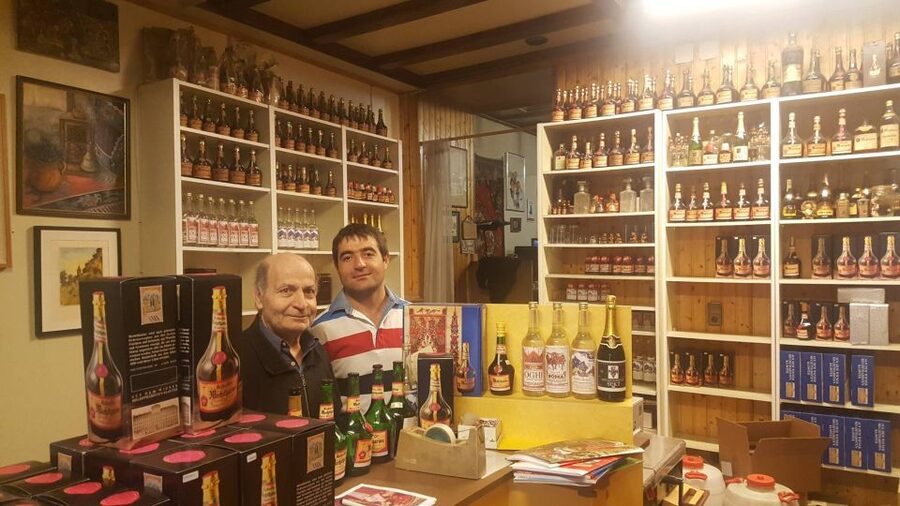
- Mechitharine tasting: Finish with a taste of the monastery’s liqueur and learn about its flavor, history, and production.
Why this small corner of Vienna matters
Vienna is often presented through imperial palaces, grand concert halls, and coffeehouses. This tour takes you somewhere quieter and more unusual: an Armenian monastery with links to worship, scholarship, art, publishing, and community life.
The Mekhitarist Congregation is central to the story. Your guide begins by explaining how the congregation developed in Vienna and how its work preserved Armenian language, faith, and culture far from Armenia. That background gives the rest of the visit a clear purpose. The library is not simply a room full of old books, and the paintings are not just decorative church art. They belong to a long effort to protect and share Armenian identity.
I find that context useful because the tour is not built around a single famous object. It connects many smaller pieces: a chapel image, a manuscript, a coin, a painting, a piece of furniture, and a liqueur made by the monastery. Together, they show how a religious community became a center of Armenian culture in Austria.
The group is limited to 10 participants. That matters here. A large crowd would make it hard to hear explanations in the church and museum, while a small group gives you a better chance to ask questions. Tours are offered in Armenian, English, or German, and the guide is a learned monk. Father Vahan is specifically associated with the warm, personal welcome that makes this experience feel more like a visit to a living community than a routine museum appointment.
Other Vienna days people book alongside this one:
- Vienna: Vivaldi’s Four Seasons Concert in Karlskirche
★ 4.7 · 14,951 reviews - Vienna: Spanish Riding School Training
★ 3.9 · 9,281 reviews - Vienna: Skip-the-cashier-desk-line Giant Ferris Wheel Ride
★ 4.5 · 7,859 reviews
Entering Maria Schutz Church, built in 1874
The church portion begins with the story of Maria Schutz, built in 1874 to replace an older Capuchin church. You then go inside to look at the interior and its art.
This is a strong opening because the church gives you an immediate sense of the monastery’s religious setting. You are not starting with a lecture in a plain meeting room. Instead, the guide can point to the objects around you and explain how Armenian themes appear in a Viennese setting.
One important work is the altar painting showing Saint Mary’s protection of Armenia, painted by Camillo Sitte. It links the church directly to Armenian identity. The subject is not only devotional. It also expresses the community’s place within a broader Christian world.
You’ll also see an altar dedicated to Saint Gregory the Illuminator. The design is connected with Theophil von Hansen, the architect of Vienna’s Austrian Houses of Parliament. That detail creates a useful bridge between the monastery and the city around it. You may know Hansen’s work from Vienna’s grand civic buildings, but here his architectural influence appears in a much smaller and more intimate religious setting.
The church is one of the parts that can reward slow looking. I would pay attention to the guide’s explanations instead of trying to photograph every detail at once. The visit is short, and the value comes from learning why particular works matter.
The Loretto-Chapel and Mary with the Rose
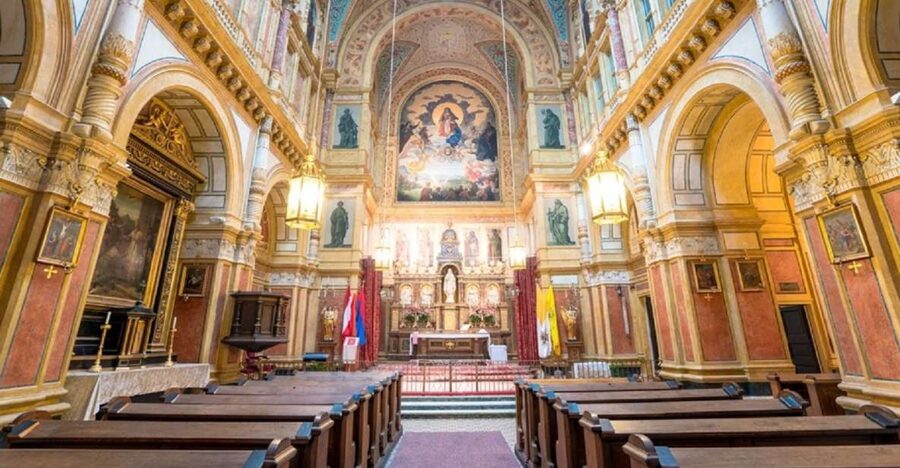
From the main church, the tour continues to the Loretto-Chapel. Its key object is the baroque miraculous picture Mary with the Rose.
The image has a dramatic survival story. It was rescued intact during the Turkish siege of Vienna in 1683. That fact gives the chapel a direct connection to one of the defining events in Vienna’s past, while also showing how religious objects can carry memory through periods of danger and upheaval.
I like this stop because it changes the scale of the tour. The large church introduces the congregation’s public face, while the chapel offers a more intimate setting. The guide’s account helps you understand why a single image can be treated as both a sacred object and a piece of community history.
Do not expect a long standalone visit in the chapel. It is one stage in a guided route, and the time is shared with the church, refectory, library, museum, and tasting. Still, it is a meaningful stop, especially if you enjoy baroque art and stories connected to Vienna’s 1683 siege.
The refectory and a monumental biblical painting
You then pass through the refectory, the monastery dining room. Its main visual feature is a monumental painting by Ludwig Ferdinand Schnorr von Carolsfeld, The Feeding of the Five Thousand.
A refectory can easily become a quick walk-through, but the painting gives this room a clear focus. The subject fits the setting, yet the work also adds another layer to the monastery’s artistic collection. Your guide can place it within the building rather than treating it as an isolated museum object.
This part of the route also helps you picture the monastery as a working religious institution. The church is for worship, the chapel holds a treasured image, and the refectory belongs to daily communal life. You get a glimpse of how the complex functions as more than a display space.
The drawback is that the itinerary includes several locations in two hours. If you like to spend ten minutes studying one painting, you may find the pace brisk. Ask questions as you go, and keep your attention on the objects the monk identifies as especially important.
Same Alps, a completely different kind of day:
- Vienna: Schönbrunn Palace & Gardens Skip-the-Line Tour
★ 4.7 · 7,739 reviews - Vienna: Light of Creation Votive Church Immersive Light Show
★ 4.8 · 6,779 reviews - Vienna Spanish Riding School Guided Tour
★ 4.7 · 6,765 reviews - Vienna: Classical Concert in the World-Famous Musikverein
★ 4.6 · 6,673 reviews
Inside one of the world’s notable Armenian libraries
The Mekhitarist Library is likely to be the intellectual high point of the visit. Its collection includes more than 2,800 Armenian manuscripts and over 170,000 volumes of ancient and modern Armenian publications. It also holds the largest collection of Armenian newspapers and magazines in the Western world.
Those numbers are impressive, but the real value is what they represent. Books and newspapers preserve language, education, religious thought, and everyday cultural memory. For Armenian history, a library like this is not just a place to store texts. It is a record of how a people maintained connections across borders and generations.
You should listen closely during this section, even if you cannot read Armenian. The guide explains the special features of the library and helps you understand what makes the collection important. Without that explanation, rows of manuscripts and books could be beautiful but difficult to interpret.
The tour does not present the library as a public reading-room visit. It is a guided look at the collection as part of the monastery and museum experience. If rare books, religious texts, or the history of publishing interest you, this portion may be worth the ticket on its own.
Coins, ceramics, carpets, and Armenian paintings
The museum adds variety after the church and library. Its holdings include a numismatic collection with about 10,000 Armenian coins and 20,000 coins from other countries. You’ll also see ceramics, carpets, and other objects, mainly of Armenian production.
The coin collection gives the tour a wider frame. Coins can reveal political power, trade, religion, and changing borders in a compact form. The presence of coins from Armenia and other countries also reflects the congregation’s international reach.
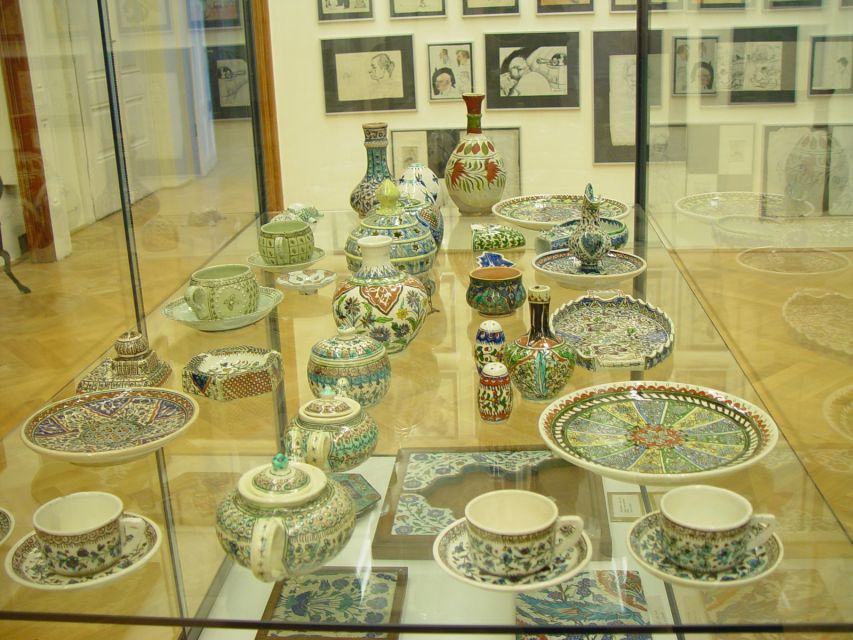
The ceramics, carpets, and other objects bring daily life and craft into the visit. They keep the museum from feeling focused only on theology or books. I particularly like this mix because it gives you several ways into Armenian culture, even if religious art is not your main interest.
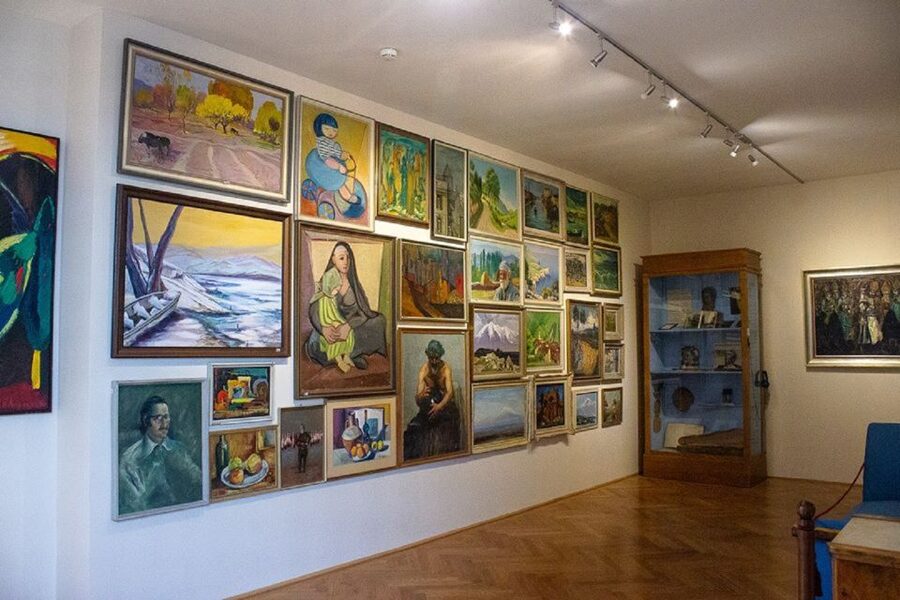
The gallery contains valuable paintings by Armenian artists, including three works by Aivazovsky. His name will be familiar to many art lovers, and the paintings add a strong visual reason to visit. The museum also connects Armenian artists with the wider European setting of Vienna, rather than presenting Armenian culture as something sealed off from its surroundings.
You should not expect the scale of a major Vienna art museum. This is a specialized monastery collection, and its strength lies in its range and setting. The guide’s interpretation is important, since the objects gain meaning from their Armenian and Mekhitarist context.
Finishing with Mechitharine liqueur
The final tasting gives the tour a relaxed close. You’ll taste Mechitharine liqueur and hear about its flavor, history, families, and business.
This is more than a quick alcoholic sample added to the end of a sightseeing route. The liqueur is part of the monastery’s living tradition and gives you a practical connection to the community’s work. After looking at manuscripts, paintings, and historic objects, you get to experience one small product associated with the Mekhitarists today.
The tasting is included in the price, along with entrance fees and the guide service. If you do not drink alcohol, the supplied information does not specify an alternative tasting, so you may want to check before booking. The activity is best understood as a cultural tasting, not a full drinks tour.
I like the balance here. The visit begins with history and religious art, moves into scholarship and collecting, then ends with something sensory and social. It keeps the experience from becoming too formal.
Is $84 a fair price for two hours?
At $84 per person, this is not a budget attraction by Vienna standards. The value depends on what you want from your sightseeing.
You are paying for more than entry to a church. The fee includes entrance fees, a live guide, access to the church, chapel, refectory, museum, and library, plus the Mechitharine tasting. The small group, capped at 10 people, also gives the visit a more personal format than a large public tour.
I would consider the price reasonable if you have a serious interest in Armenian culture, religious art, rare books, or specialized Vienna history. The library alone contains material you are unlikely to encounter in a standard city tour. The guide’s explanations are a major part of the value, especially because many objects will not be self-explanatory.
The calculation is less favorable if you mainly want a quick architectural stop. Two hours may feel expensive for someone who only wants to admire the church interior. You also need to be comfortable with a focused subject. This is not a general introduction to Vienna, and it will not cover the city’s major imperial sights.
The reserve-now, pay-later option can help if your plans are still changing. You can cancel up to 24 hours in advance for a full refund. Check the available start times before booking, since the tour lasts two hours and the schedule can affect how you fit it into a day of sightseeing.
Who will enjoy this visit most?
I would recommend this tour to you if you like places with a clear community story. It suits people who want to see how a minority culture shaped its own institutions in Vienna.
It is also a good choice for:
- Armenian visitors and families looking for a meaningful cultural connection
- Art lovers interested in Aivazovsky, religious paintings, and baroque objects
- History readers curious about the siege of Vienna in 1683
- Visitors who enjoy libraries, manuscripts, and old publications
- Anyone who prefers a small group and direct conversation with a guide
- Couples or friends looking for an experience outside Vienna’s usual palace circuit
The German-Armenian couple who visited found the welcome especially moving, and Father Vahan’s personal words left a lasting impression on them. That detail suggests the tour can carry real emotional weight for people with Armenian family ties, but you do not need Armenian heritage to find it worthwhile. One visitor specifically described it as worth doing even if you are not Armenian.
I would hesitate if you dislike religious settings, have little interest in museums or books, or want plenty of unstructured time. The route is guided and purposeful. You will see many parts of the monastery, but you will not set the pace for each one.
Practical details at the monastery entrance
Meet in front of the main entrance of the Mekhitarist Monastery. Allow yourself enough time to arrive at the stated meeting point, since the tour begins there and the route moves through a religious complex rather than a wide public museum.
The live guide speaks Armenian, English, or German. When booking, choose the language that lets you ask questions comfortably. This matters more than usual because the collection’s importance depends on explanation.
The group size is limited to 10 participants. Entrance fees, guide service, and liqueur tasting are included. The duration is two hours, and available starting times should be checked before you commit it to your Vienna schedule.
Should you book the Armenia in the Heart of Austria tour?
Book it if you want a personal look at Armenian culture in Vienna, especially if manuscripts, religious art, community history, or unusual museum collections appeal to you. The combination of Maria Schutz Church, the Loretto-Chapel, the refectory, the Mekhitarist Library, Armenian art, and Mechitharine tasting gives you a lot of substance in two hours.
Skip it if you are chasing Vienna’s headline sights or prefer to explore without a guide. The price is high for a short visit, and the subject is specialized. For the right audience, though, the small group and Father Vahan’s warm approach make this one of Vienna’s more distinctive cultural appointments.
FAQ
Where does the tour meet?
The meeting point is in front of the main entrance of the Mekhitarist Monastery in Vienna.
How long does the tour last?
The tour lasts two hours.
What languages are available?
The tour is offered in Armenian, English, and German.
How many people are in the group?
The group is limited to 10 participants.
What is included in the price?
Entrance fees, guide service, and liqueur tasting are included.
How much does the tour cost?
The listed price is $84 per person.
Which church do you visit?
You visit Maria Schutz Church, built in 1874 to replace the older Capuchin church.
What can you see in the library?
The library contains more than 2,800 Armenian manuscripts and over 170,000 volumes of ancient and modern Armenian publications. It also holds a large collection of Armenian newspapers and magazines.
What objects are in the museum?
The museum includes coins, ceramics, carpets, and other mainly Armenian objects. Its gallery also contains paintings by Armenian artists, including three by Aivazovsky.
Is liqueur tasting included?
Yes. The tour ends with a tasting of Mechitharine liqueur and an explanation of its taste, history, families, and business.
Just added around Vienna
- World War II History Vienna Old Town Private Walking Tour★ 4.8 · 9 reviews
- From Krems: Wachau Valley River Cruise on the Danube★ 4.6 · 95 reviews
- Vienna: Winery and Wine Tasting Tour with a Wine Expert★ 5.0 · 5 reviews
- Vienna: Wine Tasting E-Bike Tour★ 4.9 · 46 reviews
- Vienna: Wine Tasting at Schönbrunn Palace★ 4.3 · 71 reviews
- Vienna: Wine Tasting Tour★ 4.8 · 61 reviews
- Vienna: Wiener Schnitzel and Strudel Cooking Class★ 4.9 · 126 reviews
- Vienna Urban Art Tour: Explore a different side of Vienna!★ 3.8 · 14 reviews
Tours, compared.
Schönbrunn Palace & Gardens Skip-the-Line Tour
Read our review →

Skip-the-Line Sisi Museum, Hofburg and Gardens Tour
Read our review →
Skip-the-Line Schönbrunn Palace & Gardens Tour
Read our review →
Guided Walking Tour of City Center Highlights
Read our review →