
Reviewed · WINE TOURS
Austrian Wine Tasting
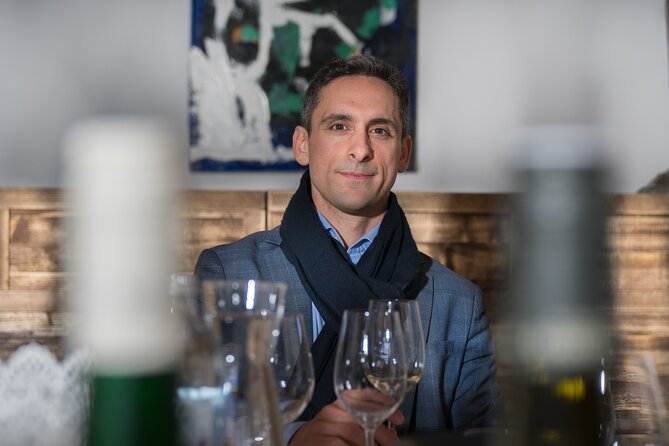
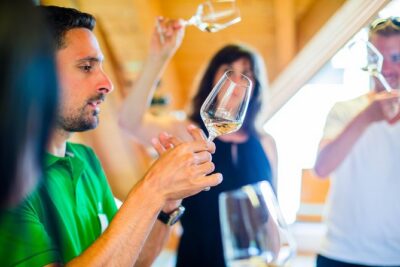
Austrian wine is one of Vienna’s best-kept pleasures, and this two-hour tasting gives you a useful introduction without sending you out into the countryside. In a restored Wilhelminian-era building in the 2nd district, sommelier Stylianos guides you through six wines, local grape varieties, production methods, and the story behind Austria’s wine regions.
I like two things right away: the small group size of eight keeps the session personal, and the generous pairing of cheese, cured meat, and bread makes this more than a string of tiny sips. I also like that Stylianos can shape the conversation around your interests, from basic wine questions to the details of Austrian winemaking.
The main consideration is the price: $141 per person is a serious spend for two hours, especially if you already know Austrian wine. It makes the most sense if you want expert guidance, a comfortable indoor setting, and a focused tasting rather than a quick sample at a wine bar.
Key points at a glance
- Six Austrian wines: Expect a broad look at the country’s wine styles rather than one narrow flight.
- Sommelier Stylianos: The English-language guide explains wine, regions, history, and production in an approachable way.
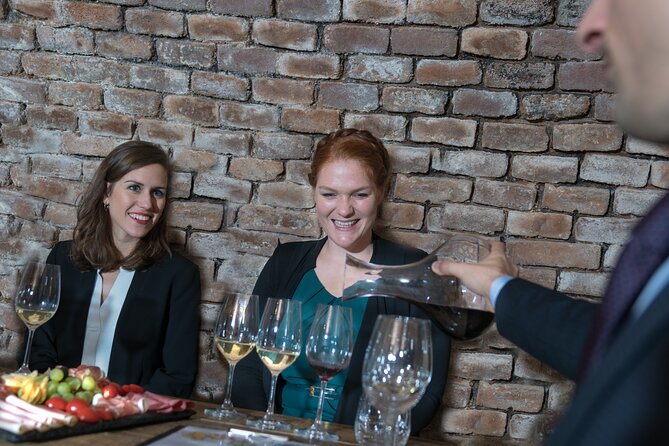
- Local food pairing: Cheese, cured meat, and bread are served in generous portions alongside the tasting.
- Historic 2nd district setting: The session takes place in a restored traditional Viennese building from the Wilhelminian era.
- Small and social: With no more than eight participants, questions and discussion are part of the experience.
- Useful for restaurant ordering: You leave better prepared to recognize Austrian grapes and make choices from local wine lists.
Why Austrian wine deserves two hours of your Vienna plans
Vienna is unusual among European capitals because wine is part of the city’s everyday identity, not only something found in formal tasting rooms. But Austrian labels and grape names can be unfamiliar if you are used to French, Italian, Spanish, or California wines.
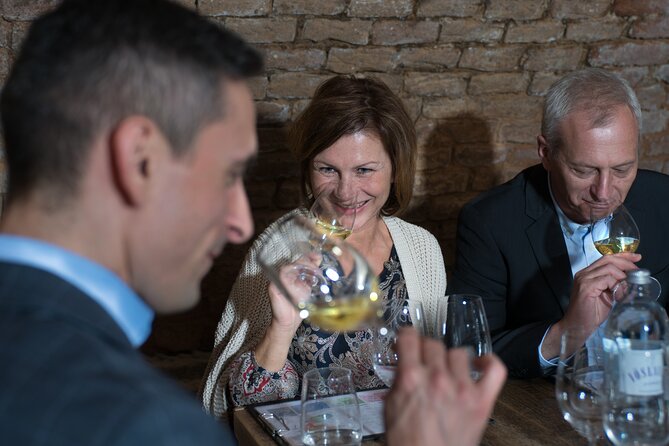
That is where this tasting earns its place. You get a guided introduction to six bottles in one sitting, with someone explaining what you are drinking and why it tastes the way it does. Instead of trying to decode a wine list on your own, you can ask questions as they come up.
The session covers Austria’s main wine regions, local grape varieties, winemaking methods, and the country’s wine story. That mix matters. A tasting based only on flavor can be pleasant but forgettable. Here, you also gain a framework for understanding Austrian wine after you leave.
I especially like this kind of activity early in a Vienna visit. Once you recognize a few grape names and styles, you can spot them on restaurant menus and in wine shops. One useful outcome is practical confidence, not just a pleasant afternoon with a glass in hand.
A few more Vienna trips to weigh up
- Wachau Valley Wine Tasting Bike Tour from Vienna
★ 5.0 · 829 reviews - Vienna: Swarovski House Tour with Champagne and Gift
★ 4.7 · 787 reviews - Countryside Half Day Wine Tour near Vienna
★ 5.0 · 545 reviews
Arriving at Hollanstraße 10 in Vienna’s 2nd district
The tasting takes place at Hollanstraße 10/1-3, 1020 Vienna. Look for the entrance to the left of the main door, next to the Italian restaurant SoFare.
That instruction is worth keeping on your phone. The location is in a traditional Viennese building, and the entrance is not described as a large, obvious wine venue. Arrive with enough time to find the doorway without rushing in at the scheduled start.
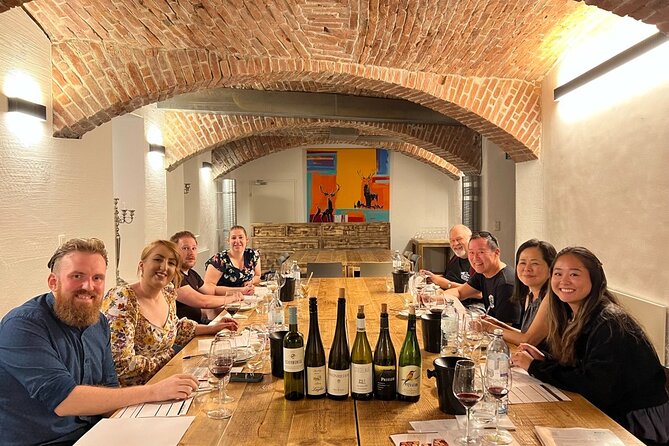
The 2nd district gives the activity a local neighborhood feel rather than a grand-palace setting. You are not being placed in a theatrical cellar designed only for tourists. Instead, the room is in a restored Wilhelminian-era building, with a refined but relaxed atmosphere.
One description of the tasting room calls it beautiful, well lit, and cozy. That combination suits the format. Wine education works better when you can hear the guide, see the glass clearly, and settle into conversation. It is also a good rainy-day choice, since the main event takes place indoors.
Meeting Stylianos and settling into the tasting
The session is conducted in English by a professional wine guide and sommelier named Stylianos. His role is more than pouring six glasses and naming the bottles. He explains the wines, answers questions, and encourages discussion throughout the two hours.
I appreciate that the tone is not overly formal. Wine tastings can sometimes make you feel as if there is a correct answer for every aroma and finish. Here, the emphasis is on learning and conversation, so you can ask basic questions without feeling out of place.
The group is limited to eight people, although the exact number can vary. A small group gives you a better chance to ask about a particular grape, region, or winemaking choice. It also means the experience may feel more like a guided conversation than a presentation from a stage.
The tasting can still go ahead with a very small turnout. In one case, a single participant received a personal session and found it enjoyable. That is good news if you prefer close attention, though some people may prefer a fuller group for more social energy.
Six wines, six ways to understand Austria
The centerpiece is a tasting of six Austrian wines selected to show a range of styles and regions. The exact bottles are not specified, and that is sensible because wine selections can change. You should expect variety, not a fixed list that never moves with availability.
The important point is the progression through Austrian wine. You are not simply tasting six unrelated products. Stylianos connects the glasses to the country’s growing areas, grape varieties, production choices, and present-day wine culture.
If you are new to Austria’s wines, the explanations are especially useful. Grape names that look unfamiliar on a menu become easier to remember once you have tasted them and heard how they fit into the country’s wine tradition. You can also compare the wines directly, which is often more helpful than reading a description.
The tasting is also useful for people who already drink wine. You may know general wine terminology but still lack a clear sense of Austria’s particular styles. The session provides a local focus without requiring a full day trip to a winery.
The six wines are described as high quality, and the tasting is intended to show Austria at its best. Still, personal taste varies. Do not book expecting every bottle to suit you. The value is in the range and explanation, along with the chance to identify the styles you prefer.
Same Alps, a completely different kind of day:
- Vienna: Vivaldi’s Four Seasons Concert in Karlskirche
★ 4.7 · 14,951 reviews - Vienna: Spanish Riding School Training
★ 3.9 · 9,281 reviews - Vienna: Skip-the-cashier-desk-line Giant Ferris Wheel Ride
★ 4.5 · 7,859 reviews - Vienna: Schönbrunn Palace & Gardens Skip-the-Line Tour
★ 4.7 · 7,739 reviews
Cheese, cured meat, and bread make the tasting practical
Food is not a minor extra here. The included board contains locally sourced cheese, cured meat, and bread, with portions described as generous.
That changes the pace of the tasting. You are not drinking on an empty stomach, and the food gives you something concrete to compare with the wine. A sharp cheese, salty cured meat, and plain bread can each make a wine seem different. Even without formal pairing instruction, the combination helps turn abstract tasting notes into something you can understand.
The board also makes the $141 price easier to assess. You are paying for six wines, a two-hour session, the sommelier’s time, and a substantial accompaniment, not just six pours. It is still not a budget activity, but it has more substance than a quick tasting with a few crackers.
The food is locally sourced, which keeps the experience connected to Austria rather than making the meal an international snack plate. If you are looking for a full dinner, though, this is not described as one. Plan it as a tasting with food, not as a replacement for an evening meal.
What you learn about Austrian wine
The educational side covers four useful areas. First, you learn about Austria’s wine history and how wine fits into the country’s culture. Second, you look at the major wine regions and how they differ.
Third, the guide explains production methods. This gives you a better way to understand why two wines made from similar grapes can taste different. Finally, you learn about local grape varieties, which is the practical key to ordering Austrian wine once you are on your own.
The best part is the chance to ask questions. You can ask about a flavor you notice, a label you saw in a shop, or a wine you want to order at dinner. That back-and-forth is more useful than a memorized lecture.
Several of the strongest comments about the experience focus on the teaching. The guide is described as friendly, clear, and able to explain wine without making the subject feel heavy. One couple found the session especially helpful for navigating unfamiliar Austrian wine lists later.
That is the standard I would use when judging the activity. If you only want to drink six good wines, you can probably do that elsewhere for less. If you want to understand what you are tasting and make better choices for the rest of your trip, the instruction adds real value.
How the two hours are likely to feel
The experience is long enough to cover serious ground but short enough to fit neatly into a Vienna sightseeing day. You can schedule it as an afternoon activity or an early evening plan, depending on the available start time.
The first part is likely to establish the setting and introduce Austrian wine. From there, the tasting moves through six wines with explanations and food. The exact order and teaching style may change according to the group’s questions and interests.
That flexibility is a strength. If your group wants more detail about production, the conversation can go there. If you are new to wine, you can focus on the basics. The guide has been described as adjusting the session around what participants like and want to learn.
Two hours also gives you time to taste at a sensible pace. You are not being hurried from one glass to the next. At the same time, the activity does not take over your entire day, as a countryside winery excursion would.
Remember that it is an alcohol-focused activity. Children under 16 are not permitted, and the event is best suited to adults who want to give their attention to wine, food, and conversation.
Is $141 a fair price in Vienna?
At $141 per person, this sits in the premium category for a two-hour tasting. The price can be justified if you value the small group, six quality wines, local food, and access to an experienced sommelier.
It is less compelling if your main goal is simply to have one glass of Austrian wine. Vienna has other ways to do that, including restaurants and wine bars. You may also prefer a lower-cost tasting if you are already confident with Austrian wine and do not need much explanation.
For me, the strongest value comes from the combination. You get a structured look at several Austrian styles, enough food to make the session comfortable, and a guide who can answer questions in real time. The experience also saves you the trouble of arranging visits to several wineries when your schedule is limited.
There is no promise that you can buy the sampled bottles afterward. One participant wished for that option, so wine shopping may need to happen separately. If taking bottles home is important to you, ask about purchase possibilities before booking.
Flexible booking terms help reduce the risk. You can cancel up to 24 hours in advance for a full refund, and the reserve-now, pay-later option lets you hold a place without paying immediately. Check the available starting times before planning the rest of your day.
Who should book this wine tasting?
I would recommend it most strongly to you if Austrian wine is new territory. The combination of tasting and explanation gives you a working introduction in one sitting, and you will be better prepared for local menus afterward.
It also suits couples, solo visitors, and small groups who enjoy conversation. The group limit of eight keeps the setting personal, while the informal style makes it easier to participate even if you are not a wine expert.
This is a good choice for a rainy afternoon, a food-focused itinerary, or a trip where you do not have time to visit wine country outside Vienna. The restored building adds atmosphere without turning the event into a grand performance.
I would think twice if you are traveling with children under 16, need a full meal, or want a large party atmosphere. I would also compare the price carefully if you already know Austrian wine and mainly want to buy bottles.
Should you book Austrian Wine Tasting?
Book it if you want a focused Austrian wine lesson, six quality pours, and local cheese and charcuterie in a comfortable Vienna setting. Stylianos’ friendly, question-led approach makes the experience useful for beginners while still giving experienced wine drinkers room to explore.
Skip it if your budget is tight or if you would rather spend a full day among vineyards. For most visitors with a genuine interest in Austrian wine, though, the two-hour format is a smart compromise: more useful than a casual glass, far easier than organizing a winery excursion, and compact enough to fit into a city break.
FAQ
Where does the Austrian wine tasting take place?
It takes place at Hollanstraße 10/1-3, 1020 Vienna, in the city’s 2nd district. The entrance is to the left of the main door, next to the Italian restaurant SoFare.
How long does the tasting last?
The tasting lasts two hours.
How many wines are included?
Six Austrian wines are included in the tasting.
What food is served?
You receive a charcuterie board with locally sourced cheese, cured meat, and bread. Still water is also included.
Is the tasting conducted in English?
Yes. The instructor speaks English, and the tasting is conducted in English.
How large is the group?
The group is limited to eight participants.
Are children allowed to attend?
No. The activity is not suitable for children under 16.
Can I cancel the booking?
Yes. You can cancel up to 24 hours in advance for a full refund. You can also reserve now and pay later, which keeps your plans flexible.
Just added around Vienna
- Ottakringer Brewery tour★ 4.0 · 6 reviews
- New Hofburg Palace Tour House of Habsburg★ 4.5 · 5 reviews
- Private Van & Walk Tour – One Perfect Day in Vienna★ 5.0 · 21 reviews
- True Crime mobile puzzle rally Vienna★ 4.0 · 3 reviews
- Vienna Naschmarket Food Tasting Tour★ 4.0 · 30 reviews
- Vienna Nightlife Experience: Food, Wine, Cocktails & Vibes★ 5.0 · 119 reviews
- Myth Mozart★ 4.0 · 80 reviews
- ( Night Tour ) With Private Guide + wine or prosecco★ 4.0 · 12 reviews
Wine Tours, compared.
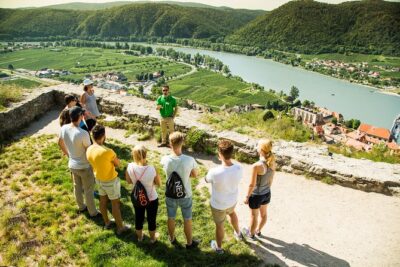
Wachau Valley Wine Tasting Bike Tour from Vienna
Read our review →
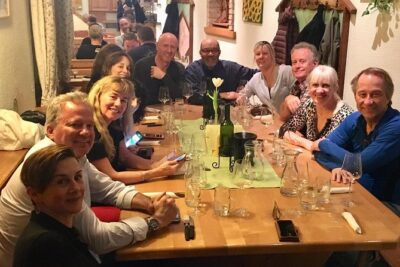
Wachau Valley Small-Group Tour and Wine Tasting from Vienna
Read our review →
Grape Grazing: Wachau Valley Winery Biking Tour
Read our review →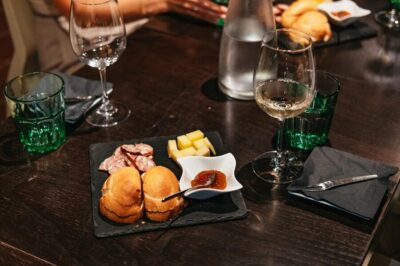
Wine Tasting Experience in a Private Wine Cellar
Read our review →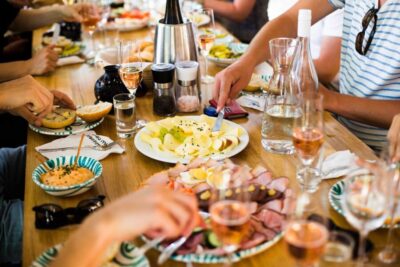
Browse the lists this tour appears in