
Reviewed · HORSES
Vienna Horse-drawn Carriage Guided Tour
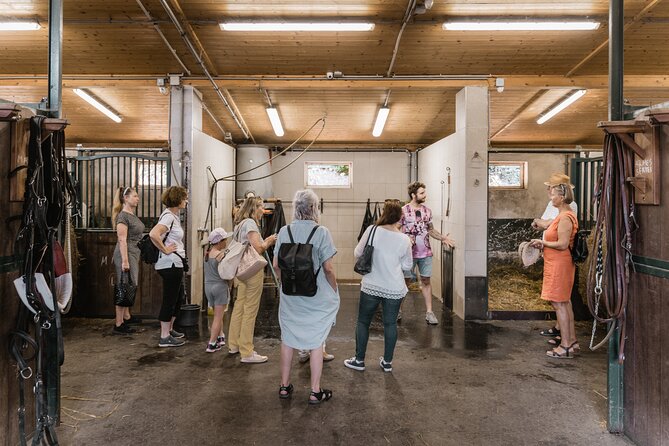
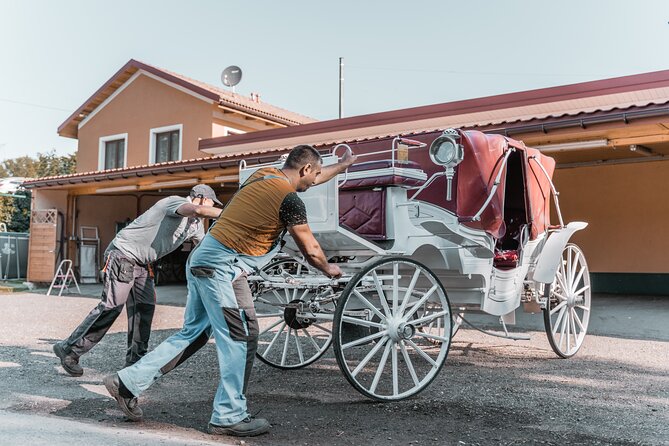
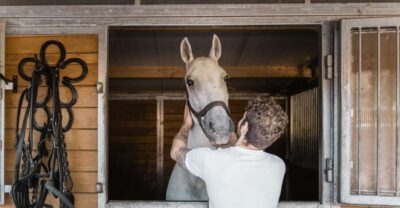
Vienna’s fiaker tradition makes the most sense when you begin with the horses and stables, not just a quick city-center loop. This morning experience starts in the 11th district, where you learn how the carriages are prepared, how the horses are fitted with harnesses, and how coachmen and stable staff work together.
I like two things here: you get close to the animals in a clean, well-kept stable, and the ride finishes in the center of Vienna. The main point to understand is that the carriage trip is largely a transfer into town, not a narrated sightseeing circuit through the old city.
Key points to know before booking
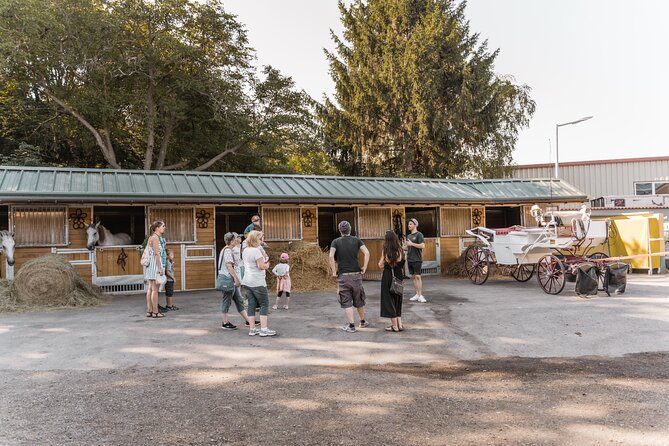
- Start behind the scenes: Begin at working fiaker stables on Rappachgasse, away from central Vienna.
- Meet the horses up close: The introduction covers care, training, harnesses, carriages, and daily routines.
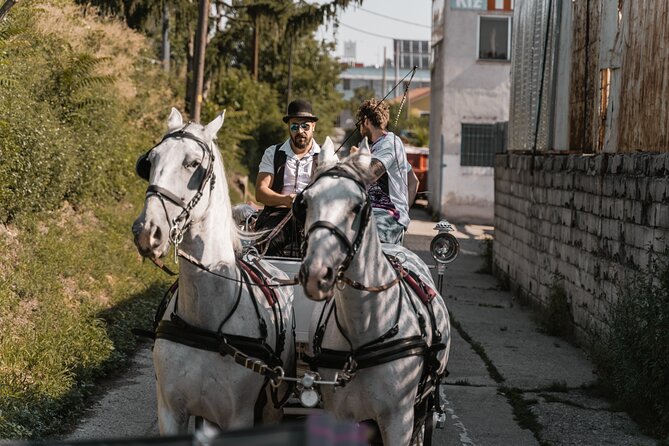
- Ride into the city: The carriage journey takes about an hour through Vienna’s 11th district and onward toward the center.
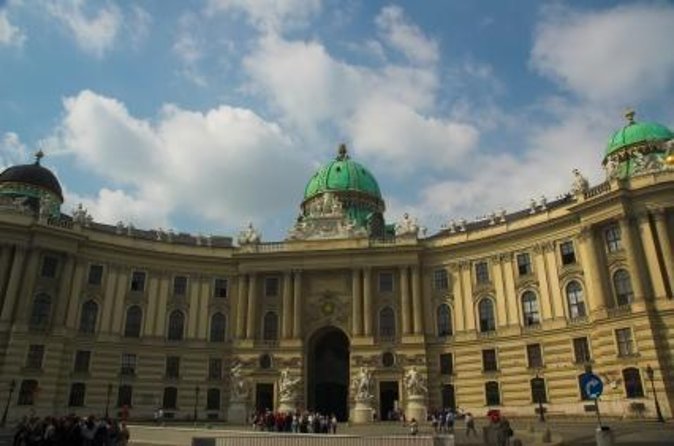
- See major landmarks from the road: The route includes views of Belvedere, the Ringstraße, the State Opera area, and Hofburg Place.
- Best for families: Children can enjoy the horses, the carriage, and the novelty of hearing hooves on the street. A small stroller has fit aboard comfortably.
- Know what is not included: Snacks are not provided, and the coachman may not give a full commentary on every sight.
Why the stable visit matters more than the ride
Many visitors picture a fiaker tour as a slow circuit around Vienna’s grandest squares. This experience offers something different. You start at the source, with the horses and people who make the city’s carriage tradition work.
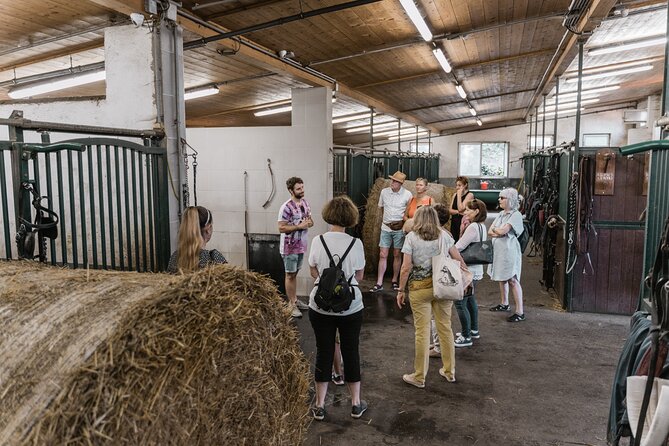
The 30-minute stable visit is the heart of the morning. You can expect an explanation of how the carriages are assembled, how the horses are harnessed, and what the staff do before setting out. You also get background on the history of the carriages and the number of horses involved in the operation.
That practical detail gives the ride more meaning. Instead of seeing a polished carriage appear beside the Hofburg and treating it like a photo prop, you learn what happens before the carriage reaches the center. You see the routine behind the spectacle.
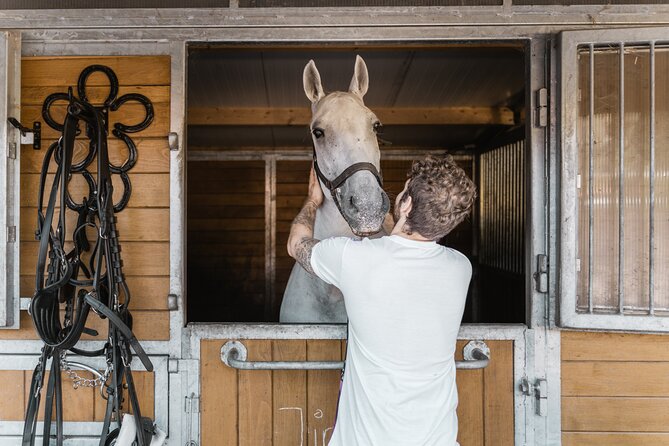
The horses receive the strongest praise for good reason. The stables are described as tidy, and the animals as clean, well cared for, and not overworked. Depending on the day and the stable routine, you may be able to spend time near the horses, ask questions, and offer a friendly cuddle. Service animals are allowed, and most people can take part.
The talk may be given in German followed by English. The English used by the staff has been described as clear, and questions are welcomed. If German is part of your trip, the bilingual format can be a small bonus. It does make the introduction take longer, so allow the full 30 minutes rather than expecting a quick greeting before the ride.
A few more Vienna trips to weigh up
- Vienna: Secrets of the Fiaker & Horse-Drawn Carriage Ride
★ 4.8 · 743 reviews - Vienna: Culinary Horse-Drawn Carriage Experience
★ 4.7 · 291 reviews - Vienna Horse-Drawn Carriage Ride with Sparkling Wine and Food
★ 5.0 · 44 reviews
Rappachgasse and Vienna’s 11th district
The meeting point is Rappachgasse 34A in Vienna’s 11th district, with an 8:45 am start. This is not a central location, so plan your morning around reaching the stable on time. The point is near public transportation, but the supplied information does not specify a particular station or route.
The district gives you a side of Vienna that many first-time visitors miss. Once you leave the stable, the carriage passes through an area with former industrial roots, modern buildings, older structures, and shops serving many cultures. It is not the postcard Vienna of ornate palaces and grand squares, but that is part of its value.
I like this portion because it shows how a carriage company actually operates in the city rather than placing you immediately into a carefully polished historic setting. You see ordinary streets and changing neighborhoods from a slow, open vantage point.
The drawback is simple: if you expect every minute of the ride to feature famous architecture, you may feel disappointed. Several parts of the route are ordinary urban streets. The ride is pleasant, but it is not uniformly scenic.
The carriage ride toward Belvedere
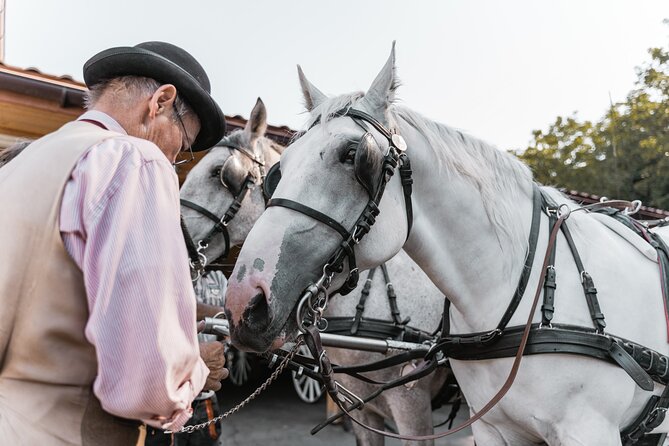
After the stable introduction, you board the carriage and head toward the inner city. The ride lasts about an hour and eventually ends at Michaelerplatz or Stephansplatz, depending on the precise drop-off arrangement.
The route reaches the Belvedere area in Vienna’s 3rd district. The palace complex was once outside the city, but today it sits within Vienna’s built-up center. From the carriage, you get a sense of how the city changes as you travel inward, from less formal streets to grander buildings and palaces.
Do not confuse this with a palace admission visit. You are passing by the Belvedere area, not receiving entry to the museum or gardens. That distinction matters if you want time inside the palace complex. You would need to plan that separately after the carriage ride.
Still, the transition is useful. You can see Vienna shift from mixed suburban and industrial neighborhoods to the polished architecture associated with imperial Vienna. The carriage gives you time to watch that change at a slower pace than a taxi or tram.
Ringstraße landmarks from a horse-drawn carriage
The ride continues toward the Ringstraße, Vienna’s grand boulevard. This is where the setting becomes more recognizably monumental, with large public buildings, palaces, and formal facades.
The route includes the area around the Vienna State Opera, known for the annual Opera Ball. You also pass through the broader Ringstraße zone, where Vienna’s imperial ambitions are written into the architecture. From a carriage, you are seated low and moving slowly, so the buildings arrive in a different rhythm than they do from a sightseeing bus.
Here I would keep expectations measured. The experience is described as a guided tour, but the operator clarifies that the coachman is not necessarily acting as a city guide during the ride. The stable visit is the structured, explanatory portion. The carriage ride adds atmosphere and a pleasant way into town, but you may not hear a detailed explanation of every building.
That is the most important booking tip. If you want a narrated architectural tour, choose a dedicated city-center fiaker ride or walking tour. If you want to understand the horses and then enjoy a long carriage journey into Vienna, this format makes much more sense.
Same Alps, a completely different kind of day:
- Vienna: Vivaldi’s Four Seasons Concert in Karlskirche
★ 4.7 · 14,951 reviews - Vienna: Spanish Riding School Training
★ 3.9 · 9,281 reviews - Vienna: Skip-the-cashier-desk-line Giant Ferris Wheel Ride
★ 4.5 · 7,859 reviews - Vienna: Schönbrunn Palace & Gardens Skip-the-Line Tour
★ 4.7 · 7,739 reviews
Hofburg Place and the central drop-off
The strongest city view comes near Hofburg Place. The former imperial palace is not a single building but a large group of connected sections, courtyards, and formal fronts. Reaching this area gives the ride its clearest taste of central Vienna.
You may finish at Michaelerplatz or Stephansplatz in the inner city. Both are useful places to continue exploring on foot, and the central ending is one of the tour’s practical advantages. You can move on to the Hofburg, the old center, nearby streets, or other planned stops without returning to the stable.
The ride does not include admission tickets to the Hofburg, Belvedere, or the State Opera. Think of these landmarks as exterior sights along the route. If you want museum rooms, palace collections, or a guided explanation inside the buildings, arrange those separately.
The sound of the horses on cobblestones is a small but memorable part of the experience. It is also the kind of detail that makes the ride feel different from ordinary transport. I would not book this just for landmark coverage, but I would value it as a gentle way to arrive in the historic center.
How much value do you get for $39.16?
At about $39.16 per person, the price is reasonable for a 90-minute experience that includes a stable introduction and private transportation by carriage. The value comes mainly from combining two elements: behind-the-scenes access and a long ride into town.
A basic city-center carriage ride can offer more famous views, but this experience gives you a closer look at the fiaker operation. You learn about the animals, the carriages, the harnessing process, and the work of the coachmen. For anyone curious about traditional transport, that information is worth more than a short loop around a square.
The price is also easier to justify for families. Children can see the horses before boarding, then enjoy the carriage itself. A small stroller has fit aboard without trouble, which is useful, though you should not assume that every stroller or larger pushchair will work in the same way.
The value drops if your only goal is a photogenic ride through central Vienna. A significant portion of the route passes through streets without major historic sights. In that case, you would be paying for a stable visit and a transfer rather than a classic old-town carriage circuit.
Snacks are not included. Since the start is early and the activity lasts roughly an hour and a half, you may want to eat beforehand or plan breakfast after reaching the center.
Who will enjoy this morning most?
I would recommend this experience to several kinds of visitors:
- Families who want an activity children can understand and enjoy.
- Horse lovers who care about stable conditions and daily animal care.
- Repeat visitors who have already seen central Vienna and want a different angle.
- Anyone interested in traditional fiaker work rather than only taking a standard tourist ride.
- People who like arriving in the center slowly, with time to watch the city change around them.
It may not suit you if you have limited time in Vienna and want maximum landmark coverage. The outlying start and less scenic first part of the ride use time that could otherwise go toward museums or central sights.
It is also not the best choice if you need continuous narration. The stable talk is informative, but the carriage portion may be mostly a ride. Ask about the exact guiding arrangement when booking if commentary is essential to you.
Timing, group size, and practical details
The experience starts at 8:45 am and lasts approximately 90 minutes. The group can reach a maximum of 20 people, although the carriage arrangement may feel smaller depending on how guests are seated.
You receive confirmation at booking, and the ticket is mobile, so you do not need to print anything. The activity is offered in English, with some sessions also using German and English during the stable presentation.
The start and end points are very different. You begin at Rappachgasse 34A in 1110 Vienna and finish in the inner city, near Michaelerplatz or Stephansplatz. That makes the tour one-way in practical terms. Do not arrive assuming you can simply walk from a central hotel to the stable in a few minutes.
Free cancellation is available until 24 hours before the start time. Changes or cancellations inside that 24-hour window are not accepted for a refund, using the local Vienna time as the cutoff.
The activity is near public transportation, and most people can participate. Service animals are allowed. No separate accessibility details are provided for the stable area or carriage, so contact the provider directly if you have specific mobility needs.
What the experience gets right
The strongest feature is the human and animal side of the fiaker tradition. The stable staff explain routines that you would never learn from a standard ride. You get a better sense of how the horses are groomed, fitted with harnesses, and prepared for work.
The staff’s care for the horses is another major strength. The animals are described as being in good condition, and the stables as well kept. That matters because horse-drawn transport raises fair questions about animal welfare. Here, the experience gives you a chance to see the working environment directly rather than asking you to accept a romantic image without context.
The family appeal is real. Young children may not care about the architectural history of the Ringstraße, but they usually understand horses, harnesses, and carriages. The activity also avoids the strain of a long walking tour first thing in the morning.
The central drop-off is useful. You can continue directly into Vienna’s old center instead of spending time returning to the outskirts.
What could be clearer before you book
The wording around the ride can create confusion. The route passes major landmarks, but the carriage portion should not be treated as a full narrated tour of Vienna. The most detailed explanations take place at the stable.
The route from the 11th district is also not a continuous parade of grand architecture. You pass through an interesting mix of neighborhoods, but some stretches have little historic or architectural interest. I see this as a tradeoff, not a flaw, as long as you know you are booking the stable experience first and the city ride second.
The start time requires planning. An 8:45 am arrival in an outlying district can be inconvenient if you are staying near the center, especially if you have children. The reward is a longer morning and an early finish in a useful part of Vienna.
Should you book the Vienna fiaker experience?
Book it if you want to understand Vienna’s carriage tradition from the inside. The stable visit, close contact with the horses, bilingual explanation, and gentle ride into the center create a distinctive morning that a standard carriage loop cannot match.
Skip it if you want a tightly narrated tour of central Vienna or only have a short time for famous sights. In that case, choose an experience that begins and ends in the old city.
My practical advice is to treat this as a fiaker stable visit with a carriage transfer into town, not as a conventional sightseeing ride. With that expectation, the price is fair, the family appeal is strong, and the chance to see how the horses are cared for gives the morning real substance.
FAQ
Where does the Vienna Horse-drawn Carriage Guided Tour begin?
It begins at Rappachgasse 34A, 1110 Vienna, Austria.
What time does the tour start?
The stated start time is 8:45 am.
How long does the experience last?
The experience lasts approximately 1 hour and 30 minutes.
Where does the carriage ride end?
The tour ends in central Vienna, at Michaelerplatz or Stephansplatz.
Is the tour offered in English?
Yes. The experience is offered in English. The stable presentation may also be given in German followed by English.
Are food or snacks included?
No. Snacks are not included.
What is the cancellation policy?
You can cancel at least 24 hours before the local start time for a full refund. Cancellations or changes made less than 24 hours before the start are not accepted for a refund.
Just added around Vienna
- World War II History Vienna Old Town Private Walking Tour★ 4.8 · 9 reviews
- From Krems: Wachau Valley River Cruise on the Danube★ 4.6 · 95 reviews
- Vienna: Winery and Wine Tasting Tour with a Wine Expert★ 5.0 · 5 reviews
- Vienna: Wine Tasting E-Bike Tour★ 4.9 · 46 reviews
- Vienna: Wine Tasting at Schönbrunn Palace★ 4.3 · 71 reviews
- Vienna: Wine Tasting Tour★ 4.8 · 61 reviews
- Vienna: Wiener Schnitzel and Strudel Cooking Class★ 4.9 · 126 reviews
- Vienna Urban Art Tour: Explore a different side of Vienna!★ 3.8 · 14 reviews
Horses, compared.
Secrets of the Fiaker & Horse-Drawn Carriage Ride
Read our review →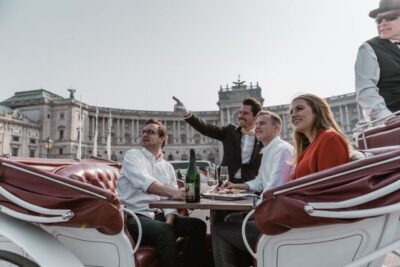
Vienna Horse-Drawn Carriage Ride with Sparkling Wine and Food
Read our review →Browse the lists this tour appears in