
Reviewed · SCHONBRUNN PALACE TOURS
Schönbrunn Palace and Gardens Tour
Schönbrunn is more than a grand palace tour. It is a close look at how the Habsburgs lived, worked, married, quarreled, raised children, and displayed power. A historian guide leads you through the gardens and roughly 40 palace rooms, including the music room where six-year-old Mozart performed for the imperial family.
I like the small-group format, which gives the guide room to adjust the pace and answer questions. I also like the human stories: Maria Theresa’s huge family, Franz Joseph’s duty-bound life, and Sisi’s dislike of court ritual make the rooms easier to remember. The main drawback is price. At $181.41 per person, you still pay separately for palace and park admission.
Key points to know before booking
- A historian leads the visit: Guides named in the feedback include Katarina, Biljana, Kristina, Elisabeth, Selin, Stephan, Wolfgang, Annelie, and Edward Mueller.
- The group is designed to stay small: It is advertised as limited to six people, with a stated maximum of eight.
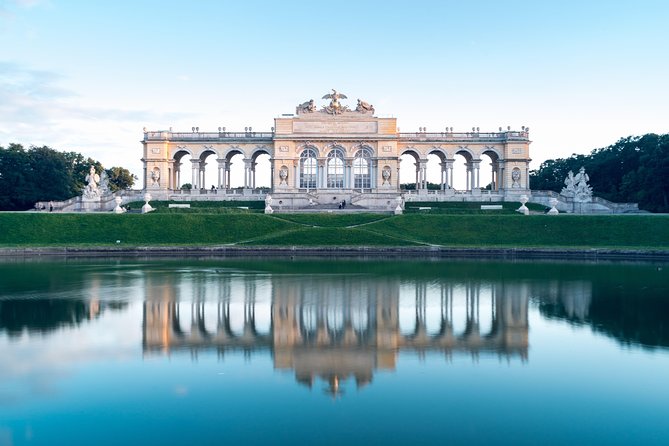
- The gardens come first: Allow about 30 minutes for the formal grounds and the walk toward the Gloriette.
- The palace rooms carry the main weight: Expect about 40 rooms, including the Great Gallery, Yellow Salon, Millions Room, and Maria Theresa’s music room.
- Admission is extra: Your guide helps purchase Schönbrunn Palace and Park tickets, so do not assume the tour price covers entry.
- The timing is flexible but fixed: Choose a 10 a.m. or 2 p.m. departure, and arrive a little early at the Group Center Schönbrunn.
Why Schönbrunn deserves a place in your Vienna plans
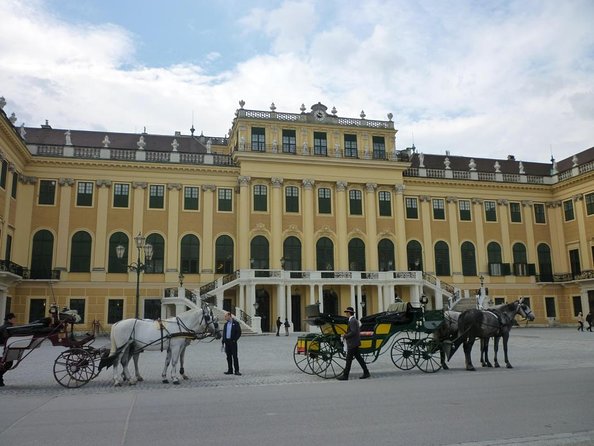
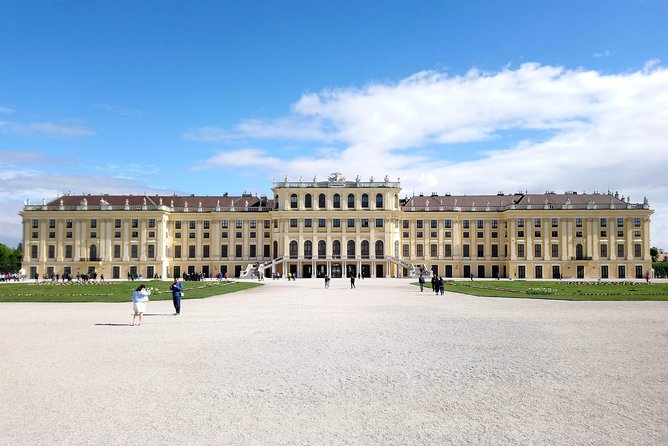
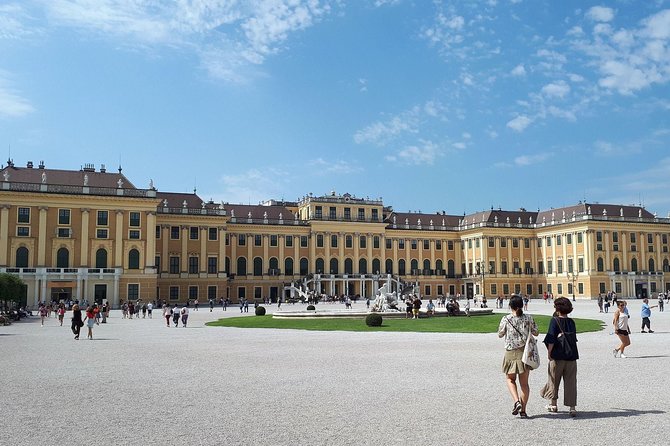
Schönbrunn was the Habsburg family’s summer residence, but that simple label does not quite capture its role. Under Empress Maria Theresa, it became a setting for court life, official ceremonies, family routines, and imperial display. The palace was built on a scale meant to rival Versailles, yet the most interesting parts are often personal rather than grand.
You see the public face of monarchy in the ceremonial rooms. Then you turn a corner and find private apartments, family offices, children’s decorations, and rooms shaped by daily habits. That contrast is the reason I prefer a live guide here to wandering through with only room labels.
The tour is especially useful if you want the Habsburg story explained as a family saga rather than a string of dates. Maria Theresa ruled from 1740 to 1780 and had 16 children. Franz Joseph married the Bavarian princess Elizabeth, better known as Sisi, in 1854. Their marriage, court duties, and separate temperaments give the palace a steady thread.
You will not simply hear that a room is Rococo. You should learn who used it, why it was decorated that way, and what it says about rank and power. That is where the small group matters.
More Schonbrunn Palace Tours in Vienna:
- Vienna: Schönbrunn Palace & Gardens Skip-the-Line Tour
★ 4.7 · 7,739 reviews - Vienna: Skip-the-Line Schönbrunn Palace & Gardens Tour
★ 4.8 · 5,411 reviews - Vienna: Bus & Schönbrunn Palace Skip-the-Line Guided Tour
★ 4.3 · 2,802 reviews
Starting at the gardens and the Gloriette
Meet your guide and group at the Group Center Schönbrunn, at Schloss, 1130 Wien. The meeting point can be confusing. One helpful detail is that the brown building may not be obvious from across the street, so arrive early and check carefully rather than walking straight toward the palace ticket office.
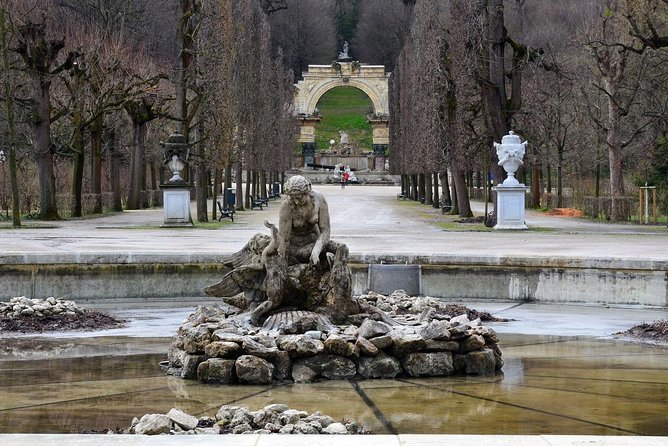
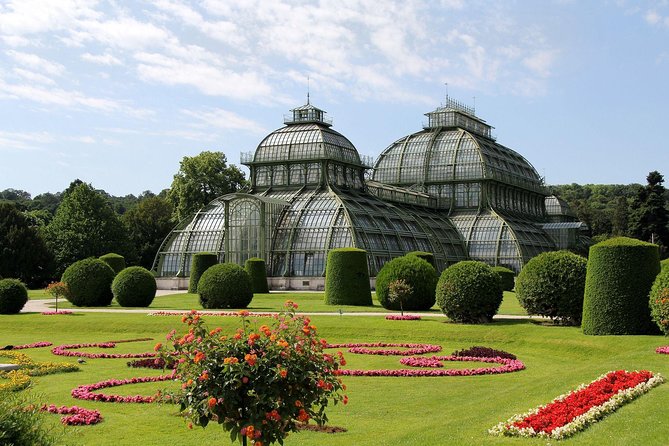
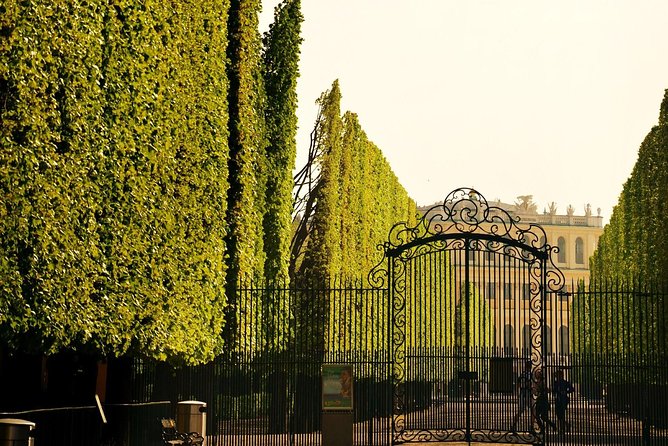
The garden portion takes about 30 minutes. It begins with the formal Baroque design around the palace, where clipped greenery, straight paths, fountains, and architecture work together. The point is not simply to admire flowers. Your guide explains how the grounds were planned to frame the palace and express authority.
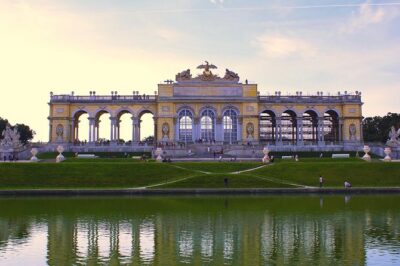
The walk toward the Gloriette gives you a useful change of scale. The triumphal arch sits on a hill above the palace and looks across Vienna’s wooded outskirts. The view is one of the best reasons not to treat the gardens as a quick prelude to the interior.
You need to judge the walk by your weather and energy. In autumn, the gardens can still be beautiful even without summer flowers. In winter, cold weather may make the outdoor section less appealing, and the grounds will naturally feel less colorful. One guest skipped the gardens in winter for that reason. That is a fair choice, but ask your guide what you would miss before deciding.
The tour also uses the gardens to explain Maria Theresa’s political skill. Schönbrunn’s park opened to the public in 1779, a notable gesture at a time when royal grounds were often closely controlled. The move helped present the empress as connected to her subjects, even as the palace remained a center of imperial ceremony.
Inside the palace: power in room after room
The interior portion lasts about two and a half hours in the stated itinerary, while the overall tour is described as approximately three hours. The difference likely reflects time spent gathering the group, buying admission, and moving between the grounds and palace. In practical terms, plan on a substantial half-day commitment, not a quick one-hour look.
The tour covers around 40 rooms. That is a lot of ground, but the guides are praised for keeping a sensible pace and explaining how the rooms were used. This helps prevent Schönbrunn from becoming a blur of gold trim, painted ceilings, and furniture.
You begin to understand the court’s public machinery in rooms such as the Great Gallery and Hall of Ceremonies. These spaces were made for events, receptions, and formal display. The Hall of Ceremonies also recalls major celebrations, including the wedding of Crown Prince Joseph, shown in scenes painted by Martin van Meytens.
The Yellow Salon offers another stop among the Rococo state rooms. The color and decoration are attractive, but the larger lesson is how an imperial residence used repeated visual signals to reinforce rank. Every room had a job. Some welcomed important people, some hosted meals, and others supported the private life of the ruling family.
The dining room brings the court’s rituals down to the table. Precious tableware and special imperial napkins formed part of the performance. Even details that seem fussy today helped show that a state dinner was not an ordinary meal.
Franz Joseph, Sisi, and the private side of monarchy
The Franz Joseph and Elisabeth Apartments are among the most useful rooms for making the palace personal. Franz Joseph became emperor as a young man and spent much of his life tied to duty and administration. Sisi, who had grown up in Bavaria, disliked the strict ceremonies and ornate court setting that surrounded her.
As you move through the apartments, the palace begins to feel less like a fairy-tale home and more like a workplace built around rules. The couple’s different temperaments help explain why royal marriages could be strained even when the rooms looked perfect.
Franz Joseph’s private suite is an important counterpoint to the grand galleries. It shows that the emperor’s daily world was not only banquets and ceremonies. The guide can place his personal rooms beside the public spaces, helping you see how a monarch moved between ordinary routine and theatrical state duties.
Sisi’s story is familiar in Vienna, sometimes too familiar. A good guide keeps it from becoming a collection of romantic legends. The best parts connect her dislike of court life to the actual spaces and rituals she had to endure.
Same Alps, a completely different kind of day:
- Vienna: Vivaldi’s Four Seasons Concert in Karlskirche
★ 4.7 · 14,951 reviews - Vienna: Spanish Riding School Training
★ 3.9 · 9,281 reviews - Vienna: Skip-the-cashier-desk-line Giant Ferris Wheel Ride
★ 4.5 · 7,859 reviews - Vienna: Light of Creation Votive Church Immersive Light Show
★ 4.8 · 6,779 reviews
Maria Theresa’s rooms and the Mozart connection
Maria Theresa’s rooms give the tour its strongest family dimension. The palace preserves memories of children growing up in a huge royal household, including their lessons, illnesses, summer activities, and early deaths. The story is grand, but it is also domestic and sometimes sad.
The Porcelain Room, used as Maria Theresa’s office, is a particularly memorable stop. It imitates precious china and includes drawings made by imperial children. That detail says a great deal about the family’s education and about the way the palace could turn even a child’s artistic work into part of court decoration.
The Gobelin Salon and Feketin Room add more layers to the empress’s world. The Hall of Ceremonies returns you to the official side of her reign, while the smaller rooms suggest how she organized work and family life.
Then comes the music room connected with Mozart. At six years old, he performed before royalty there. You do not need to be a serious classical music fan to appreciate the scene. A child prodigy playing for an imperial family turns a beautiful room into a place with a clear human event attached to it.
Several guides add small stories and visual aids. Wolfgang brought extra photographs and material, and Annelie used maps, drawings, and pictures to clarify the setting. The quality of that extra material will depend on your guide, but it can make the chronology much easier to follow.
Rococo decoration and the Millions Room
The Millions Room is one of Schönbrunn’s most lavish interiors. Its name comes from the enormous sum paid for the room in gold ducats. Indo-Persian miniatures, Rococo frames, and carved rosewood from the Antilles create a display of international materials and imperial wealth.
This is a good place to consider what the palace was trying to communicate. The room was not merely decorated because the court liked pretty things. It showed access to distant goods, skilled craftspeople, money, and a political world that reached far beyond Vienna.
The palace can feel repetitive if you rush through it alone. One ornate room follows another, and after a while the details blur. A guide who gives each room a clear purpose makes the difference between looking and seeing.
I would pay attention to the contrast between the formal spaces and the rooms with more family associations. The grand rooms tell you how the Habsburgs wanted to be seen. The offices, bedrooms, and children’s decorations tell you how the household functioned behind the ceremony.
What the small group changes
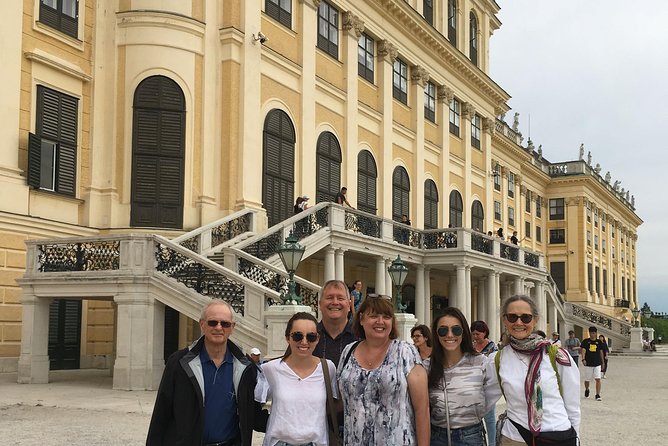
A group advertised for six people is a strong reason to consider this tour. The stated maximum is eight, so the final size may vary, but this is still much more intimate than a large coach group.
Small numbers let you hear a guide more easily and ask questions without stopping a crowd. They also make it possible for the guide to adjust the pace. One guide, Biljana, was specifically praised for paying attention to the needs of older participants, while other guides checked on interests at the start and shaped the explanations accordingly.
That personal approach is the tour’s strongest feature. Katarina, Biljana, Kristina, Elisabeth, Selin, Stephan, Wolfgang, Annelie, and Edward Mueller are all named as guides who made a strong impression. Their styles will differ, but the consistent pattern is clear: the experience depends heavily on who leads it.
There is one practical caution. One person found it hard to hear during the palace visit and felt an audio tour might have been better. If you have hearing concerns, stay close to the guide and say so at the beginning. The palace can be busy, and even a good explanation is useless if you cannot catch it.
Price, tickets, and the value question
The listed price is $181.41 per person, before the Schönbrunn Palace and Park admission ticket. That makes this a premium tour, not a budget way to enter the palace.
The price can make sense if you value a historian guide, a very small group, and a structured explanation of the rooms and family. The tour saves you from building your own chronology and helps connect the palace, gardens, Maria Theresa, Franz Joseph, Sisi, and Mozart in one visit.
It makes less sense if you mainly want to walk through at your own speed or are happy with an audio guide. You are paying for interpretation and personal attention, not transport, food, hotel pickup, or admission.
A key ticket rule deserves attention. Your guide assists with buying the Schönbrunn Palace and Park tickets. Do not purchase separate tickets on your own without checking first, especially if you have a Vienna Card. A separate purchase may produce a later palace entry time and could cause you to miss the first part of the tour.
The activity includes only the guide. Hotel pickup and drop-off are not included. Public transportation is nearby, and the meeting point is at the palace, so you must make your own way there.
Choosing 10 a.m. or 2 p.m.
The two departure choices make this easier to fit into a Vienna day. The 10 a.m. start leaves the afternoon open for the Hofburg, museums, or central Vienna. The 2 p.m. option works well if you want a slower morning, though the gardens may feel less appealing late in the day during colder or darker seasons.
Because the tour ends inside the palace after the main visit, you can continue exploring on your own if you still have energy. The gardens are extensive, and a café stop near the end can be a pleasant way to finish.
Allow extra time before the start. You need to locate the meeting point, find your guide, and handle admission. Arriving just at the departure time creates needless stress.
Who will get the most from this tour
I would choose this tour if you want context, family stories, and a guide who can answer questions. It suits first-time visitors to Schönbrunn, people interested in the Habsburg dynasty, and anyone who finds palace rooms hard to understand without explanation.
It also works well for families and mixed-age groups. One guide kept younger and older participants involved with folklore, historical facts, and stories rather than giving only a formal lecture.
You may prefer a self-guided visit if you want silence, photography time, or complete control over your route. The price is difficult to justify for someone who only wants a quick look at the palace interiors.
The gardens deserve more attention than the schedule may suggest. If the weather is decent, follow the route toward the Gloriette and take in the view. If it is cold, ask how much of the outdoor portion remains before deciding how much time to spend outside.
Should you book Schönbrunn Palace and Gardens Tour?
Book it if the historian-led storytelling and small group are worth paying for. The palace is impressive on its own, but the guide gives the rooms a sequence and a purpose. The Mozart room, Maria Theresa’s family story, Sisi’s discomfort with court life, and the Millions Room all become stronger when linked together.
Skip it if you want the lowest possible cost, plan to use an audio guide, or dislike fixed pacing. Also remember that admission is extra and that the meeting point can be hard to identify.
For most first visits, I think the tour earns its place, provided you arrive early, let the guide handle the tickets, and treat the gardens as part of the visit rather than a decorative extra.
FAQ
How long does the Schönbrunn Palace and Gardens Tour last?
The tour lasts approximately two and a half to three hours. The garden portion is listed at about 30 minutes, followed by roughly two and a half hours at the palace.
What departure times are available?
You can choose either a 10 a.m. or 2 p.m. departure.
Is palace admission included in the tour price?
No. Schönbrunn Palace and Park admission is not included. The guide helps you purchase the required entrance tickets.
Where does the tour begin?
The meeting point is the Group Center Schönbrunn at Schloss, 1130 Wien, Austria. Arrive a little early because the brown building can be difficult to identify from across the street.
How many people can join the tour?
The tour is advertised as a small group limited to six people, while the stated maximum is eight travelers.
Can I cancel for a full refund?
Yes. You can cancel at least 24 hours before the local start time for a full refund. Cancellations or changes made less than 24 hours before the start are not refunded or accepted.
Just added around Vienna
- World War II History Vienna Old Town Private Walking Tour★ 4.8 · 9 reviews
- From Krems: Wachau Valley River Cruise on the Danube★ 4.6 · 95 reviews
- Vienna: Winery and Wine Tasting Tour with a Wine Expert★ 5.0 · 5 reviews
- Vienna: Wine Tasting E-Bike Tour★ 4.9 · 46 reviews
- Vienna: Wine Tasting at Schönbrunn Palace★ 4.3 · 71 reviews
- Vienna: Wine Tasting Tour★ 4.8 · 61 reviews
- Vienna: Wiener Schnitzel and Strudel Cooking Class★ 4.9 · 126 reviews
- Vienna Urban Art Tour: Explore a different side of Vienna!★ 3.8 · 14 reviews
Schonbrunn Palace Tours, compared.
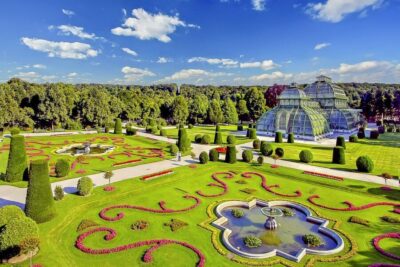
Schönbrunn Palace & Gardens Skip-the-Line Tour
Read our review →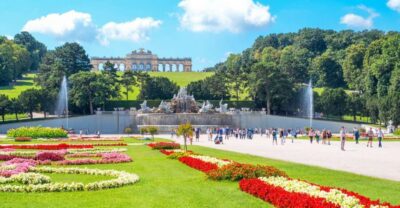
Skip-the-Line Schönbrunn Palace & Gardens Tour
Read our review →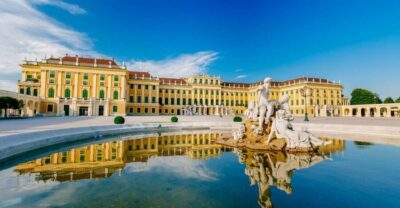
Bus & Schönbrunn Palace Skip-the-Line Guided Tour
Read our review →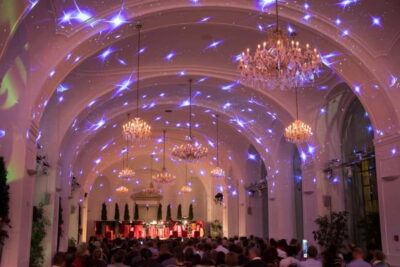
Skip the Line Schönbrunn Palace and Gardens Guided Tour
Read our review →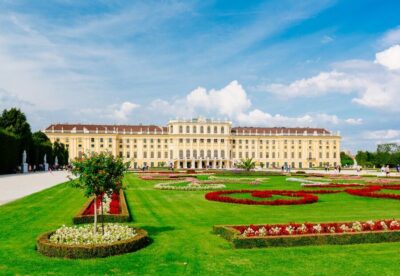
Schönbrunn Palace & Garden Skip-the-Line Guided Tour
Read our review →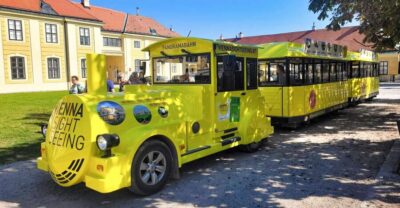
Panorama Train Tickets to explore Schönbrunn Palace
Read our review →
Skip-the-Line Schönbrunn Palace and Gardens Tour
Read our review →Browse the lists this tour appears in