
Reviewed · SCHONBRUNN PALACE TOURS
Skip the Line:Imperial Carriage Museum by Schönbrunn Kaiserliche Wagenburg Wien
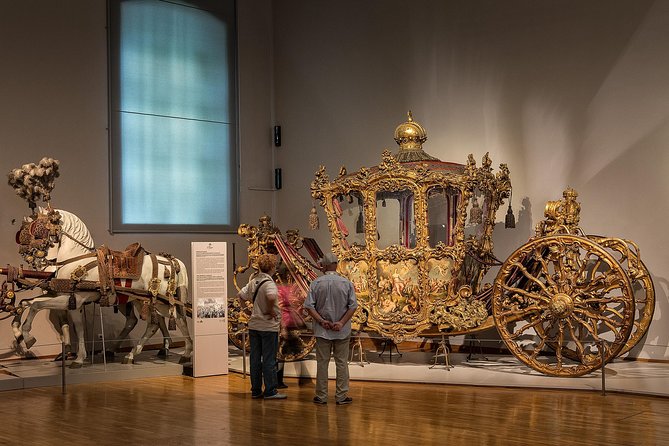
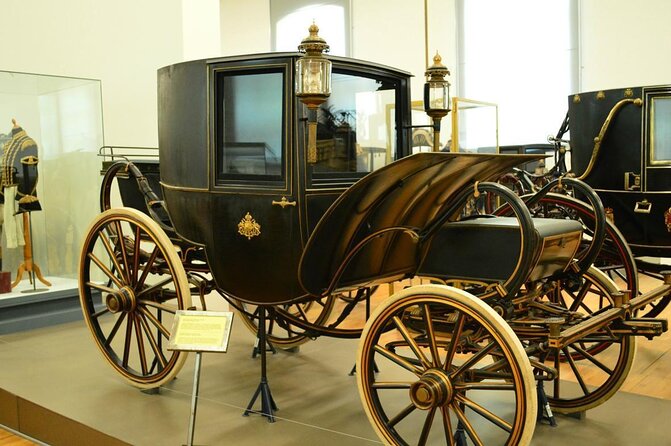
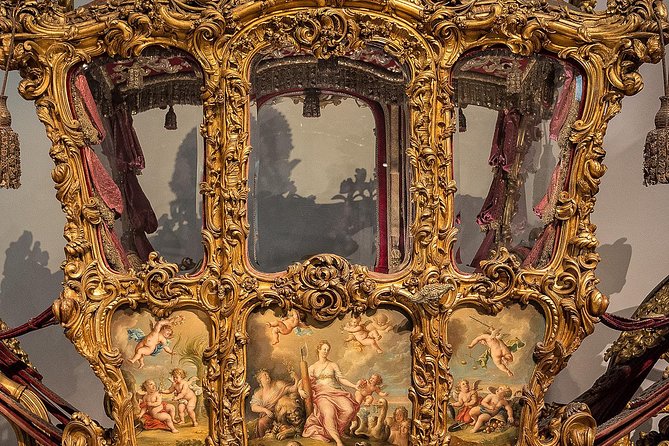
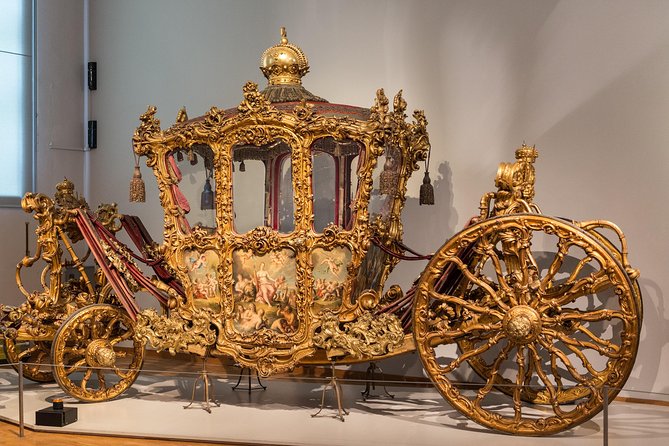
The most striking sight here is the Baroque Imperial Coach, a huge ceremonial vehicle built for royal display rather than comfort. Around it, you’ll find coaches used by Maria Theresia, Napoleon, Franz Joseph, and other Habsburg rulers, along with small children’s carriages and somber vehicles tied to royal funerals.
I like the museum for two reasons: the collection is far larger than many first-time visitors expect, and the Sisi Trail turns a room of grand vehicles into a personal story. The main drawback is the narrow display space. A large group can make it hard to see the carriage being discussed, so you’ll get more from the visit if you arrive when it is quiet.
Key points
- The Baroque Imperial Coach is the museum’s grandest object and the clearest symbol of Habsburg ceremony.
- The Sisi Trail follows Empress Elisabeth from her wedding to her assassination and funeral.
- Rare personal items include Sisi’s black court dress, only surviving saddle, and reconstructed riding chapel.
- Self-guided interpretation comes through an audio guide, detailed exhibit text, and informational films.
- A one-hour visit works well, though you can spend 90 minutes if you read closely.
- The $14.48 ticket is good value for a focused museum visit near Schönbrunn Palace, especially for history fans.
Why Vienna’s Carriages Tell the Story of an Empire
Royal carriages were more than grand transport. They showed rank, wealth, ceremony, and political power. A ruler arriving in an ornate coach was making a public statement before saying a word.
That is what makes the Imperial Carriage Museum more interesting than a simple collection of old vehicles. Each coach hints at how the Habsburg court worked. Some were used for coronations and formal processions. Others were built for long journeys, private travel, or the everyday needs of royal children.
The museum is beside Schönbrunn Palace, so it fits naturally into a palace day. You can visit after walking through the gardens or after touring the palace rooms. It is also a useful choice if you want a quieter indoor stop after the palace crowds.
I would not treat the advertised 45 minutes as a strict limit. You can move through the main collection in that time, especially if you focus on the largest coaches. Give yourself one hour to 90 minutes if you want to read the explanations, watch the films, and follow the Sisi Trail carefully.
More Schonbrunn Palace Tours in Vienna:
- Vienna: Schönbrunn Palace & Gardens Skip-the-Line Tour
★ 4.7 · 7,739 reviews - Vienna: Skip-the-Line Schönbrunn Palace & Gardens Tour
★ 4.8 · 5,411 reviews - Vienna: Bus & Schönbrunn Palace Skip-the-Line Guided Tour
★ 4.3 · 2,802 reviews
Entering the Kaiserliche Wagenburg Wien
Your ticket covers admission to the Imperial Carriage Museum. There is no live guide included, so you explore at your own pace with the audio guide and the museum’s written information. A private guide can accompany you if you arrange one separately.
The museum is near public transportation, which makes it easy to add to a Schönbrunn visit. Opening hours are listed as 10:00 a.m. to 4:00 p.m. every day throughout 2026. Since the museum closes relatively early, check your timing before spending the whole morning at the palace.
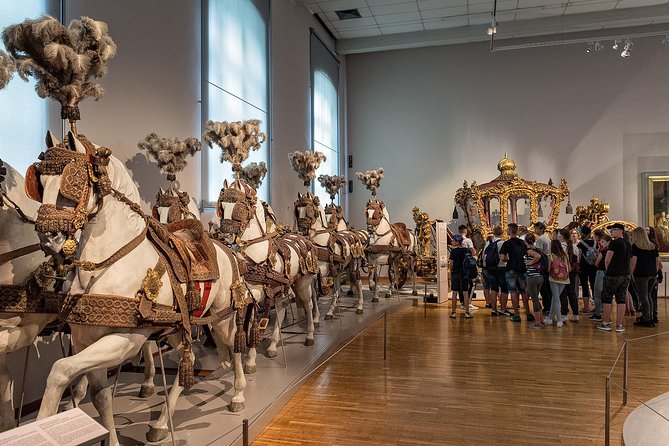
The displays are arranged so you can see the carriages at close range while reading about their owners and uses. The narrow passages are worth keeping in mind. If a group gathers around one object, your view may be blocked, and it can be difficult to move past people without missing part of the explanation.
For that reason, late afternoon can be a smart time to visit. A 4 p.m. arrival may mean less crowding inside, although you will need to move at a good pace because of the closing time.
The Imperial Coach and the Theater of Royal Power
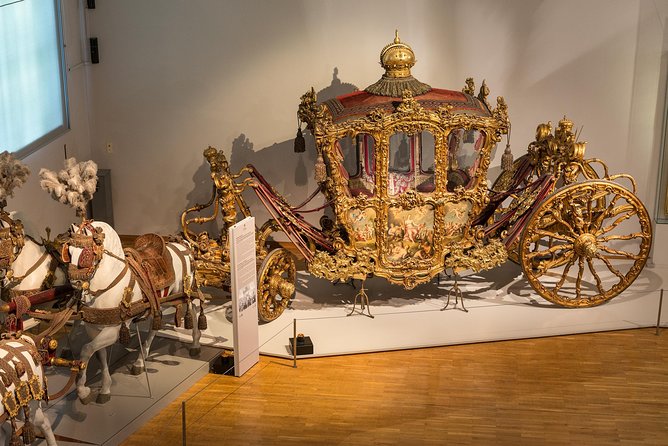
Start with the grand ceremonial vehicles. The Baroque Imperial Coach is the obvious star, with the scale and decoration you expect from a vehicle made for the imperial court.
It was not designed as a practical family car. Its purpose was spectacle. Imagine the coach appearing during a formal procession, surrounded by uniforms, horses, and court ceremony. The vehicle helped turn a journey into a public performance.
The collection also includes exquisite state carriages and more comfortable traveling coaches. This contrast is useful. You can see the difference between a vehicle made to impress a crowd and one intended to carry royals across longer distances.
The carriages associated with Maria Theresia, Napoleon, and Franz Joseph give the collection a wider reach than the Habsburg name alone suggests. You are not looking at one period or one style. The exhibits cover different rulers, different occasions, and different levels of royal life.
I especially like the children’s carriages. They soften the formal mood of the museum and make the royal family feel less distant. These smaller vehicles were charming, but they also remind you that court life shaped children from an early age.
Following Sisi from Wedding to Funeral
The Sisi Trail is the museum’s most personal route. It follows Empress Elisabeth from her marriage through her public life and finally to her tragic death.
You begin with the coach used when Elisabeth arrived as an imperial bride. From there, the displays connect her life to specific carriages, clothing, portraits, paintings, and personal objects. This gives the visit a clear sequence instead of leaving you to compare vehicles without context.
One of the strongest objects is the golden Imperial Coach used at her coronation as queen of Hungary. It represents the public Elisabeth, presented in ceremony and royal splendor.
The museum then shifts toward more intimate details. You can see her black robe with its extremely long train, made for her by Fanny Scheiner around 1885. The dress is linked to Elisabeth’s famous slender figure and tiny waist, an image that became central to the Sisi legend.
The display also includes the carriage Elisabeth left only minutes before her assassination in Geneva. That detail gives the vehicle an unusual emotional weight. It is still an object of transport, but it is also tied to the final moments of her life.
The sequence ends with the impressive black hearse that carried her to her burial. The movement from wedding coach to funeral carriage gives the Sisi Trail a strong beginning, middle, and end. If you have limited time, this is the section I would not skip.
A few more Vienna trips to weigh up
- Vienna: Skip-the-Line Sisi Museum, Hofburg and Gardens Tour
★ 4.8 · 5,918 reviews - Vienna Kunsthistorisches Museum Day Admission Ticket
★ 4.6 · 3,690 reviews - Tickets for the Albertina Exhibitions
★ 4.7 · 2,126 reviews - Vienna: Chocolate Workshop in Chocolate Museum w/ Tasting
★ 4.5 · 1,802 reviews
Sisi’s Saddle, Horses, and Private Image
Elisabeth was famous for her riding skill, and the museum shows the only surviving saddle used by her. That object changes the way you see her.
The court portraits and ceremonial coaches present Sisi as an empress. The saddle points to the person behind that public image, a woman closely connected to horses and riding. The museum also reconstructs her riding chapel, with portraits of her favorite horses.
This section works well because it avoids presenting Elisabeth only as a beautiful royal figure. Her clothing and portraits show the image created around her, while the saddle and horse portraits suggest her private interests and strong personality.
You will also see original objects connected to her life, not just large vehicles. These smaller pieces reward a slower visit. The carriages catch your eye first, but the personal items provide the details that make the story stick.
If you are interested in Sisi, allow extra time here. The displays can be read quickly, but the story is more satisfying when you pause at each stage of her life.
How the Audio Guide and Films Shape the Visit
This is a self-guided museum experience, not a scheduled walking tour. That gives you freedom, but it also means you need to decide how much information you want.
The audio guide helps explain the rare artifacts as you move around. Detailed text panels are also available, and informational films add background to the displays. If you prefer to read, you can ignore the audio and focus on the signs beside each carriage.
That flexibility is one of the museum’s strengths. You can make a quick 45-minute visit by concentrating on the largest vehicles and main Sisi objects. You can also spend 90 minutes reading the panels and watching the films.
The amount of light is not perfect in every area. Some objects may be less clearly lit than you would like, particularly if you are trying to study fine details. Take your time rather than relying only on photographs.
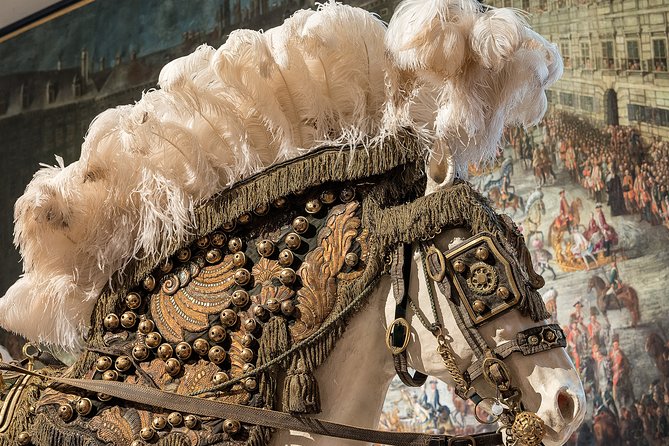
Photos are allowed, which is useful for remembering small details after the visit. Still, do not let photography replace looking closely. The paintwork, fittings, interior details, and scale of the coaches are easier to appreciate in person than in a quick snapshot.
Planning the Visit Around Schönbrunn Palace
The museum works best as part of a larger Schönbrunn day. You can tour the palace first, walk through the gardens, and then visit the carriages when you want a break from the open air.
It is only a short addition to the palace area, but it feels separate from the main palace experience. That separation can be a benefit. The palace and gardens can draw heavy crowds, while the carriage museum often feels calmer.
Do not assume that another Schönbrunn admission pass includes this museum. One important practical point is that some combination passes require an additional payment for the carriage collection. Check exactly what your pass covers before buying a separate ticket.
At $14.48 per person, the admission is reasonable if you enjoy royal history, historic vehicles, costume, or Sisi. It is less compelling if you are rushing through Vienna and have no interest in court life. The value comes from the number of objects and the quality of the story, not from the length of the visit alone.
A family can also find plenty to look at here. The children’s coaches provide an easy entry point for younger visitors, while the huge Imperial Coach and black hearse offer memorable visual contrasts.
Group Size, Crowding, and Access
The experience is listed for a maximum of 10 travelers, but conditions inside can still depend on other visitors arriving at the same time. The narrow hallways mean a large cluster around one carriage can become uncomfortable.
If a private guide joins you, ask the guide to keep the group moving in smaller sections. Otherwise, use the audio guide and read the panels at your own pace. You may understand more by stepping aside, examining the object first, and returning to the text once the space clears.
Most people can participate, and the museum is near public transportation. Transfers are not included, so you make your own way to Schönbrunn.
The ticket is mobile, which is convenient, though make sure it scans properly at the entrance. A ticket acceptance issue has occurred before, so keep your booking confirmation ready on your phone and allow a little patience at the entry desk if the scan does not work immediately.
Who Will Get the Most From This Museum?
I would recommend this experience most strongly to:
- History fans who want a closer look at Habsburg rulers and court ceremony.
- Sisi enthusiasts interested in her life, clothing, horses, and final journey.
- Museum visitors who enjoy objects with a clear human story.
- Families looking for a compact indoor attraction near Schönbrunn.
- Palace visitors who want more than rooms, gardens, and formal portraits.
- Photographers who appreciate ornate coaches and unusual historic objects.
You can still enjoy the museum without knowing much about Austrian history. The objects are visually strong, and the explanations provide a basic path through the collection.
I would be more cautious about recommending it if you have only a few hours in Vienna and already plan several major museums. The collection deserves attention, but it is specialized. It focuses on royal transport and court life rather than offering a broad introduction to Austria.
The museum is also not the best place for a rushed group visit. Narrow display areas and large clusters can make the experience frustrating. A smaller party and a slower pace will serve you better.
Cancellation and Booking Details
The ticket costs $14.48 per person and includes entrance. It is generally booked well ahead, with an average advance booking time of about 60 days, so reserve early if your Schönbrunn day is fixed.
Free cancellation is available until 24 hours before the experience start time. Cancellations made less than 24 hours ahead are not refunded, and changes within that same period are not accepted. Cutoff times use Vienna’s local time.
Should You Book the Imperial Carriage Museum?
Book it if you want to see the material side of Habsburg power: the coaches, clothing, royal objects, and vehicles connected with major ceremonies and tragic events.
My strongest reason to go is the combination of scale and personal detail. The Imperial Coach delivers the grandeur, while Sisi’s saddle, dress, wedding coach, coronation coach, and funeral carriage give the collection an intimate thread.
Plan for about an hour, arrive with enough time before the 4 p.m. closing, and avoid the busiest period if you want a clear view of the displays. At $14.48, it is a fair add-on to Schönbrunn, especially if you have already paid to visit the palace and want a quieter, focused museum nearby.
If ornate royal objects leave you cold, spend your time elsewhere in Vienna. If they make you curious about the people who used them, this small museum deserves a place in your Schönbrunn plans.
FAQ
Where is the Imperial Carriage Museum located?
The museum is near Schönbrunn Palace in Vienna, Austria, and is close to public transportation.
What does the ticket include?
The ticket includes entrance to the Imperial Carriage Museum.
Is a guide included?
No. A live guide is not included, though you can visit with a private tour guide. An audio guide and detailed exhibit information are available for the self-guided visit.
How long does the visit take?
The stated duration is approximately 45 minutes. If you read the explanations and watch the informational films, plan for about one hour to 90 minutes.
What are the opening hours?
The museum is open daily from 10:00 a.m. to 4:00 p.m. The listed hours apply from January 1 through December 31, 2026.
What can I see on the Sisi Trail?
The Sisi Trail follows Empress Elisabeth from her marriage to her death. It includes her wedding coach, children’s carriages, golden coronation coach, the carriage she left shortly before her assassination, and her black funeral hearse, along with personal objects and portraits.
Can I cancel the booking?
Yes. You can cancel for a full refund up to 24 hours before the experience start time. Cancellations or changes made less than 24 hours before the start time are not accepted for a refund.
More Skip the Line in Vienna
- Vienna: Skip-the-Line Entrance Ticket to the Danube Tower
★ 4.5 · 2,303 reviews - Vienna: Skip the Line Schönbrunn Palace and Gardens Guided Tour
★ 4.5 · 1,540 reviews - Vienna: Schönbrunn Palace & Garden Skip-the-Line Guided Tour
★ 4.1 · 1,240 reviews - Vienna: Skip-the-Line Schönbrunn Palace and Gardens Tour
★ 4.8 · 1,089 reviews
Just added around Vienna
- Ottakringer Brewery tour★ 4.0 · 6 reviews
- New Hofburg Palace Tour House of Habsburg★ 4.5 · 5 reviews
- Private Van & Walk Tour – One Perfect Day in Vienna★ 5.0 · 21 reviews
- True Crime mobile puzzle rally Vienna★ 4.0 · 3 reviews
- Vienna Naschmarket Food Tasting Tour★ 4.0 · 30 reviews
- Vienna Nightlife Experience: Food, Wine, Cocktails & Vibes★ 5.0 · 119 reviews
- Myth Mozart★ 4.0 · 80 reviews
- ( Night Tour ) With Private Guide + wine or prosecco★ 4.0 · 12 reviews
Schonbrunn Palace Tours, compared.
Schönbrunn Palace & Gardens Skip-the-Line Tour
Read our review →
Skip-the-Line Schönbrunn Palace & Gardens Tour
Read our review →
Bus & Schönbrunn Palace Skip-the-Line Guided Tour
Read our review →
Skip the Line Schönbrunn Palace and Gardens Guided Tour
Read our review →
Schönbrunn Palace & Garden Skip-the-Line Guided Tour
Read our review →
Panorama Train Tickets to explore Schönbrunn Palace
Read our review →
Skip-the-Line Schönbrunn Palace and Gardens Tour
Read our review →Browse the lists this tour appears in