Reviewed · TOURS
Small Group Tour: Balkans & Central Europe from Athens to Vienna
The big draw here is scale: in 21 days, you move from ancient Greece through Albania, North Macedonia, Kosovo, Montenegro, Bosnia and Herzegovina, Serbia, Hungary, Slovakia, and Austria. You get private transportation and a group capped at 10, so this is a practical way to cover a part of Europe that can be awkward to connect on your own.
I like the mix of major sights and everyday places, especially the family-run food stops in Tirana and the working communities inside Berat Castle. I also like that the route includes less-visited towns such as Gjirokaster, Rahovec, Gjakova, Sremski Karlovci, and Subotica rather than sticking only to capital cities.
The trade-off is pace. You will change hotels often, cross several international borders, and spend plenty of time on the road. The $7,734.19 price is also a serious commitment, particularly because lunches, dinners, drinks, and snacks are extra.
Key points to know before booking
- A 21-day route across 10 countries: Greece, Albania, North Macedonia, Kosovo, Montenegro, Bosnia and Herzegovina, Serbia, Hungary, Slovakia, and Austria are included in one long overland journey.
- A maximum of 10 people: The small group makes border crossings, restaurant stops, and walking tours easier to manage than on a large coach trip.
- Private transport from Athens to Vienna: Hotel pickup in Athens and hotel drop-off in Vienna simplify a route with many border crossings.
- UNESCO sights anchor the trip: Delphi, Meteora, Gjirokaster, Berat, Ohrid, Kotor, Mostar, Dečani, and Buda Castle are among the major cultural stops.
- Food is part of the experience: Tirana includes byrek, qofte, gjize, and raki, while Albania’s Mrizi i Zanave offers a look at farm-based cooking and local products.
- Expect three-star accommodation: Breakfast, tourist taxes, fuel, road taxes, and international car insurance are included, but room prices are based on shared occupancy.
From Delphi’s ruins to Meteora’s sunset
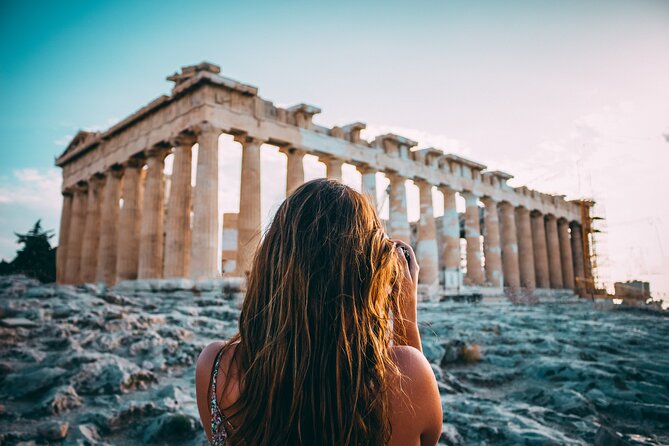
Your tour begins with pickup at your Athens hotel at about 9 a.m. The first day is a strong introduction to Greece, though it is also a long one. Delphi gives you the Temple of Apollo, the Treasury of the Athenians, the theater, the stadium, and the archaeological museum, including the famous Charioteer of Delphi.
You have about an hour at Delphi, so you should expect an overview rather than a slow archaeological study. The site is spread over a hillside, and comfortable shoes will help.
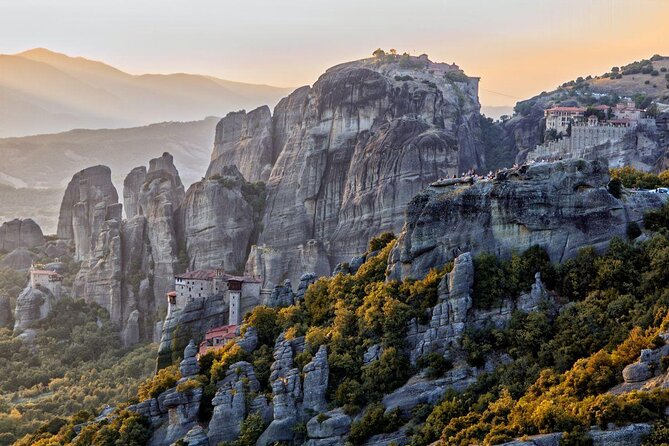
From Delphi, the route continues to Meteora, where monasteries perch on tall rock formations. The scheduled visit lasts about two hours, with time to see the dramatic setting and watch the sunset. This is one of the strongest scenic moments of the entire trip.
On the second day, Ioannina provides a calmer change of pace. You walk through the old town, visit the Byzantine-era castle, and have time for cafés and local food. Ioannina is a useful stop because it gives you a feel for northern Greece before the route enters Albania.
The drive to Gjirokaster comes later that day, so this is not a relaxed, stay-in-one-place holiday. You should be ready for several hours of road time mixed with short walks and sightseeing.
Other Austria days people book alongside this one:
- Vienna: Vivaldi’s Four Seasons Concert in Karlskirche
★ 4.7 · 14,951 reviews - Vienna: Spanish Riding School Training
★ 3.9 · 9,281 reviews - Vienna: Skip-the-cashier-desk-line Giant Ferris Wheel Ride
★ 4.5 · 7,859 reviews
Gjirokaster and Berat show Albania at its best
Gjirokaster receives a full day, and it deserves it. The town climbs a steep hillside, with stone houses that look almost fortified. The medieval bazaar leads toward the castle, and the narrow streets give you a clear sense of how the town developed around its defensive position.
The visit to Skenduli House adds something a standard town walk cannot. This preserved house keeps its original character and gives you a closer look at domestic life in Gjirokaster. The castle and old streets can be uneven and steep, so take your time.
The next day brings Berat, known for its rows of hillside windows. Inside Berat Castle, people still live among churches, mosques, and old homes. That detail makes the site feel less like a museum and more like a functioning neighborhood with centuries of history underfoot.
The National Iconographic Museum Onufri adds a worthwhile art stop. Onufri is known for a distinctive red pigment in religious paintings, and the museum helps explain Albania’s church art tradition. You also visit the Gorica neighborhood and its old stone bridge.
I like this portion of the route because it gives you several kinds of Albania: stone mountain towns, religious art, local neighborhoods, and old fortifications. The limitation is that the listed visit times are generally one hour. You will see the important places, but you will not have endless time for every side street or museum room.
Lake Ohrid adds water, monasteries, and quiet
Before entering North Macedonia, the route stops at Drilon National Park and Tushemisht. Drilon is centered on clear spring water, a small lake, and willow trees. Tushemisht offers a village setting and a chance to slow down before the next major sight.
At the Monastery of Saint Naum, you visit a religious complex near the source of the Crni Drim River. The monastery sits beside Lake Ohrid in the Galicica national park area, with clear spring water and mountain views.
Ohrid receives about three hours on the following day. You see the lake, churches including St. John and St. Nicolas, and the Halveti Hayati Tekke. The city is an important Orthodox center, and the traditional claim of 365 churches gives you a sense of its religious importance, even if you will not visit anything close to that number.
This is a valuable part of the trip for anyone who wants more than fortresses and city squares. Lake Ohrid brings open space and a quieter rhythm. Still, the itinerary provides a guided visit rather than a full lake holiday. There is no listed boat trip or extended free afternoon by the water.
Tirana turns sightseeing into a food lesson
Tirana is handled through food and local markets rather than a long list of monuments. You meet a local companion and begin at Tregu Çam, where you try byrek, a baked pastry filled with ingredients such as cheese, meat, or spinach.
The route continues through Çam Bazaar and Pazari i Ri. These markets are useful if you enjoy seeing how people shop and eat, not just photographing grand buildings. You may find clothing, household goods, secondhand items, and food stalls in the same general outing.
Lunch centers on qofte, grilled meatballs with bread. Vegetarians are offered bread with Albanian gjize, a cottage cheese. A taste of raki is also included in the food experience. Drinks and meals are generally not included in the overall tour price, so check carefully which tasting portions are covered on your departure.
Bunk’Art 2 gives the day a serious historical turn. The museum occupies a former nuclear bunker built for Enver Hoxha and senior Communist officials. Its exhibits focus on the Communist army and daily life during the regime.
I especially like this pairing of food and political history. You see modern Tirana through its markets, then confront the country’s recent past underground. The listed time at Bunk’Art 2 is only one minute, which is almost certainly a scheduling error or an extremely brief stop. Confirm the actual visit length before booking if this museum matters to you.
Same Alps, a completely different kind of day:
- Vienna: Schönbrunn Palace & Gardens Skip-the-Line Tour
★ 4.7 · 7,739 reviews - Vienna: Light of Creation Votive Church Immersive Light Show
★ 4.8 · 6,779 reviews - Vienna Spanish Riding School Guided Tour
★ 4.7 · 6,765 reviews - Vienna: Classical Concert in the World-Famous Musikverein
★ 4.6 · 6,673 reviews
Kruja, Prizren, and Kosovo’s old bazaars
Kruja is tied to Albanian resistance against Ottoman expansion, and its position on a rocky mountain slope explains the importance of its castle. The medieval bazaar is one of the best places on the route to shop for handmade souvenirs, including carpets and jewelry.
Inside Kruja Castle, the tour includes local paths once used to leave the stronghold during attacks. This kind of detail can make a walking tour more memorable than a list of dates.
After Kruja, you cross into Kosovo and reach Prizren. Its old town follows the river, with bridges, medieval houses, mosques, and a bazaar known for filigree metalwork. The Sinan Pasha Mosque is the key religious sight, while Kalaja Fortress gives you a broad view over the town.
You get free time in Prizren, which is important after several guided stops. Use it for a meal, coffee, or a slower walk through the old streets. The town is one of the better places on this route for simply wandering without a fixed checklist.
The next day includes Gjakova, with its rebuilt bazaar and artisan shops. Dečani Monastery offers a very different experience, with Orthodox monks still living there and medieval frescoes that earned the site UNESCO status. The monastery’s setting and working religious life add depth to the visit, but access to active religious sites can sometimes involve additional security or dress expectations. The supplied tour details do not specify those rules, so ask your tour leader.
Rahovec completes the Kosovo portion with vineyards and wine culture. Grape growing here reaches back to Illyrian times, and the valley is known for its wine production. A stop here will appeal to you if you prefer local agriculture to another city museum.
Northern Albania and Montenegro bring a coastal turn
The visit to Mrizi i Zanave is one of the most distinctive stops on the route. This agro-tourism farm works with regional products, preserves local food, and has adapted old Communist buildings for storage. You tour the farm, hear how the business created jobs in the surrounding area, and have time for lunch or shopping.
Lunch is not included in the tour price, but this is exactly the sort of place where paying for a meal can be worthwhile. You are supporting a local food business while trying products tied to the area.
In Shkoder, you visit Rozafa Castle, which gives views toward the lake and the rivers flowing toward the Adriatic. The city also carries Venetian architectural influence and a tradition of making carnival masks. The castle visit is scenic, though its old stone surfaces may be difficult if you dislike slopes or uneven footing.
Montenegro begins with a viewpoint over Sveti Stefan. You cannot visit the island because it operates as an exclusive residential resort, but the coastal view makes a quick photo stop.
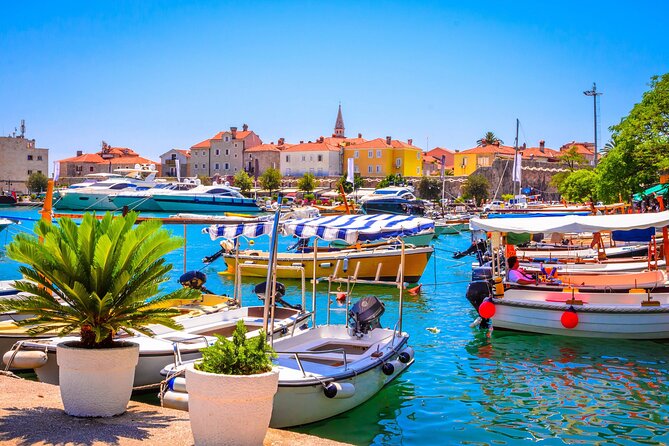
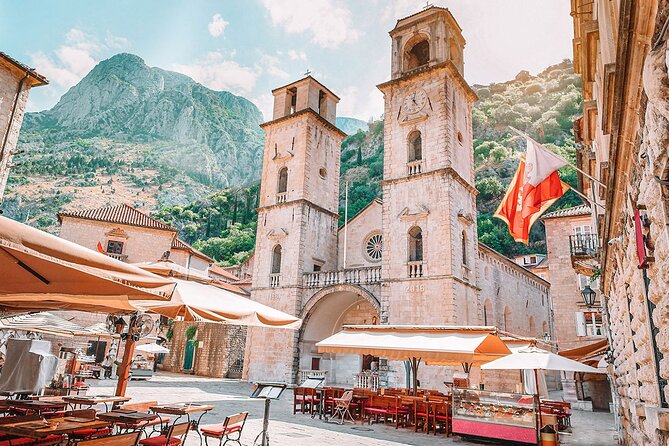
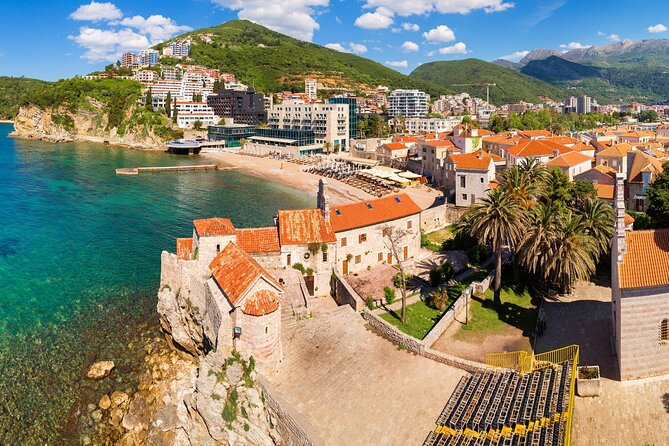
Budva follows, with its walled old town, churches, beaches, newer buildings, shops, and restaurants. Kotor is the stronger historical stop, with a UNESCO-listed old town filled with narrow cobbled lanes and churches such as St. Luke’s.
You get about an hour in each town, so do not expect to climb every fortification or explore the entire bay. This portion works best if you enjoy quick orientation walks and scenic stops.
Mostar and Sarajevo explain Bosnia’s layered past
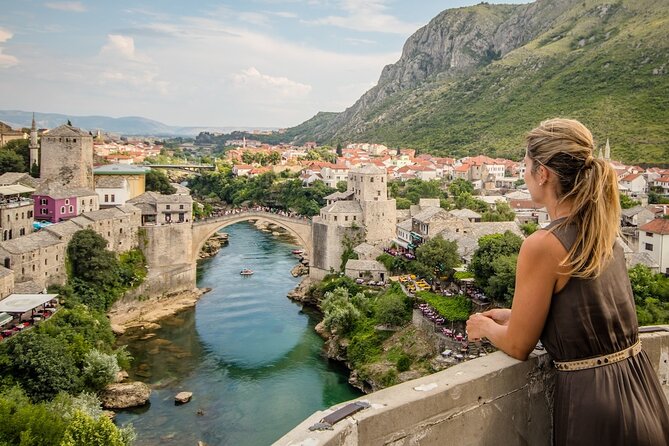
Mostar’s Old Bridge is the main event. Built in the 16th century in Islamic architectural style, Stari Most links the old town across the river and remains one of the most recognizable sights in Bosnia and Herzegovina.
You also walk through the old bazaar, where cobbled lanes, mosques, shops, and bridge views come together. Stones marked with reminders not to forget the past refer to the city’s wartime destruction and rebuilding.
Outside Mostar, Blagaj tekija sits beside blue water at the foot of a cliff. The stop is short, about 30 minutes, but the setting is unusual and gives the day a quieter finish.
Sarajevo requires a different mood. Bullet holes and cannon marks remain visible in parts of the city, and the walking tour covers the medieval Bosnian kingdom, Ottoman quarters, Austro-Hungarian buildings, mosques, churches, and synagogues. The Latin Bridge is included, along with the story of the assassination that helped trigger World War I.
The city walk includes uneven ground and wartime ruins. You should wear sturdy shoes and allow yourself time to process what you are seeing. Sarajevo also gives you free time for local meat dishes and desserts, so do not let the guided portion crowd out a meal.
Serbia combines river views, wine, and city life
On the way to Belgrade, Zvornik offers a lunch stop beside the Drina River. It breaks up the drive and gives you a smaller Serbian town before the capital.
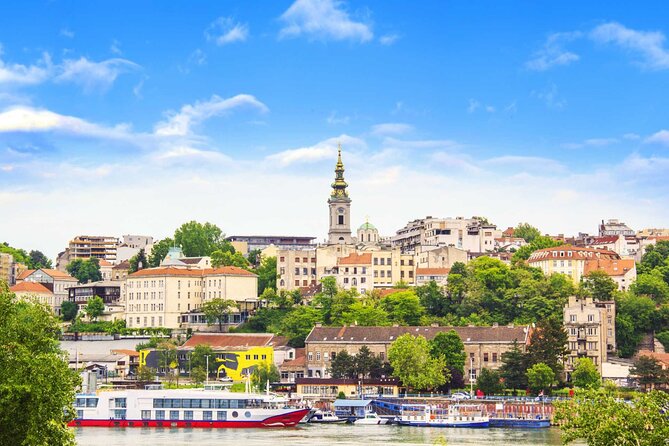
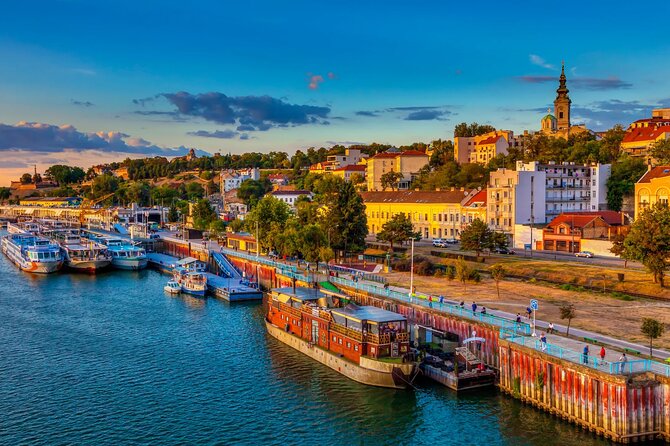
Belgrade begins at the fortress and Kalemegdan Park, located where the Sava and Danube meet. The Pobednik monument and river views make this a strong introduction to the city. The walk continues along Knez Mihailova to Republic Square, the social center of Belgrade.
Sremski Karlovci is a pleasant contrast. Its Baroque center, wine cellars, churches, and Four Lions fountain reflect its role in Serbian culture during the 18th century. You have free time to taste regional wines, though wine purchases and tastings are not listed as included.
Novi Sad offers pedestrian streets, Baroque buildings, cafés, and Petrovaradin Fortress, known as the Gibraltar on the Danube. You stay overnight here, which gives you more breathing room than the shorter stops.
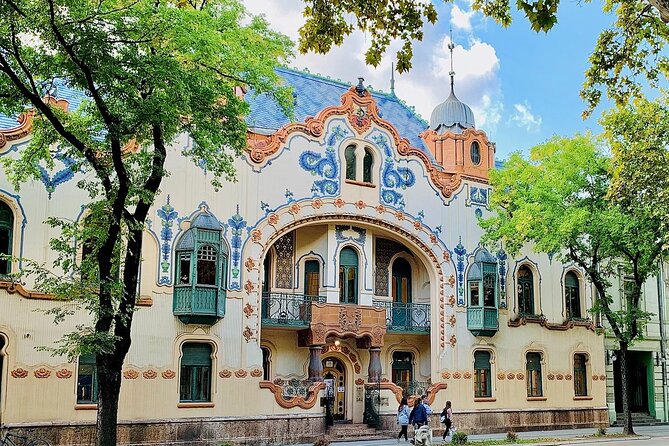
Subotica is the final Serbian town. Its City Hall, colorful architecture, park, fountains, and wide square reflect its Austro-Hungarian past and multicultural character. The three-hour visit is generous by this itinerary’s standards, leaving time for local food and independent wandering before the border crossing into Hungary.
Budapest to Vienna finishes with Central European architecture
Budapest receives a full sightseeing day. You see St. Stephen’s Basilica, the Opera, Parliament, Heroes’ Square, and Fisherman’s Bastion. The Danube divides Buda from Pest, and the itinerary includes Buda Castle, a UNESCO-listed site with views over the city.
There is also free evening time, which is important because Budapest is particularly attractive after dark. You can cross its bridges, walk along the river, or simply enjoy the city’s illuminated buildings without a guide setting the pace.
Győr is a shorter stop on the way west. Its Baroque center, churches, Town Hall tower, Cathedral of the Virgin Mary, synagogue, and pedestrian Baross Gabor Street fit into a compact visit. You also get time for Hungarian food and the locally noted blueberry beer.
Bratislava follows with a walking tour through the Old Town, Michael’s Gate, and Bratislava Castle. The castle sits above the Danube and provides the city view you want from this stop. Free time in a traditional coffee shop gives the day a more relaxed finish.
On day 21, your tour leader drops you at your hotel in Vienna. The tour does not include a Vienna sightseeing program, so plan your Austrian stay separately.
What the $7,734.19 price includes
The cost covers 20 breakfasts, three-star accommodation, private transportation, a professional tour leader, hotel pickup in Athens, hotel drop-off in Vienna, listed entrance tickets, tourist taxes, fuel, road taxes, and international car insurance.
That is a lot of administration handled for you. The value is strongest if you would otherwise need to arrange 20 nights, multiple border crossings, regional transport, and separate guides across 10 countries.
The price is less compelling if you prefer independent travel, low-cost buses, or longer stays in fewer places. You also need to budget for nearly all lunches, dinners, drinks, snacks, souvenirs, and personal spending.
Room rates are based on double, twin, or shared triple and quadruple occupancy. A single room costs an extra 45 euros per night, so solo visitors should add that amount for each overnight.
Who should book this route?
You should consider this tour if you want to see the Balkans but do not want to manage border crossings, changing currencies, driving, parking, or finding hotels in every town. It suits people who enjoy history, food, religious sites, old markets, and long overland journeys.
The small group limit of 10 is a major advantage. It keeps the experience more personal and makes it easier to ask questions or adjust a meal stop, though the exact level of flexibility depends on your tour leader.
This is not the right choice if you want beach time, slow mornings, nightlife in each capital, or detailed museum visits. The pace is active, and several stops last only 30 minutes to one hour.
Final booking advice
I would book this tour for a first visit to the Balkans when convenience matters as much as independence. The strongest parts are Gjirokaster, Berat, Ohrid, Prizren, Sarajevo, Mostar, Sremski Karlovci, and the food-focused stops in Tirana and northern Albania.
Before paying, confirm the hotel names, the actual length of the Bunk’Art visit, which food tastings are included, and the border-crossing schedule. Also ask whether your room will be shared and calculate the cost of meals and the single-room supplement.
Book it if you want a wide introduction to southeastern and Central Europe in one organized trip. Skip it if you would rather spend a week in Albania or Bosnia and let each place unfold slowly.
FAQ
How long is the Athens to Vienna tour?
The tour lasts approximately 21 days, beginning with pickup at a hotel in Athens and ending with hotel drop-off in Vienna.
How many countries does the itinerary visit?
The route visits 10 countries: Greece, Albania, North Macedonia, Kosovo, Montenegro, Bosnia and Herzegovina, Serbia, Hungary, Slovakia, and Austria.
How many people can join the small group?
The tour has a maximum of 10 travelers.
Is transportation included?
Yes. Private transportation, fuel, road taxes, and international car insurance are included. Hotel pickup in Athens and hotel drop-off in Vienna are also included.
Are meals included?
Twenty breakfasts are included. Lunches, dinners, drinks, snacks, and personal food purchases are not included, although specific tasting portions may be part of the planned food activities.
What type of accommodation is provided?
Accommodation and breakfast are provided in three-star hotels. The listed price is based on double, twin, triple, or quadruple room occupancy. Single-room occupancy costs an additional 45 euros per night.
Just added around Austria
- Ottakringer Brewery tour★ 4.0 · 6 reviews
- True Crime mobile puzzle rally Vienna★ 4.0 · 3 reviews
- New Hofburg Palace Tour House of Habsburg★ 4.5 · 5 reviews
- Private Van & Walk Tour – One Perfect Day in Vienna★ 5.0 · 21 reviews
- Vienna Naschmarket Food Tasting Tour★ 4.0 · 30 reviews
- Vienna Nightlife Experience: Food, Wine, Cocktails & Vibes★ 5.0 · 119 reviews
- Myth Mozart★ 4.0 · 80 reviews
- ( Night Tour ) With Private Guide + wine or prosecco★ 4.0 · 12 reviews
Tours, compared.
Schönbrunn Palace & Gardens Skip-the-Line Tour
Read our review →

Skip-the-Line Sisi Museum, Hofburg and Gardens Tour
Read our review →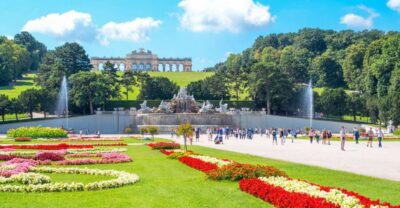
Skip-the-Line Schönbrunn Palace & Gardens Tour
Read our review →
Guided Walking Tour of City Center Highlights
Read our review →