
Reviewed · COOKING CLASSES
Austrian Apple Strudel Cooking Class including Lunch in Salzburg
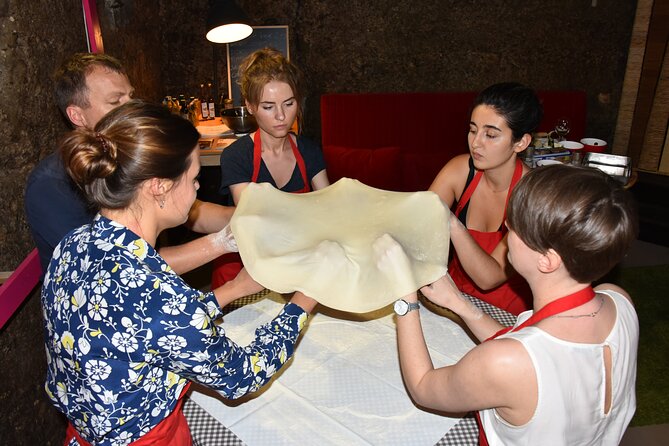
The best part of this Salzburg cooking class is the pastry stretching. You take a lump of dough and work it into the thin, flexible sheet needed for proper apple strudel. I like that you do the cooking yourself, rather than simply watching a chef perform, and that the food ends with a hot goulash soup lunch.
I also like the intimate working groups of three to five, which give the chef time to help each table. The setting, built into a rock wall at Edelweiss Cooking School, adds character. One possible drawback is that the broader activity can include up to 15 people, and a few participants have found the oven work slightly crowded.
Key details before you book
- Stretch the pastry by hand: The class shows you how to handle and thin strudel dough without tearing it.
- Two Salzburg specialties: You prepare apple strudel plus Salzburger Nockerl, or on some programs, a fluffy Salzburg pretzel.
- Lunch is part of the experience: Goulash soup or lentil stew comes before your baked desserts.
- Small cooking groups: Hands-on work is organized in groups of three to five, within a maximum activity size of 15.
- A distinctive kitchen setting: The cooking school is built around a rock wall, giving the class an unusual atmosphere.
- Good family range: Children can join from age five, and the activity suits mixed-age groups.
Why this class is more than a dessert lesson
Salzburg has no shortage of cafés selling apple strudel. You can order a slice in minutes, dust it with powdered sugar, and move on. This class gives you the useful part that a café cannot: you learn why the pastry works, how thin the dough should be, and how much care goes into a dessert that often looks simple on the plate.
The program lasts about 90 minutes. That is long enough to feel like a real activity but short enough to fit around a day of sightseeing. At $72.56 per person, it is not the cheapest lunch in Salzburg, but the price includes instruction, ingredients, a main course, and two prepared sweets. I see it as good value if you want a social food experience rather than just another restaurant meal.
The class is offered in English, and the tone appears to be practical and relaxed. Instructors including Leonardo and Johan are described as patient, clear, and humorous. That matters here, since pastry work is easier when someone can show you the motion instead of giving a long lecture about it.
A few more Salzburg trips to weigh up
- Salzburg Christmas Cookies and Apple Strudel Cooking Lesson
★ 5.0 · 183 reviews - Cookies and Apple Strudel Cooking Class Including Lunch
★ 4.9 · 156 reviews - Apple Strudel & Prezel Cooking Class incl. Dinner & Music
★ 5.0 · 113 reviews
Arriving at Edelweiss Cooking School on Ursulinenplatz
You meet at Ursulinenpl. 9, 5020 Salzburg, and return there when the activity ends. The meeting point is near public transportation, which keeps the logistics simple, though hotel pickup and drop-off are not included.
The school itself is part of the appeal. The kitchen is built into a rock wall, creating a setting that feels different from a standard demonstration kitchen. It is a small detail, but it gives the class a sense of place. You are not simply in a generic cooking studio with Austrian recipes added afterward.
Once the group gathers, ingredients and workstations are prepared. The cooking groups generally contain three to five people, allowing everyone to take part. The wider activity may have as many as 15 participants, so you should distinguish between your small hands-on station and the total number of people in the room.
That arrangement works well for couples, friends, and families. A family can work together at one station, while solo participants have a natural chance to talk with people from other countries. The shared meal at the end adds to that friendly, communal feel.
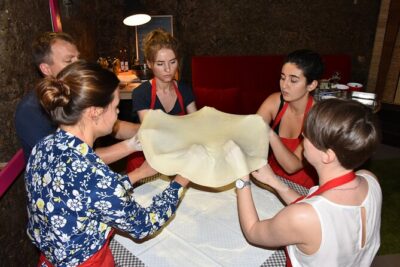
Stretching dough for real Austrian apple strudel
The apple strudel lesson is the heart of the program. You prepare the dough, work through the stages of assembly, and learn how to stretch it into the right shape. This is the part that turns the class from a recipe demonstration into a hands-on skill lesson.
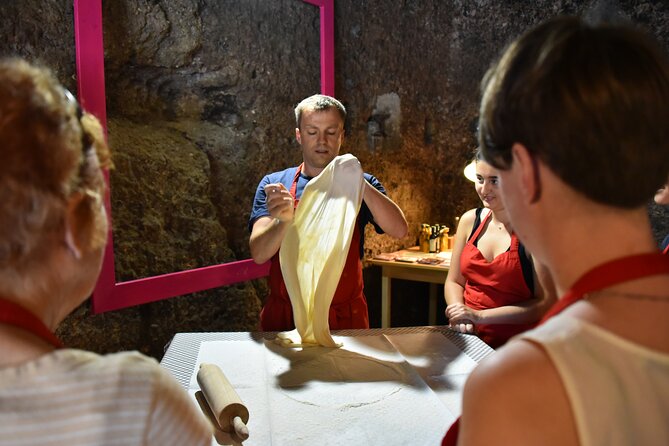
Strudel pastry needs to become remarkably thin. The goal is not to roll out a thick sheet and call it finished. You handle and stretch the dough until it is suitable for wrapping the filling. That process can be playful, but it also requires care. Pull too hard and you risk a tear. Leave it too thick and the finished dessert will not have the delicate texture associated with strudel.
The chef demonstrates each step clearly, then gives you a chance to try. This is where an English-language class with an attentive instructor earns its keep. You can watch the technique, copy it, and ask for help before the pastry reaches the oven.
The class is suitable for beginners because the emphasis is on guided participation. You do not need professional kitchen skills. You do need to be willing to get your hands into the dough and accept that a first attempt may not look perfect.
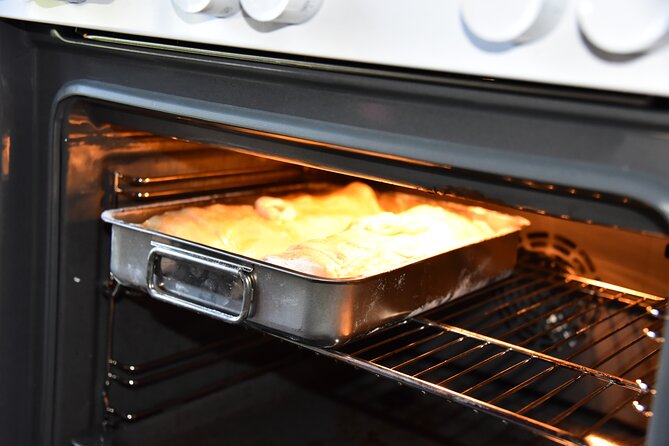
The final result is baked apple strudel, served hot with the other food you prepare. Some people have had enough left over to take home, and properly stored pieces can still be enjoyable the next day. That possibility depends on how much is produced and how the class portioning works, so I would treat leftovers as a pleasant extra rather than a promise.
Salzburger Nockerl, or the pretzel option
The second recipe gives the class a strong Salzburg identity. Salzburger Nockerl is a famous local dessert with a dramatic, fluffy appearance. It is closer to a light baked soufflé than to a dense cake, which makes it a useful contrast to the layered pastry of apple strudel.
You learn how to prepare and bake it under the chef’s direction. The method is more delicate than the strudel work, and the result may be less familiar to some people. A few participants have preferred the goulash and strudel to the Nockerl, but that is part of the fun of trying a local specialty. You get to make something you might not choose from a bakery window.
The program can also feature a Salzburg pretzel instead of the Nockerl, depending on the scheduled format. Check the exact version available for your date if the second recipe is a deciding factor. The supplied menu lists apple strudel and Salzburger Nockerl or pretzel, so the class is not always identical.
This variation is worth keeping in mind when comparing the experience with other cooking activities. The apple strudel is the constant centerpiece, while the second preparation may change. Families with children may find the pretzel format especially appealing, while anyone curious about Salzburg’s signature dessert should look for a date featuring Nockerl.
Same Alps, a completely different kind of day:
- The Original Sound of Music Tour in Salzburg
★ 4.5 · 6,129 reviews - Salzburg: Original Sound of Music Tour
★ 4.8 · 5,059 reviews - From Salzburg: Half-Day Tour to Hallstatt
★ 4.6 · 3,596 reviews - Salzburg: Mozart Concert at Mirabell Palace
★ 4.8 · 3,498 reviews
Goulash soup makes it a proper lunch
The class includes a traditional bowl of goulash soup before the desserts are served. That timing makes sense. You work with pastry, then sit down to eat a savory dish while the sweets finish baking.
The soup is repeatedly singled out as one of the strongest parts of the meal. It is described as warming and generous, with enough flavor to make lunch feel substantial rather than incidental. You should arrive ready to eat, since the menu moves from soup to fresh baked desserts.
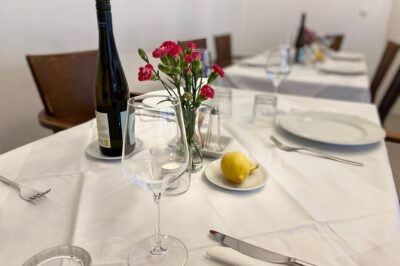
A vegetarian or vegan lunch option is available in the form of lentil stew. This is useful for mixed groups, since not everyone in a family or party needs to order the same meal. The provided menu lists goulash soup or lentil stew as the main course.
Drinks are not included. Beer and wine are available, but the bar is cash only, so bring cash if you want something with lunch. This is exactly the sort of small practical point that can spoil an otherwise easy meal if you arrive without any.
A social class with a relaxed pace
The small-group structure shapes the mood. You are not rushing through a large-scale workshop where one person handles the dough while everyone else watches. At your station, the expectation is that each participant takes part in the preparation.
That makes the class a good break from Salzburg’s churches, museums, and formal sightseeing. You use your hands, talk with the people sharing your table, and end with food you helped prepare. The experience has a social side, but it does not depend on you arriving with a group of friends.
The shared lunch is especially useful for solo visitors and couples. It gives conversation a natural focus, since you can compare pastry results and talk about your plans in Salzburg. Families have also found the class workable across several generations, with children from age five permitted to join.
The pace is described as organized and fairly quick. That is mostly a benefit during a 90-minute program, but it means you should not expect a slow, open-ended cooking school session. You will be guided from one stage to the next, with limited time for wandering off or taking a long break.
What could be improved
This is a highly rated activity, but it is not flawless. The most specific criticism concerns crowding around the oven. If the broader group is full, several strudels may need to be baked close together, and one participant felt the pastry was not baked quite long enough.
That issue does not appear to define the class, but it is worth understanding. Your final dessert depends partly on shared kitchen timing, not just on your own preparation. If the room is busy, the chef may need to manage several groups at once.
There was also a hygiene complaint about a cloth that fell on the floor and was then used to wipe a cooking table. That is an isolated concern in the supplied feedback, but it is fair to mention because cleanliness matters in a cooking class. Most of the comments focus on clear instruction, tasty food, and good organization.
The bar’s cash-only policy is another small inconvenience. Drinks are extra, and the payment arrangement is not something you want to discover at the end of lunch. Carry some cash if you plan to order wine or beer.
Who will get the most from this experience
I would recommend this class to anyone who wants an activity with a clear result. You do not simply learn a recipe and leave hungry. You prepare two Austrian specialties, eat soup, and receive the desserts you helped make.
It is particularly suited to:
- Families: Children from age five can join, and the pastry work gives younger participants something active to do.
- Couples and friends: The class creates a shared task and an easy social lunch.
- Solo visitors: Small work groups and communal dining make conversation simple.
- Food-focused visitors: You learn a real technique, not just the background story of a dish.
- Visitors with limited time: The 90-minute length fits neatly into a sightseeing day.
I would be less likely to choose it if you want an advanced culinary course, a full multi-course menu, or a private lesson. The emphasis is on fun, clear instruction, and traditional desserts. It is not designed as professional pastry training.
Price, timing, and practical value
At $72.56, the fee covers all taxes, cooking ingredients, lunch, and the instruction. Drinks cost extra, and transport to the meeting point is your responsibility. Since the activity lasts roughly an hour and a half, the price is easiest to justify when you value the teaching and the setting as much as the meal.
A restaurant lunch and two desserts might cost less, especially if you choose a modest meal. But a restaurant will not teach you how to stretch strudel dough or make Salzburger Nockerl. The class also gives you a social activity that can become one of the more memorable parts of a Salzburg visit.
This experience is often booked about 45 days ahead. That suggests you should not leave it until the last day if your schedule is tight, particularly if you need a specific date or want to coordinate it with other plans.
Confirmation is provided when you book, and the experience accepts mobile tickets. Free cancellation is available until 24 hours before the start time. Cancellations or changes made inside that window are not refundable, and a minimum number of participants is required for the class to run.
Should you book the Salzburg strudel class?
Book it if you want to cook, eat, and meet people in one compact activity. The pastry stretching is the most distinctive skill, while the goulash soup and fresh desserts make the experience feel generous for its length.
The strongest reasons to go are the hands-on format, the small working groups, the unusual rock-wall kitchen, and the chance to prepare both apple strudel and a local Salzburg specialty. Leonardo, Johan, and the other instructors provide the kind of direct help that makes unfamiliar pastry less intimidating.
Think twice if you dislike group activities, want complete control over the baking time, or are looking for a serious chef-training course. Also check whether your date includes Salzburger Nockerl or the pretzel option.
For most visitors, I would make room for it. It gives you a practical memory to take home, a warm lunch in the middle of the day, and a better understanding of why Austrian strudel is more than apples wrapped in pastry.
FAQ
Where does the cooking class meet?
The class meets at Edelweiss Cooking School, Ursulinenpl. 9, 5020 Salzburg, Austria.
How long does the experience last?
The activity lasts approximately 1 hour and 30 minutes.
What food will I prepare?
You will prepare an original Austrian apple strudel and either Salzburger Nockerl or, depending on the program, a fluffy Salzburg pretzel.
Is lunch included?
Yes. Lunch includes goulash soup or lentil stew, followed by the desserts you prepare.
Is there a vegetarian or vegan lunch option?
Yes. A vegetarian or vegan lunch option is available, listed as lentil stew.
Are drinks included?
No. Drinks are not included in the price. Beer and wine are available separately, and the bar is cash only.
Is the class taught in English?
Yes. The experience is offered in English.
Can children join the class?
Yes. The minimum age for children is five years.
How many people can attend?
The overall activity can include a maximum of 15 people, while the hands-on cooking groups are generally limited to three to five participants.
Is hotel pickup included?
No. Hotel pickup and drop-off are not included. The activity ends back at the meeting point.
Can I cancel for a full refund?
Yes, if you cancel at least 24 hours before the experience start time. Cancellations or changes made less than 24 hours in advance are not refunded or accepted.
More Workshops in Salzburg
- Salzburg: Apple Strudel & Salzburger Nockerl Class
★ 4.9 · 424 reviews - Salzburg: Dinner Cooking Class and Music
★ 4.9 · 48 reviews - Original Sound of Music Tour & Edelweiss Cooking Class
★ 4.8 · 15 reviews - Private Austrian Wine & Charcuterie Tasting Class with a Pro-Sommelière
★ 5.0 · 4 reviews
Just added around Salzburg
- Private Werfen Ice Cave and Golling Waterfall from Salzburg★ 5.0 · 15 reviews
- Zell am See Alpine Village Private Day Trip from Salzburg★ 5.0 · 3 reviews
- Viator Exclusive: ‘The Sound of Music’ Private Tour★ 5.0 · 28 reviews
- Private transfer from Salzburg to Vienna, 2 hours for sightseeing★ 4.5 · 7 reviews
- Werfen World’s Largest Ice Caves and Golling Waterfalls Tour★ 4.5 · 7 reviews
- Musical Salzburg: Follow the Trail of the Beloved Movie★ 5.0 · 5 reviews
- Private Transfer from Salzburg to Munich with 2 hours for sightseeing★ 5.0 · 8 reviews
- Private Austrian Food Tasting Tour in Salzburg’s Old Town★ 4.5 · 3 reviews
Cooking Classes, compared.
Salzburg Christmas Cookies and Apple Strudel Cooking Lesson
Read our review →
Traditional Kaiserschmarrn Cooking Class & Tasting
Read our review →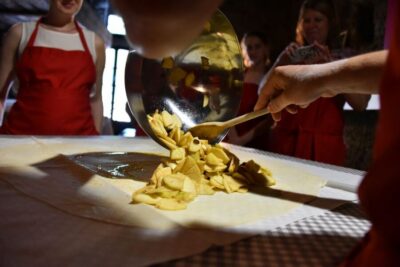
Cookies and Apple Strudel Cooking Class Including Lunch
Read our review →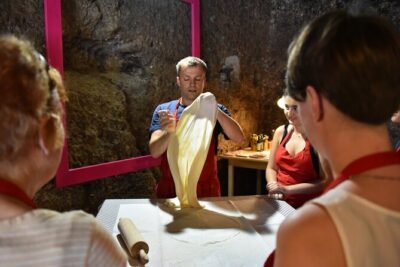
Apple Strudel & Prezel Cooking Class incl. Dinner & Music
Read our review →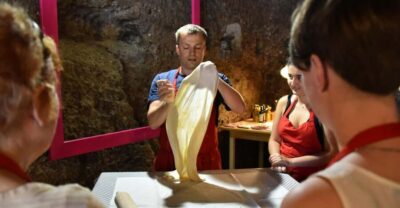
Original Sound of Music Tour & Edelweiss Cooking Class
Read our review →Browse the lists this tour appears in