
Reviewed · GRAZ TOURS
Universalmuseum Joanneum Pass in Graz
Graz’s best museum ticket is less a tour than a choose-your-own cultural pass. In 24 or 48 hours, you can move from the world’s largest historical weapons arsenal to a blue contemporary-art building, a Baroque palace, or Roman ruins outside the city. It gives you freedom, though you must plan the route yourself.
I like the wide range of subjects, from art and science to rural life and regional history. I also like the chance to use the longer pass for sites beyond central Graz, including Schloss Trautenfels and the Roman Museum Flavia Solva. The main drawback is practical: this is a paper ticket, and you must print your booking confirmation and exchange it at a cashier point.
Key points to know
- Twelve museums and cultural sites: Use one pass for places such as Eggenberg Palace, Kunsthaus Graz, the Styrian Armoury, and the Natural History Museum.
- Two useful time choices: Pick a 24-hour or 48-hour pass, depending on how many sites you want and how far you plan to travel.
- Strong mix of subjects: See weapons, paintings, fossils, Roman finds, sculpture, folk objects, and historic interiors.
- Self-guided format: You set the pace and route, but guided visits are not included.
- Extra cost for interpretation: Guided tours or audio guides cost €2.50 per person and are available in English, German, and partly Italian and Slovenian.
- Print before you go: Bring the printed Viator booking confirmation to the cashier point to receive the pass.
One pass, twelve very different museum stops
The Universalmuseum Joanneum Pass works best if you think of it as a key to Graz and Styria rather than a conventional sightseeing tour. You are not led from one stop to another. Instead, you choose the museums that fit your interests, schedule, and willingness to travel outside the city center.
The pass comes in 24-hour and 48-hour versions. The listed price is $24.08 per person, though the final amount can vary with booking conditions. For a single museum, the value may be modest. For several major sites in a day, or a mix of city and regional museums over two days, it becomes much more appealing.
You will want to check opening times and locations before setting out. Twelve institutions are included, but they are not all next door to one another. The central Graz sites can form a practical walking day, while Flavia Solva, Alpl, Krieglach, Stainz, and Trautenfels require more planning.
Other Graz days people book alongside this one:
- Kunsthaus Graz Museum Entrance Ticket
★ 3.5 · 19 reviews - Graz: Old Town Highlights Private Walking Tour
★ 4.6 · 16 reviews - Fun & mobile scavenger hunt through Graz
★ 4.5 · 12 reviews
Starting in Graz’s Altstadt
The suggested city visit takes about two hours and places you near Graz’s Old Town, or Altstadt. This is the easiest part of the pass to use because several major institutions are within the city area.
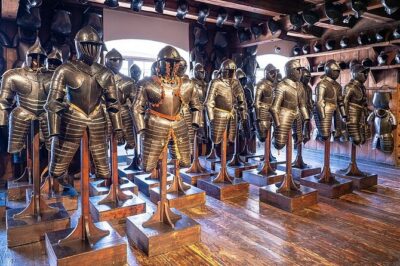
You can begin with the Styrian Armoury, a memorable stop even if you are not usually a museum person. It is described as the world’s largest historical weapons arsenal, with rows of armor, weapons, and military equipment. The appeal is visual and immediate. You see the scale of the collection rather than reading only about warfare in the abstract.
The Armoury also gives you a strong sense of Styria’s past. It is not simply a room with a few ceremonial swords. The collection presents the tools and equipment connected with centuries of conflict and defense. If this is your first visit, allow enough time to take in the repeated patterns of helmets, firearms, armor, and polearms.
The Neue Galerie offers a sharp change of mood. Its collections cover Biedermeier, Jugendstil, Expressionism, classic modernism, and Austrian and international painting after 1945. That range makes it a useful choice if you want to follow changing artistic styles rather than focus on one period.
The Natural History Museum is a good pick for families and for anyone who prefers objects from the natural world to paintings. You will find wild cats, birds in flight, unusual plants, and fossils. The displays present the variety of life and the planet’s past in a way that can appeal to adults and children alike.
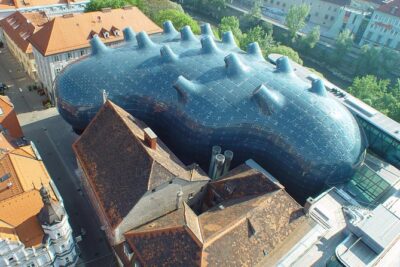
Then there is Kunsthaus Graz, a contemporary art museum housed in a building shaped like a mysterious blue balloon among the roofs of the historic center. Even before you enter, the architecture gives you something different from Graz’s older streets and Baroque interiors. The exhibitions focus on contemporary art, so your enjoyment will depend on your interest in modern installations and changing artistic ideas.
You can spend two hours on a quick introduction to the city museums, as suggested, but that is not enough time to see everything carefully. If you want a slower visit, the 48-hour pass gives you room to return to the central area after exploring a regional site.
Eggenberg Palace and its 24 state rooms
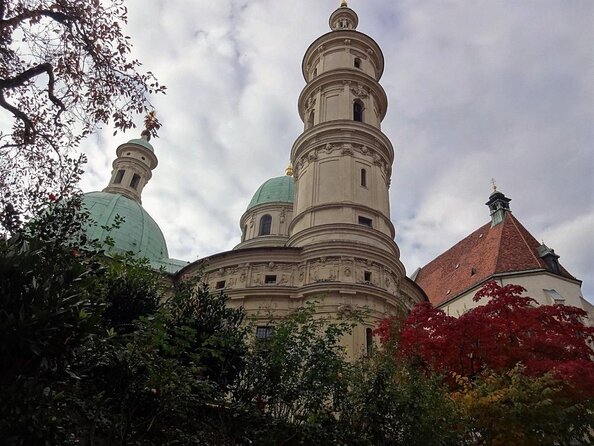
Eggenberg Palace is one of the strongest reasons to choose the pass. It sits at the edge of Graz’s city center in a park, giving you a break from the tighter streets of the Old Town.
Inside, the 24 state rooms contain original interiors, historic furniture, and more than 500 ceiling paintings. Those numbers matter because the palace is experienced as a complete setting. You are not looking at a single famous room and leaving. The sequence of rooms, painted ceilings, furniture, and formal design creates the main attraction.
The palace is especially useful for visitors who want architecture and history in one stop. The rooms help explain how an elite residence functioned, while the ceiling paintings reward a slower pace. Look up often. The details overhead are a major part of the visit.
Allow time for the park as well. The pass includes admission to the palace site, but your exact visit length depends on how closely you study the interiors and whether you spend time outdoors. It is a sensible anchor for a Graz day, particularly if you prefer one major historic site rather than several small museums.
From Roman ruins to a Styria hunting museum
The pass reaches beyond Graz, and this is where the 48-hour option begins to make more sense. You can use one day for city institutions, then devote the second to a regional site if transportation and opening hours fit your plans.
At the Roman Museum Flavia Solva, you can see the remains and discoveries connected with the only Roman city in the modern province of Styria. The displays include archaeological finds, inscriptions, and reliefs from the Roman province of Noricum.
This stop gives useful Roman context to a region often associated more with castles, art, and mountain towns. It is also a clear reminder that Styria’s story did not begin in the medieval period. If Roman archaeology interests you, Flavia Solva is one of the more distinctive choices on the pass. Its distance from central Graz means it is not a casual add-on between city museums.
Schloss Stainz houses Austria’s largest Hunting Museum. The setting in Stainz Castle adds character, while the displays focus on historic weapons and equipment. Like the Armoury, it suits visitors interested in tools, hunting, and material culture. The two museums are not duplicates, though. The Armoury presents a broad historical arsenal, while Stainz focuses on hunting and the equipment connected with it.
At Schloss Trautenfels, the collection covers zoological, geological, and mineralogical items, along with archaeological finds from the region. The castle itself has high-quality Baroque interiors, and the surrounding mountain views add another reason to make the trip.
This is a useful stop if you want one place to combine nature, archaeology, and architecture. You are not choosing between a science museum and a historic building. Trautenfels gives you both, though the extra travel makes it better suited to a planned half-day or full-day outing than a quick museum stop.
Same Alps, a completely different kind of day:
- Graz city tours
★ 3.5 · 9 reviews - Graz Scavenger Hunt and Sights Self Guided Tour
★ 4.0 · 9 reviews - Explore Graz in 60 minutes with a Local
★ 5.0 · 7 reviews - Graz Private Walking Tour With A Professional Guide
★ 5.0 · 5 reviews
Rural life through Rosegger’s homes
Two sites connected with the Styrian poet Peter Rosegger offer a quieter look at regional life.
At Rosegger’s Birthplace in Alpl, furnishings and household items show rural life in the 19th century. The value here is the ordinary detail. Instead of focusing on grand rooms or major works of art, the site helps you picture how people lived, worked, and arranged a home in a rural setting.
The Rosegger Museum in Krieglach occupies the poet’s former country home. It traces different stages of Rosegger’s life and work from 1843 to 1918. You get both literary context and a sense of the setting that shaped his connection to Styria.
These stops are best for readers who want local culture rather than a list of famous sights. They are also among the places that require the most careful planning because they are outside central Graz. The 48-hour pass gives you more breathing room, but the pass does not provide transport or a guided route.
Sculpture in an open-air setting
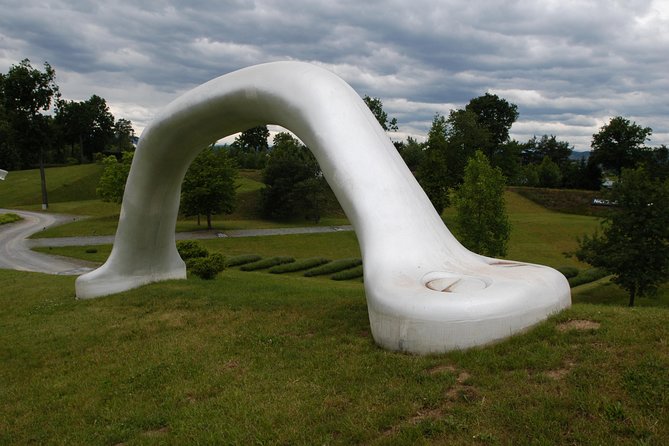
The Austrian Sculpture Park is a different kind of museum. Contemporary works range from abstract sculptures and human figures to pieces based on household and utilitarian objects.
The park is designed as a place for art and relaxation, and it is child-friendly. That combination makes it a good change of pace after indoor galleries. You can move through an outdoor setting instead of staying in formal rooms, and the large scale of the works gives contemporary art more physical presence.
If you are unsure about modern art, this may be an easier introduction than a dense gallery. The setting lets you approach works from different angles and take breaks. It is also a practical choice for families who may not want a full day of quiet indoor museums.
Folk objects and the everyday past
The Folk Life Museum has collected, preserved, and interpreted material objects connected with social life and individual human experiences since 1913.
That focus makes it different from the palace and art museums. You are looking at objects tied to daily life, work, customs, and personal stories. The museum can help fill in the space between grand regional history and the lived experiences of ordinary people.
I like this kind of stop because it gives context to the rest of the pass. The Armoury shows large systems of defense. Eggenberg shows courtly life. The Folk Life Museum turns your attention to the objects and habits of people outside those elite settings.
Planning the pass around your interests
The best itinerary depends on what you want from Graz.
For art, combine the Neue Galerie, Kunsthaus Graz, and the Austrian Sculpture Park. For science and the natural world, choose the Natural History Museum, Trautenfels, and perhaps Flavia Solva for archaeology. For historic buildings and interiors, make Eggenberg Palace the priority, then add Schloss Stainz or Schloss Trautenfels.
For local identity, select the Folk Life Museum and the two Rosegger sites. For military history, pair the Styrian Armoury with Schloss Stainz.
The pass is not designed for a rushed checklist. You could technically try to cover many sites, but travel time and museum hours will limit what you can absorb. I would choose two or three priorities for a 24-hour pass. With 48 hours, add one or two regional sites only after confirming the route.
The suggested itinerary gives about two hours to the Universalmuseum Joanneum and another two hours around the Altstadt. Treat those times as a starting point, not a fixed schedule. Eggenberg Palace can deserve more than a quick visit, while Kunsthaus Graz or the Natural History Museum may fit more easily into a shorter block.
What the ticket does and does not include
The pass includes admission to the 12 listed museums and cultural institutions. It is a self-guided admission ticket, not a group tour. You will not have a guide leading you between stops or explaining each collection.
Guided tours and audio guides can be purchased separately on site for €2.50 per person. Audio guide languages include English and German, with Italian and Slovenian available in part. If you want detailed explanations, budget for that small extra cost.
The ticket is paper-based. To receive your 24 or 48-hour pass, print your Viator booking confirmation and show it at the cashier point. This detail is easy to miss, especially if you expect to use a phone QR code. One piece of poor feedback focused on a digital organization problem, specifically the lack of an email with a QR code that museums could process within two days. Printing the confirmation is the safest approach and follows the stated redemption instructions.
Confirmation is provided at booking. Service animals are allowed, public transportation is nearby, and most people can participate. These details make the pass broadly practical, though the regional sites still require you to arrange your own transport.
Is $24.08 a good value?
At $24.08 per person, the pass can be good value if you visit several included sites. The more you use it, the less each admission costs in effect. Eggenberg Palace, the Armoury, Kunsthaus Graz, and the Natural History Museum alone can give the pass a full day of content.
The value is weaker if you plan to see only one museum. In that case, a single admission may be simpler. The 24-hour version suits a compact city plan, while the 48-hour version is better if you want to add a regional castle, Roman site, or Rosegger museum.
Do not judge the price only by the number of museums. A regional visit brings transport and time costs that are separate from the pass. The ticket saves money on admission, but it does not solve the geography of Styria.
The overall rating is 4.1 from 14 ratings, which suggests a generally positive but not flawless experience. The main practical concern is the paper redemption process, not the range of museums itself. Plan the pickup carefully and you remove the most obvious trouble spot.
Who should buy the Joanneum Pass?
I would choose this pass if you like setting your own pace and want more than one kind of museum. It is particularly suitable for art lovers, families, history fans, and anyone staying in Graz for two days.
It also works well for repeat visitors who have already seen the obvious Old Town sights. Instead of treating Graz as a single historic center, you can use the pass to explore regional culture through Roman archaeology, rural homes, castles, science, and contemporary art.
I would skip it if you want a guided overview with a fixed route. It is also less useful if your schedule allows only one short museum visit or if you do not want to plan transportation beyond the city.
Should you book it?
Book the Universalmuseum Joanneum Pass if you can name at least three included places you genuinely want to see. The 48-hour option is the better choice for a relaxed mix of Graz museums and one regional excursion.
For a short city break, focus on Eggenberg Palace, the Styrian Armoury, Kunsthaus Graz, the Neue Galerie, and the Natural History Museum. Print your confirmation before arrival, pay extra only if you want a guide or audio guide, and treat the pass as a flexible museum budget rather than a guided tour.
FAQ
What is included in the Universalmuseum Joanneum Pass?
The pass includes admission to 12 museums and cultural institutions in Graz and greater Styria, including Eggenberg Palace, Kunsthaus Graz, the Styrian Armoury, and the Natural History Museum.
How long is the pass valid?
You can choose a 24-hour or 48-hour pass. The tour information describes the experience as lasting approximately two days.
How much does the pass cost?
The listed price is $24.08 per person.
Is this a guided tour?
No. You create your own itinerary and visit the included museums independently. Guided tours are not included.
Can I buy a guided tour or audio guide?
Yes. Guided tours or audio guides can be purchased separately on site for €2.50 per person.
Which audio guide languages are available?
Audio guides are available in English and German, and partly in Italian and Slovenian.
How do I receive the paper pass?
Print your Viator booking confirmation and show it at the cashier point to receive your 24 or 48-hour pass.
Does the pass include Eggenberg Palace?
Yes. Eggenberg Palace is one of the included sites. It contains 24 state rooms, historic furniture, original interiors, and more than 500 ceiling paintings.
Are regional sites included?
Yes. Included regional sites include the Roman Museum Flavia Solva, Rosegger’s Birthplace Alpl, Rosegger Museum Krieglach, Schloss Stainz, and Schloss Trautenfels.
Can service animals participate?
Yes. Service animals are allowed. The experience is also near public transportation, and most people can participate.
Just added around Graz
- Graz city tours★ 3.5 · 9 reviews
- Graz Private Walking Tour With A Professional Guide★ 5.0 · 5 reviews
- Graz Scavenger Hunt and Sights Self Guided Tour★ 4.0 · 9 reviews
- Explore Graz in 60 minutes with a Local★ 5.0 · 7 reviews
- Graz Old Town Highlights Private Walking Tour★ 5.0 · 4 reviews
- Graz Funicular Ride and Schlossberg Picnic Experience★ 5.0 · 5 reviews
- Private Photoshoot Walk Old Town of Graz★ 3.0 · 3 reviews
- Graz: Funicular Ride & Schlossberg Picnic Experience★ 4.8 · 4 reviews
Graz Tours, compared.
Graz Funicular Ride and Schlossberg Picnic Experience
Read our review →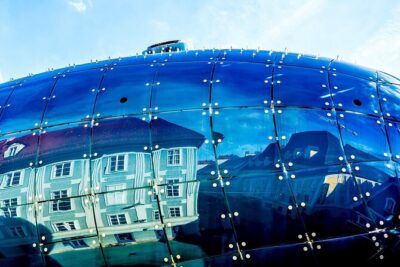
Browse the lists this tour appears in