
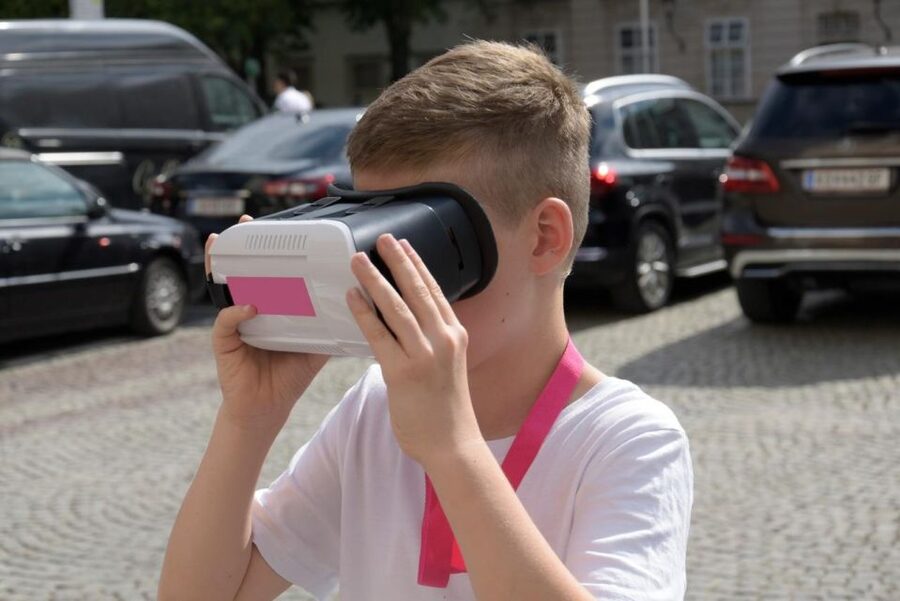
Reviewed · SALZBURG TOURS
3D Salzburg: Unique VR-Tour
Salzburg’s past appears through virtual reality scenes on this short walking tour, including Mirabell Palace, Markart Square as it looked 120 years ago, and Pfeifergasse during World War II. You use supplied VR glasses with your own charged smartphone and the TimeTour app.
I like the tour’s unusual way of showing lost city views, and I like that guide Sabine Rath adds live stories instead of leaving you alone with an app. The main concern is value: the experience focuses on only four 3D images, so visitors expecting a full city-history tour may find the $32 price high.
Key points to know before booking

- Four main time-travel scenes: See Mirabell Palace and Square, an old wood market on Markart Square, and a World War II setting in Pfeifergasse.
- Sabine Rath leads in German: The guide supplies the historical explanation and operates the live walking portion.
- Bring your own charged smartphone: Download the free TimeTour app before arriving. The password and VR glasses come at the meeting point.
- A short 90-minute experience: The stated duration is around 1.5 hours, although one description also refers to about two hours.
- Best for curious adults and older children: Children under six are not permitted, and the tour is wheelchair accessible.
- A specialized rather than classic city tour: It offers visual time travel, but not a broad survey of Salzburg’s buildings, people, and culture.
What this Salzburg VR tour actually offers
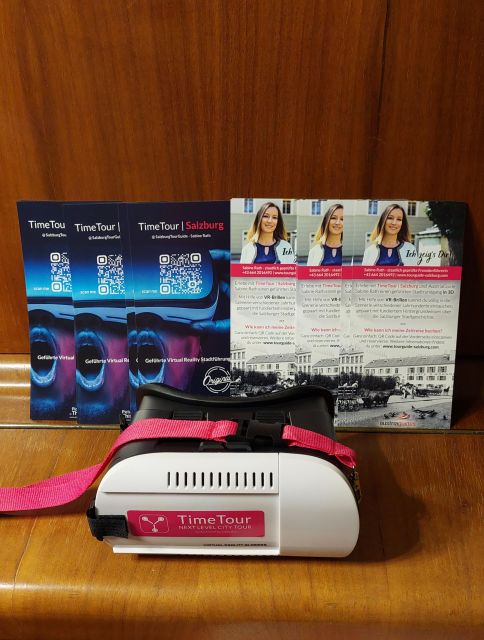
This is not a standard walking tour with a long list of monuments. It is a compact history experience built around virtual reconstructions and live commentary.
You meet in front of St. Andrä Church at Mirabellplatz 5. Arrive at least five minutes early. The location is practical because Mirabell Palace and Square provide the first major setting, and you can reach the meeting point without needing a separate transfer.
At the beginning, you receive the VR glasses and the password for the TimeTour app. Your smartphone is part of the equipment, so charge it before you leave your hotel. Downloading the app in advance matters. You do not want to spend the opening minutes sorting out an installation while the group is ready to begin.
The glasses show three-dimensional images connected to places in Salzburg. The goal is not simply to look at an old photograph. You are meant to compare the present-day location around you with a reconstructed view from another period. That makes the tour most useful for visitors who enjoy seeing how streets and public spaces changed over time.
The live guide remains important. The supplied information promises stories and background about Salzburg’s past, while the guide brings those images into the walk. Sabine Rath leads the experience in German. If you do not understand German, this is not the right choice, since no other language is listed.
Other Salzburg days people book alongside this one:
- The Original Sound of Music Tour in Salzburg
★ 4.5 · 6,129 reviews - Salzburg: Original Sound of Music Tour
★ 4.8 · 5,059 reviews - From Salzburg: Half-Day Tour to Hallstatt
★ 4.6 · 3,596 reviews
Mirabell Palace and Square: your first look backward
The tour begins around Mirabell Palace and Square, one of Salzburg’s most recognizable central areas. Here, the VR element gives you a way to see the setting through a different period rather than only hearing dates and names.
This opening scene should work well for visitors who have already seen modern Mirabell and want a visual comparison. You are standing in a real place while the headset presents an earlier version, which can make changes in the square easier to grasp than a verbal description alone.
I would not book this expecting a full architectural lecture on the palace. The focus is the 3D image and the connection between then and now. The live explanation adds context, but the experience is designed around the visual reconstruction.
The first image also helps you learn how the equipment works. VR glasses can feel less natural than simply looking at your phone, and you may need a moment to adjust the view. This is one reason the tour suits people who are open to a new format rather than those who want a simple, uninterrupted walk.
Markart Square and the old wood market

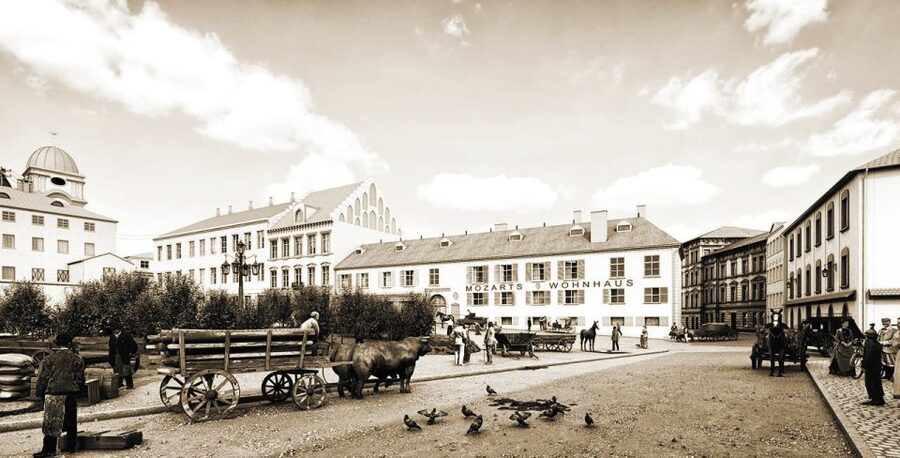
Another scene takes you to Markart Square as it appeared around 120 years ago, when an old city wood market occupied the area. This is one of the more specific historical details in the tour, and it gives the experience a clear sense of place.
The value here lies in seeing an everyday working scene rather than only a grand palace or famous church. A market tells you something about how a city functioned. It can help you picture the practical side of Salzburg, including the way public spaces were used before the modern city took shape.
The image is also a reminder that familiar squares are not fixed. Buildings may remain, but the activity, purpose, and feel of a place can change greatly. If you enjoy old photographs, street scenes, and urban history, this is likely to be one of the more appealing sections.
At the same time, the tour appears to use a limited number of 3D views. One critical account described the experience as centered on four images, with too little discussion of city history. Keep that limitation in mind. You are getting selected visual snapshots, not a complete account of Markart Square or the people who worked there.
Pfeifergasse during World War II

The World War II scene in Pfeifergasse gives the tour its most serious subject. The point is to show what Salzburg looked like during the war and place you within a specific historical setting.
This can be a useful way to approach a difficult period because the image connects a major event to an actual street. Instead of hearing only a broad statement about wartime Salzburg, you see one location as part of that period. The visual setting may help you understand that history as something tied to ordinary streets and buildings.
The tour description does not provide detailed information about the exact event shown in Pfeifergasse. That means you should treat the scene as a visual starting point, not as a complete lesson in Salzburg during World War II. Your guide’s spoken explanation becomes especially important here.
The subject also makes this portion different in mood from the market and palace scenes. You are not simply looking at an old town view. You are considering how war affected the city. Visitors with a particular interest in twentieth-century history may appreciate that focus, while anyone seeking only light sightseeing should know that the tour includes serious material.
Same Alps, a completely different kind of day:
- Salzburg: Mozart Concert at Mirabell Palace
★ 4.8 · 3,498 reviews - Salzburg: Hohensalzburg Fortress Admission Ticket
★ 4.6 · 2,236 reviews - Salzburg Cathedral: Organ Concert at Midday
★ 4.6 · 2,007 reviews - Salzburg: Best of Mozart Fortress Concert and Dinner
★ 4.5 · 1,424 reviews
How the VR equipment affects the experience
The glasses are supplied, but the smartphone is not. You must bring your own charged phone and install TimeTour before meeting the guide. The app is free, and the tour provider supplies the password when the session begins.
This setup keeps the equipment simple, but it also adds a few tasks for you. A low battery, an unfinished download, or a phone that does not work well with the app could get in the way. I would download the app at home, charge the phone fully, and keep the device easy to reach.
The virtual scenes are viewed through the glasses, but you may also interact with the app on your phone. One person found the images easier to see on the phone than through the glasses. Another found the 3D view very striking. That difference matters because the quality of the experience depends partly on your expectations and comfort with the technology.
Current VR entertainment can be highly detailed and fast-moving. This tour appears more modest. It offers a small number of historical 3D scenes linked to a guided walk. If you expect a large-scale digital production, you may feel the technology is basic. If you see it as a visual aid for a city tour, the format makes more sense.
Sabine Rath’s role as the live guide
Sabine Rath is the named guide and provider. The tour is conducted in German, and the guide is not an optional extra. She leads you between the locations, explains what you are seeing, and supplies the stories that connect the images with Salzburg’s past.
The strongest praise for this experience centers on Rath’s friendly and charming manner. One particularly positive assessment described her as someone with many special stories about Salzburg and said she presented the 3D scenes in a way that made the past feel close at hand.
That personal side may be the difference between a worthwhile tour and a disappointing one. The VR images alone are limited. Rath’s explanations give them a reason to exist. If she adds context about the buildings, daily life, and changes in the city, the tour becomes more than four pictures on a phone.
Still, you should not assume that every session will feel like a long-form history lecture. The advertised format is short, and the central feature is the VR presentation. If you want detailed information about old buildings and the lives of local people, ask yourself how much of that you need before paying.
Is $32 a fair price?

At $32 per person, this tour costs more than a casual self-guided walk but less than many extended private experiences. The question is not simply how long it lasts. You are paying for a live German guide, supplied VR glasses, the prepared historical scenes, and the unusual format.
The price can make sense if you are fascinated by visual technology or have already seen Salzburg’s main sights and want something different. The tour may also appeal to families with older children, school-age history fans, and repeat visitors who want to look at familiar places from another angle.
The value is weaker if you measure a tour by the amount of historical information delivered. A critical assessment found too little city history and considered the four-image focus too narrow for the cost. That is a fair warning. A conventional city walk may give you more buildings, stories, and local context for a similar price.
I would think of this as a specialist add-on, not your only Salzburg tour. If you want a broad introduction to the city, begin with a traditional guided walk. Add this VR experience if the time-period views are what interest you.
Timing, language, and practical details

The tour is listed as 90 minutes, and the practical information describes it as around 1.5 hours. Another description refers to about two hours, so allow a little extra time rather than planning a tight connection afterward.
The meeting point is in front of St. Andrä Church at Mirabellplatz 5, 5020 Salzburg. Arrive five minutes early at minimum. Since the activity starts with equipment and app preparation, arriving late could be more troublesome than arriving late for a normal walk.
The live language is German. No English option is listed. You should be comfortable following spoken German to get the full benefit of the guide’s stories and explanations.
The tour is wheelchair accessible. Children under six cannot take part. Food and drinks are not included, and no entrance fees are required, so you do not need to budget for an additional museum ticket as part of the activity.
Free cancellation is available up to 24 hours before the start, and you can reserve now and pay later. Those terms are useful if your Salzburg schedule is still changing, but they do not alter the central decision: you are choosing a short German tour built around a limited set of VR scenes.
Who will enjoy this most?

I would recommend the tour most strongly to you if you meet several of these points:
- You understand German well enough to follow a live guide.
- You like historical photographs, digital reconstructions, or new sightseeing technology.
- You have already visited Salzburg’s main attractions.
- You want to see how specific places changed over time.
- You prefer a 90-minute activity over a long walking tour.
- You are comfortable bringing your own phone and preparing the app in advance.
It may not suit you if you want a detailed survey of Salzburg’s history, extensive discussion of architecture, or a polished modern VR production with many scenes. The tour has a clear idea, but the idea is narrow.
I would also be cautious about booking it solely because the words virtual reality sound impressive. The supplied glasses and 3D images are the heart of the activity, but the technology may feel simple compared with what you have seen in dedicated VR attractions. The strongest experience comes when the guide’s stories add depth to the scenes.
Should you book 3D Salzburg?
Book it if you want a fresh way to look at Salzburg and you are happy with a short, German-language experience built around four main historical views. Mirabell Square, the old wood market on Markart Square, and wartime Pfeifergasse give the tour a useful range of subjects, from daily city life to a difficult chapter of the twentieth century.
I would not make it your only introduction to Salzburg. At $32, the limited number of scenes makes the tour a better choice for repeat visitors, history-minded families, and people who enjoy testing new sightseeing tools. First-time visitors who want more facts about buildings, local life, and the wider city should spend their money on a broader walking tour instead.
FAQ
Where does the 3D Salzburg tour meet?
Meet in front of St. Andrä Church at Mirabellplatz 5, 5020 Salzburg. You should arrive at least five minutes early.
How long does the tour last?
The practical information gives the duration as around 90 minutes, or 1.5 hours. One description refers to about two hours, so allow some extra time in your schedule.
What language is the tour in?
The live guided tour is in German. No other guide language is listed.
Do I need to bring my own smartphone?
Yes. You must bring a charged smartphone and download the free TimeTour app before the tour begins. The password is provided at the start.
Are VR glasses provided?
Yes. The VR glasses are supplied for the tour. Your smartphone is not included.
Are entrance fees, food, or drinks included?
No entrance fees are required for the activity, but food and drinks are not included.
Can young children join the tour?
Children under six are not permitted. The tour is listed as wheelchair accessible.
Just added around Salzburg
- Private Werfen Ice Cave and Golling Waterfall from Salzburg★ 5.0 · 15 reviews
- Zell am See Alpine Village Private Day Trip from Salzburg★ 5.0 · 3 reviews
- Viator Exclusive: ‘The Sound of Music’ Private Tour★ 5.0 · 28 reviews
- Private transfer from Salzburg to Vienna, 2 hours for sightseeing★ 4.5 · 7 reviews
- Werfen World’s Largest Ice Caves and Golling Waterfalls Tour★ 4.5 · 7 reviews
- Musical Salzburg: Follow the Trail of the Beloved Movie★ 5.0 · 5 reviews
- Private Transfer from Salzburg to Munich with 2 hours for sightseeing★ 5.0 · 8 reviews
- Private Austrian Food Tasting Tour in Salzburg’s Old Town★ 4.5 · 3 reviews
Salzburg Tours, compared.



Skip-the-Line: Eagle’s Nest in Berchtesgaden Tour from Salzburg
Read our review →Browse the lists this tour appears in